Black Bamboo
- Hardiness
- 7-10
- Mature size
- 20-30 ft canes
- Growth rate
- Establishes 3 yrs, then RUNS
- Pollination
- N/A (blooms once in decades)
- Bloom season
- Rare
- Harvest season
- Spring shoots are edible (boil, changing water) — a bonus of control-by-eating
Family Poaceae
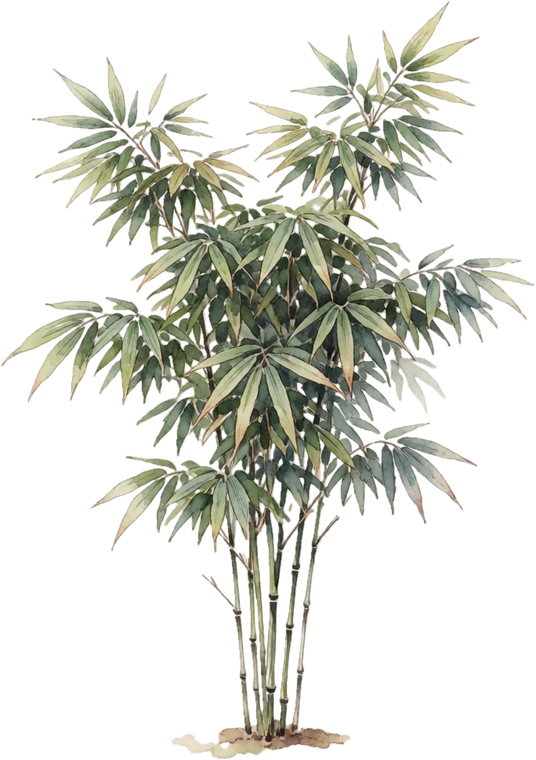
Few plants change a space the way bamboo does: a living green screen that moves with every breeze and whispers in the rain. Black bamboo brings glossy ebony canes; clumping Fargesia, a fountain of fine arching foliage — two very different characters under one name.
Which type you choose decides everything: hardiness runs zone 5 to 10 across the two, and the clumping kind stays politely where you plant it while black bamboo wants room to roam. The young shoots are even edible once cooked. For privacy, for sound, for a green wall that never needs painting — give it a run of fence.
 Moderate water
Hardiness differs across the 2 bamboos in this guide, so pick yours and this panel answers for that one.
Black Bamboo
Bamboo · Common problems

1 problem on file
FewBamboo · Which one do you have?
Where these differ, the key facts above give the span across all of them. Each type’s own figures, as the catalogue records them:
Bamboo · Growing & propagation
 Soil
Soil Propagate
Bamboo · Seasonal care & spray guidance
winter, before growth starts
3 jobs PruningIn January, February and March
Dig along the barrier or the perimeter trench and cut out every rhizome that has turned the corner, jumped the lip, or crossed the line. January through March is generally the best stretch for digging rhizomes, shifting with the sprouting time in your area — in the warm end of the range (zones 9-10) work earlier, before shoots break. Rhizomes hold the stored reserves that fire the coming spring's culms, so cutting them while the grove is dormant removes the escape before it can spend those reserves on shoots outside the grove. Rhizomes are usually all within 6 to 18 inches of the soil surface, which is why hand digging reaches them.
PruningIn winterCut canes that are five to seven years old off at ground level, and always remove dead canes whatever their age. Do this before the spring shoots come up, while you can still walk the grove without breaking them. An individual culm never gains height after its first season, so an old cane contributes nothing but shade and competition for the space a new, larger cane could occupy. Thinning opens the grove and lets each successive year's shoots come up thicker.
 ProtectionIn January, February and March
While the ground is workable and before the spring shoot flush, trench around the planting and sink a 30- to 36-inch-wide roll of 60 mil (80 mil is better for a mature or vigorous colony) HDPE or polypropylene sheeting vertically, buried at least 2 feet deep with 6 to 8 inches left standing above the soil. Seal every seam. A barrier does not stop rhizomes, it deflects them upward where you can see and cut them, so the exposed lip is the working part of the design. Any break, shallow spot, or degraded seam lets a rhizome pass underneath undetected, and running bamboo rhizomes can travel a hundred or more feet in any unobstructed direction.
early spring
3 jobs FeedingIn spring
Apply a slow-release fertilizer that is low in phosphorus with near equal parts nitrogen and potassium, such as an 18-6-12, twice per year. Time the first feeding as the shooting season opens and the second in summer, which matches the grove's two growth pushes. Per UGA, do not feed a newly dug plant until it is well established, usually after its first year, to prevent root burn. Bamboo is a grass, and the two things it does with nitrogen are throw spring culms and push rhizomes through the summer, so the twice-yearly feeding matches those two growth seasons. Phosphorus is rarely the limiting nutrient here and the excess simply runs off.
 What to watch forIn spring
New culm growth comes in one burst, a roughly 6- to 12-week window in spring. Check outside the barrier weekly, because shoots grow fast, and knock over any escape with a foot or a shovel or cut it off at the ground. Emerging culms are tender and easily damaged at this stage. An escaped shoot that is left to leaf out starts paying back the rhizome that made it, and that is how a contained grove becomes a colony. A shoot snapped in its first weeks costs the plant everything it spent and returns nothing, so weekly walks during the flush do more than any later effort.
 HarvestingIn spring
Cut newly emerged shoots at or just below ground level while they are still short and tight-sheathed, and let the containment cull double as the harvest. Peel them, then boil or soak them in water before eating. The shoots you must remove for containment are the same tender spring growth that is worth eating, so control and harvest are one job. Some bamboos carry an acrid principle in the raw shoot that boiling or soaking in water drives off.
the growing season
1 jobWateringIn summerGive an established grove 1 to 1½ inches of water per week on well-drained soils, or about 1 inch every seven to 10 days depending on weather, and hold a 2- to 3-inch mulch layer over the root zone. Water a newly dug plant one to two times weekly for its first three to six months until it is fully established. Bamboo rhizomes are usually all within 6 to 18 inches of the soil surface, so the grove has little deep reserve to fall back on and a dry spell reaches it quickly. The grove also mulches itself, and the dropped leaves can be left on the ground as mulch and fertilizer.
Bamboo · Calculators & field guides
Bamboo · Yearly calendar
PruneJanuary to December
PrunePruneJanuary to December
These are the species' typical months — expect them a few weeks earlier in warm zones and later in cold ones. Watch the plant, not just the calendar.
Bamboo · Ecology & uses
 HabitatMoisture
 Deer
DeerProtect young plants
✓ Commonly eatenShoots edible cooked; safe
Edibility, identification, and traditional-use notes here are general reference — not medical or veterinary advice, and not a claim that any plant treats or prevents anything. Medicinal ratings record how strongly a plant features in herbal tradition, nothing more. Never eat or dose a plant you have not positively identified. More on how to use this library.
Bamboo · Varieties & cultivars
Compare hardiness, mature size, growth habit, days to maturity and intended use in the seller’s variety description. Where this guide covers several plant types, start with the type you want to grow, then choose a variety for your season and space.
Sources & plant identity
Hardiness, size and timing vary with your cultivar, soil and climate.
University extension research, brought together with hands-on growing experience at Story Thyme Farms.
Publisher marks identify sources, not sponsorship or endorsement.
Bamboo questions, answered straight.
Bamboo is commonly eaten and isn't considered toxic, but "commonly eaten" isn't a guarantee for any particular person or animal — allergies, quantity, and which part you eat all matter. One caveat on this one: Shoots edible cooked; safe. Never eat a plant you haven't positively identified, and check with a vet before letting pets or livestock graze anything new.
Division or seed.
Where bamboo sits in the library.




 Sunflower
 Zinnia
 Peony
Peony Daylily