Bearberry (Kinnikinnick)
Arctostaphylos uva-ursi
Family Ericaceae
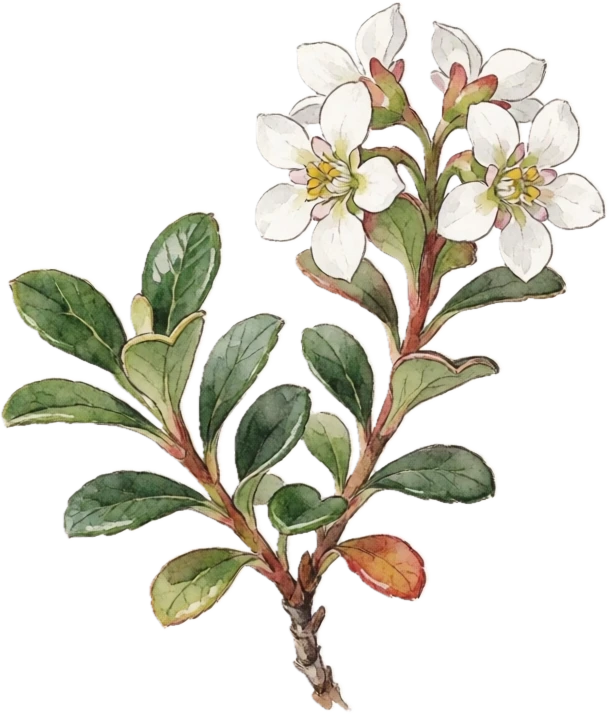
Where lawn dies and everything else gives up — poor sand, salt spray, acid gravel, zone 2 cold — bearberry lays down a glossy evergreen carpet and keeps it there for decades. Pink spring bells feed the earliest bees, and red winter berries feed the birds (and, yes, bears).
Kinnikinnick is slow to knit but permanent once it does — a weed-smothering native mat, six to twelve inches tall, bronzing handsomely for winter. It holds slopes, shrugs off drought, and never needs mowing. If you own an impossible spot, stop fighting it and carpet it.
 Full Sun to Part Shade
 Low water
 Slow growth
 Native to North America
 Attracts bees
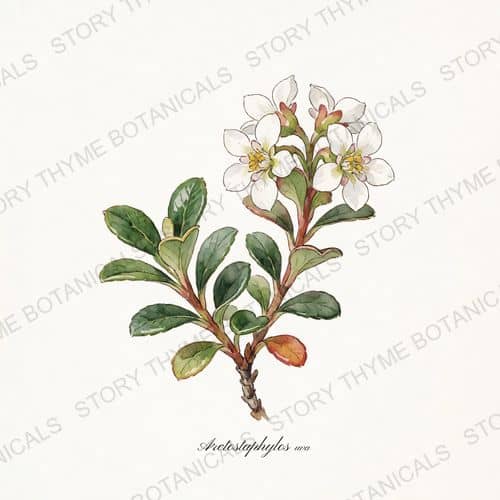
From the print shop
Growing bearberry (kinnikinnick)? Hang it.
Our Plant Library collection carries bearberry (kinnikinnick) — Arctostaphylos uva, print Nº 45, “Bearberry (Kinnikinnick).”
526 designsfrom $12.99white or black backgroundmatte poster, unframed
Will it fruit where you are?
Enter your ZIP — we look up your USDA hardiness zone (2023 map) and check it against what bearberry (kinnikinnick) actually needs.
 Hardy inZones 2-6
Bearberry (Kinnikinnick) · Common problems
Common bearberry (kinnikinnick) problems

Pests
1 problem on file
- Almost none

Diseases
1 problem on file
- Almost none
Bearberry (Kinnikinnick) · Growing & propagation
Growing bearberry (kinnikinnick)
- Light
- Full Sun to Part Shade
- Water
- Low
Drought- and salt-tolerant once established
 Soil
Soil- Sandy, acid, sharp drainage
Poor is fine · pH 4.5 - 6.0
 Fertilizer
- None
 Pruning
- Rarely needed
A tough native evergreen groundcover for the harshest sunny, sandy, acid sites — coastal, alpine, or poor gravel where nothing else knits together. Glossy little leaves turn bronze in winter, pink bells feed early bees, and red berries feed wildlife. Slow to establish, then a permanent weed-smothering carpet. Salt-tolerant enough for roadsides and seaside.
 Spacing
- 2-3 ft
How to plant & propagate bearberry (kinnikinnick)
- Propagate
- Seed (stratify), cuttings, or layering
Bearberry (Kinnikinnick) · Calculators & field guides
A little help in the garden.
Bearberry (Kinnikinnick) · Yearly calendar
The bearberry (kinnikinnick) year, month by month
Jan
HarvestDecember to February
 Bloom
Bloom Harvest
BloomMarch to May
HarvestDecember to February
What each band means
- Bloom — flowers open — pollinators working, frost on blossoms is the danger.
- Harvest — picking time — check ripeness every few days.
These are the species' typical months — expect them a few weeks earlier in warm zones and later in cold ones. Watch the plant, not just the calendar.
Bearberry (Kinnikinnick) · Ecology & uses
Ecology & uses
Arctostaphylos uva-ursi
Bearberry (Kinnikinnick) in the garden system
- Groundcover layer shrub
- Nectary/insectary
- Living mulch
 Attracts
- Bees, Birds
 Habitat
- Dry/rocky
 Moisture
- Upland / dry
 Deer
Deer- Browsed
Protect young plants
- Origin
- Native to North America
What bearberry (kinnikinnick) is grown for
✓ Commonly eatenBerries safe (bland); leaves a traditional herb — not for casual internal use
- Use
- Evergreen groundcover
- Use
- Poor/sandy soil
- Use
- Erosion
- Use
- Native
 Traditional use rating
- 3/5 in herbal tradition
Harvesting & storing bearberry (kinnikinnick)
Mealy red berries persist into winter (bird food; edible cooked but bland); leaves a traditional medicinal/smoking herb.
Edibility, identification, and traditional-use notes here are general reference — not medical or veterinary advice, and not a claim that any plant treats or prevents anything. Medicinal ratings record how strongly a plant features in herbal tradition, nothing more. Never eat or dose a plant you have not positively identified. More on how to use this library.
Bearberry (Kinnikinnick) · Varieties & cultivars
Choosing a bearberry (kinnikinnick) variety
Species; 'Massachusetts', 'Vancouver Jade' (vigorous groundcover selections)
Sources & plant identity
Know what you’re growing.
See where the knowledge comes from.
Bearberry (Kinnikinnick)
Arctostaphylos uva-ursi
The plant, at a glance.
- Botanical name
- Arctostaphylos uva-ursi
- Plant family
- Ericaceae
- Growth habit
- Shrub · Perennial
- Origin
- Native to North America
- USDA plant symbol
- ARUV
- Invasive risk
- Low
Hardiness, size and timing vary with your cultivar, soil and climate.
Rooted in research.
University extension research, brought together with hands-on growing experience at Story Thyme Farms.
Questions
Bearberry (Kinnikinnick) questions, answered straight.
Is bearberry (kinnikinnick) safe for kids and pets?
Bearberry (Kinnikinnick) is commonly eaten and isn't considered toxic, but "commonly eaten" isn't a guarantee for any particular person or animal — allergies, quantity, and which part you eat all matter. One caveat on this one: Berries safe (bland); leaves a traditional herb — not for casual internal use. Never eat a plant you haven't positively identified, and check with a vet before letting pets or livestock graze anything new.
When do you harvest bearberry (kinnikinnick)?
Mealy red berries persist into winter (bird food; edible cooked but bland); leaves a traditional medicinal/smoking herb.
How do you propagate bearberry (kinnikinnick)?
Seed (stratify), cuttings, or layering.
Elsewhere
Where bearberry (kinnikinnick) sits in the library.
 Wild Ginger
 Mayapple
 Foamflower
 Virginia Creeper