Black Locust
Robinia pseudoacacia
Family Fabaceae
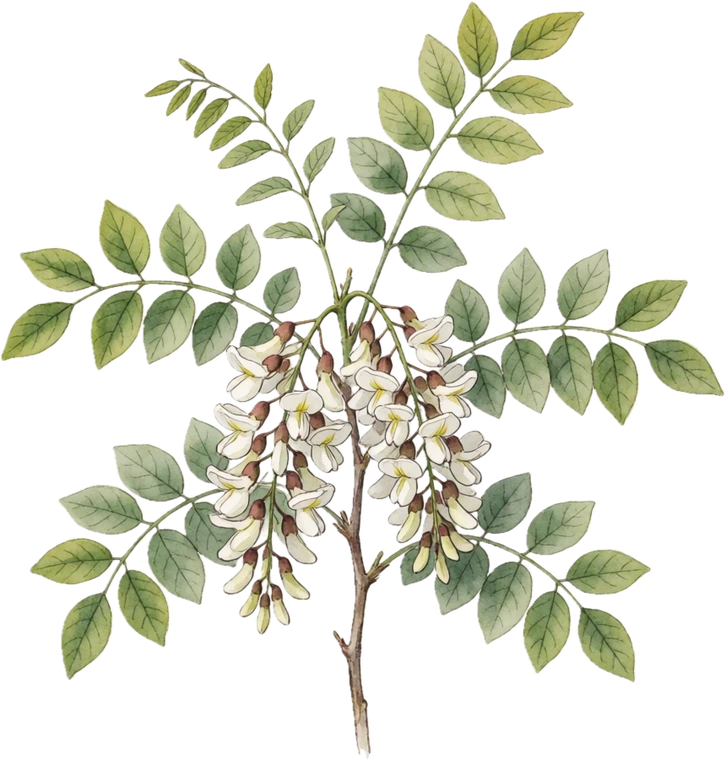
Black Locust grows fence posts faster than you'd believe — three to four feet a year toward rot-proof wood that outlasts the farmer who set it, thirty to fifty years in the ground. In late spring it drips with fragrant white bloom that bees turn into premium honey.
A nitrogen-fixing native pioneer, it rebuilds abused ground, shrugs off drought and deer, and coppices back from every cutting. Respect its terms: the flowers are the only edible part, and it suckers hard enough to be regulated in places. On acreage with a mower, it's a workhorse worth hiring.
 Full Sun
 Low water
 VERY FAST growth
 Deer-resistant
 Native to North America
 Attracts bees
From the print shop
Growing black locust? Hang it.
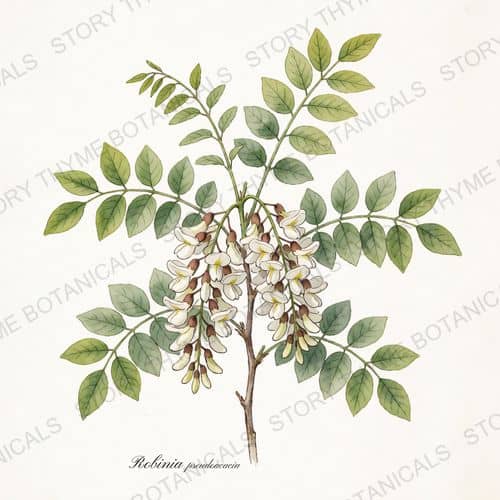
Our Plant Library collection carries black locust — Robinia pseudoacacia, print Nº 57, “Black Locust.”
526 designsfrom $12.99white or black backgroundmatte poster, unframed
Will it fruit where you are?
Enter your ZIP — we look up your USDA hardiness zone (2023 map) and check it against what black locust actually needs.
 Hardy inZones 4-8
Black Locust · Common problems
Common black locust problems

Pests
2 problems on file
- Locust Borer (the one real enemy — stressed trees)
- Leaf Miner

Diseases
1 problem on file
- Heart Rot in old wounds
Black Locust · Growing & propagation
Growing black locust
- Light
- Full Sun
- Water
- Very low
Thrives on abused land
 Soil
Soil- ANY
Builds soil it stands in (N-fixer) · pH 5.0 - 7.5
 Fertilizer
- Never
 Pruning
- Winter
Coppices ferociously — cut it and it returns ×5; manage as coppice woodlot or single stem.
 Spacing
- 20 ft
Timber rows tighter
How to plant & propagate black locust
- Propagate
- Seed (stratify), cuttings, or layering
Black Locust · Seasonal care & spray guidance
The black locust growing playbook
When to spray black locust
Growing season. Vigorous trees outgrow most issues.
Black Locust · Calculators & field guides
A little help in the garden.
Black Locust · Yearly calendar
The black locust year, month by month
Jan
PruneDecember to February
 BloomPrune
BloomMay to June
PruneDecember to February
What each band means
- Bloom — flowers open — pollinators working, frost on blossoms is the danger.
- Prune — shape it now — cuts heal cleanly and structure is visible.
These are the species' typical months — expect them a few weeks earlier in warm zones and later in cold ones. Watch the plant, not just the calendar.
Black Locust · Ecology & uses
Ecology & uses
Robinia pseudoacacia
Black Locust in the garden system
- Canopy layer tree
- N-fixer
- Nectary/insectary
 Attracts
- Bees
 Moisture
- Upland / dry
- Deer
- Resistant
A safer unfenced choice
- Origin
- Native to North America
What black locust is grown for
⚠ Toxic if eatenALL parts toxic EXCEPT the flowers (bark/seeds significantly; livestock caution)
 Use
Use- Fence posts
- Use
- Honey flow
- Use
- Soil building
- Use
- Coppice
Harvesting & storing black locust
FLOWERS are edible (fritters!); WOOD: fence posts that outlast the farmer (30-50 yrs in ground).
Edibility, identification, and traditional-use notes here are general reference — not medical or veterinary advice, and not a claim that any plant treats or prevents anything. Medicinal ratings record how strongly a plant features in herbal tradition, nothing more. Never eat or dose a plant you have not positively identified. More on how to use this library.
Black Locust · Varieties & cultivars
Choosing a black locust variety
'Purple Robe' (ornamental); straight species (posts + honey); 'Shipmast' (timber form)
Sources & plant identity
Know what you’re growing.
See where the knowledge comes from.
Black Locust
Robinia pseudoacacia
The plant, at a glance.
- Botanical name
- Robinia pseudoacacia
- Plant family
- Fabaceae
- Growth habit
- Tree · Perennial
- Origin
- Native to North America
- USDA plant symbol
- ROPS
- Invasive risk
- Low
Hardiness, size and timing vary with your cultivar, soil and climate.
Rooted in research.
University extension research, brought together with hands-on growing experience at Story Thyme Farms.
Questions
Black Locust questions, answered straight.
Do deer eat black locust?
Rarely — black locust is considered deer-resistant, which makes it one of the safer unfenced choices in deer country. Hungry deer in a hard winter test every rule, but it's a low-risk pick.
Is black locust safe for kids and pets?
No — treat it as toxic if eaten. ALL parts toxic EXCEPT the flowers (bark/seeds significantly; livestock caution) Site it accordingly if children or pets roam the garden. This is general reference, not medical or veterinary advice — call a vet or poison control if something has actually been eaten.
When do you harvest black locust?
FLOWERS are edible (fritters!); WOOD: fence posts that outlast the farmer (30-50 yrs in ground).
How do you propagate black locust?
Seed (stratify), cuttings, or layering.
Elsewhere
Where black locust sits in the library.
 Sassafras
 Eastern Hemlock
 Northern Catalpa
 American Sycamore