Burning Bush
Euonymus alatus
Family Celastraceae
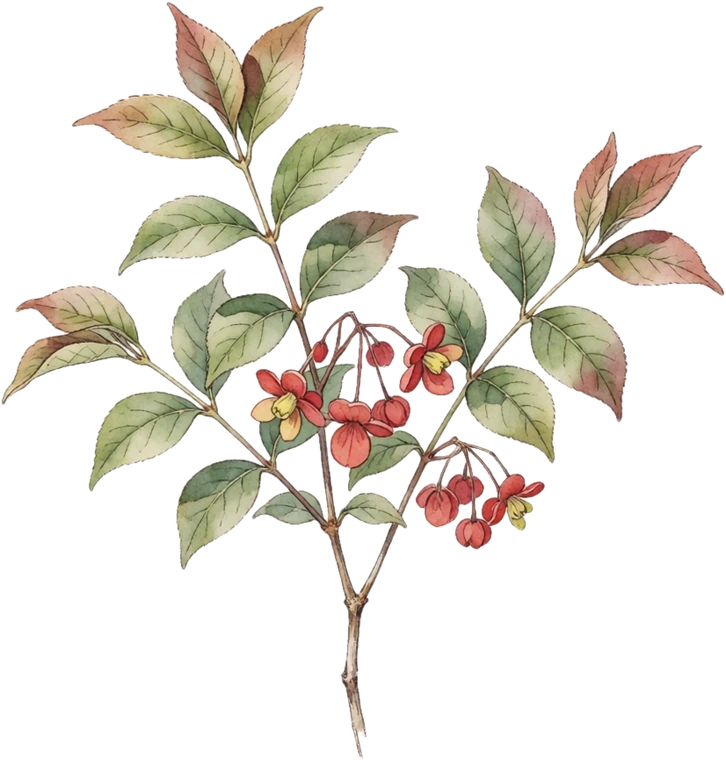
No shrub burns brighter in fall than burning bush — a fluorescent scarlet so intense it looks backlit, reliable enough to have made it a suburban fixture for generations. That famous fire is real. So, unfortunately, is its habit of escaping into the woods.
Birds ferry its berries into forests, and many states now ban or discourage it, so check yours before buying. The good news: native itea, oakleaf hydrangea, chokeberry, and fothergilla deliver comparable scarlet with a clear conscience. Get the fall fire — just choose the version the woods can live with.
⚠ Invasive in parts of the USCheck your state before planting.
 Full Sun to Part Shade
 Low water
 Moderate growth
From the print shop
Growing burning bush? Hang it.
Our Plant Library collection carries burning bush — Euonymus alatus, print Nº 78, “Burning Bush.”
526 designsfrom $12.99white or black backgroundmatte poster, unframed
Will it fruit where you are?
Enter your ZIP — we look up your USDA hardiness zone (2023 map) and check it against what burning bush actually needs.
 Hardy inZones 4-8
Burning Bush · Common problems
Common burning bush problems

Pests
2 problems on file
- Almost none
- Rabbits

Diseases
2 problems on file
- Almost none
- Crown Gall
Burning Bush · Growing & propagation
Growing burning bush
- Light
- Full Sun to Part Shade
Best red in sun
- Water
- Low-Moderate; adaptable
 Soil
Soil- Any · pH 6.0 - 7.5
 Fertilizer
- None needed
 Pruning
- Late Winter
Shear as a hedge or leave natural; very forgiving.
 Spacing
- 5-8 ft
How to plant & propagate burning bush
- Propagate
- Seed (stratify), cuttings, or layering
Burning Bush · Calculators & field guides
A little help in the garden.
Burning Bush · Yearly calendar
The burning bush year, month by month
Jan
No calendar activity is listed for this month.
PrunePruneFebruary to March
What each band means
- Prune — shape it now — cuts heal cleanly and structure is visible.
These are the species' typical months — expect them a few weeks earlier in warm zones and later in cold ones. Watch the plant, not just the calendar.
Burning Bush · Ecology & uses
Ecology & uses
Euonymus alatus
Burning Bush in the garden system
- Shrub layer shrub
 Attracts
- Birds
 Habitat
- Woodland
 Moisture
- Upland / dry
 Deer
Deer- Browsed
Protect young plants
 Origin
- Introduced
What burning bush is grown for
! Some parts toxic — see notesMildly toxic if eaten
 Use
Use- Fall color
Check legality
- Use
- Hedges
Harvesting & storing burning bush
Red berries feed birds (part of the invasive spread).
Edibility, identification, and traditional-use notes here are general reference — not medical or veterinary advice, and not a claim that any plant treats or prevents anything. Medicinal ratings record how strongly a plant features in herbal tradition, nothing more. Never eat or dose a plant you have not positively identified. More on how to use this library.
Burning Bush · Varieties & cultivars
Choosing a burning bush variety
'Compactus' (the common dwarf); species is bigger
Sources & plant identity
Know what you’re growing.
See where the knowledge comes from.
Burning Bush
Euonymus alatus
The plant, at a glance.
- Botanical name
- Euonymus alatus
- Plant family
- Celastraceae
- Growth habit
- Shrub · Perennial
- Origin
- Introduced
- USDA plant symbol
- EUAL13
- Invasive risk
- High; check your state
Hardiness, size and timing vary with your cultivar, soil and climate.
Rooted in research.
University extension research, brought together with hands-on growing experience at Story Thyme Farms.
Questions
Burning Bush questions, answered straight.
Is burning bush safe for kids and pets?
With care. Mildly toxic if eaten Site it accordingly if children or pets roam the garden. This is general reference, not medical or veterinary advice — call a vet or poison control if something has actually been eaten.
When do you harvest burning bush?
Red berries feed birds (part of the invasive spread).
How do you propagate burning bush?
Seed (stratify), cuttings, or layering.
Is burning bush invasive?
It can be invasive in some regions — give it room or a barrier, and check your state's invasive-species list before planting.
Elsewhere
Where burning bush sits in the library.
 Rose
Rose Hydrangea
 Common Lilac
 Forsythia