Tart Cherry
- Hardiness
- 4-7
- Mature size
- 12-18 ft
- Growth rate
- Moderate
- Chill requirement
- 1000-1200
- Pollination
- Self-Fertile
- Bloom season
- Early-Mid Spring
Family Rosaceae
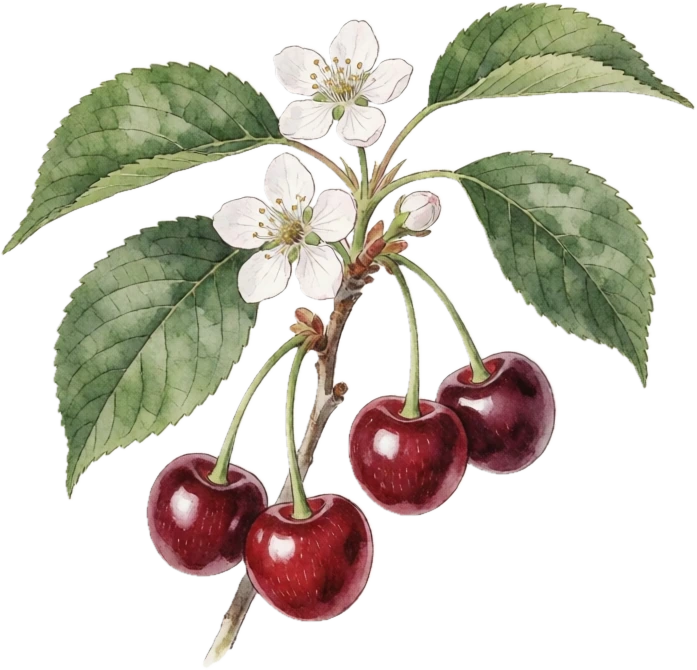
Cherry season splits into two camps: tart cherries, the true pie fruit that almost never appears fresh in stores, and sweet cherries for eating by the greedy handful. Either way, the flavor of tree-ripened fruit is the kind people plant whole trees to get back.
Blossom season is half the argument — a cherry in full spring flower stops the whole street. Which type you choose sets its size, hardiness, and pollination needs, so match the tree to your yard and settle the pie-versus-snacking question by planting for it.
 Full Sun
 Moderate water
 Excellent edible
Hardiness differs across the 2 cherrys in this guide, so pick yours and this panel answers for that one.
Tart Cherry
Cherry · Common problems
Nothing common enough to list for cherry. Watch it like anything else in the garden, and check the plants growing next to it.
Cherry · Which one do you have?
Where these differ, the key facts above give the span across all of them. Each type’s own figures, as the catalogue records them:
Cherry · Growing & propagation
Light Propagate
Seed won't come true
Cherry · Seasonal care & spray guidance
at bloom
2 jobs SprayingAt bloomSweet Cherry
Spray captan just before the first blossoms open and again at full bloom. No insecticide while it is in flower. Brown rot enters through the dying petals — the blossom spray is what prevents the fruit rot you would otherwise see in June.
SprayingAt bloomTart CherrySpray captan just before the first blossoms open and again at full bloom. Add no insecticide while the tree is flowering. Brown rot enters through the dying petals first, then moves into the fruit later in the season.
as the fruit sets
3 jobsSprayingAfter fruit setSweet CherryStart at petal fall with chlorothalonil, then keep the leaves covered with captan every 14 days through harvest. Leaf spot takes sweet cherry too, not just tart. Infection needs only about five hours of leaf wetness at 63-68F, so every spring rain infects unprotected new leaves.
SprayingAt petal fallTart CherryAs the petals drop and the first leaves unfold, spray chlorothalonil for leaf spot. Repeat at shuck split, about two weeks later. The fungus infects young leaves through their undersides during rain, and early lesions produce the spores that drive the whole season.
SprayingAfter fruit setTart CherryKeep the leaves covered with captan every 14 days, about five sprays, carrying through to harvest. Leaf spot needs only about five hours of leaf wetness at 63-68F to infect, so every spring rain finds unprotected new leaves.
the growing season
2 jobs PruningIn July and AugustSweet Cherry
After harvest, remove crossing or shaded limbs and keep the leader or scaffold structure manageable. Sweet cherries often heal best in warm dry weather and need light management to keep picking height reasonable.
PruningIn July and AugustTart CherryAfter fruiting, remove dead or crowded wood and keep enough young lateral growth for next year's crop. Summer pruning after harvest lowers canker risk compared with wet dormant pruning in many regions.
as it ripens, and picking
6 jobs What to watch forAs fruit ripensSweet Cherry
Begin weekly sprays as soon as the fruit starts to lose its green, rotating insecticide groups, and never stretch past 7 days. Pick promptly and completely; bag the culls. The female saws into sound ripening fruit and lays eggs under the skin, and a generation can finish in 8-14 days, so numbers escalate fast.
What to watch forAs fruit ripensTart CherryThe moment the fruit starts losing its green, begin weekly sprays and rotate insecticide groups. Fine netting plus prompt, complete picking cuts the spraying. Unlike ordinary fruit flies, the female SWD saws into sound, undamaged ripening fruit and lays eggs under the skin — so maggots grow inside fruit that looks perfect.
SprayingBefore harvestSweet CherrySpray a fungicide 3 weeks before you expect to pick and again a week before harvest. If it keeps raining, add one or two more at 5-7 day intervals. Brown rot decays mature fruit very fast and spreads from spore masses on the rotted ones, so a crop can collapse in the fortnight before picking.
SprayingBefore harvestTart CherrySpray a fungicide about 3 weeks before you expect to pick, and again a week before harvest. Brown rot moves fastest as sugars rise near maturity, and each rotted cherry becomes a spore source for the ones touching it.
 ProtectionAs fruit ripensSweet Cherry
Get netting over the tree as the fruit begins to ripen, before it colours. Noisemakers, scarecrows, pie plates and plastic snakes do little. Sweet cherry is a favourite of several bird species, and a flock can take the entire crop in a single day once it ripens.
ProtectionAs fruit ripensTart CherryGet netting on as the fruit begins to ripen. Noisemakers, scarecrows, pie plates and plastic snakes do not work. Birds can take a ripening cherry crop faster than any other loss on the tree; a physical barrier is the only thing that reliably stops them.
autumn, and putting it to bed
2 jobsSprayingAfter harvestSweet CherryTwo weeks after picking, spray captan for leaf spot; in a wet year continue up to three weeks past harvest at 7-10 day intervals. Losing leaves early leaves the tree with poor stored reserves, so it enters winter unprepared and is prone to winter injury and dieback.
SprayingAfter harvestTart CherryTwo weeks after harvest, spray captan again. In a wet year keep protecting the leaves up to three weeks past picking, every 7-10 days. The tree must hold its leaves into September to build the reserves that set next year's crop and harden it for winter. Defoliated early, it goes into winter starved and comes out with dieback.
Cherry · Calculators & field guides
Cherry · Yearly calendar
No calendar activity is listed for this month.
HarvestHarvestJune to July
These are the species' typical months — expect them a few weeks earlier in warm zones and later in cold ones. Watch the plant, not just the calendar.
Cherry · Ecology & uses
Moisture Deer
DeerProtect young plants
 Origin
! Some parts toxic — see notesPits toxic if crushed
Edible valueEdibility, identification, and traditional-use notes here are general reference — not medical or veterinary advice, and not a claim that any plant treats or prevents anything. Medicinal ratings record how strongly a plant features in herbal tradition, nothing more. Never eat or dose a plant you have not positively identified. More on how to use this library.
Cherry · Varieties & cultivars
Compare hardiness, mature size, growth habit, days to maturity and intended use in the seller’s variety description. Where this guide covers several plant types, start with the type you want to grow, then choose a variety for your season and space.
Sources & plant identity
Hardiness, size and timing vary with your cultivar, soil and climate.
University extension research, brought together with hands-on growing experience at Story Thyme Farms.
 Iowa State University
 Oregon State University
 Penn State
 University of California ANR
 University of Illinois
 University of Minnesota
 University of Saskatchewan Fruit Program
 University of Wisconsin-Madison
 Utah State University
 Washington State University
 University of Missouri
Publisher marks identify sources, not sponsorship or endorsement.
Cherry questions, answered straight.
With care. Pits toxic if crushed Site it accordingly if children or pets roam the garden. This is general reference, not medical or veterinary advice — call a vet or poison control if something has actually been eaten.
Grafted, or from cuttings/layering (seed won't come true).
Where cherry sits in the library.
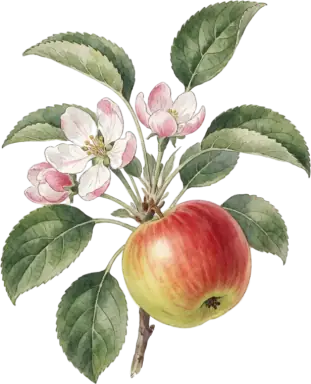 Apple
Apple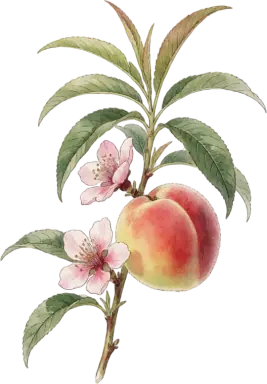 Peach
Peach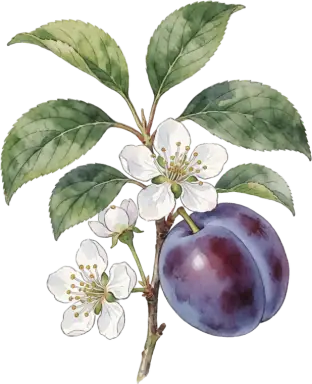 Plum
Plum Pluot
Pluot