
Cocktail Tree
Malus spp. / Prunus spp. / Pyrus spp. / Citrus spp.
Family Variable by group
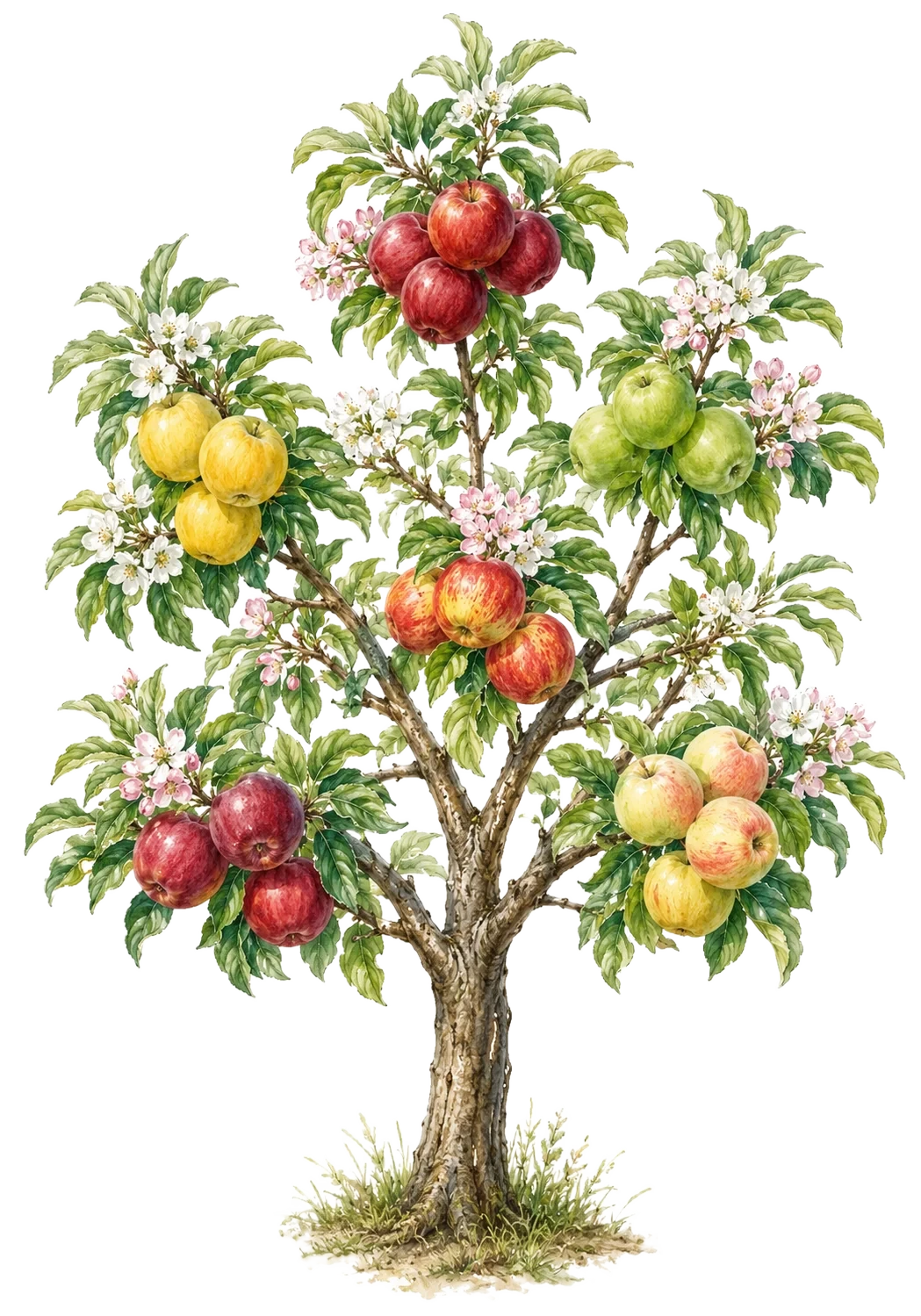
One trunk, several fruits: a cocktail tree carries multiple grafted varieties on a single rootstock, so a lone planting hole can ripen an orchard's worth of different harvests. For a small yard that wants variety more than volume, the cocktail tree is the whole argument in one silhouette.
Bloom and harvest arrive in waves as each graft takes its turn, keeping bees busy from spring into summer. Know what each branch carries — timing, pollination, and even size follow the grafts — then give it full sun and enjoy owning the most interesting tree on the block.
 Full Sun
 Moderate water
 Variable per graft growth
 Excellent edible
 Attracts bees
- Needs a pollination partner
From the print shop
Growing cocktail tree? Hang it.
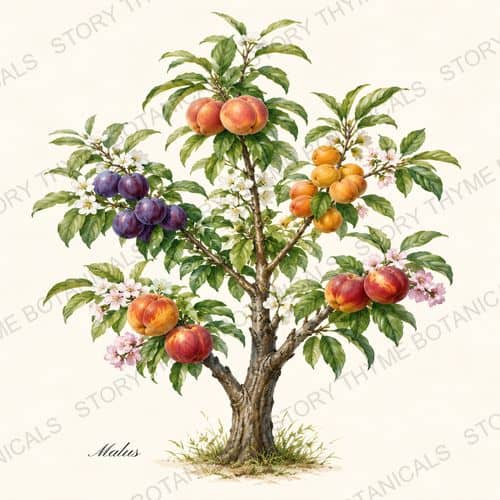
Our Plant Library collection carries cocktail tree — Malus, print Nº 120, “Cocktail Tree.”
526 designsfrom $12.99white or black backgroundmatte poster, unframed
✓
Will it fruit where you are?
Enter your ZIP — we look up your USDA hardiness zone (2023 map) and check it against what cocktail tree actually needs.
 Hardy inZones Variable by group and graftPollinationPartner needed
Cocktail Tree · Common problems
Common cocktail tree problems
Pests, diseases and weather to keep an eye on.

Pests
1 problem on file
- Varies by graft

Diseases
2 problems on file
- Varies by graft
- Peach Leaf Curl
Pollination
Poor pollination → low fruit set (plant a partner)
Cocktail Tree · Grafted trees
Four genera
Cocktail trees are several plants on one root.
Cocktail trees come in Malus (apple and crabapple), Prunus (stone fruit), Pyrus (pear), and Citrus versions.
Compatibility depends on the exact species combination and rootstock, not genus alone. A nursery label or seller record is the safest evidence.
- One root system, several identities. Rootstock and site conditions shape the whole tree, while each graft can carry different care requirements.
- Balance vigor carefully. Compare the grafts before pruning. Reduce an overly vigorous branch without applying one fruit type's pruning method to every graft.
- Label every graft. Branches can be difficult to distinguish while dormant, so durable labels and a written graft inventory prevent guesswork.
- Check pollination by cultivar. Several varieties on one trunk do not guarantee compatible bloom timing or fertility. A partner tree may still be needed.
- Each graft keeps its own bloom, harvest, pruning, and disease clock. Track every known graft so its care follows its crop type instead of a universal cocktail-tree schedule.
Cocktail Tree · Growing & propagation
Growing cocktail tree
Light, water, soil, propagation and the season’s jobs.
What it needsThe details
- Light
- Full Sun
- Water
- Varies by rootstock, climate, and graft load
 Soil
Soil- Varies by rootstock
Well-drained soil is a common baseline · pH Variable
 Fertilizer
- Base feeding on rootstock, vigor, soil test, and the needs of the grafted crops
 Pruning
- Variable by graft
Keep graft vigor balanced and use the pruning method appropriate to each recorded fruit type.
- Spacing
- Varies by rootstock
How to plant & propagate cocktail tree
- Propagate
- Grafted, or from cuttings/layering
Seed won't come true
Cocktail Tree · Harvest & keeping
What you get from cocktail tree
How long before it bears, how much it gives, how you know it is ready, and how long it keeps once picked.
 Years to first harvest
- 2 to 4 years
- Typical yield
- 20–60 lbs
- What you eat
- Fruit
- How to tell it is ready
- Each grafted variety ripens on its own schedule
Check limb by limb
- How long it keeps
- 1-3 weeks refrigerated
Cocktail Tree · Calculators & field guides
A little help in the garden.
Calculators for the figures. Field guides for the hands-on work.
Cocktail Tree · Yearly calendar
The cocktail tree year, month by month
What cocktail tree asks for, month by month.
No fixed season calendar for cocktail tree — its care follows conditions, not the calendar.
Cocktail Tree · Ecology & uses
Ecology & uses
What it does for the garden, and what it is grown for.
Malus spp. / Prunus spp. / Pyrus spp. / Citrus spp.
Cocktail Tree in the garden system
- Understory layer tree
- Keystone: Keystone — hosts 300+ caterpillar species
 Attracts
- Bees
- Moisture
- Facultative / average
 Deer
Deer- Browsed
Protect young plants
What cocktail tree is grown for
✓ Commonly eatenVaries by graft; identify each fruit before use
- Use
- Multiple fruit cultivars from one planting footprint
- Edible value
- 4/5
Harvesting & storing cocktail tree
Variable per graft.
Edibility, identification, and traditional-use notes here are general reference — not medical or veterinary advice, and not a claim that any plant treats or prevents anything. Medicinal ratings record how strongly a plant features in herbal tradition, nothing more. Never eat or dose a plant you have not positively identified. More on how to use this library.
Cocktail Tree · Varieties & cultivars
Choosing a cocktail tree variety
Match the plant to your climate, season and available space.
Malus; Prunus; Pyrus; Citrus multi-graft trees
Sources & plant identity
Know what you’re growing.
See where the knowledge comes from.
Cocktail Tree
Malus spp. / Prunus spp. / Pyrus spp. / Citrus spp.
The plant, at a glance.
- Botanical name
- Malus spp. / Prunus spp. / Pyrus spp. / Citrus spp.
- Plant family
- Variable by group
- Growth habit
- Tree · Perennial
- USDA plant symbol
- PRUNU
- Invasive risk
- Low
Every garden is different.
Hardiness, size and timing vary with your cultivar, soil and climate.
Rooted in research.
University extension research, brought together with hands-on growing experience at Story Thyme Farms.
Questions
Cocktail Tree questions, answered straight.
Why isn't my cocktail tree fruiting?
Most often: it has no genetically distinct partner nearby. Cocktail Tree can't pollinate itself — varies by graft; some cultivars require a compatible pollination partner. Plant a second, unrelated one nearby; two different cultivars, or a cultivar plus a seedling, is the classic pairing.
Is cocktail tree safe for kids and pets?
Cocktail Tree is commonly eaten and isn't considered toxic, but "commonly eaten" isn't a guarantee for any particular person or animal — allergies, quantity, and which part you eat all matter. One caveat on this one: Varies by graft; identify each fruit before use. Never eat a plant you haven't positively identified, and check with a vet before letting pets or livestock graze anything new.
When do you harvest cocktail tree?
Variable per graft.
How do you propagate cocktail tree?
Grafted, or from cuttings/layering (seed won't come true).
Elsewhere
Where cocktail tree sits in the library.
 Apple
Apple Peach
Peach Plum
Plum Pluot
Pluot