Meyer Lemon
- Mature size
- 4-8 ft in pots
- Bloom season
- Year-round flushes, heavenly scent
- Harvest season
- Fruit ripens over 6-9 months; pick when fully yellow-orange
Family Rutaceae
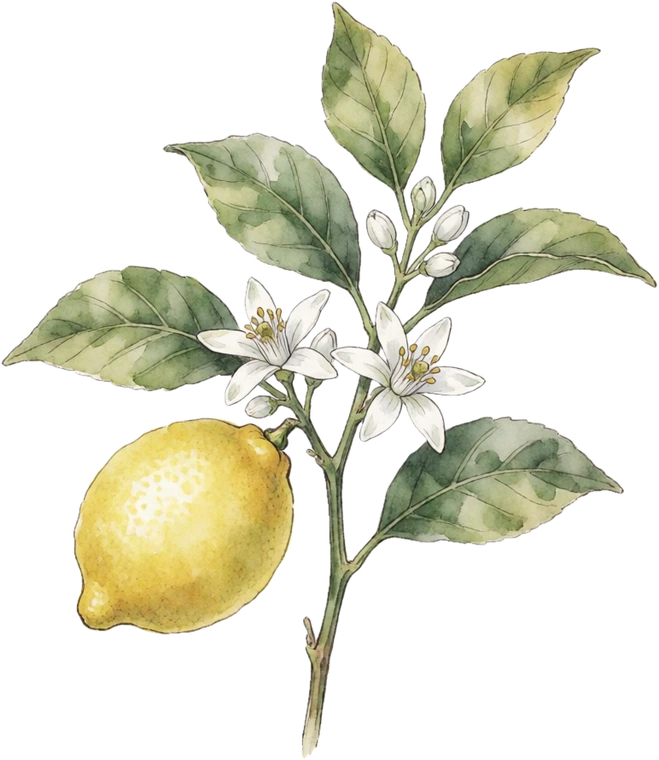
A lemon tree refuses to follow the calendar: it can flower and fruit in every season at once, blossoms perfuming the air while last season's lemons ripen alongside. Whether you grow a classic tart lemon or the sweeter, thin-skinned Meyer, the kitchen difference between store-bought and branch-picked is not subtle.
Self-fertile, so one tree carries the whole show — planted out in zones 9 to 11, or potted anywhere else to summer outdoors and winter at a bright window, where Meyer is famously the easier keeper. Few plants repay a sunny corner with actual groceries; this one does, year-round. Make room for it.
 Moderate water
 Excellent edible
 None winter chill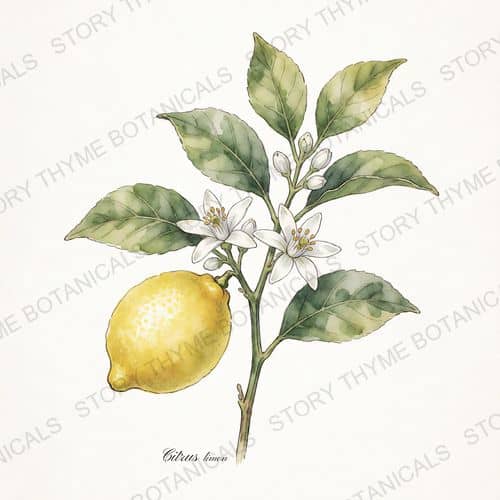
From the print shop
Our Plant Library collection carries lemon — Citrus limon, print Nº 270, “Lemon.”
526 designsfrom $12.99white or black backgroundmatte poster, unframed
Will it fruit where you are?
Enter your ZIP — we look up your USDA hardiness zone (2023 map) and check it against what lemon actually needs.
 Life cyclePerennial zones 9–11, annual elsewhere
 PollinationSelf-fertile
Lemon · Common problems
Nothing common enough to list for lemon. Watch it like anything else in the garden, and check the plants growing next to it.
Lemon · Which one do you have?
Where these differ, the key facts above give the span across all of them. Each type’s own figures, as the catalogue records them:
Lemon · Growing & propagation
 Pruning
 Propagate
Seed won't come true
Lemon · Harvest & keeping
 Years to first harvestTypical yieldWhat you eat
 How to tell it is ready
Holds well on the tree
How long it keepsLemon · Seasonal care & spray guidance
winter, before growth starts
3 jobs FeedingIn February, March, September and October
Use a fertilizer labelled for citrus and follow the bag rate. With a slow- or controlled-release product, two applications carry the year: one in February or March before bloom and one around September or October. If you use a dry soluble fertilizer instead, split it into four smaller feedings. Spread it in the root zone rather than piled against the trunk. A young tree needs about a quarter pound of a 6-6-6 type product every three to four months, stepping up as it grows; a mature bearing tree takes roughly 3 to 4 pounds per application, two to three times a year. Citrus is evergreen and pushes growth in flushes rather than one spring surge, so it draws nutrients across a long season - but nitrogen delivered right before bloom is what funds flowering and fruit set.
PruningIn February and MarchOnce hard freezes are past and before the spring flush pushes, prune only lightly - enough to hold the tree near 7 to 10 feet tall and 10 to 15 feet wide and to take out dead, crossing, or damaged wood. Remove every sprout arising below the bud union at ground level, and cut out water sprouts in the canopy. Resist the urge to head the tree back hard. Lemons bear most of their fruit on the canopy periphery, so lightly pruned trees produce more fruit than heavily pruned ones - every branch you shorten is fruiting wood you removed. Suckers below the bud union come from the rootstock, not your variety, and will never make the lemon you planted; water sprouts are soft succulent growth that citrus leafminer moths prefer to lay eggs on.
 ProtectionIn winter
Before cold arrives, mound clean, weed-free soil around the trunk as high as you reasonably can - up into the scaffold limbs if possible, but at minimum covering the graft union. Water early in the day ahead of a freeze so bare, moist soil can soak up heat and radiate it back overnight, and pull mulch away from under the tree for the winter because it blocks that heat. If you drape a cover, use cloth rather than plastic and take it all the way to the ground to trap the rising heat, then remove it as soon as the cold passes. Remove the soil bank once freeze danger ends, working carefully so the shovel never wounds the trunk. Lemon is the most cold-tender of the common citrus: flowers and young fruit die near 29F, leaves drop at 22 to 24F, and wood is damaged around 20F. Soil is a good insulator, so banking protects the graft union - even if the top is killed, the grafted variety can regrow rather than resprouting as worthless rootstock.
early spring
1 job What to watch forIn spring
Starting with the spring flush and repeating monthly through fall, walk slowly around the tree and inspect the newest forming leaves. Look for twisted or notched leaves, adults feeding head-down with the body cocked up at a 45-degree angle, and nymphs excreting waxy tubules that look like a curly tube with a bulb on the end. Honeydew and black sooty mold are the giveaway from a distance. Report suspected psyllids or greening symptoms to your county agricultural commissioner or state agriculture department. The Asian citrus psyllid vectors huanglongbing, or citrus greening, which infects the tree's phloem, kills the tree in roughly 5 to 8 years, and has no cure. The psyllid can only lay eggs and develop on new flush, so the flush is the one place and time scouting actually finds it.
as the fruit sets
2 jobsWateringAfter fruit setWater from flowering through fruit development, delivering it to the soil rather than over the canopy. A newly planted tree wants water every other day the first week, then once or twice weekly for a couple of months. A tree four years or older needs water only during prolonged dry periods. Flowering through fruit sizing is when the tree is actually building the crop and when a water deficit costs fruit, but wetting the foliage increases disease problems - and citrus roots resent staying wet, so over-watering an established tree causes decline rather than helping it.
 SprayingAt petal fall
As petals drop and the tiny fruit begins to size, apply one to two copper-based fungicide sprays at early fruit development. Cover the newly emerging leaves and young fruit, which are the tissues at risk. Citrus scab is the major fruit disease of lemon, raising corky wart-like formations on the rind. The fungus only infects tissue while it is young and expanding - once the fruit rind hardens it can no longer be infected, so a spray applied after the window closes protects nothing.
the growing season
1 jobWhat to watch forIn summerExpect silvery serpentine mines and curled leaves on summer and fall flush. On a mature tree, note it and do nothing - the damage is cosmetic and the tree carries the crop regardless. Instead, remove water sprouts that give the moths a place to lay, and hold off nitrogen that would force more tender flush. Only on a young tree, where leaf loss genuinely costs growth, consider spinosad. Leafminer infestations on mature trees rarely if ever require insecticide treatment, and the products available for backyard trees are not very effective. Many leave residues that kill the Cirrospilus and Pnigalio parasitic wasps already suppressing the leafminer, so spraying reliably makes next year's infestation worse than doing nothing.
as it ripens, and picking
1 jobHarvestingAt harvestLemons are mature and worth picking once they reach about 1.5 to 2 inches in diameter, even while the peel is still light green. Picked at that stage, they cure at room temperature until the peel turns yellow and the juice content rises. If you would rather pick tree-ripe, wait for full yellow and a fruit that feels heavy for its size. Clip or twist gently rather than yanking. Peel color is a poor ripeness signal on lemon - a fruit can be fully juicy while still green, and lemons hold on the tree in overlapping flushes rather than ripening as one crop, so size and weight tell you more than color does.
Lemon · Calculators & field guides
Lemon · Yearly calendar
No calendar activity is listed for this month.
PrunePruneMarch to May
These are the species' typical months — expect them a few weeks earlier in warm zones and later in cold ones. Watch the plant, not just the calendar.
Lemon · Ecology & uses
 Deer
DeerProtect young plants
✓ Commonly eatenSkin oils mildly irritating to pets
Edible valueEdibility, identification, and traditional-use notes here are general reference — not medical or veterinary advice, and not a claim that any plant treats or prevents anything. Medicinal ratings record how strongly a plant features in herbal tradition, nothing more. Never eat or dose a plant you have not positively identified. More on how to use this library.
Lemon · Varieties & cultivars
Named varieties of lemon differ in winter-chill needs, ripening time, hardiness, and whether they set fruit on their own — pick one that fits your climate.
6 varieties
Also known as Meyer, Improved Meyer, Citrus x meyeri
Self-fertile
sweet-tart, low-acid, floral; a lemon-mandarin/orange hybrid — The hardiest and most container-friendly lemon and a top choice for cold-climate growers who overwinter it indoors.
Story Thyme Farms may earn a small commission from these links, at no cost to you — it never changes what we recommend.
Also known as Four Seasons lemon, Quatre Saisons
Self-fertile
classic tart high-acid grocery lemon, juicy — The standard true lemon for warm regions, nearly thornless and everbearing (hence the 'Four Seasons' trade name), but the least cold-tolerant of the true lemons.
Story Thyme Farms may earn a small commission from these links, at no cost to you — it never changes what we recommend.
Self-fertile
classic tart high-acid lemon, heavy juice — More tolerant of heat, cold, and wind than Eureka, making it the better true lemon for exposed or borderline sites despite its heavy thorns.
Story Thyme Farms may earn a small commission from these links, at no cost to you — it never changes what we recommend.
Also known as Bearss Sicilian, Sicilian lemon
Self-fertile
very juicy, aromatic, high-oil rind prized for zest — A Florida-selected true lemon (Lutz, FL) favored in the humid Southeast for its heavy juice and fragrant, oil-rich rind.
Story Thyme Farms may earn a small commission from these links, at no cost to you — it never changes what we recommend.
Also known as American Wonder lemon
Self-fertile
tart, thick bumpy rind; a citron-lemon hybrid, novelty size — Grown mainly as a novelty and patio plant for its grapefruit-sized fruit; it is more frost-tender than standard lemons.
Story Thyme Farms may earn a small commission from these links, at no cost to you — it never changes what we recommend.
Also known as Pink Lemonade lemon, Eureka Pink Variegated
Self-fertile
tart with pink-tinged flesh; green-striped young fruit — An ornamental Eureka sport with cream-variegated leaves and striped fruit, chosen as much for looks as for its pink-fleshed lemons.
Story Thyme Farms may earn a small commission from these links, at no cost to you — it never changes what we recommend.
Sources & plant identity
Hardiness, size and timing vary with your cultivar, soil and climate.
University extension research, brought together with hands-on growing experience at Story Thyme Farms.
 Texas A&M AgriLife
 University of California, Riverside
 University of California ANR
 University of Florida
 University of Georgia
 ASPCA
ASPCA University of Wisconsin-Madison
Publisher marks identify sources, not sponsorship or endorsement.
Lemon questions, answered straight.
No — lemon is self-fertile, so a single plant will set a crop. A second one usually improves yields, but it isn't required.
Lemon is commonly eaten and isn't considered toxic, but "commonly eaten" isn't a guarantee for any particular person or animal — allergies, quantity, and which part you eat all matter. One caveat on this one: Skin oils mildly irritating to pets. Never eat a plant you haven't positively identified, and check with a vet before letting pets or livestock graze anything new.
Grafted, or from cuttings/layering (seed won't come true).
Where lemon sits in the library.
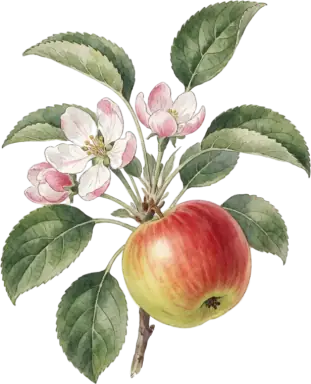 Apple
Apple Peach
Peach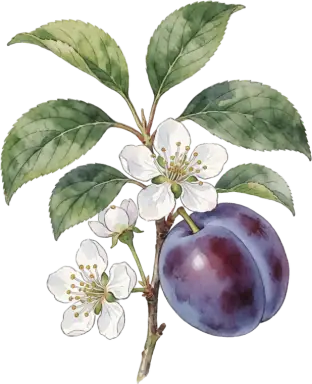 Plum
Plum Pluot
Pluot