 HarvestingIn June, July and August
Harvest skullcap flowering tops
Cut the top third of flowering stems and dry with airflow. Flowering tops are the traditional harvest and regrow from moist crowns.
Scutellaria lateriflora
Family Lamiaceae
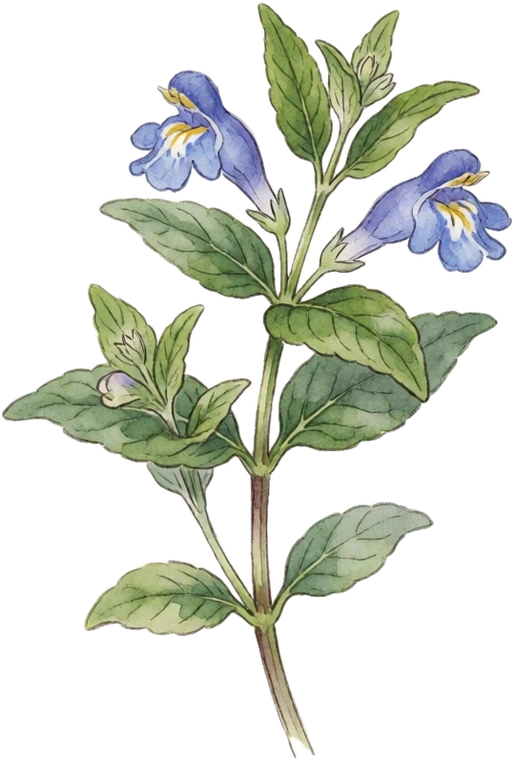
Herbalists have long prized skullcap for a calming evening tea, and the true source is this modest native — a moist-meadow mint relative stitched with small blue flowers through summer. Growing your own also solves the herb trade's old problem: knowing your skullcap is actually skullcap.
It belongs where the ground holds moisture — rain-garden edges, damp meadow plantings — spreading gently by rhizome and feeding bees along the way. As with any traditional nervine, respect it: verified plants, sensible use. Give the damp edge of your garden an herb with history.
 Full Sun to Part Shade
 Moderate water
 Moderate growth
 Native to North America
 Attracts bees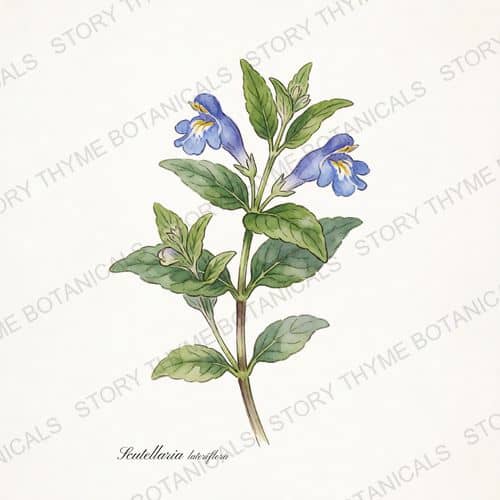
From the print shop
Our Plant Library collection carries skullcap — Scutellaria lateriflora, print Nº 434, “Skullcap.”
526 designsfrom $12.99white or black backgroundmatte poster, unframed
Will it fruit where you are?
Enter your ZIP — we look up your USDA hardiness zone (2023 map) and check it against what skullcap actually needs.
 Hardy inZones 4-8
Skullcap · Common problems

1 problem on file
Almost none
1 problem on file
Powdery Mildew (minor)Skullcap · Growing & propagation
LightWater Soil
Soil Fertilizer
 Pruning
Cut old stems in spring; contain by pulling wandering rhizomes if needed.
 SpacingPropagate
Skullcap · Seasonal care & spray guidance
Growing season. Airflow helps in humid sites.
the growing season
1 jobHarvestingIn June, July and AugustCut the top third of flowering stems and dry with airflow. Flowering tops are the traditional harvest and regrow from moist crowns.
Skullcap · Calculators & field guides
Skullcap · Yearly calendar
No calendar activity is listed for this month.
 BloomPruneHarvest
BloomJune to August
PruneMarch to May
HarvestJune to August
These are the species' typical months — expect them a few weeks earlier in warm zones and later in cold ones. Watch the plant, not just the calendar.
Skullcap · Ecology & uses
Scutellaria lateriflora
 Attracts
 HabitatMoisture
 Deer
DeerProtect young plants
Origin! Some parts toxic — see notesCaution: medicinal nervine tea; use verified material and avoid pregnancy or liver-risk combinations
Traditional useUseUseUseEdible valueTraditional use ratingFlowering tops in summer for traditional tea.
Edibility, identification, and traditional-use notes here are general reference — not medical or veterinary advice, and not a claim that any plant treats or prevents anything. Medicinal ratings record how strongly a plant features in herbal tradition, nothing more. Never eat or dose a plant you have not positively identified. More on how to use this library.
Skullcap · Varieties & cultivars
Species
Sources & plant identity
Scutellaria lateriflora
Hardiness, size and timing vary with your cultivar, soil and climate.
University extension research, brought together with hands-on growing experience at Story Thyme Farms.
Publisher marks identify sources, not sponsorship or endorsement.
Skullcap questions, answered straight.
With care. Caution: medicinal nervine tea; use verified material and avoid pregnancy or liver-risk combinations Site it accordingly if children or pets roam the garden. This is general reference, not medical or veterinary advice — call a vet or poison control if something has actually been eaten.
Flowering tops in summer for traditional tea.
Division or seed.
Where skullcap sits in the library.


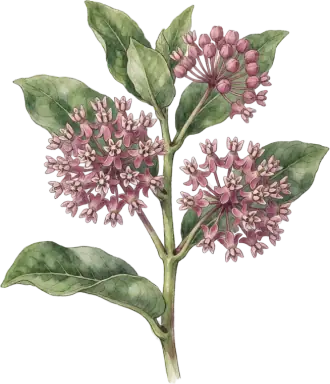 Common Milkweed
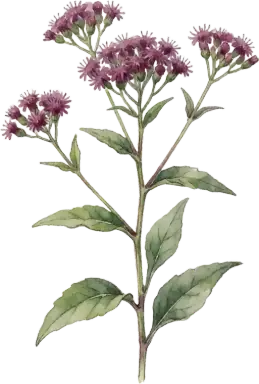 Ironweed
 Cup Plant
 Helen's Flower (Sneezeweed)