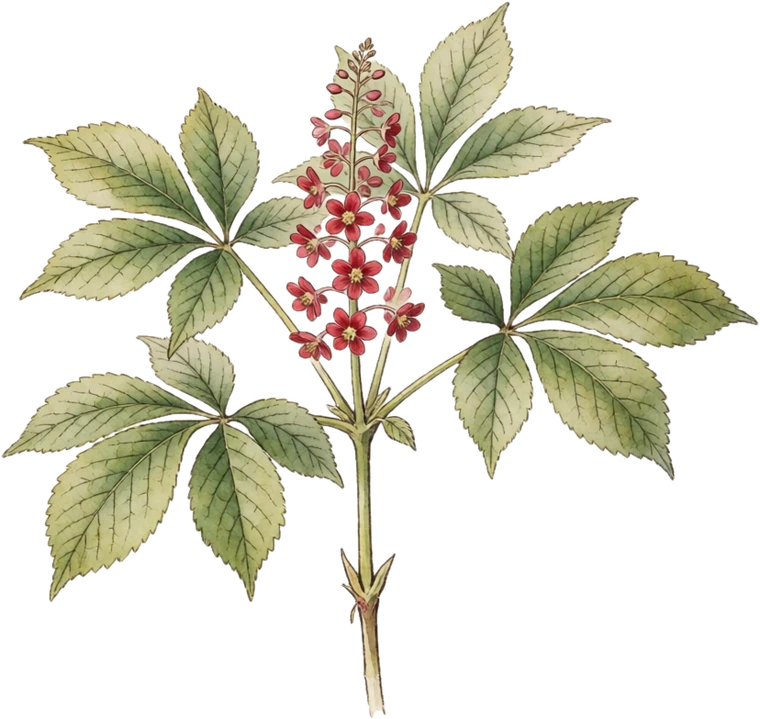
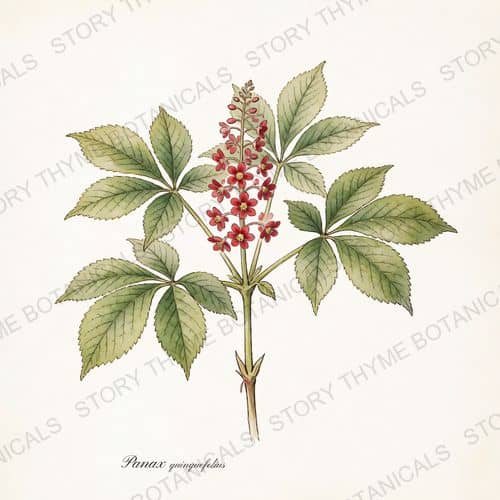
The illustrated growing guide
American Ginseng
Panax quinquefolius
Family Araliaceae
Est. zones 3-7

The highest-value legal crop an eastern woodlot can grow — wild-simulated roots command hundreds per dried pound after a decade's patience. An ag degree + shaded acreage + this seed = an actual business, not a hobby. Check your state's regulations; plant where nobody wanders.

From the print shop
Growing american ginseng? Hang it.
Our Medicinal Herbs collection carries american ginseng — Panax quinquefolius, print Nº 11, “Ginseng.”
16 designsfrom $21.99white or black groundmatte poster, unframed
I
Overview
Will american ginseng suit your garden, and what goes wrong.
Will it fruit where you are?
Enter your ZIP — we look up your USDA hardiness zone (2023 map) and check it against what american ginseng actually needs.
American Ginseng at a glance
Common american ginseng problems
- Root poachers (genuinely — plant discreetly)
- Slugs on seedlings
- Alternaria Blight in dense plantings
II
Growing
Light, water, soil, propagation and the season’s jobs.
How to grow american ginseng: light, water & soil
How to plant & propagate american ginseng
When to spray american ginseng
Growing season. Wild-simulated spacing prevents most disease.
The american ginseng growing playbook
Field-tested instructions for every job american ginseng asks of you, compiled from university extension guidance — in the order the season brings them.
Sowing
Sow stratified seed in fall, before the ground freezesOct – Nov
Plant stratified ginseng seed in October or November - any time from mid-August to mid-December works as long as the ground has not frozen. Kick the leaves aside, sow each seed half an inch to an inch deep with a dibble or knife blade, space seeds 14 to 18 inches apart, and pull the leaves back over the spot. Keep seed refrigerated between 36 and 50 degrees, moist and aerated, until you plant it. Ginseng seed stays dormant 18 to 20 months and only germinates the second spring after the berries ripened, so it has to sit in cold, moist ground through two winters to break dormancy. Sparse spacing is not laziness - it keeps air moving between the leaves, which is the main defense against blight.
⚠ Buy from a reputable dealer and prefer local seed. Improperly stratified cheap seed germinates poorly, and imported seed can harm the fitness of nearby wild populations.
Replant the red berries where you dug
Before you take any root, strip the ripe berries off the plant and plant those seeds about an inch deep right in the immediate vicinity of the plant you are digging. A mature plant carries 60 to 100 seeds. Never dig a plant whose fruit is still green. A fruit is not fully ripe until it is completely red, and green fruit holds immature seed that will never germinate - digging then simply removes the plant and its whole future line from the woods. Replanting local seed on the spot is what keeps a patch self-propagating and keeps the local genetics intact.
⚠ Most states require replanting seed from harvested plants, and harvesting before the seed ripens violates state regulations. Check your own state's ginseng rules - they differ.
Mulching
Return leaf litter over the bed, but keep it under two inches
After the tops die back, make sure the planting is covered with forest leaf litter to protect and insulate the seed and roots through winter. Keep the layer under two inches thick so seedlings can push through in spring, and resist the urge to pile it deeper. Leaf litter is what a wild ginseng seed overwinters under, and it holds the moisture the seed needs through its long dormancy. Deeper than two inches and the seedlings cannot emerge, and heavy mulch actually raises damping-off, which collapses first-year stems in a cold wet spring - a light cover lowers it.
Swap out blighted leaf litter for clean mulch
If blight showed up in the patch this year, rake the old leaf litter away from around the infected plants once the tops have died back and replace it with a sterile substitute. Do this in fall or winter, while the plants are dormant. Alternaria spores overwinter in the fallen leaf litter, which is why the disease reappears in the same spots each spring. Taking the infested litter away removes the inoculum that would otherwise be waiting for next year's new growth.
What to watch for
Walk the patch for blight, and pull sick plants out
Check the planting regularly once the tops are up, looking for dark oily or yellow spots on stems and leaves that turn light brown and grow to two inches with yellow margins, and for wilted, droopy foliage with red or brown edges that signals root rot. Dig out and remove diseased plants immediately, whole. Do not step on foliage, and never walk from a diseased patch into a healthy one. Alternaria blight spreads by wind within a few weeks and overwinters in the leaf litter, so it comes back to the same ground year after year unless you break the cycle. Root rot is worse - if you leave an infected root in the soil it reinfects the site next season, and badly infected ground should not be replanted at all. You are also the vector: spores ride from plant to plant on boots.
⚠ Keep visits purposeful rather than frequent - walking the patch constantly spreads pathogens between plants and between patches.
Spraying
Alternaria blight: chlorothalonil only if a garden planting is losing leaves
In a tended garden planting where blight is actually building, spray chlorothalonil at 7- to 10-day intervals through the warm humid stretch. Alternate it with a different mode of action - iprodione or fluazinam are both registered on ginseng - rather than running chlorothalonil straight through. In a wild-simulated woodland patch, skip this and manage blight with spacing and airflow instead. Alternaria panax germinates on the leaves during long periods of rain, dew, fog, and high humidity, and dense stands stay wet longest after a dew. Chlorothalonil is a protectant, so it only works on foliage it covers before the spores land - once lesions are running it will not rescue the leaf.
⚠ Chlorothalonil: do not apply within 14 days of harvest, and do not exceed 8 applications (12 lb a.i.) per acre per year. Iprodione carries a much longer 36-day pre-harvest interval and a 5-application season limit, and Alternaria develops resistance to it if overused. Fluazinam (Omega 500F) carries a 30-day pre-harvest interval and a 6 pt per acre per season limit; use 1 pt/acre when disease first appears or when conditions favor it, and the higher rate only under severe pressure. The label is the legal document - read it.
Protection
Guard new tops from slugs and deer
As the tops come up, watch for slug damage and bait with an iron phosphate product whose label lists ginseng. Where deer are thick, fence or screen the youngest plants. Slugs are the only pest that regularly attacks ginseng. Deer are the bigger threat and they prefer one-year-old plants, which usually die outright when browsed - older plants often resprout but lose a year's growth, and browsed plants set no seed. On a crop that needs seven or more years in the ground, a lost year is expensive.
⚠ Only use a slug bait certified for use on ginseng - check that the label names the crop before you apply it.
Harvesting
Dig roots in fall, at three prongs and five years or older
Harvest only plants with at least three leaves of five leaflets each, which is roughly five years old. Dig after a rain when the soil is moist and loose, setting the spade six inches out from the base of the stem so you do not nick the root, and keep as many root hairs as possible. Leave the neck attached. Rinse with low-pressure water and never scrub, then dry at 70 to 95 degrees with good air circulation, flipping the roots after the first 36 hours. The root is the entire value of the plant, and a nicked root or a scrubbed-off sheen of root hairs costs real money. Plant growth slows sharply once plants reach four prongs, so wild-simulated ginseng is usually dug at seven to eleven years. Below 60 to 70 degrees roots mold before they dry; above 95 the outside goes brittle while the interior stays green.
⚠ American ginseng is CITES Appendix II listed and harvest is regulated state by state - seasons, minimum plant age, and reseeding rules all differ, and some states bar harvest on public land entirely. Harvest in National Parks is prohibited. Retain the neck on every root sold: bud scars on the neck are how age is verified for legal export. Violations carry criminal penalties. Check your state's rules before you dig.
III
The year
What american ginseng asks for, month by month.
The american ginseng year, month by month
What each band means
- Bloom — flowers open — pollinators working, frost on blossoms is the danger.
- Harvest — picking time — check ripeness every few days.
The american ginseng year as text
- Jan quiet month
- Feb quiet month
- Mar quiet month
- Apr quiet month
- May quiet month
- Jun bloom
- Jul quiet month
- Aug quiet month
- Sep harvest
- Oct harvest
- Nov harvest
- Dec quiet month
These are the species' typical months — expect them a few weeks earlier in warm zones and later in cold ones. Watch the plant, not just the calendar.
IV
Ecology & uses
What it does for the garden, and what it is grown for.
American Ginseng in the garden system
- Herbaceous layer perennial
What american ginseng is grown for
! Some parts toxic — see notesCaution: the root is edible, but it blunts warfarin and stacks with diabetes medication — check with a doctor before regular use. Wild harvest is regulated (CITES Appendix II; state permits, seasons and a 5-year minimum plant age)
Harvesting & storing american ginseng
Roots after year 7+, fall; berries replanted on site perpetuate the patch.
Edibility, identification, and traditional-use notes here are general reference — not medical or veterinary advice, and not a claim that any plant treats or prevents anything. Medicinal ratings record how strongly a plant features in herbal tradition, nothing more. Never eat or dose a plant you have not positively identified. More on how to use this library.
V
Cultivars
Named varieties of american ginseng, ruled as a catalogue.
Best american ginseng varieties & cultivars
Wild-simulated seed (highest value); woods-cultivated strains
VI
Sources & plant ID
Where the care distinctions come from, and how the plant is filed.
Research basis
Sources behind this profile
No extension citations are attached to american ginsengyet. The care figures below come from the library's own catalogue rather than a traced primary source.
Plant ID
VII
Where to buy
Third-party nurseries — not Story Thyme Farms.
Third-party nurseries, not Story Thyme Farms. Prices are theirs.
Story Thyme Farms may earn a small commission from these links, at no cost to you — it never changes what we recommend.
VIII
Questions
American Ginseng questions, answered straight.
Is american ginseng safe for kids and pets?
With care. Caution: the root is edible, but it blunts warfarin and stacks with diabetes medication — check with a doctor before regular use. Wild harvest is regulated (CITES Appendix II; state permits, seasons and a 5-year minimum plant age) Site it accordingly if children or pets roam the garden. This is general reference, not medical or veterinary advice — call a vet or poison control if something has actually been eaten.
When do you harvest american ginseng?
Roots after year 7+, fall; berries replanted on site perpetuate the patch.
How do you propagate american ginseng?
Division or seed.
IX
Elsewhere
Where american ginseng sits in the library.
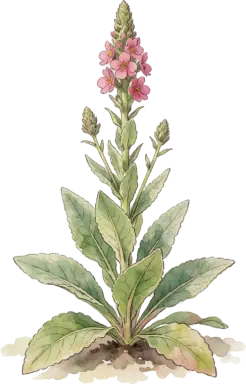
Mullein
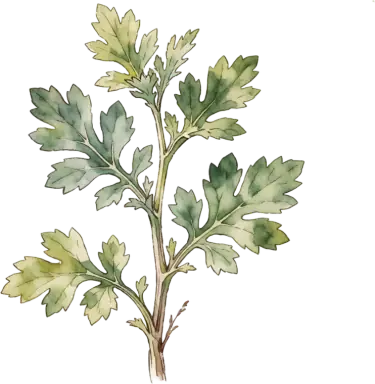
Feverfew
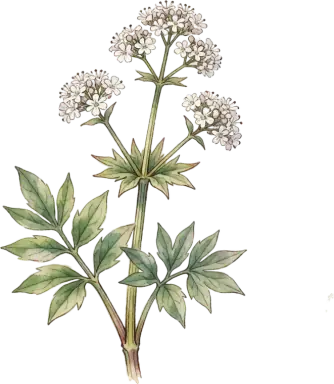
Valerian
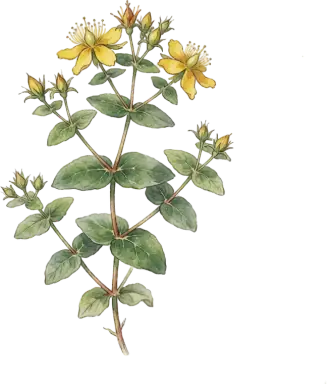
St. John's Wort