Calamondin Orange
Citrus × microcarpa
Family Rutaceae
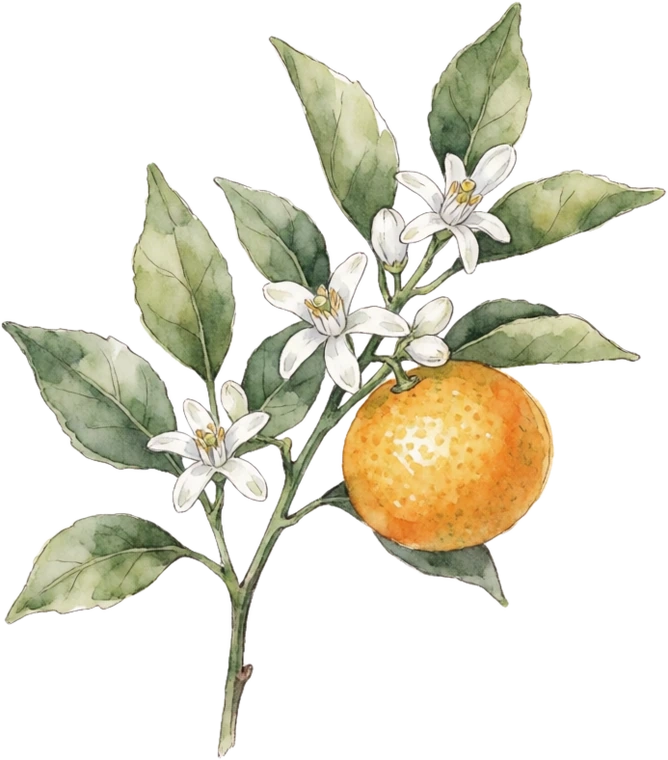
Calamondin Orange is the citrus that never leaves the house — flowering and fruiting at the same time, often all winter, so a sunny sill carries fragrant white blossoms beside ripe orange fruit in midwinter. The fruit puckers lips raw but makes marmalade people fight over.
Compact at three to six feet potted, self-fertile, and generous nearly year-round, it doubles as a Filipino kitchen staple — calamansi — squeezed over everything from noodles to grilled fish. Collectors call it the gateway citrus for a reason. Clear a spot at your brightest window.
 Bright
 Moderate water
 Moderate growth
 Excellent edible
 Attracts bees
 None winter chill
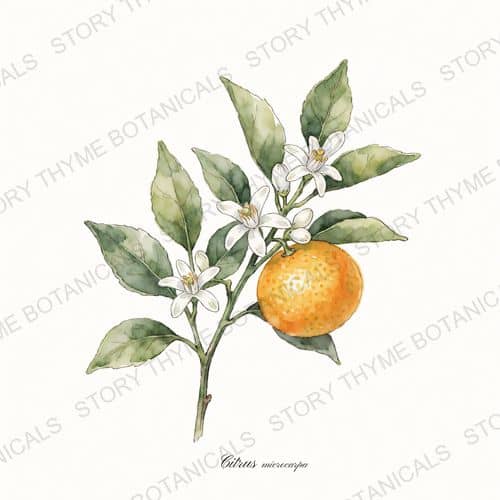
From the print shop
Growing calamondin orange? Hang it.
Our Plant Library collection carries calamondin orange — Citrus microcarpa, print Nº 84, “Calamondin Orange.”
526 designsfrom $12.99white or black backgroundmatte poster, unframed
Will it fruit where you are?
Enter your ZIP — we look up your USDA hardiness zone (2023 map) and check it against what calamondin orange actually needs.
 Life cyclePerennial zones 9–11, annual elsewherePollinationSelf-fertile
Calamondin Orange · Common problems
Common calamondin orange problems

Pests
3 problems on file

Diseases
2 problems on file
- Root Rot
- chlorosis
Calamondin Orange · Growing & propagation
Growing calamondin orange
- Light
- Bright, sunniest window / summer patio
- Water
- Moderate
 Soil
Soil- Citrus mix · pH 6.0 - 7.0
 Fertilizer
- Citrus feed monthly in season
 Pruning
- Spring
Pinch to shape; the most bloom-and-fruit-happy indoor citrus.
 Spacing
- Container
How to plant & propagate calamondin orange
- Propagate
- Grafted, or from cuttings/layering
Seed won't come true
Calamondin Orange · Harvest & keeping
What you get from calamondin orange
 Years to first harvest
- 2 to 3 years
- Typical yield
- 10–30 lbs
- What you eat
- Fruit
- How to tell it is ready
- Full orange at ping-pong size; tart
Use like a lime
- How long it keeps
- 1-2 weeks refrigerated
Calamondin Orange · Seasonal care & spray guidance
The calamondin orange growing playbook
When to spray calamondin orange
Growing season. Oil for scale; check monthly indoors.
Calamondin Orange · Calculators & field guides
A little help in the garden.
Calamondin Orange · Yearly calendar
The calamondin orange year, month by month
Jan
HarvestJanuary to December
PruneHarvestPruneMarch to May
HarvestJanuary to December
What each band means
- Prune — shape it now — cuts heal cleanly and structure is visible.
- Harvest — picking time — check ripeness every few days.
These are the species' typical months — expect them a few weeks earlier in warm zones and later in cold ones. Watch the plant, not just the calendar.
Calamondin Orange · Ecology & uses
Ecology & uses
Citrus × microcarpa
Calamondin Orange in the garden system
- Understory layer tree
 Attracts
- Bees
- Moisture
- Facultative / average
 Deer
Deer- Browsed
Protect young plants
 Origin
- Introduced
What calamondin orange is grown for
✓ Commonly eatenSkin oils mild pet irritant
- Use
- Indoor citrus
- Use
- Marmalade
- Use
- Ornamental fruit
- Edible value
- 4/5
Harvesting & storing calamondin orange
Small tart orange fruit nearly year-round, holds on the tree beautifully.
Edibility, identification, and traditional-use notes here are general reference — not medical or veterinary advice, and not a claim that any plant treats or prevents anything. Medicinal ratings record how strongly a plant features in herbal tradition, nothing more. Never eat or dose a plant you have not positively identified. More on how to use this library.
Calamondin Orange · Varieties & cultivars
Choosing a calamondin orange variety
Standard; variegated form (pink-fleshed, striped fruit)
Sources & plant identity
Know what you’re growing.
See where the knowledge comes from.
Calamondin Orange
Citrus × microcarpa
The plant, at a glance.
- Botanical name
- Citrus × microcarpa
- Plant family
- Rutaceae
- Growth habit
- Tree · Tender Perennial
- Origin
- Introduced
- USDA plant symbol
- CIMI4
- Invasive risk
- Low
Hardiness, size and timing vary with your cultivar, soil and climate.
Rooted in research.
University extension research, brought together with hands-on growing experience at Story Thyme Farms.
for Calamondin Orange
Research from these sources



Publisher marks identify sources, not sponsorship or endorsement.
Questions
Calamondin Orange questions, answered straight.
Do I need two calamondin orange plants to get fruit?
No — calamondin orange is self-fertile, so a single plant will set a crop. A second one usually improves yields, but it isn't required.
Is calamondin orange safe for kids and pets?
Calamondin Orange is commonly eaten and isn't considered toxic, but "commonly eaten" isn't a guarantee for any particular person or animal — allergies, quantity, and which part you eat all matter. One caveat on this one: Skin oils mild pet irritant. Never eat a plant you haven't positively identified, and check with a vet before letting pets or livestock graze anything new.
When do you harvest calamondin orange?
Small tart orange fruit nearly year-round, holds on the tree beautifully.
How do you propagate calamondin orange?
Grafted, or from cuttings/layering (seed won't come true).
Elsewhere
Where calamondin orange sits in the library.
 Apple
Apple Peach
Peach Plum
Plum Pluot
Pluot