The illustrated growing guide

Calendula

Calendula officinalis

Family Asteraceae

Grown as an annual

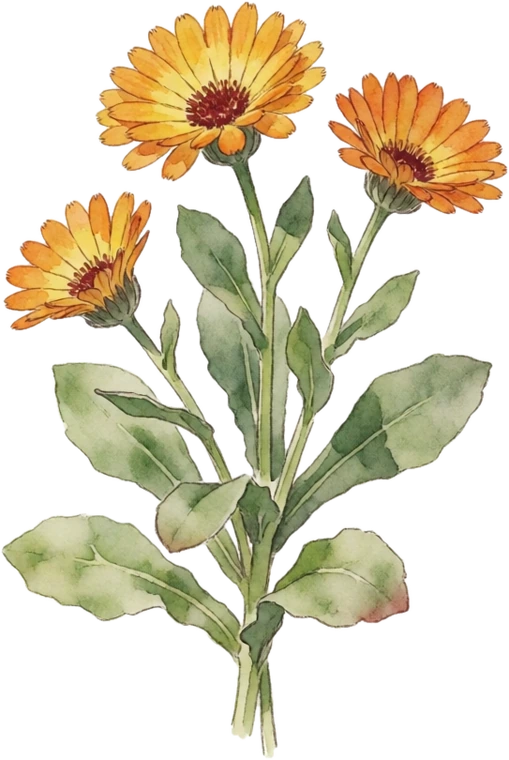
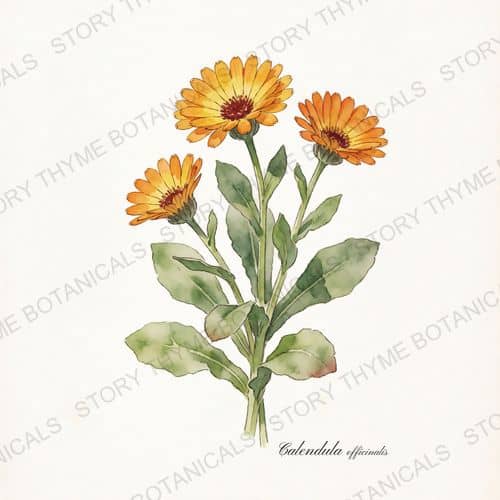
Botanical illustration of Calendula
Annual · Calendula officinalis

The pot marigold of grandmother gardens: petals in salads and rice, dried heads infused into every salve worth its name, and volunteers every spring after the first year.

AnnualFull SunLow waterFast growthAttracts beesNone winter chill

Where to buy the plant — 1 nursery

Calendula — a print from the Medicinal Herbs collection

From the print shop

Growing calendula? Hang it.

Our Medicinal Herbs collection carries calendulaCalendula officinalis, print Nº 2, “Calendula.”

16 designsfrom $21.99white or black groundmatte poster, unframed

Shop Medicinal Herbs botanical prints →

I

Overview

Will calendula suit your garden, and what goes wrong.

Will it fruit where you are?

Enter your ZIP — we look up your USDA hardiness zone (2023 map) and check it against what calendula actually needs.

Life cycleAnnual
Winter chillNone

Calendula at a glance

Life cycleAnnual
Mature size1-2 ft
PollinationBees + hoverflies (aphid-eater nurseries)
Chill requirementNone (not chill-dependent)
Bloom seasonMay - Frost, best in cool spells
Harvest seasonPetals + whole heads for drying, continuous
Growth rateFast

Common calendula problems

II

Growing

Light, water, soil, propagation and the season’s jobs.

How to grow calendula: light, water & soil

LightFull Sun
WaterLow-Moderate
SoilAverage · pH 6.0 - 7.0
FertilizerNone needed
PruningNone — Deadhead for bloom or let late heads self-sow next year's patch.
Spacing8-12 in

How to plant & propagate calendula

Maturity50-60 days
From seedDirect-sow early; cool-season; self-sows
PropagateFrom seed

The calendula growing playbook

Field-tested instructions for every job calendula asks of you, compiled from university extension guidance — in the order the season brings them.

Sowing

Direct sow in early spring once the soil hits 60F

Sow seed a quarter inch deep and cover it well, because light inhibits germination. Sow once soil temperatures reach 60F, and expect germination in 1 to 2 weeks. For earlier bloom, start seed indoors about 6 to 8 weeks before your last frost date. Sow a second and third batch a few weeks apart to keep flowers coming. In the mildest winter zones (roughly 9b through 11) the calendar flips and calendula is grown as a fall-sown winter and spring crop instead. Calendula is a cool-season annual that germinates best around 60F and prefers temperatures under 85F, so seed sown into cold soil rots and seed sown late spends its best weeks in heat it cannot flower through.

Planting out

Set transplants out after frost danger passes

Move indoor-started seedlings or nursery transplants into the garden once frost danger has passed, into a well-drained spot in full sun. Once the young plants are several inches tall, pinch out the vegetative growing tips to force branching. Calendula survives down to about 25F but young transplants have no hardening behind them, and pinching early turns a single leggy stem into a bushy plant that carries many more flower heads.

Watering

Give 1 to 1.5 inches of water a week in midsummer

Supply 1 to 1.5 inches of water per week through midsummer, counting rainfall. Water at the base rather than over the top of the plants, and do not overwater, since established calendula tolerates fairly dry conditions. If you do water overhead, do it mid-morning so the foliage dries quickly. Soggy soil is a bigger risk to calendula than dryness is, and dense damp canopies hold the high humidity and shade that powdery mildew wants. Watering at the base keeps the soil supplied without keeping foliage wet for long stretches, which is what invites other leaf diseases. Plants may languish in prolonged heat regardless of water, then recover on their own when cooler weather returns.

Thinning

Thin seedlings to 8 to 12 inches apart

After the seedlings emerge, thin them to stand 8 to 12 inches apart. Snip the extras at the soil line rather than pulling, so you do not disturb the roots of the keepers. Crowded calendula holds damp air in the canopy, and that stagnant air is exactly the condition powdery mildew needs. Spacing is the cheapest mildew control you will ever apply.

Pruning

Deadhead every few days through bloom

Pinch or snip spent flower heads off at the base of the stem, and keep at it every few days for as long as the plant is blooming. Plants push a fresh flush roughly two weeks after picking, and will run almost continuously until the first heavy frost. Once a flower head sets seed the plant reads its job as done and slows flowering. Removing heads before seed matures keeps it in vegetative bloom, and it also stops the volunteer seedlings calendula scatters when heads are left to ripen.

What to watch for

Scout for aphids and whiteflies, knock them off with water

Check the growing tips and the undersides of leaves for aphids and whiteflies. A stiff spray of plain water dislodges them and is the first control to reach for. Insecticidal soap is an option on heavy infestations, but only on seedlings before the plant is in flower. Calendula flowers almost continuously from late spring to frost and is a heavy pollinator draw, so once it opens there is essentially no safe spray window. Aphids also vector cucumber mosaic virus, which is why you knock the colonies down early rather than waiting.

Never apply insecticidal soap or any insecticide to calendula in bloom, because it is in flower nearly all season and pollinators are working it. Petals are eaten, so treat any sprayed planting as inedible.

Watch for powdery mildew and open up the canopy

Look for dusty white patches on the leaves as summer humidity builds. Manage it by improving air circulation, thinning or removing the worst-affected plants, and keeping irrigation off the foliage rather than by spraying. Powdery mildew is calendula's main disease and it establishes in still, humid air inside a crowded canopy. Cultural control works here because the flowers are harvested for eating and drying, which rules out most fungicides.

Since the petals are consumed, do not apply fungicide to a planting you intend to harvest.

Harvesting

Pick fully open heads in the morning, dry them in the dark

Harvest whole flower tops, or just the petals, when the flowers are fully expanded. Pick after the dew has dried, and dry the heads in a well-ventilated place out of direct sunlight. Plants re-bloom in about two weeks, so harvest is a repeating cut-and-come-again task, not a one-time event. Petals are picked at full expansion because that is when the head is at its fullest, and drying out of sunlight preserves the orange pigment that direct sun bleaches out. Wet petals mold rather than dry.

Calendula petals are eaten, so only harvest from plants that have not been sprayed with pesticide.

III

The year

What calendula asks for, month by month.

The calendula year, month by month

MonthJanFebMarAprMayJunJulAugSepOctNovDec
Bloom

What each band means

  • Bloomflowers open — pollinators working, frost on blossoms is the danger.

The calendula year as text

  • Jan quiet month
  • Feb quiet month
  • Mar quiet month
  • Apr quiet month
  • May bloom
  • Jun quiet month
  • Jul quiet month
  • Aug quiet month
  • Sep quiet month
  • Oct quiet month
  • Nov quiet month
  • Dec quiet month

These are the species' typical months — expect them a few weeks earlier in warm zones and later in cold ones. Watch the plant, not just the calendar.

IV

Ecology & uses

What it does for the garden, and what it is grown for.

Calendula in the garden system

  • Herbaceous layer annual
  • Nectary/insectary
AttractsBees
MoistureUpland / dry
DeerBrowsed — protect young plants
OriginIntroduced

What calendula is grown for

✓ Commonly eatenedible petals

Traditional useSalves
UseEdible petals
UseSelf-sowing borders
Edible value3/5
Traditional use rating4/5 in herbal tradition

Harvesting & storing calendula

Petals + whole heads for drying, continuous. About 50-60 days from planting.

Edibility, identification, and traditional-use notes here are general reference — not medical or veterinary advice, and not a claim that any plant treats or prevents anything. Medicinal ratings record how strongly a plant features in herbal tradition, nothing more. Never eat or dose a plant you have not positively identified. More on how to use this library.

V

Cultivars

Named varieties of calendula, ruled as a catalogue.

Best calendula varieties & cultivars

8 on file

Named varieties of calendula differ in days to maturity, disease resistance, flavor, and habit — pick one that fits your season and space.

Resina

Zones2-11Size24-30 inches tall

Bright yellow single daisy blooms with occasional orange, on strong stems. Sticky, extremely high resin content in the blooms, which is what herbalists select it for. Space 8 to 12 inches apart.

Where to buy ‘Resina

Story Thyme Farms may earn a small commission from these links, at no cost to you — it never changes what we recommend.

POWERDAISY · Buttermilk;Mango;Sunny;Tango

Zones2-11Diseasepowdery mildew

A sterile series propagated from cuttings rather than seed, sold as Buttermilk, Mango, Sunny and Tango. Because it sets no seed it does not need deadheading to keep blooming and will not self-sow.

Where to buy ‘POWERDAISY

Story Thyme Farms may earn a small commission from these links, at no cost to you — it never changes what we recommend.

Pacific Beauty

Zones2-11Size18 inches tall

A long-standing seed series in yellow, orange and apricot, carried on notably tall stems.

Where to buy ‘Pacific Beauty

Story Thyme Farms may earn a small commission from these links, at no cost to you — it never changes what we recommend.

Bon Bon

Zones2-11Size12 inches tall

Compact series in apricot, yellow and orange with 2.5 to 3 inch flowers. Short enough for containers and front edging.

Where to buy ‘Bon Bon

Story Thyme Farms may earn a small commission from these links, at no cost to you — it never changes what we recommend.

Indian Prince

Zones2-11Size14-24 inches tall

Dark yellow-orange 2 to 3 inch flowers edged in red, with a dark center.

Where to buy ‘Indian Prince

Story Thyme Farms may earn a small commission from these links, at no cost to you — it never changes what we recommend.

Flashback Mix

Zones2-11

Double and semi-double flowers in pastel and bright shades, each petal backed in burgundy. Noted as well suited to cutting.

Where to buy ‘Flashback Mix

Story Thyme Farms may earn a small commission from these links, at no cost to you — it never changes what we recommend.

Orange Porcupine

Zones2-11Size24 inches tall

Bright orange double flowers, 2.5 to 3.5 inches across, with quilled petals that give the head a spiky look.

Where to buy ‘Orange Porcupine

Story Thyme Farms may earn a small commission from these links, at no cost to you — it never changes what we recommend.

Touch of Red

Zones2-11Size14 inches tall

Two inch flowers in yellow, orange and cream with reddish overtones and a mahogany-red petal reverse.

Where to buy ‘Touch of Red

Story Thyme Farms may earn a small commission from these links, at no cost to you — it never changes what we recommend.

VI

Sources & plant ID

Where the care distinctions come from, and how the plant is filed.

Research basis

Sources behind this profile

No extension citations are attached to calendulayet. The care figures below come from the library's own catalogue rather than a traced primary source.

Plant ID

BinomialCalendula officinalis
FamilyAsteraceae
TypeAnnual
USDA symbolCAOF
OriginIntroduced
Invasive riskLow

VII

Where to buy

Third-party nurseries — not Story Thyme Farms.

Third-party nurseries, not Story Thyme Farms. Prices are theirs.

Story Thyme Farms may earn a small commission from these links, at no cost to you — it never changes what we recommend.

VIII

Questions

Calendula questions, answered straight.

Is calendula safe for kids and pets?

Calendula is commonly eaten and isn't considered toxic, but "commonly eaten" isn't a guarantee for any particular person or animal — allergies, quantity, and which part you eat all matter. One caveat on this one: edible petals. Never eat a plant you haven't positively identified, and check with a vet before letting pets or livestock graze anything new.

When do you harvest calendula?

Petals + whole heads for drying, continuous. From planting, expect about 50-60 days to maturity.

How do you propagate calendula?

From seed.

IX

Elsewhere

Where calendula sits in the library.

Where calendula sits in the library

Grows in the same world