The illustrated growing guide

Chives

Allium schoenoprasum / A. tuberosum

Family Amaryllidaceae

Est. zones 3-9

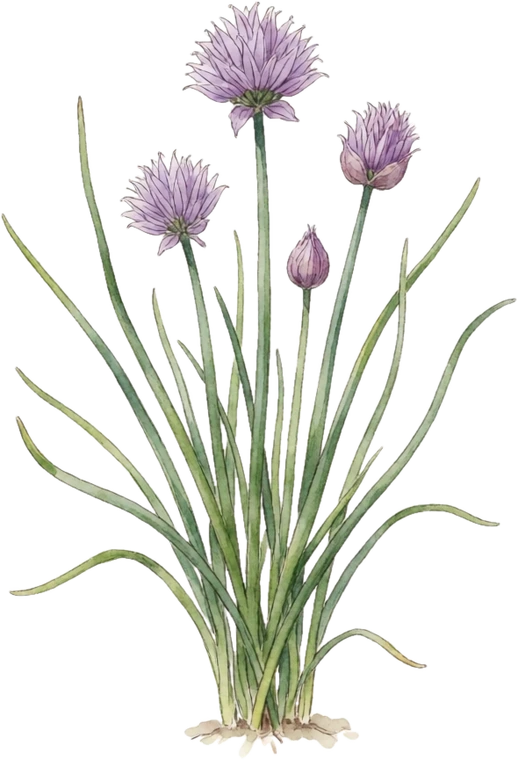
Botanical illustration of Chives
Perennial · Allium schoenoprasum / A. tuberosum

First green thing in March, last in December. Divide clumps every 3 years. GARLIC chives self-seed like a plague — deadhead them, always.

PerennialFull Sun to Part ShadeModerate waterFast growthAttracts bees

Where to buy the plant — 3 nurseries

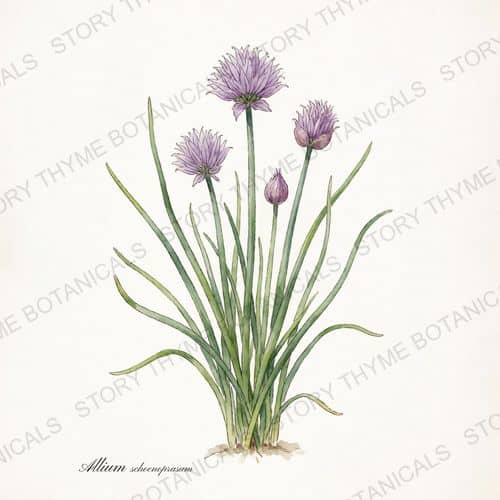
Chives — a print from the Herbs, Greenery & Desert collection

From the print shop

Growing chives? Hang it.

Our Herbs, Greenery & Desert collection carries chivesAllium schoenoprasum, print Nº 3, “Chives.”

16 designsfrom $21.99white or black groundmatte poster, unframed

Shop Herbs, Greenery & Desert botanical prints →

I

Overview

Will chives suit your garden, and what goes wrong.

Will it fruit where you are?

Enter your ZIP — we look up your USDA hardiness zone (2023 map) and check it against what chives actually needs.

Hardy inZones 3-9

Chives at a glance

HardinessUSDA 3–9
Mature size12-18 inches
PollinationBees love blooms; blooms are edible too
Chill requirementNot yet established
Bloom seasonLate Spring (purple pompoms)
Harvest seasonMarch - December, shear as needed
Growth rateFast

Common chives problems

  • None — actually repels some pests
  • None significant

II

Growing

Light, water, soil, propagation and the season’s jobs.

How to grow chives: light, water & soil

LightFull Sun to Part Shade
WaterModerate
SoilAverage, Well-drained · pH 6.0 - 7.0
FertilizerCompost topdress spring.
PruningNone — Shear clumps to 2 inches after bloom — regrows in days, prevents seeding.
Spacing8-12 inches

How to plant & propagate chives

PropagateDivision or seed

The chives growing playbook

Field-tested instructions for every job chives asks of you, compiled from university extension guidance — in the order the season brings them.

Sowing

Sow chive seed as early as the soil can be worked

Sow seed a quarter inch deep as early as possible in spring, then thin seedlings to stand 4 to 6 inches apart in all directions. If you are starting indoors, give transplants 6 to 8 weeks of growth before they go out, and set them out once frost danger has passed. Chives are a cool-season perennial and the seed is slow, taking four to six weeks to make a transplant, so an early start is what buys you a harvest the same year rather than the next one.

Feeding

One light spring feeding, and only if the clump is weakening

Give the bed a very light application of a 5-10-5 fertilizer once each spring. Container and indoor chives get a liquid fertilizer at half the label strength every four to six weeks instead, and nothing at all through winter. An established clump lives off its own bulblets and rarely needs feeding, so the spring application is a correction for a plant that has visibly lost vigor, not a routine. Overfeeding buys soft growth and weak flavor.

Dividing

Split the clump every two to three years in spring

In spring, lift the clump and pull it apart into divisions carrying at least 5 bulblets each, and replant them 6 to 12 inches apart. Let the divisions reestablish for several weeks before you start cutting them again. The bulblets multiply underground until they are crowded shoulder to shoulder, and a congested clump thins out and quits producing. Dividing gives the younger, more vigorous bulbs room, which is why a regularly split planting outyields one left alone.

Pruning

Cut the spent flower stalks at the soil line before seed sets

As the purple pompom flowers fade, cut the flower stalks right off at the soil line. Do this before the heads dry and shatter, not weeks later. The stalks themselves are tough and unpalatable, so they go to the compost rather than the kitchen. Chives self-sow hard enough to seed themselves through a bed, and a clump that is ripening seed diverts energy out of the leaves you actually eat. Cutting the stalks off ends both problems in one pass and pushes the plant back into leaf.

What to watch for

Check for thrips silvering the leaves in hot weather

In hot dry stretches, look down into the clump for leaves turning silver or gray, twisting, and dying back. That is thrips feeding. On a culinary clump the fix is to shear the planting to within an inch or two of the soil and let it regrow clean, which removes the infested tissue and the harvest in one cut. Thrips rasp the leaf surface and drain the cells, which is what leaves the silvered streaks. Chives are cut and eaten fresh every few weeks, so shearing is both the control and the harvest, and it sidesteps spraying a crop you eat raw.

Do not spray insecticide on a chive clump in flower - the blooms are heavily worked by bees. If you spray at all, only a product whose label lists chives or herbs is legal, and you must honor its pre-harvest interval.

Harvesting

Shear the whole clump low rather than picking leaves

Once the leaves are about 6 inches long, cut the plant back to within 1 to 2 inches of the soil with scissors, taking the whole clump rather than tipping the leaves. Expect three or four cuttings the first year, and a cutting roughly monthly in the years after. Chives regrow from the bulblet, so a hard low cut resets the whole clump to fresh tender growth at once. Leaves left standing keep aging and turn tough and fibrous, and tipping them only leaves you a clump of blunt old foliage.

III

The year

What chives asks for, month by month.

The chives year, month by month

MonthJanFebMarAprMayJunJulAugSepOctNovDec
Bloom
Harvest

What each band means

  • Bloomflowers open — pollinators working, frost on blossoms is the danger.
  • Harvestpicking time — check ripeness every few days.

The chives year as text

  • Jan quiet month
  • Feb quiet month
  • Mar harvest
  • Apr harvest
  • May bloom, harvest
  • Jun harvest
  • Jul harvest
  • Aug harvest
  • Sep harvest
  • Oct harvest
  • Nov harvest
  • Dec harvest

These are the species' typical months — expect them a few weeks earlier in warm zones and later in cold ones. Watch the plant, not just the calendar.

IV

Ecology & uses

What it does for the garden, and what it is grown for.

Chives in the garden system

  • Herbaceous layer perennial
  • Nectary/insectary
AttractsBees
MoistureFacultative / average
DeerBrowsed — protect young plants
OriginIntroduced

What chives is grown for

! Some parts toxic — see notesToxic to dogs, cats and horses — organosulfur compounds cause Heinz-body haemolytic anaemia; also toxic to cattle, sheep and goats. Cats are the most sensitive.

UseCulinary
UseBlooms in salads
UseEdging
Edible value3/5

Harvesting & storing chives

March - December, shear as needed.

Edibility, identification, and traditional-use notes here are general reference — not medical or veterinary advice, and not a claim that any plant treats or prevents anything. Medicinal ratings record how strongly a plant features in herbal tradition, nothing more. Never eat or dose a plant you have not positively identified. More on how to use this library.

V

Cultivars

Named varieties of chives, ruled as a catalogue.

Best chives varieties & cultivars

4 on file

Named varieties of chives differ in winter-chill needs, ripening time, hardiness, and whether they set fruit on their own — pick one that fits your climate.

PROFUSION · Profusion

Zones3-9

A sterile vegetative form, so it is propagated by division rather than seed and never volunteers. Zones given are the species hardiness range, not a cultivar-specific figure.

Where to buy ‘PROFUSION

Story Thyme Farms may earn a small commission from these links, at no cost to you — it never changes what we recommend.

Forescate

Zones3-9Size18-20 inches tall

Larger than the species in every dimension, with larger and brighter flowers. Zones given are the species hardiness range, not a cultivar-specific figure.

Where to buy ‘Forescate

Story Thyme Farms may earn a small commission from these links, at no cost to you — it never changes what we recommend.

Snowcap

Zones3-9Size12-15 inches tall

Semi-dwarf with white flowers instead of the usual purple. Zones given are the species hardiness range, not a cultivar-specific figure.

Where to buy ‘Snowcap

Story Thyme Farms may earn a small commission from these links, at no cost to you — it never changes what we recommend.

Curly Mauve

Zones3-9

Prostrate habit with curling foliage and gray-lavender flowers. Zones given are the species hardiness range, not a cultivar-specific figure.

Where to buy ‘Curly Mauve

Story Thyme Farms may earn a small commission from these links, at no cost to you — it never changes what we recommend.

VI

Sources & plant ID

Where the care distinctions come from, and how the plant is filed.

Research basis

Sources behind this profile

No extension citations are attached to chivesyet. The care figures below come from the library's own catalogue rather than a traced primary source.

Plant ID

BinomialAllium schoenoprasum / A. tuberosum
FamilyAmaryllidaceae
TypePerennial
USDA symbolALSC
OriginIntroduced
Invasive riskLow

VII

Where to buy

Third-party nurseries — not Story Thyme Farms.

Third-party nurseries, not Story Thyme Farms. Prices are theirs.

Story Thyme Farms may earn a small commission from these links, at no cost to you — it never changes what we recommend.

VIII

Questions

Chives questions, answered straight.

Is chives safe for kids and pets?

With care. Toxic to dogs, cats and horses — organosulfur compounds cause Heinz-body haemolytic anaemia; also toxic to cattle, sheep and goats. Cats are the most sensitive. Site it accordingly if children or pets roam the garden. This is general reference, not medical or veterinary advice — call a vet or poison control if something has actually been eaten.

When do you harvest chives?

March - December, shear as needed.

How do you propagate chives?

Division or seed.

IX

Elsewhere

Where chives sits in the library.

Where chives sits in the library

Grows in the same world