The illustrated growing guide

Lavender

Lavandula angustifolia

Family Lamiaceae

Est. zones 5-9

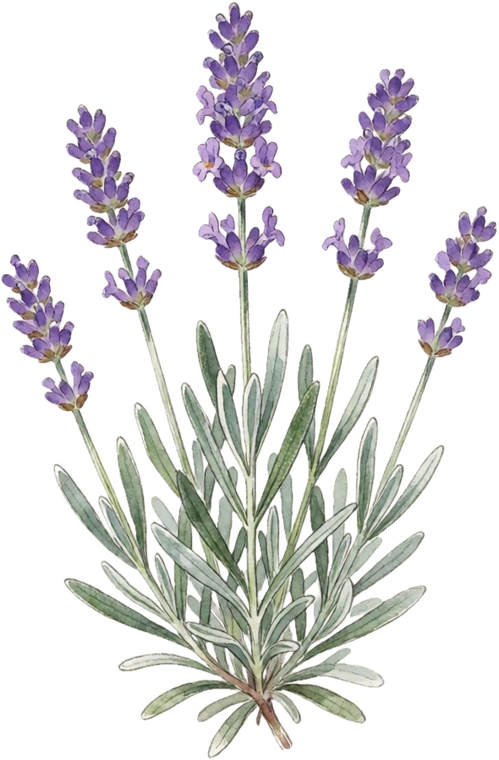
Botanical illustration of Lavender
Shrub · Lavandula angustifolia

Needs drainage. Mulch with gravel, not wood chips (to keep crown dry).

ShrubFull SunDrought-tolerant · low waterModerate growthAttracts bees

Where to buy the plant — 3 nurseries

Lavender — a print from the Herbarium collection

From the print shop

Growing lavender? Hang it.

Our Herbarium collection carries lavenderLavandula angustifolia, print Nº 12, “Lavender.”

16 designsfrom $21.99white or black groundmatte poster, unframed

Shop Herbarium botanical prints →

I

Overview

Will lavender suit your garden, and what goes wrong.

Will it fruit where you are?

Enter your ZIP — we look up your USDA hardiness zone (2023 map) and check it against what lavender actually needs.

Hardy inZones 5-9

Lavender at a glance

HardinessUSDA 5–9
Mature size1-2 ft
PollinationBee Magnet
Chill requirementNot yet established
Bloom seasonSummer
Harvest seasonWhen flowers just open
Growth rateModerate

Common lavender problems

  • Root Rot (wet feet)
  • Fungal issues in high humidity

II

Growing

Light, water, soil, propagation and the season’s jobs.

How to grow lavender: light, water & soil

LightFull Sun
WaterLow (Drought tolerant)
SoilPoor, Sandy, Gravelly, Fast Draining · pH 6.5 - 7.5
FertilizerNone/Low. Avoid manure.
PruningSpring (after new growth starts) and Post-Bloom — Cut back by 1/3. Do not cut into old wood (no leaves).
Spacing2-3 ft

How to plant & propagate lavender

PropagateSeed (stratify), cuttings, or layering

When to spray lavender

Growing season. Ensure airflow.

The lavender growing playbook

Field-tested instructions for every job lavender asks of you, compiled from university extension guidance — in the order the season brings them.

Watering

Step watering up only once buds form

Newly transplanted lavender takes about 1 gallon per plant per week until established. Hold established plants at half a gallon every two weeks until flower buds form, then water one or two times per week from bud formation through harvest. Let the soil dry between waterings and go back to sparse watering once the flowers come off. Lavender is drought tolerant but sets more and better flowers with steady moisture while the buds are filling. The rest of the year, wet soil is the real threat, because Phytophthora root rot follows overwatering more reliably than any pest.

Do not overwater or let water stand around the plants. Lavender wants light, well-aerated, gravelly soil and will not tolerate saturated or soggy ground.

Mulching

Mulch with coarse white sand, never wood chips

Spread one to two inches of white sand around the plants, pulled back clear of the crown. Skip sawdust, wood chips, and heavy organic mulches. Heavy organic mulch holds moisture against the crown and feeds the fungal pathogens that rot lavender, and it raises insect pressure too. A light mineral mulch suppresses weeds and dries the crown fast after rain, which is the condition this Mediterranean plant is built for.

Feeding

Feed lightly, once, or not at all

Lavender has very low nutrient needs. Work in about an inch of compost at planting, and give established plants at most one application of slow-release fertilizer, roughly a tablespoon per plant, for the whole season. Excess fertility pushes soft leafy growth at the expense of flowers, and that lush growth holds humidity in the canopy and makes the plant more vulnerable to disease. A hungry lavender flowers better than a fed one.

Pruning

Hard prune once green shoots break at the base

Wait until new green growth emerges from the base of the plant, then cut back one third to one half of the stem length all over. Always leave green leaves and live buds below every cut, and take out any stems that stayed brown and brittle through winter. Lavender is a woody subshrub that will not push new shoots from bare leafless wood, so a cut below the last live bud kills that stem permanently. Waiting for green growth also lets you see what actually survived the winter instead of guessing at dormant wood.

Do not prune in fall. Lavender is marginally hardy through much of its range and fall-pruned plants are the ones that die over winter.

Shear off the spent spikes after bloom

Once flowering finishes, deadhead the spent flower spikes and lightly shape the plant back toward a mound. Take the spikes and the dead tips only, never cut into bare leafless wood, and do not cut the plant back hard. Deadheading and shaping after bloom keeps the plant compact instead of splitting open and going woody in the middle, and it encourages the plant to bloom again.

Do not severely cut lavender back after bloom, as this can kill it. Save the hard cut for spring. Stop shearing while there are still roughly two months of growing weather left before your first fall frost. Maryland Extension puts that cutoff at mid-August. Growth pushed after that will not harden off and winter will take it.

What to watch for

Check for wilt in hot, humid weather

During hot muggy stretches, walk the planting and look for individual plants or single branches that wilt and brown while neighbors stay healthy. Dig out and dispose of affected plants, and do not replant lavender into that spot. Vascular wilt is lavender's most common killer, and it moves in hardest around 90 degrees and 90 percent humidity. It plugs the plant's water-conducting tissue from inside, so once a plant shows it there is no spray that saves it, and English types go down more readily than lavandins.

There is no effective chemical rescue for vascular wilt. Removal, spacing for airflow, and drainage are the whole control program.

Harvesting

Cut when the first florets open, in the morning

For dried bundles, cut whole spikes once the first few florets on the spike have opened, taking the stalk just under the first pair of leaves. For fragrance and oil, wait until about half the buds on the spike are open. Cut early in the day before full sun, then bundle 50 to 100 stems and hang them somewhere cool, dark, and airy. Essential oil concentration is highest early in the day before the sun drives it off, and buds cut before they are fully open hold their color and stay attached to the stem as they dry. Fully open spikes shatter.

III

The year

What lavender asks for, month by month.

The lavender year, month by month

MonthJanFebMarAprMayJunJulAugSepOctNovDec
Bloom
Prune

What each band means

  • Bloomflowers open — pollinators working, frost on blossoms is the danger.
  • Pruneshape it now — cuts heal cleanly and structure is visible.

The lavender year as text

  • Jan quiet month
  • Feb quiet month
  • Mar pruning
  • Apr pruning
  • May pruning
  • Jun bloom
  • Jul bloom
  • Aug bloom
  • Sep quiet month
  • Oct quiet month
  • Nov quiet month
  • Dec quiet month

These are the species' typical months — expect them a few weeks earlier in warm zones and later in cold ones. Watch the plant, not just the calendar.

IV

Ecology & uses

What it does for the garden, and what it is grown for.

Lavender in the garden system

  • Herbaceous layer shrub
  • Nectary/insectary
AttractsBees
HabitatDry/rocky
MoistureUpland / dry
DeerBrowsed — protect young plants
OriginIntroduced

What lavender is grown for

! Some parts toxic — see notesToxic to dogs, cats and horses (ASPCA; linalool and linalyl acetate) — nausea, vomiting and loss of appetite.

UseCulinary
UseTea
UseAromatherapy
Edible value3/5
Traditional use rating3/5 in herbal tradition

Harvesting & storing lavender

When flowers just open.

Edibility, identification, and traditional-use notes here are general reference — not medical or veterinary advice, and not a claim that any plant treats or prevents anything. Medicinal ratings record how strongly a plant features in herbal tradition, nothing more. Never eat or dose a plant you have not positively identified. More on how to use this library.

V

Cultivars

Named varieties of lavender, ruled as a catalogue.

Best lavender varieties & cultivars

10 on file

Named varieties of lavender differ in winter-chill needs, ripening time, hardiness, and whether they set fruit on their own — pick one that fits your climate.

Hidcote · Hidcote Blue

RipensEarly summerZones5-9

One of the best-known English lavenders and one of the dark-flowered group, with a compact habit that suits edging and low hedges. English lavenders as a class yield roughly 12 to 15 pounds of oil and 300 to 1,800 pounds of fresh flower per acre.

Where to buy ‘Hidcote

Story Thyme Farms may earn a small commission from these links, at no cost to you — it never changes what we recommend.

Munstead

RipensEarly summerZones5-9

A well-known dark-flowered English lavender and one of the standard cultivars for the home garden. English lavenders as a class yield roughly 12 to 15 pounds of oil and 300 to 1,800 pounds of fresh flower per acre.

Where to buy ‘Munsteadverified

Story Thyme Farms may earn a small commission from these links, at no cost to you — it never changes what we recommend.

Phenomenal

RipensMid to late summer, about 3 to 4 weeks after English lavendersZones4-9SizeBushy compact habit

A lavandin hybrid and the hardiest lavender in the NC State cultivar list, rated a full zone colder than the English types. Higher flower and oil yields than English lavender.

Where to buy ‘Phenomenalverified

Story Thyme Farms may earn a small commission from these links, at no cost to you — it never changes what we recommend.

Grosso

RipensMid to late summer, about 3 to 4 weeks after English lavendersZones5-9SizeLarge, well above English lavender

The standard commercial lavandin for oil, yielding roughly 53 to 67 pounds of oil per acre and 3,500 to 4,500 pounds of fresh flowers, several times what an English lavender gives. Florets separate easily from the stem, which suits potpourri and oil rather than dried bundles.

Where to buy ‘Grossoverified

Story Thyme Farms may earn a small commission from these links, at no cost to you — it never changes what we recommend.

Provence

RipensMid to late summer, about 3 to 4 weeks after English lavendersZones5-9SizeLarge, well above English lavender

Commercial lavandin grown alongside Grosso and noted as doing well in western North Carolina, at roughly 53 to 67 pounds of oil and 3,500 to 4,500 pounds of fresh flower per acre. Like the other lavandins it blooms once, about 3 to 4 weeks after the English lavenders.

Where to buy ‘Provenceverified

Story Thyme Farms may earn a small commission from these links, at no cost to you — it never changes what we recommend.

Irene Doyle

RipensEarly summer, with a second flush later in the seasonZones5-9

Excellent fragrance, higher oil concentration than typical English lavender — A recurrent-blooming English lavender that reliably flowers twice in a season, which makes the post-bloom shearing rule matter more here than on a once-blooming lavandin.

Where to buy ‘Irene Doyle

Story Thyme Farms may earn a small commission from these links, at no cost to you — it never changes what we recommend.

Lady · Lavender Lady

RipensFirst summer from a spring sowingZones5-9

The English lavender to grow from seed rather than cuttings. Germinates in 14 to 28 days and flowers in its first year, three to six months from sowing depending on region, where most lavenders need a second season.

Where to buy ‘Ladyverified

Story Thyme Farms may earn a small commission from these links, at no cost to you — it never changes what we recommend.

Nana Alba

RipensEarly summerZones5-9SizeDwarf

A white-flowered dwarf English lavender, grown for its compact size and unusual flower color among the mostly purple English cultivars.

Where to buy ‘Nana Alba

Story Thyme Farms may earn a small commission from these links, at no cost to you — it never changes what we recommend.

Jean Davis

RipensEarly summerZones5-9

One of the pink-flowered English lavenders, grouped by NC State with Rosea and Loddon Pink — names the source notes may all refer to the same cultivar, so expect overlap between them in the trade.

Where to buy ‘Jean Davis

Story Thyme Farms may earn a small commission from these links, at no cost to you — it never changes what we recommend.

Superblue · Super Blue

RipensEarly summerZones5-9

A well-known compact English lavender, named by NC State alongside Hidcote and Munstead as a standard variety. English lavenders as a class yield roughly 12 to 15 pounds of oil and 300 to 1,800 pounds of fresh flower per acre.

Where to buy ‘Superblue

Story Thyme Farms may earn a small commission from these links, at no cost to you — it never changes what we recommend.

VI

Sources & plant ID

Where the care distinctions come from, and how the plant is filed.

Research basis

Sources behind this profile

No extension citations are attached to lavenderyet. The care figures below come from the library's own catalogue rather than a traced primary source.

Plant ID

BinomialLavandula angustifolia
FamilyLamiaceae
TypeShrub · Perennial
USDA symbolLAAN81
OriginIntroduced
Invasive riskLow

VII

Where to buy

Third-party nurseries — not Story Thyme Farms.

Third-party nurseries, not Story Thyme Farms. Prices are theirs.

Story Thyme Farms may earn a small commission from these links, at no cost to you — it never changes what we recommend.

VIII

Questions

Lavender questions, answered straight.

Is lavender safe for kids and pets?

With care. Toxic to dogs, cats and horses (ASPCA; linalool and linalyl acetate) — nausea, vomiting and loss of appetite. Site it accordingly if children or pets roam the garden. This is general reference, not medical or veterinary advice — call a vet or poison control if something has actually been eaten.

When do you harvest lavender?

When flowers just open.

How do you propagate lavender?

Seed (stratify), cuttings, or layering.

IX

Elsewhere

Where lavender sits in the library.

Where lavender sits in the library

Grows in the same world