Dragon Fruit (Pitaya)
Selenicereus undatus
Family Cactaceae
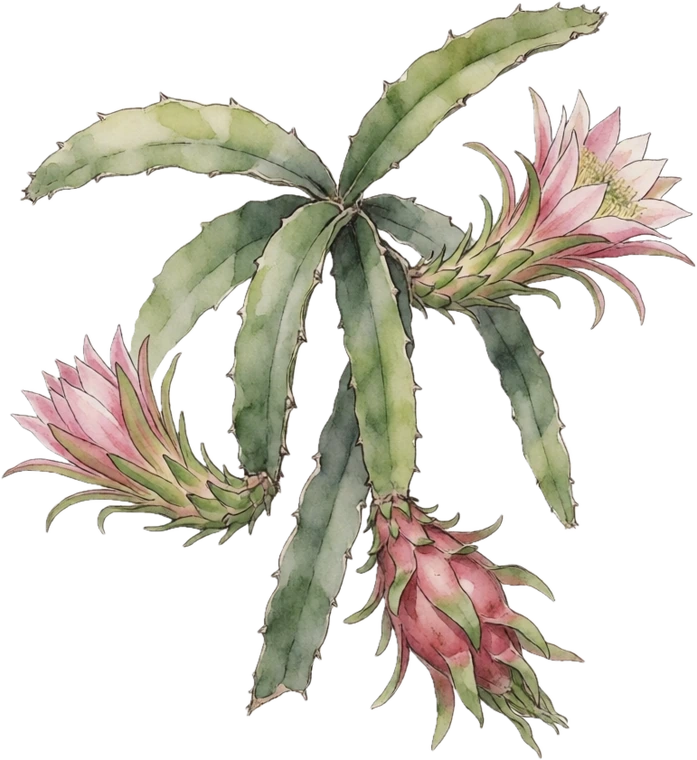
Dragon Fruit saves its show for after dark: dinner-plate white flowers that open for one perfumed night per bloom, followed a month or so later by those magenta, green-scaled fruits that look invented for photographs. It is a cactus that behaves like an event calendar.
On a stout trellis in a big pot it climbs happily, sails through drought, and rolls indoors ahead of frost. For fruit, choose a self-fertile clone or grow two different ones, and keep a soft brush handy for midnight pollinating duty. Few plants earn their spot with better stories — give it the sunniest corner you have.
 Full Sun to bright light
 Low water
 Fast in heat growth
 Excellent edible
 Attracts bees
 None winter chill
- Needs a pollination partner
From the print shop
Growing dragon fruit (pitaya)? Hang it.
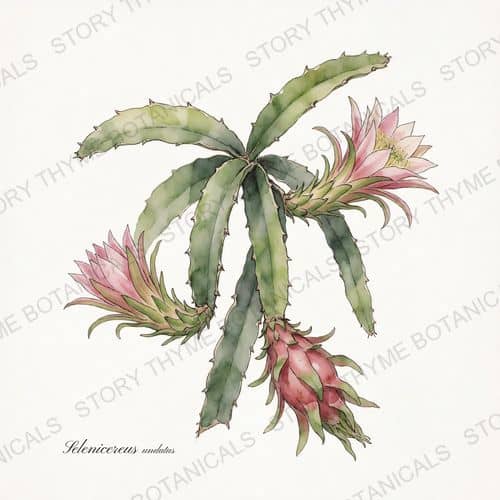
Our Plant Library collection carries dragon fruit (pitaya) — Selenicereus undatus, print Nº 158, “Dragon Fruit (Pitaya).”
526 designsfrom $12.99white or black backgroundmatte poster, unframed
Will it fruit where you are?
Enter your ZIP — we look up your USDA hardiness zone (2023 map) and check it against what dragon fruit (pitaya) actually needs.
 Life cyclePerennial zones 10–11, annual elsewherePollinationPartner needed
Dragon Fruit (Pitaya) · Common problems
Common dragon fruit (pitaya) problems


Dragon Fruit (Pitaya) · Growing & propagation
Growing dragon fruit (pitaya)
- Light
- Full Sun to bright light
Some afternoon shade in brutal heat
- Water
- Low
It's a cactus; soak then dry hard
 Soil
Soil- Cactus mix, sharp drainage · pH 6.0 - 7.0
 Fertilizer
- Light cactus feed monthly in growth
 Spacing
- Sturdy post/trellis
The stems are heavy
Dragon Fruit (Pitaya) · Harvest & keeping
What you get from dragon fruit (pitaya)
 Years to first harvest
- 1 to 2 years
- Typical yield
- 10–60 fruits
- What you eat
- Fruit
 How to tell it is ready
- Skin fully pink-red with the fins just starting to wither; slight give
- How long it keeps
- 1-2 weeks refrigerated
Dragon Fruit (Pitaya) · Calculators & field guides
A little help in the garden.
Dragon Fruit (Pitaya) · Yearly calendar
The dragon fruit (pitaya) year, month by month
Jan
No calendar activity is listed for this month.
 BloomHarvest
BloomJune to August
HarvestJune to November
What each band means
- Bloom — flowers open — pollinators working, frost on blossoms is the danger.
- Harvest — picking time — check ripeness every few days.
These are the species' typical months — expect them a few weeks earlier in warm zones and later in cold ones. Watch the plant, not just the calendar.
Dragon Fruit (Pitaya) · Ecology & uses
Ecology & uses
Selenicereus undatus
Dragon Fruit (Pitaya) in the garden system
- Vine layer cactus
 Attracts
- Bees
 Moisture
- Upland / dry
 Deer
Deer- Browsed
Protect young plants
 Origin
- Introduced
What dragon fruit (pitaya) is grown for
✓ Commonly eaten
- Use
- Night-bloom spectacle
- Use
- Exotic fruit
- Use
- Trellis cactus
- Edible value
- 4/5
Harvesting & storing dragon fruit (pitaya)
Fruit 30-50 days after bloom, summer-fall.
Edibility, identification, and traditional-use notes here are general reference — not medical or veterinary advice, and not a claim that any plant treats or prevents anything. Medicinal ratings record how strongly a plant features in herbal tradition, nothing more. Never eat or dose a plant you have not positively identified. More on how to use this library.
Dragon Fruit (Pitaya) · Varieties & cultivars
Choosing a dragon fruit (pitaya) variety
'American Beauty' (self-fertile, red flesh); 'Physical Graffiti'; white-flesh types often need a partner
Sources & plant identity
Know what you’re growing.
See where the knowledge comes from.
Dragon Fruit (Pitaya)
Selenicereus undatus
The plant, at a glance.
- Botanical name
- Selenicereus undatus
- Plant family
- Cactaceae
- Growth habit
- Cactus · Tender Perennial
- Origin
- Introduced
- USDA plant symbol
- HYUN3
- Invasive risk
- Low
Hardiness, size and timing vary with your cultivar, soil and climate.
Rooted in research.
University extension research, brought together with hands-on growing experience at Story Thyme Farms.
for Dragon Fruit (Pitaya)
Research from these sources



Publisher marks identify sources, not sponsorship or endorsement.
Questions
Dragon Fruit (Pitaya) questions, answered straight.
Why isn't my dragon fruit (pitaya) fruiting?
Most often: it has no genetically distinct partner nearby. Dragon Fruit (Pitaya) can't pollinate itself — many types need hand-pollination at night (flowers open once, after dark) or a second clone. Plant a second, unrelated one nearby; two different cultivars, or a cultivar plus a seedling, is the classic pairing.
Is dragon fruit (pitaya) safe for kids and pets?
Dragon Fruit (Pitaya) is commonly eaten and isn't considered toxic, but "commonly eaten" isn't a guarantee for any particular person or animal — allergies, quantity, and which part you eat all matter. Never eat a plant you haven't positively identified, and check with a vet before letting pets or livestock graze anything new.
When do you harvest dragon fruit (pitaya)?
Fruit 30-50 days after bloom, summer-fall.
Elsewhere
Where dragon fruit (pitaya) sits in the library.
 Boysenberry
 Grape
Grape Kiwi
Kiwi Cantaloupe