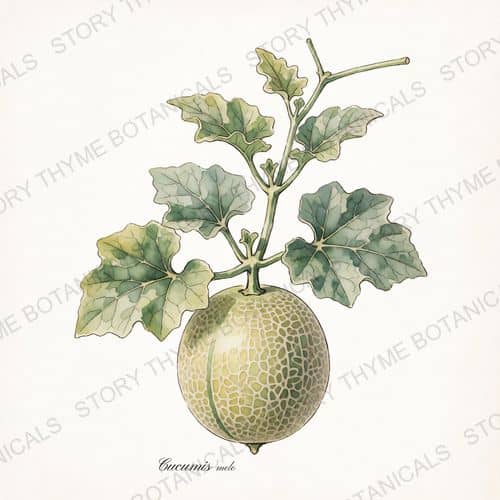
Cantaloupe

Cucumis melo

Family Cucurbitaceae

Annual annualZones 2-11

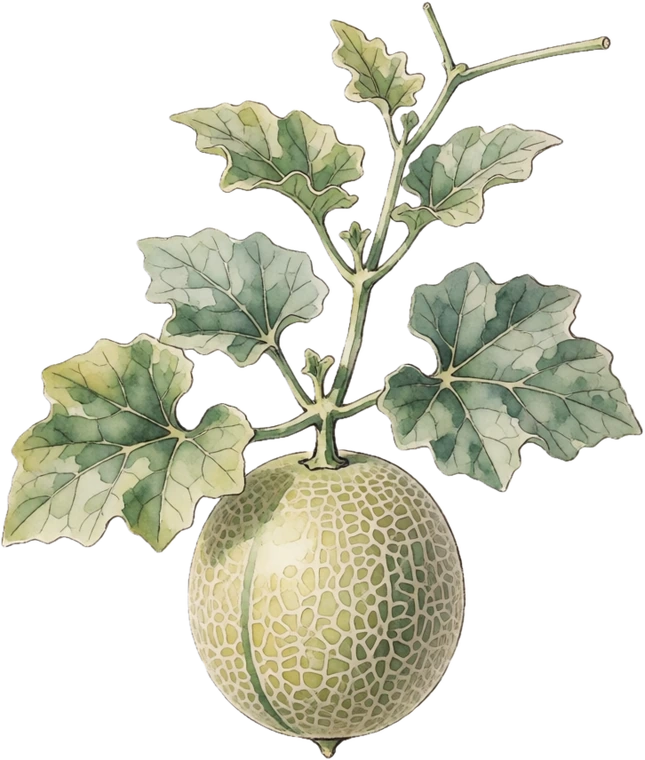
Botanical illustration of Cantaloupe

A cantaloupe that ripened on its own vine until the stem slipped free at a touch is a different fruit from anything picked green for a truck — perfumed at the stem, honeyed all the way through. That August breakfast slice is why melon growers never go back.

The vines run six to ten feet in full sun, flowering for the bees and setting fruit fast in real summer heat. It wants room more than fuss. Spare it a sunny corner or a fence to climb, and August will smell like it.

Where to buy cantaloupe — 4 nurseries compared

  • Full Sun
  • Moderate water
  • Fast growth
  • Excellent edible
  • Attracts bees
  • None winter chill
Cantaloupe — a print from the Plant Library collection

From the print shop

Growing cantaloupe? Hang it.

Our Plant Library collection carries cantaloupe — Cucumis melo, print Nº 91, “Cantaloupe.”

526 designsfrom $12.99white or black backgroundmatte poster, unframed

Shop Plant Library botanical prints →

✓

Will it fruit where you are?

Enter your ZIP — we look up your USDA hardiness zone (2023 map) and check it against what cantaloupe actually needs.

Life cycleAnnual
Winter chillNone

Cantaloupe · Common problems

Common cantaloupe problems

Pests, diseases and weather to keep an eye on.

Cantaloupe · Growing & propagation

Growing cantaloupe

Light, water, soil, propagation and the season’s jobs.
What it needsThe details
Light
Full Sun
Water
Deep weekly water until fruit sizes

Then CUT water for sugar

Soil
Warm, sandy loam · pH 6.0 - 6.8
Fertilizer
Compost hill

Feed at vining and fruit set

Pruning
None

Pinch vine tips when 4 fruits set per plant; set fruit on boards/mulch off soil.

Spacing
2-3 ft in rows, or 2 per hill

How to plant & propagate cantaloupe

Maturity
75-95 days
From seed
Direct-sow or start 3 wks early; soil 75°F+
Propagate
From seed

Cantaloupe · Harvest & keeping

What you get from cantaloupe

How long before it bears, how much it gives, how you know it is ready, and how long it keeps once picked.
Botanical illustration of Cantaloupe
Years to first harvest
0 years
Typical yield
2–5 melons
What you eat
Fruit
How to tell it is ready
Slips clean off the vine at full ripeness

Netting turns tan and the blossom end smells sweet

How long it keeps
1-2 weeks refrigerated

Cantaloupe · Seasonal care & spray guidance

The cantaloupe growing playbook

Field-tested instructions for every job cantaloupe asks of you, compiled from university extension guidance — in the order the season brings them.

When to spray cantaloupe

Growing season. Row cover till bloom for beetles; resistant varieties for mildew.

As growth begins

early spring

4 jobs
SowingIn spring

Direct sow only once the soil hits 65 F

Wait until frost danger has passed and soil at seed depth is 65 to 70 F, then sow 4 to 6 seeds 1 to 2 inches deep in hills 4 feet apart and thin to the best 2 plants per hill. Black plastic laid ahead of planting warms the soil and lets you start earlier. Cantaloupe is a heat crop with no cold tolerance. Seed sown into cold ground germinates slowly or rots outright, and the seedlings that do emerge sit stunted while cucumber beetles find them.

Planting outIn spring

Start transplants in individual containers, and set them out young

Where the season is short, start seed indoors 3 to 4 weeks before your outdoor planting date, sowing into individual containers with one or two seeds each so the roots are never teased apart. Harden off gradually and set plants out while they are still young and growing fast, spacing them 18 to 24 inches apart in rows at least 5 feet apart. Muskmelons do not transplant well if the roots are disturbed, so they go out in the container they grew in. An overgrown transplant checks badly when moved and will often be outrun by a seed sown the same week.

What to watch forAt green tip

Count striped cucumber beetles on the seedlings

From emergence through the 5-leaf stage, check plants a few times a week and count beetles. On cantaloupe the treatment threshold is just 1 beetle for every 2 plants - act within 24 hours of reaching it. The beetle carries Erwinia tracheiphila in its gut and leaves it in its frass, which washes into fresh feeding wounds with dew or rain. Plants at the cotyledon to 2-leaf stage are far more susceptible to bacterial wilt than older ones, and the bacteria plug the xylem so the vine wilts weeks later with nothing to be done.

SprayingAt green tip

Cucumber beetle: treat seedlings before any flowers open

If beetles reach 1 per 2 plants on seedlings, spray carbaryl within 24 hours. Kaolin clay is a lower-toxicity alternative that suppresses rather than kills. Get this done while the planting is still pre-bloom. Cantaloupe is very susceptible to bacterial wilt, and infection risk rises the longer beetles feed. Killing the beetles during the seedling window is the whole game - once the vine is infected there is no cure.

While it flowers

at bloom

1 job
ProtectionAt bloom

Pull the row covers off at first bloom

Float row covers over the planting from the day you sow or transplant to keep cucumber beetles off, then remove them at first bloom so pollinators can do their work. Watch for female flowers, which have a swollen young fruit beneath the yellow petals. A covered melon is a beetle-proof melon, but it is also an unpollinated one. Every fruit depends on bees moving pollen from male to female flowers, so the cover has to go the moment bloom starts or you get vines and no melons.

Just after bloom

as the fruit sets

1 job
SprayingAfter fruit set

Powdery mildew: start once fruit begins to form

Once fruit starts setting, check older leaves weekly, looking at both the upper and lower surfaces. Begin spraying sulfur or chlorothalonil when fewer than 1 in 50 old leaves show symptoms on either surface — that is, at the first trace, not once it is obvious — and repeat on a 7-day interval. Cover both leaf surfaces. Powdery mildew takes down the old canopy first, and that is exactly the leaf area feeding the ripening fruit. Losing it early means sunscald, incomplete ripening and melons with visibly lower soluble solids, so the crop tastes flat even though it looks ripe. Starting at the first trace is what keeps the canopy through harvest.

Through summer

the growing season

1 job
FeedingIn summer

Side dress nitrogen once the vines start to run

When the vines begin sending out runners, side dress each plant with 3 to 4 tablespoons of a nitrogen fertilizer such as 21-0-0 sprinkled in a ring around the plant, then water it in. Do not overdo it. Runner growth is when the plant builds the leaf area that will later fill the fruit with sugar, so nitrogen pays off here. Past that point excess nitrogen just pushes vine at the expense of fruit and delays maturity.

Harvest time

as it ripens, and picking

2 jobs
WateringAs fruit ripens

Ease off the water as the melons ripen

Water deeply and infrequently, 1 to 2 inches per week, from germination until the fruit reaches full size. As the melons begin to ripen, cut the amount back. Drip irrigation in the early morning is ideal. Water taken up late goes straight into the fruit and dilutes the sugars the plant has spent all season loading. Slightly dry roots during ripening concentrate the flesh and are the difference between a sweet melon and a watery one.

HarvestingAt harvest

Pick at full slip, and pick often

Press a thumb against the stem where it joins the fruit. When the stem separates cleanly on its own with no cutting, that is full slip and the melon is ready. Look also for a crack circling the stem attachment and background color turning from green or olive-gray to yellowish tan between the netting. Check every other day early on and daily at peak. Sugar keeps moving into the melon right up to the moment the stem separates, so a melon cut early never gets sweeter - it has reached maximum sugar exactly at full slip. Quality then falls off fast, which is why the vine has to be walked daily rather than picked over once a week.

Cantaloupe · Calculators & field guides

A little help in the garden.

Calculators for the figures. Field guides for the hands-on work.

Cantaloupe · Yearly calendar

The cantaloupe year, month by month

What cantaloupe asks for, month by month.

Jan

No calendar activity is listed for this month.

MonthJanFebMarAprMayJunJulAugSepOctNovDec
Bloom
Harvest

BloomJune to August

HarvestAugust

What each band means

  • Bloom — flowers open — pollinators working, frost on blossoms is the danger.
  • Harvest — picking time — check ripeness every few days.

These are the species' typical months — expect them a few weeks earlier in warm zones and later in cold ones. Watch the plant, not just the calendar.

Cantaloupe · Ecology & uses

Ecology & uses

What it does for the garden, and what it is grown for.
Botanical illustration of Cantaloupe

Cucumis melo

Cantaloupe in the garden system

  • Vine layer annual
Attracts
Bees
Moisture
Facultative / average
Deer
Browsed

Protect young plants

Origin
Introduced

What cantaloupe is grown for

✓ Commonly eaten

Use
Breakfast
Use
Prosciutto pairing
Edible value
4/5

Harvesting & storing cantaloupe

August — ripe when it SLIPS (stem separates at a touch) and smells like melon at the stem. About 75-95 days from planting.

Edibility, identification, and traditional-use notes here are general reference — not medical or veterinary advice, and not a claim that any plant treats or prevents anything. Medicinal ratings record how strongly a plant features in herbal tradition, nothing more. Never eat or dose a plant you have not positively identified. More on how to use this library.

Cantaloupe · Varieties & cultivars

Best cantaloupe varieties & cultivars

There are far more than these — the ones below are the named varieties of cantaloupe people actually plant.

Named varieties of cantaloupe differ in days to maturity, disease resistance, flavor, and habit — pick one that fits your season and space.

8 varieties

Sources & plant identity

Know what you’re growing.
See where the knowledge comes from.

Botanical illustration of Cantaloupe

Cantaloupe

Cucumis melo

The plant, at a glance.

Botanical name
Cucumis melo
Plant family
Cucurbitaceae
Growth habit
Annual
Origin
Introduced
USDA plant symbol
CUME
Invasive risk
Low
Every garden is different.

Hardiness, size and timing vary with your cultivar, soil and climate.

Rooted in research.

University extension research, brought together with hands-on growing experience at Story Thyme Farms.

Explore Cantaloupe’s sources5 reference links
for Cantaloupe

Research from these sources

Publisher marks identify sources, not sponsorship or endorsement.

Questions

Cantaloupe questions, answered straight.

Is cantaloupe safe for kids and pets?

Cantaloupe is commonly eaten and isn't considered toxic, but "commonly eaten" isn't a guarantee for any particular person or animal — allergies, quantity, and which part you eat all matter. Never eat a plant you haven't positively identified, and check with a vet before letting pets or livestock graze anything new.

When do you harvest cantaloupe?

August — ripe when it SLIPS (stem separates at a touch) and smells like melon at the stem. From planting, expect about 75-95 days to maturity.

How do you propagate cantaloupe?

From seed.

Elsewhere

Where cantaloupe sits in the library.

Where cantaloupe sits in the library

Grows in the same world