The illustrated growing guide

Echinacea

Echinacea purpurea

Family Asteraceae

Est. zones 3-9

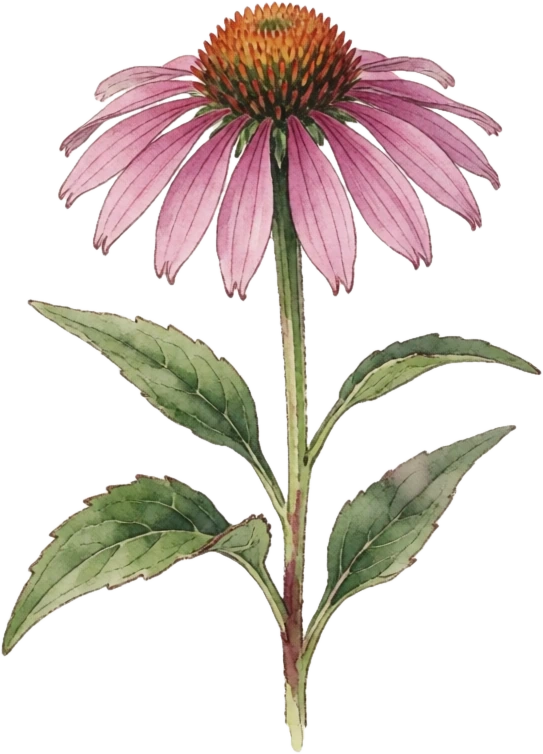
Botanical illustration of Echinacea
Perennial · Echinacea purpurea

Native. Leave seed heads for goldfinches in winter.

Perennial · NativeFull SunLow waterModerate growthNative to North AmericaAttracts butterfliesAttracts bees

Where to buy the plant — 3 nurseries

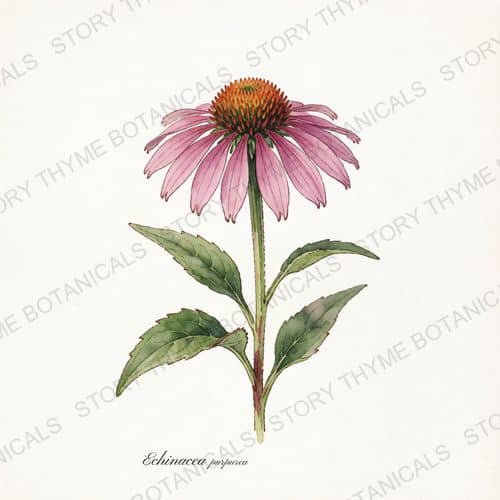
Echinacea — a print from the Medicinal Herbs collection

From the print shop

Growing echinacea? Hang it.

Our Medicinal Herbs collection carries echinaceaEchinacea purpurea, print Nº 1, “Echinacea.”

16 designsfrom $21.99white or black groundmatte poster, unframed

Shop Medicinal Herbs botanical prints →

I

Overview

Will echinacea suit your garden, and what goes wrong.

Will it fruit where you are?

Enter your ZIP — we look up your USDA hardiness zone (2023 map) and check it against what echinacea actually needs.

Hardy inZones 3-9

Echinacea at a glance

HardinessUSDA 3–9
Mature size2-4 ft
PollinationButterflies/Bees
Chill requirementNot yet established
Bloom seasonSummer
Harvest seasonRoots (Fall - 3/4th year), Flowers (Summer)
Growth rateModerate

Common echinacea problems

  • None major
  • Aster Yellows

II

Growing

Light, water, soil, propagation and the season’s jobs.

How to grow echinacea: light, water & soil

LightFull Sun
WaterLow
SoilAdaptable · pH 6.0 - 7.0
FertilizerNone
PruningSpring — Cut back stalks.
Spacing1-2 ft

How to plant & propagate echinacea

PropagateDivision or seed

The echinacea growing playbook

Field-tested instructions for every job echinacea asks of you, compiled from university extension guidance — in the order the season brings them.

Sowing

Start echinacea seed indoors at 65-70F

Sow indoors where air temperature holds at 65 to 70 F and cover the seed lightly with potting soil to keep light from inhibiting germination. Purple coneflower germinates in 10 to 20 days and seedlings are ready to move on 20 to 28 days after sowing. Echinacea purpurea germinates readily in 10 to 20 days with no cold pretreatment, so the only thing standing between you and transplants is steady warmth. Plants raised from seed need two or more years to reach mature size, so a clean early start buys you a year.

Echinacea angustifolia and E. pallida are not the same crop here: both require four to twelve weeks of cold stratification, and angustifolia also wants a 24 hour soak immediately before seeding. Seed sold simply as 'echinacea' may be either one.

Feeding

Feed lightly in spring, or not at all

Established plantings need little. As growth resumes in spring you can apply a slow-release 12-6-6 at about 1 pound per 100 square feet, or skip it entirely on decent soil. A soil test is the only way to know whether you need anything at all. Coneflower is a prairie plant and runs on lean soil. Pushing it with nitrogen buys tall floppy stems that fall over in the first storm, which is why the recommended rate is modest and why doing nothing is a legitimate option.

Dividing

Divide the clump every 3-4 years as growth emerges

Every three to four years, lift the crown in spring just as new shoots push through, and split it so that every division carries both a shoot and its own roots. Replant at the depth it was growing before. Coneflower crowns crowd themselves out as they age, and the center thins and flowers less. Dividing in spring at emergence means each piece has a growing shoot to run on and a full season to re-root before winter.

Pruning

Leave the seed heads up, cut back before growth resumes

Resist deadheading the last flush of flowers and let the cones stand through winter. Cut the dead foliage and stems down any time from fall through early spring, before new growth pushes. The standing seed heads are a winter food source that goldfinches work over, so a tidy fall cleanup costs you the birds for no gain to the plant. Deadheading earlier in the season is a different matter and does push rebloom into fall.

If the planting had eriophyid mites this year, that changes the call: cut those plants to the ground in fall instead and remove and destroy all the debris, because the mites overwinter in it.

What to watch for

Aster yellows: pull and bag infected plants on sight

As flowers open, look for deformed lopsided heads, petals that stay green and never color up, brush-like tufts of small shoots growing out of the cone, yellowing between the leaf veins, and stunting. Dig out the whole plant, roots and all, bag it, and put it in the trash. Aster yellows is a phytoplasma spread by the aster leafhopper, and the infection is systemic through the entire plant. Snapping off the ugly flower cures nothing, and every plant you leave standing is a reservoir the next leafhopper feeds on and carries to the rest of the planting.

Do not compost infected plants and do not try to spray your way out of this: no insecticide cures an infected plant, and coneflower in bloom is covered in bees and butterflies, so an insecticide here kills pollinators for nothing.

Harvesting

Cut flower heads for medicine at full bloom

For medicinal use, cut purple coneflower heads when the flowers are at full bloom, working in the early morning. Get them processed the same day, preferably within four hours of cutting. Dry the material at a moderate 20 to 25 C, roughly 68 to 77 F. The active compounds peak at full bloom and start degrading as soon as the head is cut and warms up, which is why the four hour window and the morning cut both matter. Drying hot drives off the cichoric acid you are trying to keep.

Dig roots in fall of the third or fourth year

Leave seed-grown plants in the ground three to four years before digging roots. Harvest in autumn after the first frost, lifting with a spade or a root digger. Expect roots about 8 inches deep on E. purpurea. Wash them clean, then dry under low forced heat or in open air at 20 to 25 C. Autumn is when root moisture is lowest and the plant has pulled its reserves down into the root, and the roots simply have not built enough mass or enough active compound before the third year to be worth digging.

E. angustifolia and E. pallida root far deeper, to about 24 inches, so a spade that works for purpurea will cut their taproots off underground.

III

The year

What echinacea asks for, month by month.

The echinacea year, month by month

MonthJanFebMarAprMayJunJulAugSepOctNovDec
Bloom
Prune
Harvest

What each band means

  • Bloomflowers open — pollinators working, frost on blossoms is the danger.
  • Pruneshape it now — cuts heal cleanly and structure is visible.
  • Harvestpicking time — check ripeness every few days.

The echinacea year as text

  • Jan quiet month
  • Feb quiet month
  • Mar pruning
  • Apr pruning
  • May pruning
  • Jun bloom, harvest
  • Jul bloom, harvest
  • Aug bloom, harvest
  • Sep harvest
  • Oct harvest
  • Nov harvest
  • Dec quiet month

These are the species' typical months — expect them a few weeks earlier in warm zones and later in cold ones. Watch the plant, not just the calendar.

IV

Ecology & uses

What it does for the garden, and what it is grown for.

Echinacea in the garden system

  • Herbaceous layer perennial
  • Nectary/insectary
AttractsButterflies, Bees, Birds
MoistureUpland / dry
DeerBrowsed — protect young plants
OriginNative to North America

What echinacea is grown for

✓ Commonly eaten

Traditional useMedicinal (Immunity)
UseOrnamental
Edible value3/5
Traditional use rating5/5 in herbal tradition

Harvesting & storing echinacea

Roots (Fall - 3/4th year), Flowers (Summer).

Edibility, identification, and traditional-use notes here are general reference — not medical or veterinary advice, and not a claim that any plant treats or prevents anything. Medicinal ratings record how strongly a plant features in herbal tradition, nothing more. Never eat or dose a plant you have not positively identified. More on how to use this library.

V

Cultivars

Named varieties of echinacea, ruled as a catalogue.

Best echinacea varieties & cultivars

6 on file

Named varieties of echinacea differ in winter-chill needs, ripening time, hardiness, and whether they set fruit on their own — pick one that fits your climate.

Magnus

RipensSummerZones3-9Size30-36 in tall

Rose-pink flowers to 4.5 inches across. Like most E. purpurea cultivars it carries its petals more horizontally than the drooping wild species. One of the few that can be propagated reliably from seed and still come true.

Where to buy ‘Magnus

Story Thyme Farms may earn a small commission from these links, at no cost to you — it never changes what we recommend.

White Swan

RipensSummerZones3-9Size24-36 in tall

White petals around a bronze cone. Can be propagated reliably by seed and rated an excellent cut flower.

Where to buy ‘White Swanverified

Story Thyme Farms may earn a small commission from these links, at no cost to you — it never changes what we recommend.

Kim's Knee High

RipensSummerZones3-9Size12-18 in tall

Compact habit with purple-rose flowers, roughly half the height of the species.

Where to buy ‘Kim's Knee High

Story Thyme Farms may earn a small commission from these links, at no cost to you — it never changes what we recommend.

Ruby Star · Rubinstern

RipensSummerZones3-9Size30-36 in tall

Crimson-rose flowers on full-height stems. Sold in Europe under its original name, Rubinstern.

Where to buy ‘Ruby Star

Story Thyme Farms may earn a small commission from these links, at no cost to you — it never changes what we recommend.

Cheyenne Spirit

RipensSummerZones3-8Diseasephytophthora resistant

A seed strain that throws a mix of colors across red, orange, purple, yellow and cream. Listed by NC State as showing phytophthora resistance.

Where to buy ‘Cheyenne Spiritverified

Story Thyme Farms may earn a small commission from these links, at no cost to you — it never changes what we recommend.

PowWow Wildberry

RipensSummerZones3-8Diseasephytophthora resistant

Deep rose-purple flowers on a compact plant. Listed by NC State as showing phytophthora resistance.

Where to buy ‘PowWow Wildberry

Story Thyme Farms may earn a small commission from these links, at no cost to you — it never changes what we recommend.

VI

Sources & plant ID

Where the care distinctions come from, and how the plant is filed.

Research basis

Sources behind this profile

No extension citations are attached to echinaceayet. The care figures below come from the library's own catalogue rather than a traced primary source.

Plant ID

BinomialEchinacea purpurea
FamilyAsteraceae
TypePerennial
USDA symbolECPU
OriginNative to North America
Invasive riskLow

VII

Where to buy

Third-party nurseries — not Story Thyme Farms.

Third-party nurseries, not Story Thyme Farms. Prices are theirs.

Story Thyme Farms may earn a small commission from these links, at no cost to you — it never changes what we recommend.

VIII

Questions

Echinacea questions, answered straight.

Is echinacea safe for kids and pets?

Echinacea is commonly eaten and isn't considered toxic, but "commonly eaten" isn't a guarantee for any particular person or animal — allergies, quantity, and which part you eat all matter. Never eat a plant you haven't positively identified, and check with a vet before letting pets or livestock graze anything new.

When do you harvest echinacea?

Roots (Fall - 3/4th year), Flowers (Summer).

How do you propagate echinacea?

Division or seed.

IX

Elsewhere

Where echinacea sits in the library.

Where echinacea sits in the library

Grows in the same world