The illustrated growing guide

Lingonberry

Vaccinium vitis-idaea

Family Ericaceae

Est. zones 2-7

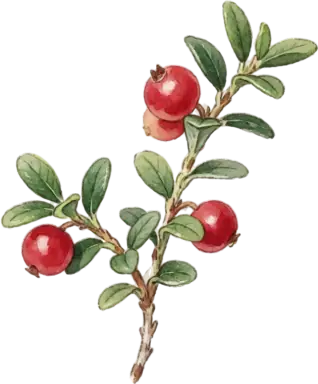
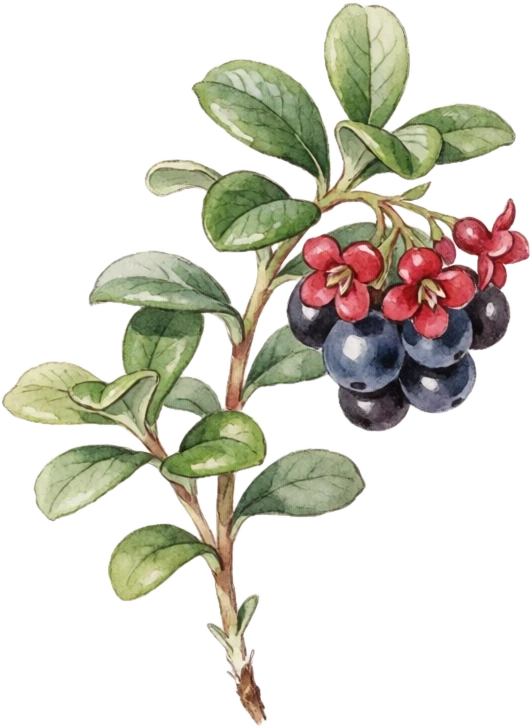
Botanical illustration of Lingonberry
Shrub · Vaccinium vitis-idaea

The evergreen groundcover that gives you Scandinavian lingonberries — tart, jewel-red, often in two harvests a year, for the classic sauce and jam. Glossy, low, and cold-hardy to zone 2, it knits into a beautiful edible mat in acid, peaty soil (think blueberry conditions). Ornamental and productive at once.

Shrub · NativeFull Sun to Part ShadeModerate waterSlow growthNative to North AmericaExcellent edibleAttracts beesNeeds a pollination partner

Where to buy the plant — 3 nurseries

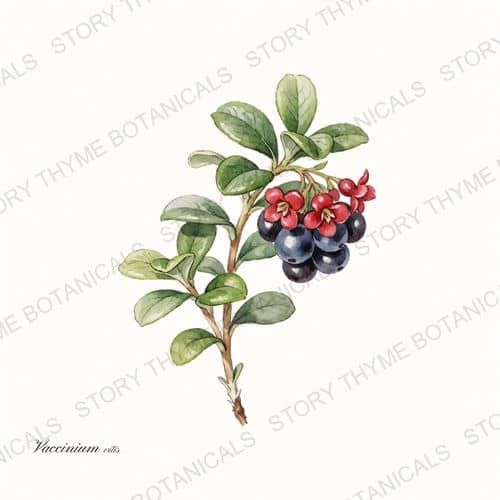
Lingonberry — a print from the Berry Plants collection

From the print shop

Growing lingonberry? Hang it.

Our Berry Plants collection carries lingonberryVaccinium vitis-idaea, print Nº 11, “Lingonberry.”

16 designsfrom $21.99white or black groundmatte poster, unframed

Shop Berry Plants botanical prints →

I

Overview

Will lingonberry suit your garden, and what goes wrong.

Will it fruit where you are?

Enter your ZIP — we look up your USDA hardiness zone (2023 map) and check it against what lingonberry actually needs.

Hardy inZones 2-7
PollinationPartner needed

Lingonberry at a glance

HardinessUSDA 2–7
Mature size6-12 in evergreen mat
PollinationBell flowers feed bees
Chill requirementNot yet established
Bloom seasonSpring and again late summer (often two flushes)
Harvest seasonTart red berries (twice a year) — the Scandinavian lingonberry, for sauce, jam, and syrup; glossy evergreen groundcover
Growth rateSlow

Common lingonberry problems

  • Almost none
  • Almost none
  • Poor pollination → low fruit set (plant a partner)

II

Growing

Light, water, soil, propagation and the season’s jobs.

How to grow lingonberry: light, water & soil

LightFull Sun to Part Shade
WaterModerate, even — like its blueberry cousins
SoilACID, peaty, well-drained · pH 4.0 - 5.5
FertilizerAcid feed lightly
PruningRarely needed — A charming cold-hardy evergreen groundcover that fruits — glossy little leaves and tart red Scandinavian lingonberries, often in two crops a year, for the sauce that graces Swedish meatballs. Needs the same acid, peaty soil as blueberries. Spreads slowly by runners into a handsome edible mat. Hardy to zone 2.
Spacing12 in

How to plant & propagate lingonberry

PropagateGrafted, or from cuttings/layering (seed won't come true)

The lingonberry growing playbook

Field-tested instructions for every job lingonberry asks of you, compiled from university extension guidance — in the order the season brings them.

Planting out

Plant with a second cultivar as a pollinizer

Plant in spring as soon as the soil can be worked, in full sun, setting roots 2 to 3 inches deep and spacing plants 8 to 18 inches apart. Add a second cultivar such as Red Pearl or Sussi at roughly one plant in ten, and keep it near the others so bees will move between them. Fall planting also works. Lingonberry will set some fruit on its own, but the berries stay small. Pollen from a different cultivar, carried by bumblebees, honeybees, and flies, is what produces full-size berries and the highest yield, and it is needed for both the spring and the summer bloom.

Wind does almost nothing to pollinate lingonberry, so a sheltered site with active insects matters more than airflow. Heavy rain or high wind during bloom hampers pollination.

Watering

About half an inch a week, and never bone dry

Apply 0.5 to 0.75 inch of water a week, by drip if you can manage it. Water without fail through the first summer after planting to establish the roots and prevent sunburn. On heavier soil, hold back rather than push. Two opposite mistakes kill lingonberry. Letting the soil dry out concentrates salts in the soil water, which this species tolerates very poorly. Overwatering a heavy soil invites Phytophthora root rot and Pythium, which is exactly how Koralle plantings died in Oregon trials.

Test irrigation water for pH, chloride, sodium, and calcium before relying on it. Lingonberry is damaged by even modest chloride and sodium levels.

Mulching

Renew the acid mulch each spring

Keep at least a 2 inch layer of peat moss, partially decomposed sawdust, or bark mulch over the root zone each spring, and renew the deeper 4 to 6 inch planting mulch every 3 to 6 years as it breaks down. Lingonberry roots run right at the soil surface, so mulch is what holds moisture and smothers weeds. It matters because the alternative does not exist here: cultivating deeply enough to control weeds would shred the very roots you are trying to feed.

Do not use preservative-treated wood mulch.

Feeding

Feed lightly in spring, ammonium nitrogen only

Give one light spring feeding of nitrogen in the ammonium form: urea, or ammonium sulfate where the soil pH also needs pulling down. Commercial rates are only 20 to 40 pounds of actual nitrogen per acre through the first five years and about 40 pounds a year after that, so at garden scale this is a scattering, not a handful. When in doubt, give less. This is a lean boreal heath plant. Nitrogen above roughly 60 pounds per acre pushes leafy growth at the expense of flowers and actually reduces the crop, and overapplication causes a brown-to-black dieback that looks so much like Phytophthora root rot that growers misdiagnose it as disease.

Use only chloride-free fertilizer. Chloride salts severely damage lingonberry, and high sodium or calcium is also toxic. Koralle and Red Pearl are more sensitive to high rates than other cultivars.

Pruning

Leave it unpruned for five years, then mow alternate rows

Do not prune at all for the first four or five years after planting. Once the planting is five years or older, cut alternate rows down to about 2 to 3 inches above the mulch in very early spring, and repeat every 3 to 6 years. Never cut the whole planting in one year. Lingonberry blooms on the tips of last year's growth, so cutting removes the coming crop outright. It also stimulates dense, vigorous, unbranched one-year wood that carries many more fruiting stems the following season. Alternating rows buys that renewal while leaving half the planting in bloom wood.

Extension notes there is still no established best practice for pruning lingonberry, so treat the mow as renewal on a long cycle rather than annual maintenance.

Protection

Cover open flowers when frost threatens

If frost is forecast while the bell-shaped flowers are open, cover the planting with floating row cover or run overhead irrigation through the freeze. Take covers off once temperatures rise so pollinating insects can reach the flowers. Frost at temperatures as mild as 28F damages lingonberry flowers and prevents pollination and fruit set, and a freeze during flowering or fruiting can cost up to half the berries. The damage is to the flower itself, so once it is done there is no second chance at that crop.

Protect only when hard cold arrives without snow

Where winter temperatures drop below about 10F and snow cover is thin or absent, protect plants with straw mulch, floating row cover, or overhead irrigation. Under reliable snow, do nothing. Lingonberry has come through 2F unharmed in Oregon, Washington, and Wisconsin plantings. Snow is the insulation this species evolved under, so it is bare, snowless cold that injures the evergreen leaves and buds, not low temperature by itself.

Harvesting

Take the fall crop dark red, after a sharp frost

Pick when the berries are light to dark red; any green left on the fruit means it will taste bitter. Favor the fall crop and let the lighter summer crop go, and pick it after a sharp frost. A hand rake of the sort used for lowbush blueberries and dry cranberries works well. Refrigerate at 32 to 45F: extension figures for clean, not-overripe fruit range from 3 to 5 weeks for fresh-pack shipping (PNW 583-E) up to 8 to 12 weeks (Cornell). Freezing holds the fruit for many months. The summer berries drop from the plant by the fall harvest anyway, and the fall crop is both heavier and better quality. The fruit's own high benzoic acid content is what gives it an unusually long shelf life once picked.

A frost just before harvest does not hurt fruit on the plant, but a prolonged freeze will destroy the crop. Berries left too long are overripe, will not store, and should be processed at once.

III

The year

What lingonberry asks for, month by month.

The lingonberry year, month by month

MonthJanFebMarAprMayJunJulAugSepOctNovDec
Bloom

What each band means

  • Bloomflowers open — pollinators working, frost on blossoms is the danger.

The lingonberry year as text

  • Jan quiet month
  • Feb quiet month
  • Mar bloom
  • Apr bloom
  • May bloom
  • Jun quiet month
  • Jul quiet month
  • Aug bloom
  • Sep quiet month
  • Oct quiet month
  • Nov quiet month
  • Dec quiet month

These are the species' typical months — expect them a few weeks earlier in warm zones and later in cold ones. Watch the plant, not just the calendar.

IV

Ecology & uses

What it does for the garden, and what it is grown for.

Lingonberry in the garden system

  • Groundcover layer shrub
  • Living mulch
  • Keystone: Keystone shrub — hosts 290+ caterpillar species
AttractsBees
MoistureFacultative / average
DeerBrowsed — protect young plants
OriginNative to North America

What lingonberry is grown for

✓ Commonly eatenBerries edible (tart)

UseLingonberry sauce
UseEdible groundcover
UseCold-climate fruit
Edible value4/5

Harvesting & storing lingonberry

Tart red berries (twice a year) — the Scandinavian lingonberry, for sauce, jam, and syrup; glossy evergreen groundcover.

Edibility, identification, and traditional-use notes here are general reference — not medical or veterinary advice, and not a claim that any plant treats or prevents anything. Medicinal ratings record how strongly a plant features in herbal tradition, nothing more. Never eat or dose a plant you have not positively identified. More on how to use this library.

V

Cultivars

Named varieties of lingonberry, ruled as a catalogue.

Best lingonberry varieties & cultivars

11 on file

Named varieties of lingonberry differ in winter-chill needs, ripening time, hardiness, and whether they set fruit on their own — pick one that fits your climate.

Koralle

Partly self-fertile
Ripenssummer and fallZones2-7Size12 to 14 inches tall, upright and bushy
Pollinationmain crop

tangy and highly flavored, pale to medium red — Released in Holland in 1969 as an ornamental groundcover, then taken up for fruit, and now makes up almost all of European production. Moderate to high yielding but slow to spread. Berries average 0.23 gram and grow on the branch tips, and the plant's upright, bushy habit makes it one of the easiest cultivars to pick. In Oregon it showed moderate to severe root-rot dieback on heavy, over-irrigated soil, and it is among the cultivars most sensitive to overfertilizing.

Where to buy ‘Koralle

Story Thyme Farms may earn a small commission from these links, at no cost to you — it never changes what we recommend.
Red Pearl

Partly self-fertile
Ripenssummer and fallZones2-7Size13 to 15 inches tall, upright and vigorous
Pollinationpollinizer

mild, bright red — Dutch cultivar from 1981, introduced to the U.S. by Elden Stang in 1983. Low yielding on its own but planted everywhere as the standard pollinizer, usually at ten percent of a field. Berries are small to medium at 0.18 gram and carried on the branch tips, with two flower periods so it covers both blooms. Reported to be the most tolerant of less than ideal soil, but Coleophoma empetri ripe rot has been found on it, and it is sensitive to high fertilizer rates.

Where to buy ‘Red Pearl

Story Thyme Farms may earn a small commission from these links, at no cost to you — it never changes what we recommend.

Sussi · Suissi

Partly self-fertile
RipensfallZones2-7Diseasesome resistance to Phytophthora root rotSize7 to 10 inches tall, spreading habit
Pollinationpollinizer

dark red, globular, large fruit — Swedish patented cultivar from 1985, the other standard pollinizer alongside Red Pearl. Moderate yields ripening uniformly in mid-October, with small to medium berries at 0.26 gram on the branch tips. The one cultivar extension credits with some resistance to Phytophthora root rot, which is the disease most likely to kill a planting on heavy ground. Also described as a nice ornamental plant.

Where to buy ‘Sussi

Story Thyme Farms may earn a small commission from these links, at no cost to you — it never changes what we recommend.

Erntesegen

Partly self-fertile
Ripenssummer and fallZones2-7Size12 to 15 inches tall, vigorous and upright
Pollinationmain crop

sweetest of the trialed cultivars at 13.9 Brix, bright dark red — German cultivar and the top performer in the Fall Creek, Oregon trials, yielding 15 tons per acre against a 6.6 ton trial average. Berries are very large at 0.41 gram, borne on the branch tips, and it recorded the highest soluble solids of any cultivar tested. Unusual in producing larger berries in the summer crop than in the fall.

Where to buy ‘Erntesegen

Story Thyme Farms may earn a small commission from these links, at no cost to you — it never changes what we recommend.

Ida

Partly self-fertile
Ripenssummer and fallZones2-7Size5 to 7 inches tall, low with dark green leaves
Pollinationmain crop

dark red — Swedish cultivar from 1997 carrying the largest berries of any cultivar in the Oregon trials at 0.45 gram, on a notably short plant. High yielding, and blooms very vigorously once past its first two years. Fruit is overripe by mid-November, so it will not wait.

Where to buy ‘Ida

Story Thyme Farms may earn a small commission from these links, at no cost to you — it never changes what we recommend.

Erntekrone

Partly self-fertile
Ripenssummer and fallZones2-7Size8 to 12 inches tall, upright and vigorous
Pollinationmain crop

tartest of the trialed cultivars at 10.2 Brix, bright red — German cultivar developed in 1981, high yielding in both the summer and fall crops. Berries are medium to large at 0.32 gram. Leaves are dark green and rounder than the oval shape typical of the species, which makes it easy to tell apart. Allantophomopsis lycopodina black rot has been found on this cultivar.

Where to buy ‘Erntekrone

Story Thyme Farms may earn a small commission from these links, at no cost to you — it never changes what we recommend.

Erntedank

Partly self-fertile
Ripenssummer and fallZones2-7Size14 to 16 inches tall, the tallest of the common cultivars
Pollinationmain crop

mild, bright red — German cultivar, high yielding with a good summer and fall crop, though the berries are the smallest of the trialed cultivars at 0.17 gram. Moderate growth habit that only begins to spread in the third year, so it fills in slowly. Fruit is produced on the branch tips.

Where to buy ‘Erntedank

Story Thyme Farms may earn a small commission from these links, at no cost to you — it never changes what we recommend.
Splendor

Partly self-fertile
Ripenssummer and fallZones2-7Size6 to 10 inches tall, moderately vigorous with modest spread
Pollinationmain crop

brilliant red, high in anthocyanins — Released in 1994 by the University of Wisconsin-Madison from Finnish seed, the sister selection to Regal. Precocious, often cropping in its second year and yielding heavily from the third. Berries are small at 0.24 gram on the branch tips. Extension describes its flowers and fruit buds as somewhat frost tolerant, which is worth weighing anywhere late frosts routinely hit bloom.

Where to buy ‘Splendor

Story Thyme Farms may earn a small commission from these links, at no cost to you — it never changes what we recommend.

Linnea · Linnae

Partly self-fertile
Ripenssummer and fallZones2-7Size5 to 9 inches tall, light green foliage
Pollinationmain crop

very dark red — Swedish cultivar from the Balsgard Institute, released 1997. Cornell describes it as vigorous, upright, and a heavy cropper with smaller berries than Ida; the Oregon trials, by contrast, had too little time in production to rate its yield at all, so treat the yield claim as unsettled. Berries are medium at 0.24 gram. Like Erntesegen, Koralle, and Sanna it produces larger berries in the summer crop than in the fall. Very ripe by November.

Where to buy ‘Linnea

Story Thyme Farms may earn a small commission from these links, at no cost to you — it never changes what we recommend.

Scarlet · Scarlett

Partly self-fertile
Ripenssummer and fallZones2-7Size4 to 8 inches tall, medium green leaves
Pollinationpollinizer

light red — Older Norwegian cultivar, moderate yielding but vigorous, and a heavy pollen producer. Cornell rates it best used as a pollinator for Koralle; the PNW guide instead counts it among the high-yielding producers rather than its two named pollinizers (Red Pearl and Sussi), and notes it is commonly used in ornamental gardening. Berries are medium at 0.27 gram on the branch tips.

Where to buy ‘Scarlet

Story Thyme Farms may earn a small commission from these links, at no cost to you — it never changes what we recommend.

Regal

Partly self-fertile
Ripenssummer and fallZones2-7Size2 to 4 inches tall, very dark green foliage
Pollinationmain crop

dull red — Released in 1994 by the University of Wisconsin-Madison from Finnish seed, and one of the oldest lingonberries grown in the United States. Low yielding and grown mainly as an ornamental, with small dull berries at 0.18 gram and two bloom periods. Moderate vigor with some frost resistance. Choose it for groundcover, not for fruit.

Where to buy ‘Regal

Story Thyme Farms may earn a small commission from these links, at no cost to you — it never changes what we recommend.

VI

Sources & plant ID

Where the care distinctions come from, and how the plant is filed.

Research basis

Sources behind this profile

No extension citations are attached to lingonberryyet. The care figures below come from the library's own catalogue rather than a traced primary source.

Plant ID

BinomialVaccinium vitis-idaea
FamilyEricaceae
TypeShrub · Perennial
USDA symbolVAVI
OriginNative to North America
Invasive riskLow

VII

Where to buy

Third-party nurseries — not Story Thyme Farms.

Third-party nurseries, not Story Thyme Farms. Prices are theirs.

Story Thyme Farms may earn a small commission from these links, at no cost to you — it never changes what we recommend.

Lingonberry needs a pollination partner — plant two genetically distinct plants (two different cultivars, or a cultivar plus a seedling).

VIII

Questions

Lingonberry questions, answered straight.

Why isn't my lingonberry fruiting?

Most often: it has no genetically distinct partner nearby. Lingonberry can't pollinate itself — bell flowers feed bees. Plant a second, unrelated one nearby; two different cultivars, or a cultivar plus a seedling, is the classic pairing.

Is lingonberry safe for kids and pets?

Lingonberry is commonly eaten and isn't considered toxic, but "commonly eaten" isn't a guarantee for any particular person or animal — allergies, quantity, and which part you eat all matter. One caveat on this one: Berries edible (tart. Never eat a plant you haven't positively identified, and check with a vet before letting pets or livestock graze anything new.

When do you harvest lingonberry?

Tart red berries (twice a year) — the Scandinavian lingonberry, for sauce, jam, and syrup; glossy evergreen groundcover.

How do you propagate lingonberry?

Grafted, or from cuttings/layering (seed won't come true).

IX

Elsewhere

Where lingonberry sits in the library.

Where lingonberry sits in the library

Grows in the same world