The illustrated growing guide

Prickly Pear

Opuntia spp.

Family Cactaceae

Est. zones 4-11

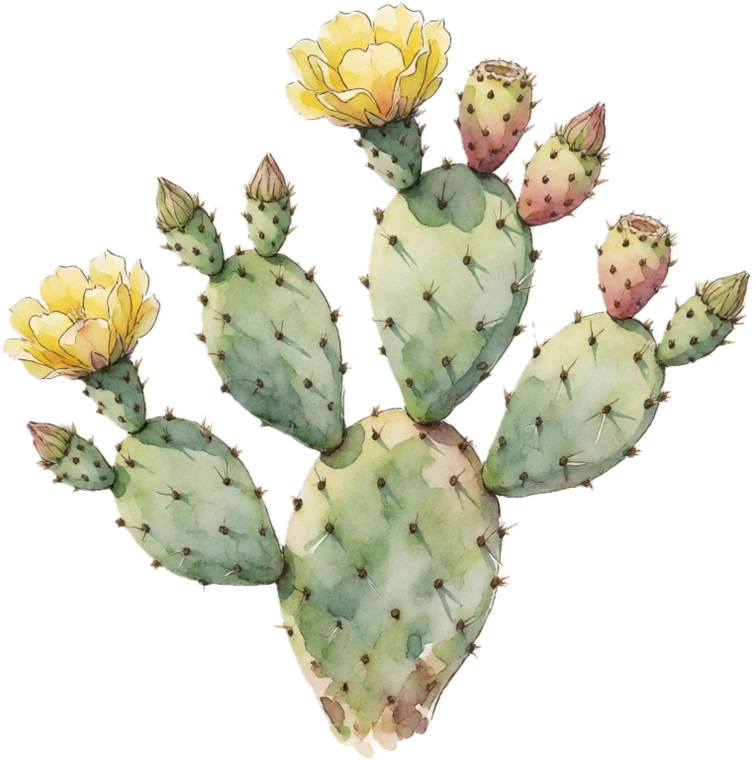
Botanical illustration of Prickly Pear
Cactus · Opuntia spp.

A cactus that's hardy to -20°F AND a vegetable AND a fruit: the pads are Mexican nopales (grilled, in eggs) and the tunas are sweet magenta fruit. Native across most of the US. The catch is the glochids — those innocent-looking tufts of tiny barbed hairs embed in skin miserably, so handle with thick gloves and tongs. Buy spineless types for eating.

CactusFull SunLow waterSlow-Moderate growthExcellent edibleAttracts bees

Where to buy the plant — 2 nurseries

Bunny Ear — a print from the Cacti Vol. 2 collection

From the print shop

The closest print we make

We don’t print Opuntia spp. The closest we have is Opuntia microdasys (“Bunny Ear”) in the Cacti Vol. 2 collection — the same genus, Opuntia, not the same species.

16 designsfrom $21.99white or black groundmatte poster, unframed

Shop Cacti Vol. 2 botanical prints →

I

Overview

Will prickly pear suit your garden, and what goes wrong.

Will it fruit where you are?

Enter your ZIP — we look up your USDA hardiness zone (2023 map) and check it against what prickly pear actually needs.

Hardy inZones 4-11

Prickly Pear at a glance

HardinessUSDA 4–11
Mature size1-6 ft by species
PollinationBees mob the big waxy flowers
Chill requirementNot yet established
Bloom seasonLate Spring - Summer (huge yellow/orange/pink blooms)
Harvest seasonYoung pads (nopales) spring-summer; fruit (tunas) late summer — both edible, both need de-spining
Growth rateSlow-Moderate

Common prickly pear problems

  • Cochineal Scale (white fuzz)
  • Cactus Bugs
  • Rot in wet soil

II

Growing

Light, water, soil, propagation and the season’s jobs.

How to grow prickly pear: light, water & soil

LightFull Sun
WaterVery low — true xeric cactus
SoilSandy, gritty, sharp drainage; rots in wet clay · pH 6.0 - 8.0
FertilizerNone
PruningSpring (remove damaged pads) — Snap off pads at the joint to propagate or control; wear thick gloves — beware the tiny hair-like glochids.
Spacing2-4 ft

When to spray prickly pear

Growing season. Site for drainage; that's the whole program.

The prickly pear growing playbook

Field-tested instructions for every job prickly pear asks of you, compiled from university extension guidance — in the order the season brings them.

Planting out

Start new plants from callused pads

In warm weather cut a pad at least six months old off at its joint, stand it in a dry shaded spot for one to two weeks until the cut face forms a hard callus, then set it upright just one inch deep in a half-and-half mix of soil and sand. Stake or wedge it with rocks so it stays upright, and do not water it in. Roots form in about a month; water once then, and let it dry out between waterings after that. An uncallused cut is an open wound on a stem that is over 90 percent water, so a pad planted wet or planted deep rots before it can root. The callus seals it, and pads root far faster than seed, which takes three to four years to reach flowering.

Handle every pad with leather gloves and tongs. Glochids are the tiny barbed bristles at the spine bases, they detach on contact and lodge in skin.

Watering

Cut water back to almost nothing while dormant

Through the dormant months give bright light and only enough water to keep the pads from shriveling. Let the soil dry fully between waterings the rest of the year. Given genuinely sharp drainage the plant tolerates a lot of water, but in heavy soil that holds moisture, water little. Prickly pear stores its own water in the pads, so its roots have no defense against soil that stays wet. Root and stem rot from overwatering is the way most backyard plants die, not cold or drought.

Feeding

Feed for pads or for fruit, not both

Decide what you want off this plant. If you are growing it for nopales, feed a high-nitrogen fertilizer through the growing season to push tender new pads. If you want tunas, switch to a no-nitrogen fertilizer such as 0-10-10 about once a month instead. Nitrogen buys leafy stem growth at the expense of flowers, and every flower is one fruit, so a nitrogen-fed plant gives you pads and few tunas. Dropping the nitrogen pushes the plant toward bloom.

Pruning

Cut pads off at the joints, never across the face

When you are shaping the clump, thinning a crowded center, or removing a damaged pad, always make the cut at the narrow joint where one pad meets the pad below it. Do this in warm weather, and let removed pads dry out before you replant or discard them. A cut at the joint is a small wound that callus closes over quickly, while a cut across a pad leaves a wide wet face that stem-end rot moves straight into. Rot at cut tissue is the main thing that ruins harvested and pruned pads.

Leather gloves and tongs. Prunings still carry glochids and root where they fall, so bag them rather than leaving them in the bed.

What to watch for

Cochineal scale: check the cottony wax before you treat

Look over the pads for conspicuous white cottony masses. Scrape one off with a knife and crush it on paper - a deep red smear confirms cochineal scale. Light colonies do negligible damage and need nothing. Only if the plant is heavily colonized and declining, prune the worst pads off at their joints and discard them, blast the rest with a high-pressure hose nozzle, and then spray insecticidal soap on the scale bodies the water has exposed. The white wax is the insect's shelter, and it sheds sprays as well as it sheds predators, so soap applied over intact wax accomplishes nothing. Stripping the wax with water first is what makes the soap work. Multiple generations run through a warm season, and the mobile crawler stage is how they reach the next plant.

Insecticidal soap only, and only on washed, exposed scale - it spares the natural enemies that hold this pest down. Do not spray while the flowers are open; cactus blooms are heavily worked by bees. Wait until bloom is finished.

Harvesting

Cut nopales young, and in the middle of the day

Take the small, tender young pads while they are still soft and thin, cutting them free at the joint where they meet the supporting pad with a sanitized knife. Harvest between mid-morning and mid-afternoon. A well-tended plant can be cut for pads up to six times a year, so keep taking the new flush as it comes rather than stripping the plant at once. On a newly planted pad, wait several months before taking anything. Acid content in the pads is lowest from mid-morning to mid-afternoon, so midday-cut nopales taste better than dawn-cut ones. Young pads are the most succulent and carry the fewest spines. Cutting a young plant too early costs you every future harvest, because the pads you remove are the branches that would have borne them.

Every Opuntia has glochids, even the spineless kinds. Scrape the glochids off with a knife before the pad goes anywhere near the sink - do not rinse a pad until the spines and glochids are off it, or you seed the basin with bristles.

Pick tunas only once the glochids drop, and twist them off

Watch the fruit for its glochids falling away on their own - that is the ripeness signal. Twist each tuna off the pad rather than pulling it. Tunas are borne on mature pads, generally the second or third pad to form. Each fruit holds its perfect stage of ripeness for only about a week, so check the planting every few days once the first glochids start dropping. Prickly pear fruit does not continue to ripen once harvested, so a tuna picked early is a tuna that stays sour. Pulling instead of twisting tears the stem end, and damage to the peel and stem end is what lets decay pathogens in - shelf life is short at best, on the order of eight or nine days, so torn fruit is fruit you lose.

Leather or rubber gloves and tongs, and carry the fruit in paper bags - glochids go straight through cloth. Burn the glochids off over an open flame or brush them off before peeling.

III

The year

What prickly pear asks for, month by month.

The prickly pear year, month by month

MonthJanFebMarAprMayJunJulAugSepOctNovDec
Bloom
Prune
Harvest

What each band means

  • Bloomflowers open — pollinators working, frost on blossoms is the danger.
  • Pruneshape it now — cuts heal cleanly and structure is visible.
  • Harvestpicking time — check ripeness every few days.

The prickly pear year as text

  • Jan quiet month
  • Feb quiet month
  • Mar pruning, harvest
  • Apr pruning, harvest
  • May bloom, pruning, harvest
  • Jun bloom, harvest
  • Jul bloom, harvest
  • Aug bloom, harvest
  • Sep quiet month
  • Oct quiet month
  • Nov quiet month
  • Dec quiet month

These are the species' typical months — expect them a few weeks earlier in warm zones and later in cold ones. Watch the plant, not just the calendar.

IV

Ecology & uses

What it does for the garden, and what it is grown for.

Prickly Pear in the garden system

  • Groundcover layer cactus
AttractsBees
MoistureUpland / dry
DeerBrowsed — protect young plants

What prickly pear is grown for

✓ Commonly eatenPads/fruit edible (de-spined); glochids irritate skin badly

UseNopales
UseTuna fruit
UseXeriscape
UseNative
Edible value4/5

Harvesting & storing prickly pear

Young pads (nopales) spring-summer; fruit (tunas) late summer — both edible, both need de-spining.

Edibility, identification, and traditional-use notes here are general reference — not medical or veterinary advice, and not a claim that any plant treats or prevents anything. Medicinal ratings record how strongly a plant features in herbal tradition, nothing more. Never eat or dose a plant you have not positively identified. More on how to use this library.

V

Cultivars

Named varieties of prickly pear, ruled as a catalogue.

Best prickly pear varieties & cultivars

2 on file

Named varieties of prickly pear differ in winter-chill needs, ripening time, hardiness, and whether they set fruit on their own — pick one that fits your climate.

Burbank Spineless · Burbank's Spineless

Ripenslate summerZones9-11Sizeto about 6ft tall, with 1ft oblong bluish-green pads

reddish-purple tunas likened to watermelon — Luther Burbank's near-spineless Opuntia ficus-indica, hardy to about 20F, so it needs a frost-free or nearly frost-free spot or a container that comes in. Orange-yellow flowers in spring and early summer. Grown for both nopales and tunas.

Where to buy ‘Burbank Spineless

Story Thyme Farms may earn a small commission from these links, at no cost to you — it never changes what we recommend.

Ellisiana · Opuntia cacanapa 'Ellisiana'; Opuntia ellisiana; Thornless Blue

Ripenslate summer - fallZones7-10Size3-4ft tall by 6ft wide in five years, 6in grey-green pads

large red tunas — A spineless selection of the Texas native Opuntia cacanapa, reported hardy to about 0F and essentially free of glochids as well as spines, which is unusual. Bright yellow flowers in summer, red tunas after. Well-drained winter soil is what decides whether it survives the cold, not the low temperature alone.

Where to buy ‘Ellisiana

Story Thyme Farms may earn a small commission from these links, at no cost to you — it never changes what we recommend.

VI

Sources & plant ID

Where the care distinctions come from, and how the plant is filed.

Research basis

Sources behind this profile

No extension citations are attached to prickly pearyet. The care figures below come from the library's own catalogue rather than a traced primary source.

Plant ID

BinomialOpuntia spp.
FamilyCactaceae
TypeCactus · Perennial
USDA symbolOPUNT
Invasive riskLow

VII

Where to buy

Third-party nurseries — not Story Thyme Farms.

Third-party nurseries, not Story Thyme Farms. Prices are theirs.

Story Thyme Farms may earn a small commission from these links, at no cost to you — it never changes what we recommend. As an Amazon Associate I earn from qualifying purchases.

VIII

Questions

Prickly Pear questions, answered straight.

Is prickly pear safe for kids and pets?

Prickly Pear is commonly eaten and isn't considered toxic, but "commonly eaten" isn't a guarantee for any particular person or animal — allergies, quantity, and which part you eat all matter. One caveat on this one: Pads/fruit edible (de-spined); glochids irritate skin badly. Never eat a plant you haven't positively identified, and check with a vet before letting pets or livestock graze anything new.

When do you harvest prickly pear?

Young pads (nopales) spring-summer; fruit (tunas) late summer — both edible, both need de-spining.

IX

Elsewhere

Where prickly pear sits in the library.

Where prickly pear sits in the library

Grows in the same world