Mandevilla
Mandevilla × hybrids
Family Apocynaceae
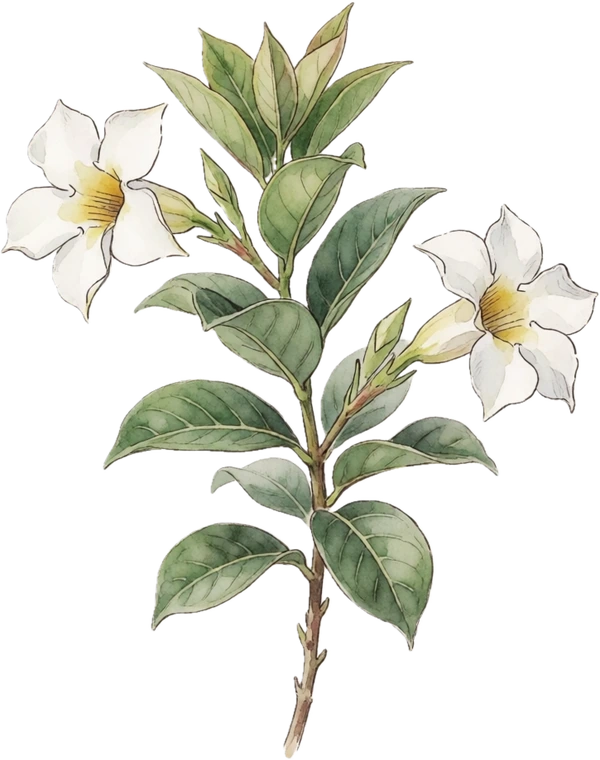
Mandevilla turns a plain patio trellis into the tropics — glossy leaves and a nonstop parade of big red, pink, or white trumpets from planting until frost, no deadheading required. It loves the baking sun that wilts other container plants, climbing six to ten feet in a single season.
Hummingbirds find the trumpets fast. Hardy outdoors only in zones 10 and 11, it happily winters on a bright windowsill instead, ready to go out again — one plant, many summers. Keep it up out of pets' reach (the milky sap is no snack) and give your sunniest railing a show.
 Full Sun to Part Shade
 Moderate water
 Fast growth
 Attracts hummingbirds
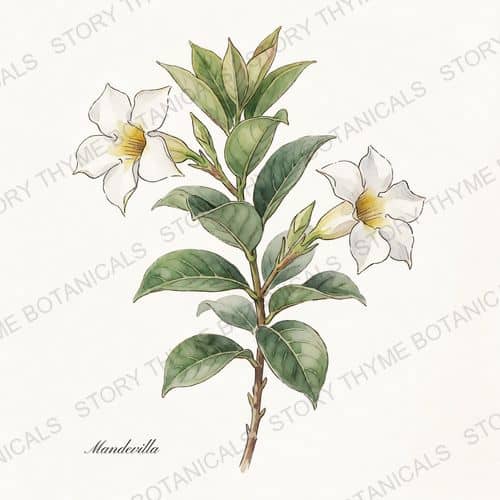
From the print shop
Growing mandevilla? Hang it.
Our Plant Library collection carries mandevilla — Mandevilla, print Nº 291, “Mandevilla.”
526 designsfrom $12.99white or black backgroundmatte poster, unframed
Will it thrive where you are?
Enter your ZIP — we look up your USDA hardiness zone (2023 map) and check it against what mandevilla actually needs.
 Life cyclePerennial zones 10–11, annual elsewhere
Mandevilla · Common problems
Common mandevilla problems

Pests
3 problems on file
- Spider Mites
- Mealybugs
- Whitefly (esp. indoors)

Diseases
1 problem on file
Mandevilla · Growing & propagation
Growing mandevilla
- Light
- Full Sun to Part Shade
- Water
- Moderate, even
 Soil
Soil- Rich, well-drained · pH 6.0 - 7.0
 Fertilizer
- Bloom feed (high P) every 2 weeks in season
 Pruning
- Overwinter tip: cut back, bring in before 50°F
A patio and container superstar: a trellis in a pot smothered in tropical trumpets all summer. Pinch for fullness. Overwinter it as a houseplant in a bright window (it'll slow down) or take cuttings.
 Spacing
- One per trellis/pot
Mandevilla · Seasonal care & spray guidance
The mandevilla growing playbook
When to spray mandevilla
Growing season. Wash pests off before bringing indoors.
Mandevilla · Calculators & field guides
A little help in the garden.
Mandevilla · Yearly calendar
The mandevilla year, month by month
Jan
No calendar activity is listed for this month.
 Bloom
BloomBloomJune to August
What each band means
- Bloom — flowers open — pollinators working, frost on blossoms is the danger.
These are the species' typical months — expect them a few weeks earlier in warm zones and later in cold ones. Watch the plant, not just the calendar.
Mandevilla · Ecology & uses
Ecology & uses
Mandevilla × hybrids
Mandevilla in the garden system
- Vine layer vine
 Attracts
- Hummingbirds
- Moisture
- Facultative / average
 Deer
Deer- Browsed
Protect young plants
What mandevilla is grown for
! Some parts toxic — see notesToxic to pets; milky sap irritates
 Use
Use- Patio trellises
- Use
- Summer trumpets
- Use
- Containers
Edibility, identification, and traditional-use notes here are general reference — not medical or veterinary advice, and not a claim that any plant treats or prevents anything. Medicinal ratings record how strongly a plant features in herbal tradition, nothing more. Never eat or dose a plant you have not positively identified. More on how to use this library.
Mandevilla · Varieties & cultivars
Choosing a mandevilla variety
'Alice du Pont' (classic pink); 'Sun Parasol' series; Dipladenia types (bushier, for pots)
Sources & plant identity
Know what you’re growing.
See where the knowledge comes from.
Mandevilla
Mandevilla × hybrids
The plant, at a glance.
- Botanical name
- Mandevilla × hybrids
- Plant family
- Apocynaceae
- Growth habit
- Vine · Tender Perennial
- USDA plant symbol
- MANDE
- Invasive risk
- Low
Hardiness, size and timing vary with your cultivar, soil and climate.
Rooted in research.
University extension research, brought together with hands-on growing experience at Story Thyme Farms.
for Mandevilla
Research from these sources


Publisher marks identify sources, not sponsorship or endorsement.
Questions
Mandevilla questions, answered straight.
Is mandevilla safe for kids and pets?
With care. Toxic to pets; milky sap irritates Site it accordingly if children or pets roam the garden. This is general reference, not medical or veterinary advice — call a vet or poison control if something has actually been eaten.
Elsewhere
Where mandevilla sits in the library.
 Sweet Pea
 Morning Glory
 Clematis
 Wisteria