The illustrated growing guide

Maypop (Hardy Passionflower)

Passiflora incarnata

Family Passifloraceae

Est. zones 5-9

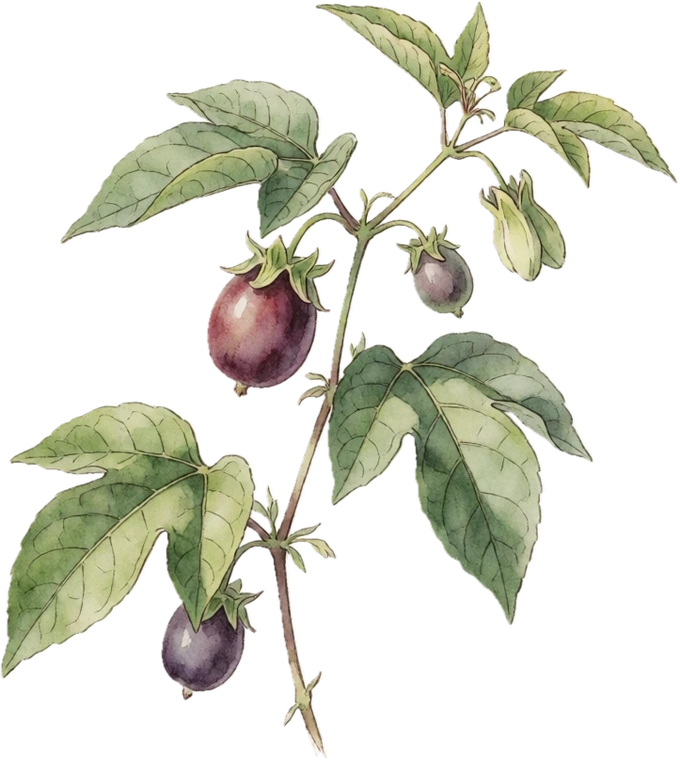
Botanical illustration of Maypop (Hardy Passionflower)
Vine · Passiflora incarnata

A tropical-looking native that laughs at zone 5: carpenter-bee UFO flowers, passionfruit-adjacent fruit, butterfly nursery, and the classic calm-nerves tea — all from a root-hardy vine that vanishes every winter and re-erupts 15 feet by August.

Vine · NativeFull SunLow waterFast growthNative to North AmericaExcellent edibleAttracts butterfliesAttracts beesNone winter chillNeeds a pollination partner

Where to buy the plant — 1 nursery

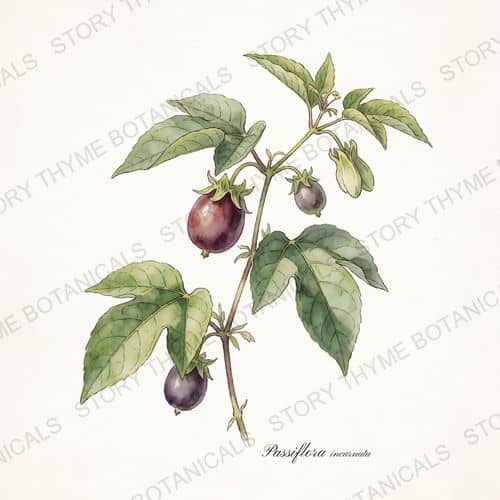
Passionflower — a print from the Vines & Climbers collection

From the print shop

Growing maypop (hardy passionflower)? Hang it.

Our Vines & Climbers collection carries maypop (hardy passionflower)Passiflora incarnata, print Nº 3, “Passionflower.”

16 designsfrom $21.99white or black groundmatte poster, unframed

Shop Vines & Climbers botanical prints →

I

Overview

Will maypop (hardy passionflower) suit your garden, and what goes wrong.

Will it fruit where you are?

Enter your ZIP — we look up your USDA hardiness zone (2023 map) and check it against what maypop (hardy passionflower) actually needs.

Hardy inZones 5-9
Winter chillNone
PollinationPartner needed

Maypop (Hardy Passionflower) at a glance

HardinessUSDA 5–9
Mature size10-20 ft vines, dying to the roots each winter
PollinationCarpenter bees in the alien purple blooms; larval host for Gulf Fritillary butterflies
Chill requirementNone (not chill-dependent)
Bloom seasonJune - September (the most complex flower in the native flora)
Harvest seasonEgg-sized fruits September - October — ripe when they wrinkle and 'pop'; leaves + flowers = the traditional calming tea
Growth rateFast (late to emerge — June)

Common maypop (hardy passionflower) problems

  • Gulf Fritillary caterpillars (the plant feeds them ON PURPOSE — plant enough for both)
  • Few
  • Poor pollination → low fruit set (plant a partner)

II

Growing

Light, water, soil, propagation and the season’s jobs.

How to grow maypop (hardy passionflower): light, water & soil

LightFull Sun
WaterLow-Moderate
SoilAverage, drained; spreads by root in rich beds · pH 6.0 - 7.5
FertilizerNone
PruningNone (dies back) — Remove winter-killed vines in spring; contain root runners by mowing.
Spacing5 ft at a fence (it travels)

The maypop (hardy passionflower) growing playbook

Field-tested instructions for every job maypop (hardy passionflower) asks of you, compiled from university extension guidance — in the order the season brings them.

Sowing

Collect and sow seed once the fruit shrivels

Collect seed in fall after the fruit has begun to shrivel - mature seed is brown with no traces of white. Sow it directly into an outdoor seedbed; that is the best method. If you are holding seed rather than sowing it now, wash the gelatinous covering off first, which is what keeps it in storage. Move seedlings once they have three or four leaves. Seed left in the fruit until it shrivels is fully mature, and an outdoor fall seedbed leaves it in place for spring germination. Sowing several seedlings also gives you the genetically distinct vines that fruit set depends on, since a lone vine is self-sterile.

Planting out

Plant two genetically different vines or you will get flowers and no fruit

Set out at least two maypops that are not clones of each other - two separate seedlings, or a named plant plus a seedling from another source. Suckers off one plant are the same plant, so a patch that spread from a single crown will not pollinate itself. Give each a trellis, fence, or tree trunk to climb. Passiflora incarnata is self-sterile: its own pollen will not set fruit, so a lone vine flowers all summer and drops every bloom. Fruit only forms when a large bee carries pollen from a genetically distinct vine.

Leaves and stems contain cyanogenic glycosides and are poisonous - only the ripe fruit pulp is edible.

Mulching

Mulch the crown once growth starts

Lay mulch around the base of the vine after the shoots emerge, keeping it off the stems. Mulch cuts weed competition, keeps the roots cool, and holds water - maypop is drought-tolerant but fruits best with steady moisture.

Dividing

Lift suckers in spring to make new plants

In early spring, cut around a sucker with a shovel, lift it with its roots attached, replant it where you want it, and water it in immediately. Early spring is also the moment for stem cuttings: strip the lower leaves from a 6-8 inch cutting and set it in rooting medium. Maypop spreads by root suckers, so the plant hands you free divisions every year - and lifting them is the same cut that keeps the patch from running, which is the standard way to control its spread.

A division is a clone of its parent and will not pollinate it - you still need a second, unrelated vine for fruit.

Pruning

Clear the winter-killed vines and steer the new shoots

The top growth dies to the ground each winter - pull and cut away the dead vines in spring, then clip and direct the new shoots onto their support as they appear. Pull suckers coming up outside the bed at the same time. Do not panic if nothing shows early; maypop is a late riser and often waits until the soil is thoroughly warm. The vines are killed to the ground by freezing weather every year while the roots live, so all of next season's growth is new - the old canes are just dead litter, and the plant will run 12 feet or more once it wakes.

What to watch for

Hand-pick Japanese beetles - do not spray this vine

While the vine is in flower, check it in the early morning or evening when beetles are cool and sluggish, and knock or hand-pick them into a bucket of soapy water. Leave the caterpillars alone. Skip Japanese beetle traps - they pull in more beetles than they catch and increase the damage nearby. Maypop is the larval host of the gulf fritillary butterfly, so the caterpillars chewing the leaves are the reason to grow it - they slow growth but the vine survives. Japanese beetles feed heavily where they occur, but an established vine tolerates the loss.

Never apply an insecticide to this vine in bloom - it flowers June to September, exactly when its bees and butterflies are on it, and the large bees that visit are the only thing that will set your fruit. Extension guidance is to avoid insecticides on bee-attractive plants or wait until flowering is over, and this vine flowers and fruits at the same time.

Protection

Mulch deeply for winter at the cold edge of its range

In the colder end of its range, pile a thick winter mulch over the crown after the tops are frosted down. Make sure the site drains - do not let the crown sit in wet soil over winter. The vine is reliably hardy to about zone 6 and survives further north only where a heavy mulch insulates the roots, which are the part that carries the plant to spring. Root rot is the real winter killer in soils that stay wet.

Harvesting

Pick when the fruit turns yellow and wrinkles

Fruit is ready two to three months after the flower it came from. Watch each hen's-egg-sized fruit turn from green to yellowish, then let it wrinkle and soften - that is ripe. Scoop the pulp around the seeds; that arillate pulp is the edible part. Because the vine blooms for months, fruit ripens over a long stretch, so pick repeatedly rather than all at once. Maypop keeps flowering while earlier fruit is still filling, so ripeness tracks each individual flower's date, not the calendar. Green firm fruit is simply unfinished - the sweetness arrives with the color change and the shrivel.

Only ripened fruit is edible; the leaves and stems are poisonous and cause severe nausea, vomiting, and drowsiness if eaten.

III

The year

What maypop (hardy passionflower) asks for, month by month.

The maypop (hardy passionflower) year, month by month

MonthJanFebMarAprMayJunJulAugSepOctNovDec
Bloom
Harvest

What each band means

  • Bloomflowers open — pollinators working, frost on blossoms is the danger.
  • Harvestpicking time — check ripeness every few days.

The maypop (hardy passionflower) year as text

  • Jan quiet month
  • Feb quiet month
  • Mar quiet month
  • Apr quiet month
  • May quiet month
  • Jun bloom
  • Jul bloom
  • Aug bloom
  • Sep bloom, harvest
  • Oct harvest
  • Nov quiet month
  • Dec quiet month

These are the species' typical months — expect them a few weeks earlier in warm zones and later in cold ones. Watch the plant, not just the calendar.

IV

Ecology & uses

What it does for the garden, and what it is grown for.

Maypop (Hardy Passionflower) in the garden system

  • Vine layer vine
  • Nectary/insectary
  • Hosts Gulf fritillary & variegated fritillary butterflies
AttractsButterflies, Bees
MoistureUpland / dry
DeerBrowsed — protect young plants
OriginNative to North America

What maypop (hardy passionflower) is grown for

✓ Commonly eatenfruit + traditional tea

UsePassionfruit
Traditional useCalming tea
UseButterfly host
UseWow factor
Edible value4/5
Traditional use rating3/5 in herbal tradition

Harvesting & storing maypop (hardy passionflower)

Egg-sized fruits September - October — ripe when they wrinkle and 'pop'; leaves + flowers = the traditional calming tea.

Edibility, identification, and traditional-use notes here are general reference — not medical or veterinary advice, and not a claim that any plant treats or prevents anything. Medicinal ratings record how strongly a plant features in herbal tradition, nothing more. Never eat or dose a plant you have not positively identified. More on how to use this library.

V

Cultivars

Named varieties of maypop (hardy passionflower), ruled as a catalogue.

Best maypop (hardy passionflower) varieties & cultivars

2 on file

Named varieties of maypop (hardy passionflower) differ in winter-chill needs, ripening time, hardiness, and whether they set fruit on their own — pick one that fits your climate.

Incense · Passiflora 'Incense'

RipensfallZones5-9Sizevine 8-10 ft on a trellis or fence

juicy tangy pulp — A hybrid of the North American maypop and the South American P. cincinnata, made from a Tennessee maypop clone in 1971 and released by USDA-ARS in 1973. Grown mostly for the large fragrant purple flowers; it fruits, but sets few seed. One Green World lists it as self-fertile, but P. incarnata itself is self-sterile, so plant a second, genetically distinct vine if fruit is the goal.

Where to buy ‘Incense

Story Thyme Farms may earn a small commission from these links, at no cost to you — it never changes what we recommend.

Alba · White Maypop; Passiflora incarnata alba

RipensfallZones7-11Sizevine 10-20 ft

A pure white-flowered form of the native species, with 3-inch flowers blooming in summer. Mostly herbaceous - cut to the ground in winter, and mulch for winter protection in the colder zones. Spreads from underground runners like the species, so expect it to pop up around the garden.

Where to buy ‘Alba

Story Thyme Farms may earn a small commission from these links, at no cost to you — it never changes what we recommend.

VI

Sources & plant ID

Where the care distinctions come from, and how the plant is filed.

Research basis

Sources behind this profile

No extension citations are attached to maypop (hardy passionflower)yet. The care figures below come from the library's own catalogue rather than a traced primary source.

Plant ID

BinomialPassiflora incarnata
FamilyPassifloraceae
TypeVine · Perennial
USDA symbolPAIN6
OriginNative to North America
Invasive riskLow

VII

Where to buy

Third-party nurseries — not Story Thyme Farms.

Third-party nurseries, not Story Thyme Farms. Prices are theirs.

Story Thyme Farms may earn a small commission from these links, at no cost to you — it never changes what we recommend.

Maypop (Hardy Passionflower) needs a pollination partner — plant two genetically distinct plants (two different cultivars, or a cultivar plus a seedling).

VIII

Questions

Maypop (Hardy Passionflower) questions, answered straight.

Why isn't my maypop (hardy passionflower) fruiting?

Most often: it has no genetically distinct partner nearby. Maypop (Hardy Passionflower) can't pollinate itself — carpenter bees in the alien purple blooms; larval host for gulf fritillary butterflies. Plant a second, unrelated one nearby; two different cultivars, or a cultivar plus a seedling, is the classic pairing.

Is maypop (hardy passionflower) safe for kids and pets?

Maypop (Hardy Passionflower) is commonly eaten and isn't considered toxic, but "commonly eaten" isn't a guarantee for any particular person or animal — allergies, quantity, and which part you eat all matter. One caveat on this one: fruit + traditional tea. Never eat a plant you haven't positively identified, and check with a vet before letting pets or livestock graze anything new.

When do you harvest maypop (hardy passionflower)?

Egg-sized fruits September - October — ripe when they wrinkle and 'pop'; leaves + flowers = the traditional calming tea.

IX

Elsewhere

Where maypop (hardy passionflower) sits in the library.

Where maypop (hardy passionflower) sits in the library

Grows in the same world