The illustrated growing guide

Mountain Mint

Pycnanthemum muticum

Family Lamiaceae

Est. zones 4-8

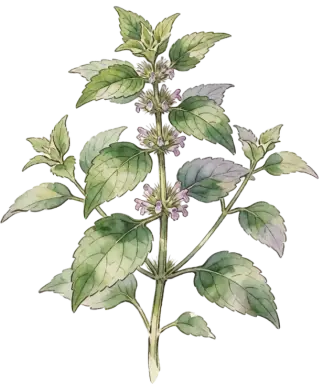
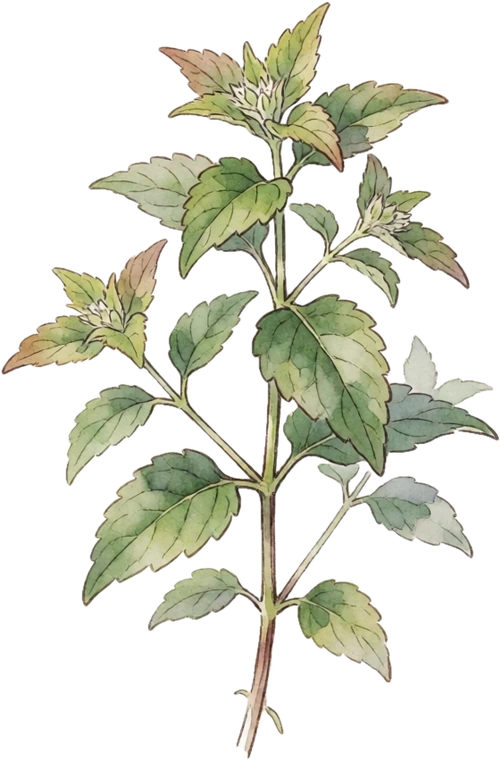
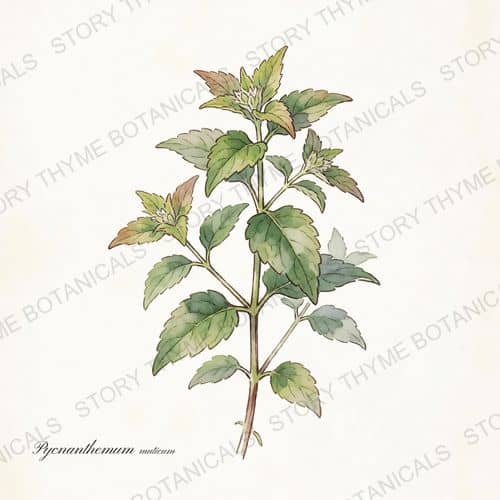
Botanical illustration of Mountain Mint
Perennial · Pycnanthemum muticum

If you plant one thing for pollinators, make it this: in university trials mountain mint draws more total insects and more different species than almost any other plant — a silvery cloud humming with bees, wasps, and butterflies for weeks. Deer won't touch the minty foliage, which also makes a decent tea. Spreads, but politely enough to manage.

Perennial · NativeFull Sun to Part ShadeModerate waterFast growthDeer-resistantNative to North AmericaAttracts butterfliesAttracts bees

⚠ Spreads aggressivelyMountain Mint spreads aggressively — mints and their kin send out underground runners and are extremely hard to get rid of once they're in the ground. Grow it in a sunken pot or a fully contained bed, never loose in open soil.

Where to buy the plant — 1 nursery

I

Overview

Will mountain mint suit your garden, and what goes wrong.

Will it fruit where you are?

Enter your ZIP — we look up your USDA hardiness zone (2023 map) and check it against what mountain mint actually needs.

Hardy inZones 4-8

Mountain Mint at a glance

HardinessUSDA 4–8
Mature size2-3 ft
PollinationTHE pollinator champion — trials rank it #1 for total insect visits; a silvery haze alive with bees, wasps, butterflies
Chill requirementNot yet established
Bloom seasonSummer (frosted silver bracts around tiny flowers, for weeks)
Harvest seasonLeaves for a minty tea
Growth rateFast

Common mountain mint problems

  • Almost none — deer-proof (aromatic)
  • Almost none

II

Growing

Light, water, soil, propagation and the season’s jobs.

How to grow mountain mint: light, water & soil

LightFull Sun to Part Shade
WaterModerate; adaptable
SoilAny decent soil · pH 6.0 - 7.5
FertilizerNone
PruningSpring cleanup — Contain the gentle spread by dividing edges; cut to the ground in spring.
Spacing18-24 in (spreads politely by rhizome)

How to plant & propagate mountain mint

PropagateDivision or seed

The mountain mint growing playbook

Field-tested instructions for every job mountain mint asks of you, compiled from university extension guidance — in the order the season brings them.

Watering

Water through the first season, then hold back

Keep the soil somewhat moist through the first growing season while the roots take hold. After that, water only in a real drought, and deliver it at the soil line rather than over the foliage. Mountain mint is very drought tolerant once established, and keeping the soil on the dry side afterward is also the gentlest brake there is on how fast the colony spreads.

Dividing

Spade the clump back to size in spring

As the new shoots push up in spring, drive a spade straight down through the soil in a circle at the edge of the clump you want to keep, then pull up the shoots outside that line by hand. The rhizome pieces you lift come up with shoots attached and can be replanted elsewhere or given away. Mountain mint is a vigorous grower that spreads by rhizomes in good conditions, so a clump left alone will crowd its neighbors. NC State's guidance is direct: if spreading is not wanted, prune the roots in spring with a spade. Doing it while the plant is still short does the containment and the propagation in one pass.

What to watch for

Let it bloom, and keep insecticide off it

Leave the flowering clump unsprayed from the first open bracts to the last, and watch what shows up - this is the plant to stand next to. If something nearby genuinely needs an insecticide, spray it on a still evening and do not let the drift reach mountain mint in bloom. In a Penn State study running 2012-2015 that compared 86 species and cultivars of native pollinator plants, clustered mountain mint drew the most pollinator visits and the most diverse mix of them - bees, butterflies, wasps, syrphid and tachinid flies. It rarely warrants a spray in any case: NC State reports no serious insect or disease problems on this plant.

Never apply an insecticide to a plant in bloom - the flowers are exactly what the bees are visiting.

Harvesting

Cut leaves for tea as the buds form, before the flowers open

When the top bracts start to silver over and the buds have swelled but not opened, cut stems for tea, taking only part of the clump and leaving the rest to flower. Hang the cuttings upside down in a shady spot until brittle, or dry them flat on a screen in the shade, then store the leaves in an airtight jar. Utah State's mint guidance notes that if the plant is allowed to bloom, leaf oil content decreases and the leaves are less flavorful, so the same leaf is noticeably weaker a couple of weeks later. NC State confirms the leaves and flowers of mountain mint may be used for tea. (Oil-timing guidance is drawn from culinary mint, a same-family relative, not from a Pycnanthemum-specific trial.)

III

The year

What mountain mint asks for, month by month.

The mountain mint year, month by month

MonthJanFebMarAprMayJunJulAugSepOctNovDec
Bloom
Prune

What each band means

  • Bloomflowers open — pollinators working, frost on blossoms is the danger.
  • Pruneshape it now — cuts heal cleanly and structure is visible.

The mountain mint year as text

  • Jan quiet month
  • Feb quiet month
  • Mar pruning
  • Apr pruning
  • May pruning
  • Jun bloom
  • Jul bloom
  • Aug bloom
  • Sep quiet month
  • Oct quiet month
  • Nov quiet month
  • Dec quiet month

These are the species' typical months — expect them a few weeks earlier in warm zones and later in cold ones. Watch the plant, not just the calendar.

IV

Ecology & uses

What it does for the garden, and what it is grown for.

Mountain Mint in the garden system

  • Herbaceous layer perennial
  • Nectary/insectary
AttractsButterflies, Bees
HabitatPrairie/meadow
MoistureFacultative / average
DeerResistant — a safer unfenced choice
OriginNative to North America

What mountain mint is grown for

✓ Commonly eaten

UsePollinator #1 pick
UseNative meadows
UseTea
UseDeer-proof
Edible value3/5
Traditional use rating3/5 in herbal tradition

Harvesting & storing mountain mint

Leaves for a minty tea.

Edibility, identification, and traditional-use notes here are general reference — not medical or veterinary advice, and not a claim that any plant treats or prevents anything. Medicinal ratings record how strongly a plant features in herbal tradition, nothing more. Never eat or dose a plant you have not positively identified. More on how to use this library.

V

Cultivars

Named varieties of mountain mint, ruled as a catalogue.

Best mountain mint varieties & cultivars

Species (P. muticum is the showiest); P. tenuifolium (fine-textured)

VI

Sources & plant ID

Where the care distinctions come from, and how the plant is filed.

Research basis

Sources behind this profile

No extension citations are attached to mountain mintyet. The care figures below come from the library's own catalogue rather than a traced primary source.

Plant ID

BinomialPycnanthemum muticum
FamilyLamiaceae
TypePerennial
USDA symbolPYMU
OriginNative to North America
Invasive riskLow

VII

Where to buy

Third-party nurseries — not Story Thyme Farms.

Third-party nurseries, not Story Thyme Farms. Prices are theirs.

Story Thyme Farms may earn a small commission from these links, at no cost to you — it never changes what we recommend.

VIII

Questions

Mountain Mint questions, answered straight.

Do deer eat mountain mint?

Rarely — mountain mint is considered deer-resistant, which makes it one of the safer unfenced choices in deer country. Hungry deer in a hard winter test every rule, but it's a low-risk pick.

Is mountain mint safe for kids and pets?

Mountain Mint is commonly eaten and isn't considered toxic, but "commonly eaten" isn't a guarantee for any particular person or animal — allergies, quantity, and which part you eat all matter. Never eat a plant you haven't positively identified, and check with a vet before letting pets or livestock graze anything new.

When do you harvest mountain mint?

Leaves for a minty tea.

How do you propagate mountain mint?

Division or seed.

IX

Elsewhere

Where mountain mint sits in the library.