White Oak
- Hardiness
- 3-9
- Mature size
- 60-100 ft, wider than tall with age
- Growth rate
- Slow (but faster than its reputation)
- Bloom season
- April (catkins)
- Harvest season
- Acorns (sweet-type, leachable for flour; wildlife gold) in fall
Family Fagaceae
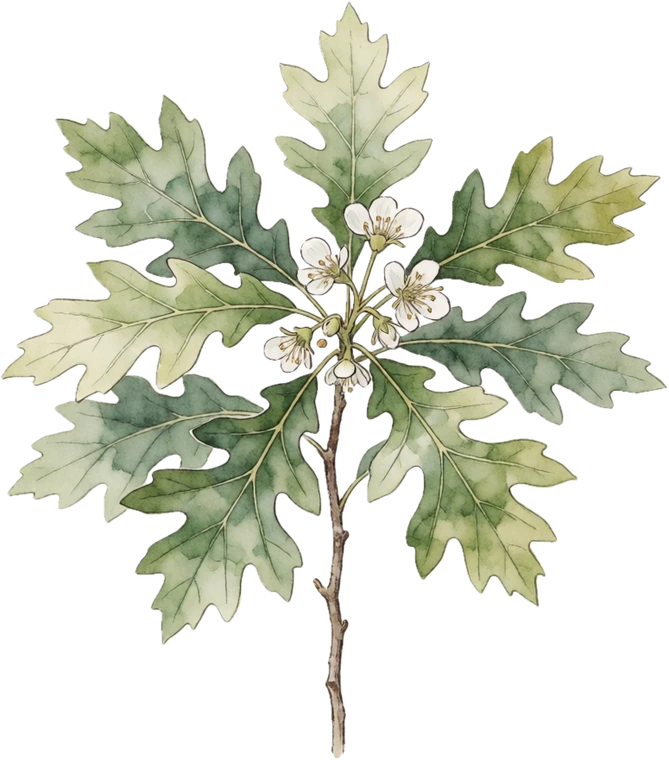
An oak is the most consequential thing you can plant — the tree your great-grandchildren will be photographed under. This entry covers two natives, white oak and northern red oak: centuries-long lifespans, serious shade, and acorns that run the backyard economy of jays, woodpeckers, and squirrels.
No native tree feeds more life — oaks host more caterpillar species than anything else in the woods, which is what actually feeds baby songbirds. Let horses and dogs skip the acorns; they're wildlife food, not fodder. Plant one now — the sooner it starts, the sooner it's ancient.
 Full Sun
 Low water
 Native to North America
Hardiness differs across the 2 oaks in this guide, so pick yours and this panel answers for that one.
White Oak
Oak · Common problems
Nothing common enough to list for oak. Watch it like anything else in the garden, and check the plants growing next to it.
Oak · Which one do you have?
Where these differ, the key facts above give the span across all of them. Each type’s own figures, as the catalogue records them:
Oak · Growing & propagation
Light Fertilizer
 Propagate
Oak · Calculators & field guides
Oak · Yearly calendar
No fixed season calendar for oak — its care follows conditions, not the calendar.
Oak · Ecology & uses
 Moisture
 Deer
DeerProtect young plants
Origin! Some parts toxic — see notesAcorns toxic to horses/dogs in quantity
Edibility, identification, and traditional-use notes here are general reference — not medical or veterinary advice, and not a claim that any plant treats or prevents anything. Medicinal ratings record how strongly a plant features in herbal tradition, nothing more. Never eat or dose a plant you have not positively identified. More on how to use this library.
Oak · Varieties & cultivars
Compare hardiness, mature size, growth habit, days to maturity and intended use in the seller’s variety description. Where this guide covers several plant types, start with the type you want to grow, then choose a variety for your season and space.
Sources & plant identity
Hardiness, size and timing vary with your cultivar, soil and climate.
University extension research, brought together with hands-on growing experience at Story Thyme Farms.
Oak questions, answered straight.
With care. Acorns toxic to horses/dogs in quantity Site it accordingly if children or pets roam the garden. This is general reference, not medical or veterinary advice — call a vet or poison control if something has actually been eaten.
Seed (stratify), cuttings, or layering.
Where oak sits in the library.
 Maple
Maple Tulip Poplar
 Bald Cypress
 Sweetgum