Rose of Sharon
Hibiscus syriacus
Family Malvaceae
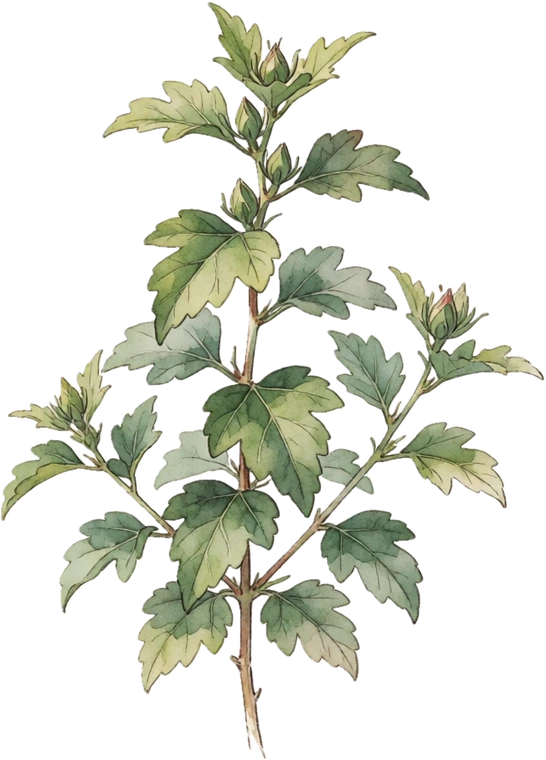
Tropical hibiscus flowers on a bush that winters in zone 5 — Rose of Sharon opens its satiny blooms in the August drought, precisely when the rest of the garden has surrendered, and keeps going into fall. Eight to twelve feet of late-summer glamour, on drought-shrugging roots.
Hummingbirds and bees mob the trumpets at a time when little else feeds them, it's safe around pets, and it lines up handsomely as a flowering hedge. Just buy the sterile modern cultivars — the old ones seed everywhere. Then give it sun and let August become its month.
 Full Sun
 Low water
 Moderate growth
 Attracts hummingbirds
 Attracts bees
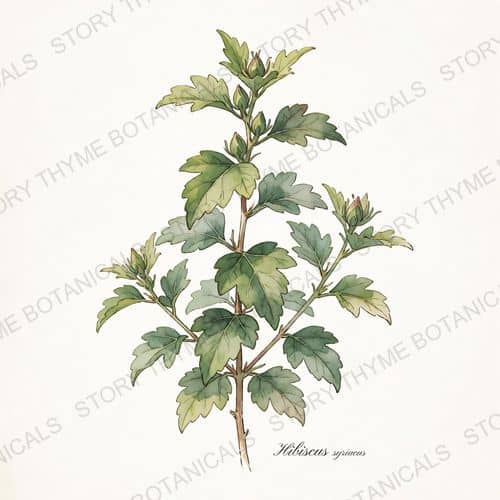
From the print shop
Growing rose of sharon? Hang it.
Our Plant Library collection carries rose of sharon — Hibiscus syriacus, print Nº 403, “Rose of Sharon.”
526 designsfrom $12.99white or black backgroundmatte poster, unframed
Will it thrive where you are?
Enter your ZIP — we look up your USDA hardiness zone (2023 map) and check it against what rose of sharon actually needs.
 Hardy inZones 5-9
Rose of Sharon · Common problems
Common rose of sharon problems

Pests
2 problems on file

Diseases
2 problems on file
Rose of Sharon · Growing & propagation
Growing rose of sharon
- Light
- Full Sun
- Water
- Low
August-blooming BECAUSE it shrugs at drought
 Soil
Soil- Any drained · pH 5.5 - 7.0
 Fertilizer
- Light spring feed
 Pruning
- Late winter; blooms on new wood
Hard pruning = fewer but LARGER flowers — Leafs out embarrassingly late (June) — never declare it dead in May. Prune to shape or pollard hard, both work.
 Spacing
- 6-8 ft
How to plant & propagate rose of sharon
- Propagate
- Seed (stratify), cuttings, or layering
Rose of Sharon · Calculators & field guides
A little help in the garden.
Rose of Sharon · Yearly calendar
The rose of sharon year, month by month
Jan
No calendar activity is listed for this month.
 BloomPrune
BloomJuly to September
PruneFebruary to March
What each band means
- Bloom — flowers open — pollinators working, frost on blossoms is the danger.
- Prune — shape it now — cuts heal cleanly and structure is visible.
These are the species' typical months — expect them a few weeks earlier in warm zones and later in cold ones. Watch the plant, not just the calendar.
Rose of Sharon · Ecology & uses
Ecology & uses
Hibiscus syriacus
Rose of Sharon in the garden system
- Shrub layer shrub
- Nectary/insectary
 Attracts
- Hummingbirds, Bees
 Moisture
- Upland / dry
 Deer
Deer- Browsed
Protect young plants
 Origin
- Introduced
What rose of sharon is grown for
✓ Not known to be toxic
 Use
Use- Late-summer bloom
- Use
- Hummingbirds
- Use
- Flowering hedges
Edibility, identification, and traditional-use notes here are general reference — not medical or veterinary advice, and not a claim that any plant treats or prevents anything. Medicinal ratings record how strongly a plant features in herbal tradition, nothing more. Never eat or dose a plant you have not positively identified. More on how to use this library.
Rose of Sharon · Varieties & cultivars
Choosing a rose of sharon variety
STERILE moderns only: 'Azurri Blue Satin', 'Sugar Tip', 'Purple Pillar' (narrow) — old seedy types carpet gardens with seedlings
Sources & plant identity
Know what you’re growing.
See where the knowledge comes from.
Rose of Sharon
Hibiscus syriacus
The plant, at a glance.
- Botanical name
- Hibiscus syriacus
- Plant family
- Malvaceae
- Growth habit
- Shrub · Perennial
- Origin
- Introduced
- USDA plant symbol
- HISY
- Invasive risk
- Spreads aggressively
Hardiness, size and timing vary with your cultivar, soil and climate.
Rooted in research.
University extension research, brought together with hands-on growing experience at Story Thyme Farms.
for Rose of Sharon
Research from these sources


Publisher marks identify sources, not sponsorship or endorsement.
Questions
Rose of Sharon questions, answered straight.
Is rose of sharon safe for kids and pets?
Rose of Sharon is commonly eaten and isn't considered toxic, but "commonly eaten" isn't a guarantee for any particular person or animal — allergies, quantity, and which part you eat all matter. Never eat a plant you haven't positively identified, and check with a vet before letting pets or livestock graze anything new.
How do you propagate rose of sharon?
Seed (stratify), cuttings, or layering.
Is rose of sharon invasive?
It can be an aggressive spreader — give it room or a barrier, and check your state's invasive-species list before planting.
Elsewhere
Where rose of sharon sits in the library.
 Rose
Rose Hydrangea
 Common Lilac
 Forsythia