The illustrated growing guide

Tea Plant

Camellia sinensis

Family Theaceae

Est. zones 7-9

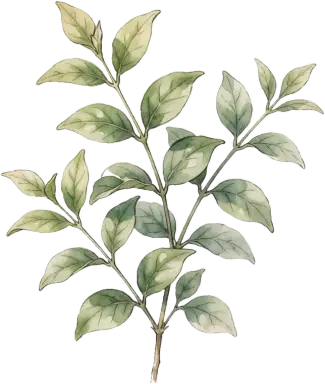
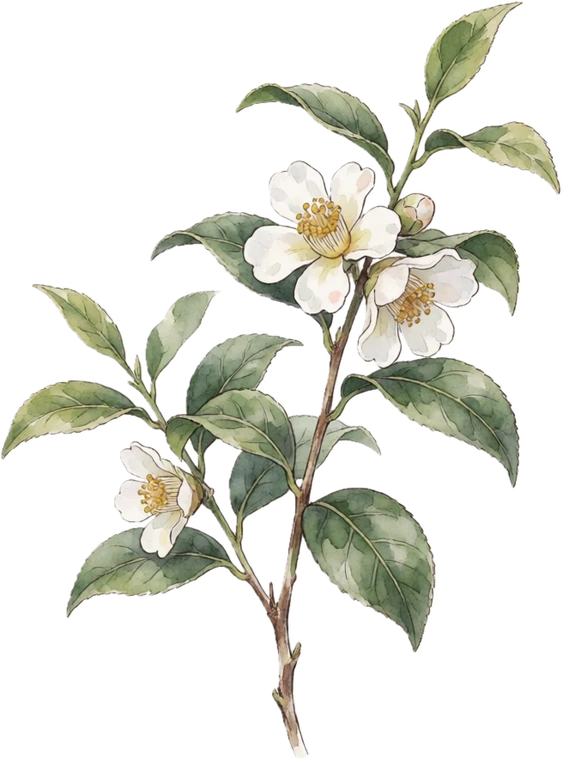
Botanical illustration of Tea Plant
Shrub · Camellia sinensis

Grow actual tea in America — zone 7 outdoors, zone 6 against a wall, anywhere in a big pot wintered cool. Pluck a spring flush, wither overnight, roll by hand, pan-fire: you've made green tea. The single best 'moat' plant for a tea category.

ShrubMorning sun / afternoon shadeModerate waterSlow growthAttracts bees

Where to buy the plant — 2 nurseries

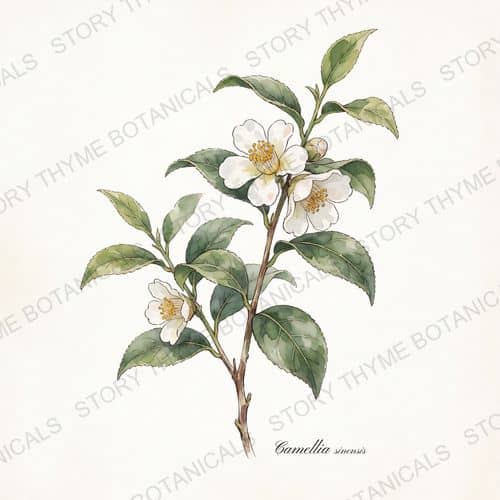
Tea Plant — a print from the Tea Herbs collection

From the print shop

Growing tea plant? Hang it.

Our Tea Herbs collection carries tea plantCamellia sinensis, print Nº 16, “Tea Plant.”

16 designsfrom $21.99white or black groundmatte poster, unframed

Shop Tea Herbs botanical prints →

I

Overview

Will tea plant suit your garden, and what goes wrong.

Will it fruit where you are?

Enter your ZIP — we look up your USDA hardiness zone (2023 map) and check it against what tea plant actually needs.

Hardy inZones 7-9

Tea Plant at a glance

HardinessUSDA 7–9
Mature size6-12 ft unpruned; kept at 3-4 ft for plucking
PollinationBees on the fall blooms
Chill requirementNot yet established
Bloom seasonOCTOBER - NOVEMBER (white gold-centered camellias)
Harvest seasonPluck 'two leaves and a bud' from new flushes, spring through summer — green, black, and oolong are all THIS plant, differing only in processing
Growth rateSlow

Common tea plant problems

II

Growing

Light, water, soil, propagation and the season’s jobs.

How to grow tea plant: light, water & soil

LightMorning sun / afternoon shade
WaterModerate, even; mulched
SoilACID (blueberry rules) · pH 4.5 - 6.0
FertilizerAcid feed (azalea food) spring + midsummer
PruningAfter harvest flushes; shape like a low hedge — Table-prune flat at 3 ft — plucking height, denser flushing.
Spacing4-5 ft

How to plant & propagate tea plant

PropagateSeed (stratify), cuttings, or layering

The tea plant growing playbook

Field-tested instructions for every job tea plant asks of you, compiled from university extension guidance — in the order the season brings them.

Watering

Water through dry spells, then back off in fall

Water frequently during dry periods in the growing season, then reduce the frequency through fall and winter. Check the soil by hand rather than leaving the plant on an unattended timer. Flush growth stalls when the plant runs dry, and a stalled flush is a lost harvest. But tea also needs well-drained ground, and an automatic system that keeps the soil constantly wet is a common route to root rot.

Mulching

Mulch the root zone, but hold it off the trunk

Lay a 2 to 6 inch layer of bark, wood chips or similar material over the root zone, and keep that mulch 8 to 12 inches back from the trunk. Tea roots shallowly in acid ground, and a decaying organic mulch holds the moisture and the acidity the plant wants. Mulch banked against the trunk instead traps moisture on the bark and invites rot at the one point the plant cannot afford to lose.

Feeding

Feed an acid-forming fertilizer as growth resumes

Use a formulation carrying 6 to 10 percent nitrogen, 6 to 10 percent available phosphoric acid, 6 to 10 percent potash and 2 to 6 percent magnesium. Give young plants 1/8 to 1/4 lb every other month through the growing season, increasing to 1 to 2 lbs as the bush matures, and apply foliar micronutrients and iron 3 to 4 times during the warmer months. Tea is an evergreen harvested by stripping off its newest leaves, so every plucking exports nitrogen the plant must replace before it can push the next flush.

Tea is reported not to be well adapted to high-pH soils, so do not lime the root zone. Correct alkaline ground with compost and topsoil instead.

Pruning

Cut the bush back before spring growth begins

Before growth resumes in spring, form the bush at no more than 3 to 5 feet. Once a plant reaches 5 to 6 feet, cut it back to 2 to 4 feet to force it to rebranch low. Tea is plucked from the tips of new shoots, so a low bush forced to branch keeps every flush within arm's reach. Left alone, Camellia sinensis becomes a multi-trunked tree of 15 feet and carries its entire harvest in the canopy.

Tip the shoots again in midsummer to multiply plucking points

Once the first flush has been plucked and the shoots have hardened, tip them a second time in midsummer to induce another round of branching before the season ends. Yield is a count of shoot tips, not of leaves. Every branching event turns one plucking point into two or three, and a bush pruned frequently carries far more harvestable tips than one pruned once a year.

What to watch for

Scout leaf undersides for scale, aphids and mites

Through the growing season check stems and leaf undersides for aphids, scale insects and spider mites, which concentrate on plants already stressed by drought or poor drainage. Watch too for camellia leaf gall on the foliage, and remove affected leaves. These are sap feeders that colonize exactly the young flush you intend to pluck, and they build fastest on a stressed plant. Catching a colony early means you can wash or prune it out instead of reaching for a spray you cannot safely use on a leaf crop.

The leaf is the crop here and it is brewed without washing, so do not spray insecticide on a bush you plan to pluck. NC Cooperative Extension accepts biorational insecticides only while plants are still too young to harvest, and advises that pesticides be avoided when plants are near to harvest. Tea blooms in fall and the flowers draw pollinators, so never apply an insecticide to a plant in bloom.

Protection

Shelter the foliage from hard freezes

At the cold edge of tea's range, keep the root zone mulched through winter and shelter young or newly planted stock when a hard freeze is forecast. Prefer a cultivar with a documented cold-hardiness record where winters bite. Tea plants generally survive freezing to slightly below freezing, but the leaves themselves may be damaged or killed. Because the leaf is the harvest, a freeze that merely disfigures an ornamental camellia can cost you the season's crop, and an unestablished plant has the fewest reserves to reflush from.

Harvesting

Pluck two leaves and a bud from each new flush

Take the terminal bud plus the 2 to 3 leaves directly below it from each new shoot, and repeat every time the bush pushes a fresh flush through spring and summer. A single mature bush yields roughly 1/2 lb of made tea in a season. Only the unfurling tip carries the tender tissue and the flavor compounds that make tea. Older leaves further down the shoot are tough and bitter. Green, oolong and black tea all come from this same pluck and differ only in how the leaf is processed afterward.

III

The year

What tea plant asks for, month by month.

The tea plant year, month by month

MonthJanFebMarAprMayJunJulAugSepOctNovDec
Bloom
Prune
Harvest

What each band means

  • Bloomflowers open — pollinators working, frost on blossoms is the danger.
  • Pruneshape it now — cuts heal cleanly and structure is visible.
  • Harvestpicking time — check ripeness every few days.

The tea plant year as text

  • Jan quiet month
  • Feb quiet month
  • Mar harvest
  • Apr harvest
  • May harvest
  • Jun harvest
  • Jul pruning, harvest
  • Aug pruning, harvest
  • Sep quiet month
  • Oct bloom
  • Nov bloom
  • Dec quiet month

These are the species' typical months — expect them a few weeks earlier in warm zones and later in cold ones. Watch the plant, not just the calendar.

IV

Ecology & uses

What it does for the garden, and what it is grown for.

Tea Plant in the garden system

  • Shrub layer shrub
AttractsBees
MoistureFacultative / average
DeerBrowsed — protect young plants
OriginIntroduced

What tea plant is grown for

✓ Commonly eatenit's tea

UseHomegrown tea
UseFall camellia blooms
UseHedges
Edible value3/5

Harvesting & storing tea plant

Pluck 'two leaves and a bud' from new flushes, spring through summer — green, black, and oolong are all THIS plant, differing only in processing.

Edibility, identification, and traditional-use notes here are general reference — not medical or veterinary advice, and not a claim that any plant treats or prevents anything. Medicinal ratings record how strongly a plant features in herbal tradition, nothing more. Never eat or dose a plant you have not positively identified. More on how to use this library.

V

Cultivars

Named varieties of tea plant, ruled as a catalogue.

Best tea plant varieties & cultivars

8 on file

Named varieties of tea plant differ in winter-chill needs, ripening time, hardiness, and whether they set fruit on their own — pick one that fits your climate.

Sochi

Ripensspring through summer flushesZones7-9Size8 ft tall by 8 ft wide at 10 years, naturally multi-stemmed

full-bodied black tea, commonly caramel with occasional smoky notes — Seedlings descend from plants developed at the tea research stations of Sochi, Russia. In a Mississippi State University cultivar screening it showed some of the lowest winter leaf damage of nine cultivars tested, at 2.08 percent, and carried the highest caffeine of the group in both spring and summer. Mature leaves average 4.5 by 2.5 inches.

Where to buy ‘Sochi

Story Thyme Farms may earn a small commission from these links, at no cost to you — it never changes what we recommend.

Super Sochi

Ripensspring through summer flushesZones7-9Size8 ft tall by 8 ft wide at 10 years

A selection with significantly larger leaves and more vigorous growth than ordinary Sochi seedlings while holding the same color and similar cold hardiness. Leaves reach up to 8 inches long on vigorous growth, against 4.5 inches for standard Sochi.

Where to buy ‘Super Sochi

Story Thyme Farms may earn a small commission from these links, at no cost to you — it never changes what we recommend.

Large Leaf · Tetraploid

Ripensspring through summer flushesZones7-9Size10 ft by 10 ft at 10 years, easily becoming a multi-trunked tree to 15 ft

favored for white tea because the buds are unusually large — A USDA introduction from the 1970s whose origins the nursery has been unable to trace. Leaves average 6 by 3 inches, large and leathery with pronounced serrations. Mississippi State University measured it as the largest-leaved of nine cultivars at 29.43 sq cm leaf area with the highest shoot weight at 74.60 g, alongside good cold hardiness at 1.90 percent leaf damage in 2019.

Where to buy ‘Large Leaf

Story Thyme Farms may earn a small commission from these links, at no cost to you — it never changes what we recommend.

Small Leaf

Ripensspring through summer flushesZones7-9Size6 ft tall by 6 ft wide at 10 years

mild, favored for green tea — The small-leaved var. sinensis type widely grown in Japan and listed by the nursery as cold-hardy. Medium-green leaves with irregular serrations stay under 4 by 2.5 inches. Mississippi State University recorded low winter damage of 3.85 percent in 2018 and low polyphenols suiting it to green tea, though it had the lowest growth index of the nine cultivars tested.

Where to buy ‘Small Leaf

Story Thyme Farms may earn a small commission from these links, at no cost to you — it never changes what we recommend.

Korea

Ripensspring through summer flushesZones7-9Size6 ft by 6 ft at 10 years

the nursery makes a high-quality roasted green tea from these plants — Seedlings of plants originating on Chiri Mountain, the second tallest mountain in South Korea. Reported by the nursery's customers to be among the most cold-hardy tea plants available. Mature leaves average 4.5 by 2 inches.

Where to buy ‘Korea

Story Thyme Farms may earn a small commission from these links, at no cost to you — it never changes what we recommend.

Chiri Mountain · Jiri Mountain

Ripensspring through summer flushesZones6b-9

Named for its origin in the Chiri, also spelled Jiri, Mountain region of Korea, where the originals were wild collected. Listed among the nursery's most cold-hardy tea selections and expected to handle brief drops below 0 F, though the nursery publishes no USDA zone rating for it. Vigorous in containers, but its in-ground performance is still under evaluation, having only been planted in the nursery's tea garden in summer 2024.

Where to buy ‘Chiri Mountain

Story Thyme Farms may earn a small commission from these links, at no cost to you — it never changes what we recommend.

Dave's Fave

Ripensspring through summer flushesZones7-9Size8 ft by 8 ft at 10 years

among the lowest-caffeine cultivars Mississippi State tested, with low spring polyphenols at 7.98 percent — Selected for rounded leaves and short internodes, with exceptionally dark green leaves that stay shiny as they mature, averaging 4.25 by 2.5 inches. The nursery reports an established plant survived 3 F without injury. Mississippi State measured it second only to 'Large Leaf' for both leaf width (4.76 cm against 4.80) and new shoot weight (63.40 g per 100 shoots against 74.60), with moderate winter damage of 18.15 percent in 2018.

Where to buy ‘Dave's Fave

Story Thyme Farms may earn a small commission from these links, at no cost to you — it never changes what we recommend.

Christine's Choice

Ripensspring through summer flushesZones7-9Size8 ft by 8 ft at 10 years

highest amino acids and L-theanine of the Mississippi State trial at 0.87 percent, a savory profile — Selected from Camellia Forest's own tea garden for dark green leaves that tend long and narrow, averaging 4.5 by 1.75 inches, on a plant that branches abundantly and so offers many shoots to harvest. Listed by the nursery at zones 7b-9 and not among the most cold-hardy, though an established plant survived 3 F with only leaf damage. Mississippi State recorded it as the worst of nine for winter injury at 34.67 percent in 2018, but it recovered well the following year.

Where to buy ‘Christine's Choice

Story Thyme Farms may earn a small commission from these links, at no cost to you — it never changes what we recommend.

VI

Sources & plant ID

Where the care distinctions come from, and how the plant is filed.

Research basis

Sources behind this profile

No extension citations are attached to tea plantyet. The care figures below come from the library's own catalogue rather than a traced primary source.

Plant ID

BinomialCamellia sinensis
FamilyTheaceae
TypeShrub · Perennial
USDA symbolCASI16
OriginIntroduced
Invasive riskLow

VII

Where to buy

Third-party nurseries — not Story Thyme Farms.

Third-party nurseries, not Story Thyme Farms. Prices are theirs.

Story Thyme Farms may earn a small commission from these links, at no cost to you — it never changes what we recommend.

VIII

Questions

Tea Plant questions, answered straight.

Is tea plant safe for kids and pets?

Tea Plant is commonly eaten and isn't considered toxic, but "commonly eaten" isn't a guarantee for any particular person or animal — allergies, quantity, and which part you eat all matter. One caveat on this one: it's tea. Never eat a plant you haven't positively identified, and check with a vet before letting pets or livestock graze anything new.

When do you harvest tea plant?

Pluck 'two leaves and a bud' from new flushes, spring through summer — green, black, and oolong are all THIS plant, differing only in processing.

How do you propagate tea plant?

Seed (stratify), cuttings, or layering.

IX

Elsewhere

Where tea plant sits in the library.

Where tea plant sits in the library

Grows in the same world