The illustrated growing guide
Thyme
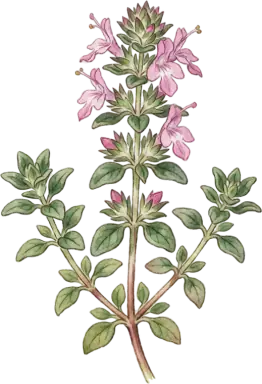
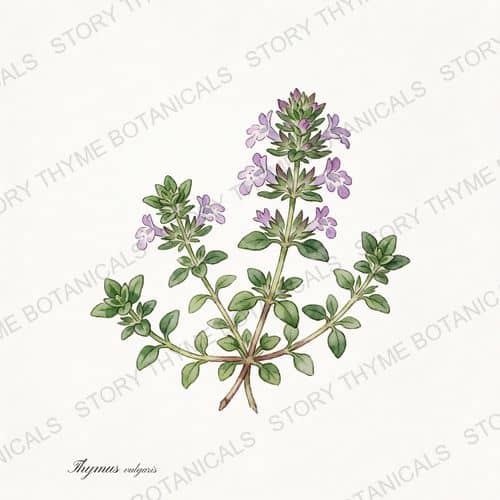
Thymus vulgaris
Family Lamiaceae
Est. zones 5-9

Plant it in your worst dry sunny spot and ignore it. Woody after 4-5 years — layer a stem to make its replacement. Snow-covered thyme still seasons the stew.

From the print shop
Growing thyme? Hang it.
Our Kitchen & Orchard collection carries thyme — Thymus vulgaris, print Nº 12, “Thyme.”
16 designsfrom $21.99white or black groundmatte poster, unframed
I
Overview
Will thyme suit your garden, and what goes wrong.
Will it fruit where you are?
Enter your ZIP — we look up your USDA hardiness zone (2023 map) and check it against what thyme actually needs.
Thyme at a glance
Common thyme problems
- None significant
- Root Rot (wet feet)
II
Growing
Light, water, soil, propagation and the season’s jobs.
How to grow thyme: light, water & soil
How to plant & propagate thyme
The thyme growing playbook
Field-tested instructions for every job thyme asks of you, compiled from university extension guidance — in the order the season brings them.
Sowing
Sow seed in spring, or start from a division instead
Sow in a seed tray or directly in the bed in spring, in light well-drained soil at about pH 6.3, and thin the seedlings to 12 inches apart. Seed-grown plants take several years to reach a size worth harvesting, so if you want thyme this year, start from a division or a cutting rather than seed. Thyme germinates slowly and builds its woody frame over several seasons, so a seedling spends its first years making structure rather than the leafy stems you actually cut.
Watering
Keep it on the dry side - water only when the soil is dry
Let the soil dry out between waterings, then water deeply rather than sprinkling often. Thyme wants fast-draining sandy or rocky ground and full sun; if yours sits in heavy soil, raise the bed or work in grit rather than watering less on bad drainage. Thyme is drought-tolerant and intolerant of wet feet - constant moisture around the roots brings on root rot, and poorly drained ground, especially over winter, is what shortens most plantings' lives rather than cold.
Dividing
Divide well-established plants in spring
In spring, lift the entire root ball of an established plant and pull or cut it into smaller pieces, making sure every piece keeps rootlets attached, then replant them at the depth they were growing. Do this every few years as the clump ages, rather than waiting for the old plant to die out. Division is far more reliable than seed for thyme and it resets a clump that has gone woody in the middle, giving you young rooted plants from wood that would otherwise be spent.
Pruning
Cut back in early spring to hold off the woody base
Trim the plant back in early spring to limit woody growth and force new shoots, and trim again through summer whenever it goes leggy. Every few years, when the base has gone bare and twiggy, cut the whole plant back severely in spring to renew it. Thyme is a subshrub - the oldest wood at the base stops producing leaves and will not resprout well once it is bare, so the plant slowly hollows out unless you keep forcing young tender stems from lower down.
Harvesting
Cut for drying just before the blossoms open
Take the main drying harvest as the flower buds swell and show color but before they open - this is when leaf essential oil content peaks. Cut five to six inches off the top growth, leaving the woody stems below. Gather on a dry morning after the dew has burned off. Strip the bottom two inches of leaves, bundle the stems, and hang them upside down somewhere shady, dry, and airy until crisp, then store the leaves in an airtight jar. The essential oil in the leaves peaks just before the plant flowers and falls off once it blooms, so the same cut made after the blossoms open carries noticeably less flavor. Dew left on the stems invites mold in the drying bundle.
⚠ Leave at least five inches of growth standing - cutting back into the bare woody stems removes the buds the plant needs to recover.
III
The year
What thyme asks for, month by month.
The thyme year, month by month
What each band means
- Bloom — flowers open — pollinators working, frost on blossoms is the danger.
- Prune — shape it now — cuts heal cleanly and structure is visible.
- Harvest — picking time — check ripeness every few days.
The thyme year as text
- Jan harvest
- Feb harvest
- Mar pruning, harvest
- Apr pruning, harvest
- May pruning, harvest
- Jun bloom, harvest
- Jul harvest
- Aug harvest
- Sep harvest
- Oct harvest
- Nov harvest
- Dec harvest
These are the species' typical months — expect them a few weeks earlier in warm zones and later in cold ones. Watch the plant, not just the calendar.
IV
Ecology & uses
What it does for the garden, and what it is grown for.
Thyme in the garden system
- Groundcover layer perennial
- Living mulch
What thyme is grown for
✓ Commonly eaten
Harvesting & storing thyme
Year-round (evergreen to zone 5).
Edibility, identification, and traditional-use notes here are general reference — not medical or veterinary advice, and not a claim that any plant treats or prevents anything. Medicinal ratings record how strongly a plant features in herbal tradition, nothing more. Never eat or dose a plant you have not positively identified. More on how to use this library.
V
Cultivars
Named varieties of thyme, ruled as a catalogue.
Best thyme varieties & cultivars
English, 'French', Lemon
VI
Sources & plant ID
Where the care distinctions come from, and how the plant is filed.
Research basis
Sources behind this profile
No extension citations are attached to thymeyet. The care figures below come from the library's own catalogue rather than a traced primary source.
Plant ID
VII
Where to buy
Third-party nurseries — not Story Thyme Farms.
Third-party nurseries, not Story Thyme Farms. Prices are theirs.
Story Thyme Farms may earn a small commission from these links, at no cost to you — it never changes what we recommend.
VIII
Questions
Thyme questions, answered straight.
Is thyme safe for kids and pets?
Thyme is commonly eaten and isn't considered toxic, but "commonly eaten" isn't a guarantee for any particular person or animal — allergies, quantity, and which part you eat all matter. Never eat a plant you haven't positively identified, and check with a vet before letting pets or livestock graze anything new.
When do you harvest thyme?
Year-round (evergreen to zone 5).
How do you propagate thyme?
Division or seed.
IX
Elsewhere
Where thyme sits in the library.
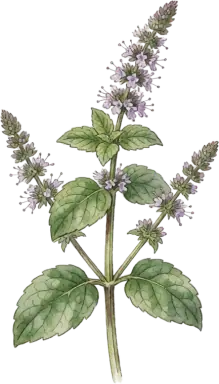
Mint
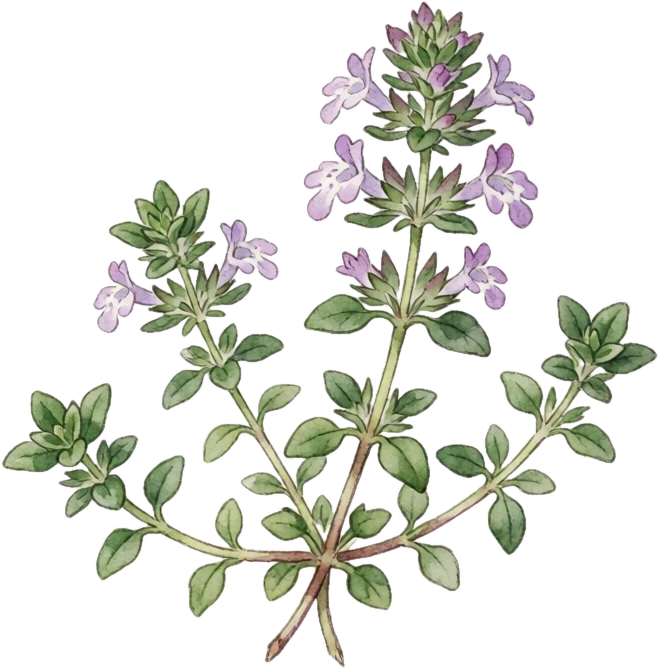
Lemon Thyme
Roman Chamomile
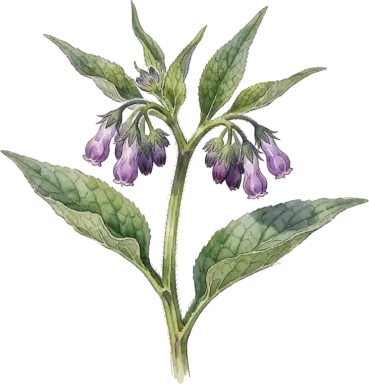
Comfrey