 HarvestingIn June, July, August and September
Pick Roman chamomile flowers
Harvest fresh-open flowers on a dry morning and dry promptly in a single layer. Frequent picking keeps flowers coming and improves tea quality.
Chamaemelum nobile
Family Asteraceae
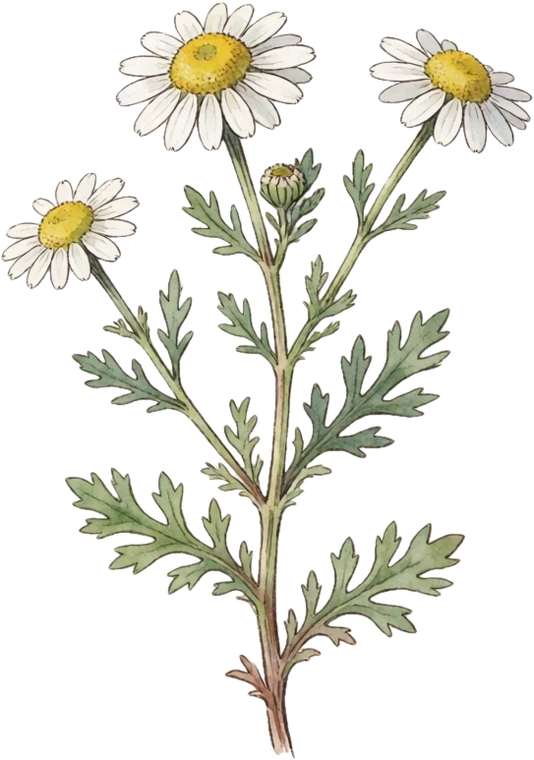
Roman chamomile is the tea you can walk on — a low, creeping mat of ferny, apple-scented foliage that releases fragrance underfoot between stepping stones, then offers up little flowers for the teapot. Unlike its annual German cousin, this one stays, a true perennial carpet.
It settles into sunny, well-drained edges, path joints, and the fabled herb lawn, blooming for the bees from summer into fall. One note: ragweed-allergic folks can react to it, so sample gently. For everyone else, homegrown chamomile tea starts with a single planted mat.
 Full Sun to Part Shade
 Low water
 Moderate growth
 Attracts bees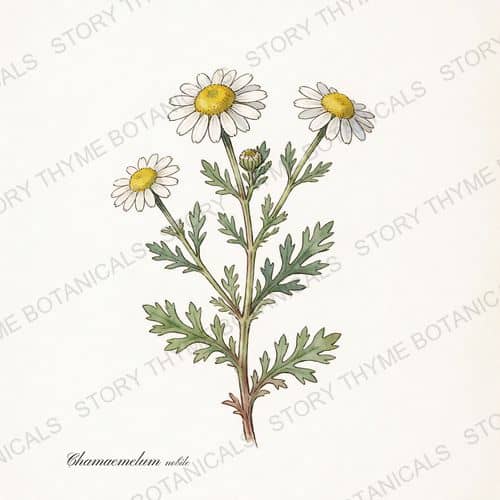
From the print shop
Our Plant Library collection carries roman chamomile — Chamaemelum nobile, print Nº 401, “Roman Chamomile.”
526 designsfrom $12.99white or black backgroundmatte poster, unframed
Will it fruit where you are?
Enter your ZIP — we look up your USDA hardiness zone (2023 map) and check it against what roman chamomile actually needs.
 Hardy inZones 4-9
Roman Chamomile · Common problems

1 problem on file
Aphids (minor)
2 problems on file
Root Rot in wet soilPowdery MildewRoman Chamomile · Growing & propagation
LightWater Soil
Soil Fertilizer
Avoid rich lush growth
 Pruning
Shear lightly after flowering to keep a tight mat; divide tired patches.
 SpacingPropagate
Roman Chamomile · Seasonal care & spray guidance
Growing season. Improve drainage and airflow.
the growing season
1 jobHarvestingIn June, July, August and SeptemberHarvest fresh-open flowers on a dry morning and dry promptly in a single layer. Frequent picking keeps flowers coming and improves tea quality.
Roman Chamomile · Calculators & field guides
Roman Chamomile · Yearly calendar
No calendar activity is listed for this month.
 Bloom
BloomBloomJune to September
These are the species' typical months — expect them a few weeks earlier in warm zones and later in cold ones. Watch the plant, not just the calendar.
Roman Chamomile · Ecology & uses
Chamaemelum nobile
 Attracts
 Moisture
 Deer
DeerProtect young plants
 Origin
! Some parts toxic — see notesCaution: may trigger ragweed-family allergy or contact dermatitis in sensitive people
UseUseUseUseEdible valueTraditional use ratingFlowers when freshly open; leaves lightly for aroma.
Edibility, identification, and traditional-use notes here are general reference — not medical or veterinary advice, and not a claim that any plant treats or prevents anything. Medicinal ratings record how strongly a plant features in herbal tradition, nothing more. Never eat or dose a plant you have not positively identified. More on how to use this library.
Roman Chamomile · Varieties & cultivars
Species; 'Treneague' (non-flowering lawn chamomile)
Sources & plant identity
Chamaemelum nobile
Hardiness, size and timing vary with your cultivar, soil and climate.
University extension research, brought together with hands-on growing experience at Story Thyme Farms.
Publisher marks identify sources, not sponsorship or endorsement.
Roman Chamomile questions, answered straight.
With care. Caution: may trigger ragweed-family allergy or contact dermatitis in sensitive people Site it accordingly if children or pets roam the garden. This is general reference, not medical or veterinary advice — call a vet or poison control if something has actually been eaten.
Flowers when freshly open; leaves lightly for aroma.
Division or seed.
Where roman chamomile sits in the library.

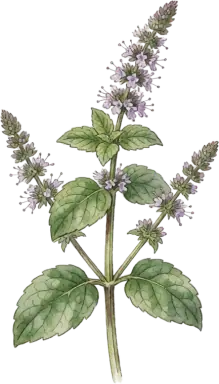 Mint
Mint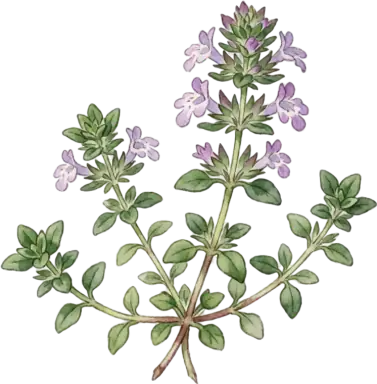 Thyme
Thyme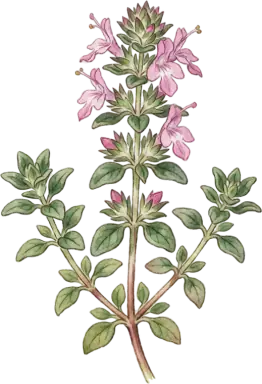 Lemon Thyme
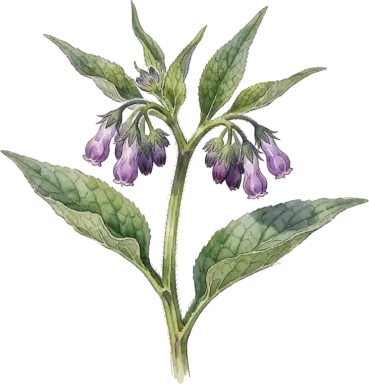 Comfrey