The illustrated growing guide

Turmeric

Curcuma longa

Family Zingiberaceae

Est. zones 8-11

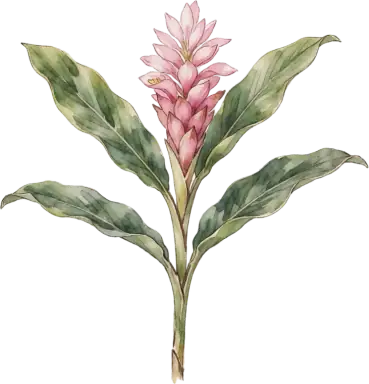
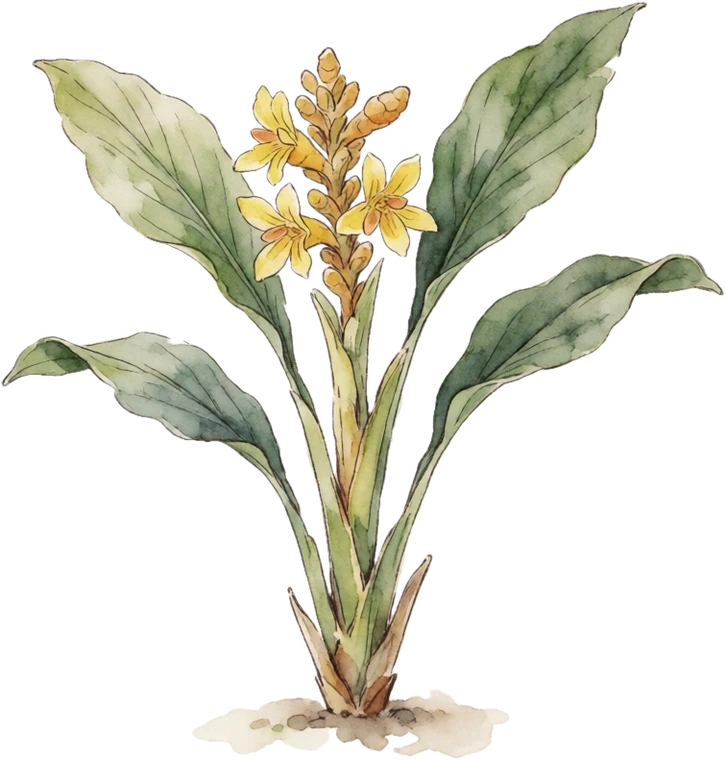
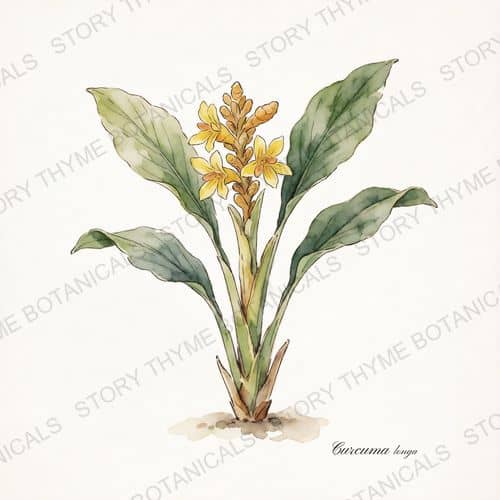
Botanical illustration of Turmeric
Perennial · Curcuma longa

Ginger's golden cousin, same tub method, prettier plant (canna looks + surprise pink torches). Fresh homegrown turmeric grated into rice or tea makes the jarred stuff taste like dust — and the harvest ritual stains your hands the color of victory.

PerennialMorning sun / bright shadeModerate waterSlow-steady growthExcellent edible

Where to buy the plant — 1 nursery

I

Overview

Will turmeric suit your garden, and what goes wrong.

Will it fruit where you are?

Enter your ZIP — we look up your USDA hardiness zone (2023 map) and check it against what turmeric actually needs.

Life cyclePerennial zones 8–11, annual elsewhere

Turmeric at a glance

Life cyclePerennial zones 8–11, annual elsewhere
Mature size3-4 ft canna-like leaves (gorgeous)
PollinationOccasionally throws a stunning pink torch bloom
Chill requirementNot yet established
Bloom seasonLate summer (bonus, not promise)
Harvest seasonOCTOBER - NOVEMBER: dig tubs after frost nips leaves — fresh orange fingers beat dried powder by a mile
Growth rateSlow-steady; 9-10 months to harvest

Common turmeric problems

  • Almost none
  • Rhizome rot if cold + wet

II

Growing

Light, water, soil, propagation and the season’s jobs.

How to grow turmeric: light, water & soil

LightMorning sun / bright shade
WaterModerate-High in season
SoilRich, loose · pH 5.5 - 6.5
FertilizerMonthly in season
PruningNone — Same as ginger: hill, water, wait.
SpacingRhizomes 4 in apart in tubs, started March indoors

How to plant & propagate turmeric

PropagateDivision or seed

The turmeric growing playbook

Field-tested instructions for every job turmeric asks of you, compiled from university extension guidance — in the order the season brings them.

Sowing

Plant seed corms in spring once the soil is warm

Plant mother corms, or finger rhizomes at least 6 inches long, 3 to 4 inches deep, spacing plants about 1 foot apart in the row with 3 to 4 feet between beds. Choose seed pieces weighing at least 1 ounce, and split large corms down the middle to stretch your planting material. Use mounded beds, especially in heavy clay or poorly drained soil. Expect buds to break 2 to 4 weeks after planting. Seed piece size and yield are positively correlated, so a stingy seed piece caps your harvest before the plant ever emerges. Mother corms beat finger rhizomes because they store longer without drying out, they sprout more uniformly, and they are the part of the plant you can least easily sell anyway. Cold conditions are associated with higher disease incidence, and the crop wants 68 to 86 degrees F.

Watering

Water deeply and evenly through the first eight months

Give turmeric 1.5 to 2.0 inches of water per week, irrigating every 5 to 7 days, for a total near 60 inches spread evenly across the first 8 months of growth. Do not let the crop dry out during the vegetative flush. Turmeric follows the same curve as taro: it builds nearly all of its leaf biomass in the first five months, and that canopy is what fills the rhizomes once the foliage declines. Drought stress early costs you rhizome later, because there is no second chance to rebuild the canopy once the plant turns to bulking underground.

Cut off irrigation a month before you dig

Stop irrigating at least 1 month before harvest, and avoid digging when the soil is wet. Undercut the beds deeply enough that the rhizomes lift out by hand instead of being pried, and handle them gently from the row to the wash station. Mechanical injury during lifting and washing is one of the three things that ruin a turmeric crop after it leaves the ground, and bruised, gouged rhizomes darken at the skin and rot in storage. Soil dug dry falls off the fingers instead of caking onto them and forcing rough handling later.

Mulching

Hill soil over the rhizomes two or three times a season

Mulch after planting to hold soil moisture and suppress weeds, then hill soil up around the plants 2 to 3 times over the season to keep the expanding rhizomes buried. Keep weeds down hard for the first 2 to 3 months by cultivating and mulching. Rhizomes that work their way up and catch sun develop a dry, scaly outer skin and stop sizing up, so burying them is what protects the part you are actually growing. Weed control matters most early because the canopy closes after two to three months and shades most weeds out on its own.

Feeding

Feed for potassium, in splits across vegetative growth

Apply fertilizer at planting and then in 2 or 3 split applications through the first 5 months of vegetative growth, or fertigate continuously, which was associated with the highest yields in Hawaii trials. Universal rate recommendations do not exist for this crop, so soil test before planting each year and set rates against your yield target. To chase a suspected deficiency mid-season, sample the third leaf from the top 90 to 120 days after planting. Turmeric removes roughly 98 pounds of potash per metric ton of rhizome harvested against only 36 pounds of nitrogen, so potassium, not nitrogen, is what this crop is most likely to run out of. Feeding is front-loaded because the plant banks everything in leaf growth during the first five months and spends it filling rhizomes later.

What to watch for

Scout for bacterial wilt and rhizome rot

Walk the planting and look for yellowing leaves, leaf rolling, and plants drooping or wilting as though short of water despite wet soil. Dig any suspect plant and cut the rhizome to check for rot. Pull and remove infected plants, and never save seed pieces out of an affected block. Watch for stunted, knotty rhizomes that signal root-knot nematode. Ralstonia solanacearum, the bacterial wilt pathogen already widespread on ginger in Hawaii, blocks the plant's water-conducting tissue, which is exactly why a well-irrigated plant wilts anyway. Pythium, Rhizoctonia, and Fusarium all rot the rhizome, and cold, wet conditions raise the incidence of all of them.

No chemical control is recommended for bacterial wilt or rhizome rot on turmeric. Planting clean, disease-free seed material is the only reliable defense, supported by crop rotation, cover crops, and weed management. Rhizomes missed at harvest resprout and turn into a pest and disease reservoir, so rotate the ground rather than let volunteers carry pathogens into next season.

Protection

Colder than zone 8: lift the rhizomes and store them above 50 degrees

Turmeric is only winter hardy in USDA zones 8 to 11. Everywhere colder, dig the rhizomes in fall and store them in a cool, dry, well-ventilated spot out of the sun. CTAHR's Hawai'i Turmeric Production Guidelines (VC-9) puts the target at 50 to 60 degrees F, and never below 50. Use paper bags, ventilated containers packed with wood shavings, or shallow layers on racks. Check them through winter for sprouting or deterioration. Stored rhizomes fail in three ways: they dehydrate and go wrinkled and dull, they sprout, or they rot. Cool, dry, moving air slows all three, while sealed plastic without air exchange traps the moisture that makes fungal rot the major storage problem. Undamaged, disease-free mother corms held this way are also next season's best seed, which is how most growers keep their own planting stock.

Harvesting

Dig at mid to late foliage dieback, not the first yellow leaf

Let the foliage senesce and die back before digging, roughly 8 months or more after planting. Harvesting at the earliest stages of dieback costs about 15 percent of your yield compared with mid or late dieback, and there is no yield penalty for waiting from mid to late. Judge quality by plump pieces with a bright, uniform yellow-to-orange flesh when cut. The plant is still emptying the dying foliage into the rhizomes right through senescence, so an early dig catches them half filled. Growers also report bitterness in turmeric pulled early, and practitioners hold that medicinal quality is best when the crop has died back fully or sat in the ground more than a year.

III

The year

What turmeric asks for, month by month.

The turmeric year, month by month

MonthJanFebMarAprMayJunJulAugSepOctNovDec
Bloom
Harvest

What each band means

  • Bloomflowers open — pollinators working, frost on blossoms is the danger.
  • Harvestpicking time — check ripeness every few days.

The turmeric year as text

  • Jan quiet month
  • Feb quiet month
  • Mar quiet month
  • Apr quiet month
  • May quiet month
  • Jun quiet month
  • Jul quiet month
  • Aug bloom
  • Sep quiet month
  • Oct harvest
  • Nov harvest
  • Dec quiet month

These are the species' typical months — expect them a few weeks earlier in warm zones and later in cold ones. Watch the plant, not just the calendar.

IV

Ecology & uses

What it does for the garden, and what it is grown for.

Turmeric in the garden system

  • Root layer perennial
MoistureFacultative / average
DeerBrowsed — protect young plants
OriginIntroduced

What turmeric is grown for

✓ Commonly eatenstains EVERYTHING gold — gloves

UseGolden milk
UseCurries
UseTropical looks in a pot
Edible value4/5
Traditional use rating3/5 in herbal tradition

Harvesting & storing turmeric

OCTOBER - NOVEMBER: dig tubs after frost nips leaves — fresh orange fingers beat dried powder by a mile.

Edibility, identification, and traditional-use notes here are general reference — not medical or veterinary advice, and not a claim that any plant treats or prevents anything. Medicinal ratings record how strongly a plant features in herbal tradition, nothing more. Never eat or dose a plant you have not positively identified. More on how to use this library.

V

Cultivars

Named varieties of turmeric, ruled as a catalogue.

Best turmeric varieties & cultivars

5 on file

Named varieties of turmeric differ in winter-chill needs, ripening time, hardiness, and whether they set fruit on their own — pick one that fits your climate.

Hawaiian Red · Red Hawaiian

RipensAt full foliage dieback, about 8 months after plantingZones8-11

Deep red-orange flesh, bolder than yellow types — The industry standard in Hawaii and one of only two cultivars CTAHR recommends for commercial production (VC-9), for consistently high yield and curcuminoid concentration. In the CTAHR Kauai trial it was in the top yield group at 1.11 to 1.25 kg per plant with 6.5 percent total curcuminoids by dry weight, well over the 4 percent commercial threshold. Widely available as certified organic seed rhizomes.

Where to buy ‘Hawaiian Red

Story Thyme Farms may earn a small commission from these links, at no cost to you — it never changes what we recommend.

Roma

RipensAt full foliage dieback, about 8 months after plantingZones8-11

A commercial variety from India, recently introduced to Hawaii and now one of the two cultivars CTAHR recommends for commercial production (VC-9). In the CTAHR Kauai trial it was a top yielder at 1.11 to 1.25 kg per plant and measured 10.1 percent total curcuminoids, an unusual combination since the highest-curcuminoid types are normally the weakest yielders. Curcuminoid samples in that trial were unreplicated, so treat the figure as indicative. Planting material is available seasonally from Hawaii producers rather than mainland catalogs.

Where to buy ‘Roma

Story Thyme Farms may earn a small commission from these links, at no cost to you — it never changes what we recommend.

BKK

RipensAt full foliage dieback, about 8 months after plantingZones8-11

The highest-curcuminoid cultivar in the CTAHR Kauai trial at 11.2 percent total curcuminoids by dry weight, but also among the lowest yielding at 0.52 to 0.70 kg per plant, roughly half of Hawaiian Red. Prized by medicinal practitioners who are buying potency rather than pounds (VC-9). Sold as certified organic seed rhizomes.

Where to buy ‘BKK

Story Thyme Farms may earn a small commission from these links, at no cost to you — it never changes what we recommend.

Olena · 'Olena; Hawaiian turmeric

RipensAt full foliage dieback, about 8 months after plantingZones8-11

The traditional Hawaiian turmeric, carried to the islands by early Polynesian voyagers and long used as spice, medicine, and dye (VC-9). A top yielder in the CTAHR Kauai trial at 1.11 to 1.25 kg per plant, but the only variety tested that fell below the 4 percent commercial curcuminoid threshold, at just 2.2 percent. Grow it for yield, flavor, and cultural value, not for curcumin.

Where to buy ‘Olena

Story Thyme Farms may earn a small commission from these links, at no cost to you — it never changes what we recommend.

Indira Yellow · Indira

RipensAt full foliage dieback, about 8 months after plantingZones8-11

Bright yellow flesh — An Indian cultivar introduced to Hawaii alongside Hawaiian Red and BKK and evaluated by CTAHR, though it is not among the cultivars they currently recommend for commercial production and no trial yield or curcuminoid figure was published for it. Listed here mainly because it is the turmeric mainland growers can most reliably buy as seed rhizomes.

Where to buy ‘Indira Yellow

Story Thyme Farms may earn a small commission from these links, at no cost to you — it never changes what we recommend.

VI

Sources & plant ID

Where the care distinctions come from, and how the plant is filed.

Research basis

Sources behind this profile

No extension citations are attached to turmericyet. The care figures below come from the library's own catalogue rather than a traced primary source.

Plant ID

BinomialCurcuma longa
FamilyZingiberaceae
TypePerennial · Tender Perennial
USDA symbolCULO
OriginIntroduced
Invasive riskLow

VII

Where to buy

Third-party nurseries — not Story Thyme Farms.

Third-party nurseries, not Story Thyme Farms. Prices are theirs.

Story Thyme Farms may earn a small commission from these links, at no cost to you — it never changes what we recommend.

VIII

Questions

Turmeric questions, answered straight.

Is turmeric safe for kids and pets?

Turmeric is commonly eaten and isn't considered toxic, but "commonly eaten" isn't a guarantee for any particular person or animal — allergies, quantity, and which part you eat all matter. One caveat on this one: stains EVERYTHING gold — gloves. Never eat a plant you haven't positively identified, and check with a vet before letting pets or livestock graze anything new.

When do you harvest turmeric?

OCTOBER - NOVEMBER: dig tubs after frost nips leaves — fresh orange fingers beat dried powder by a mile.

How do you propagate turmeric?

Division or seed.

IX

Elsewhere

Where turmeric sits in the library.

Where turmeric sits in the library

Grows in the same world