The illustrated growing guide

Almond

Prunus dulcis

Family Rosaceae

Est. zones 7-9

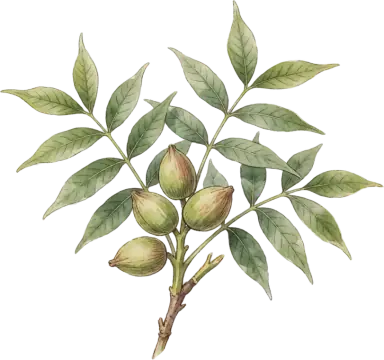
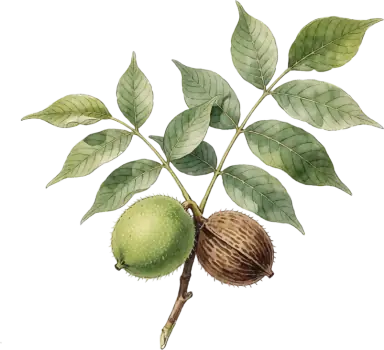
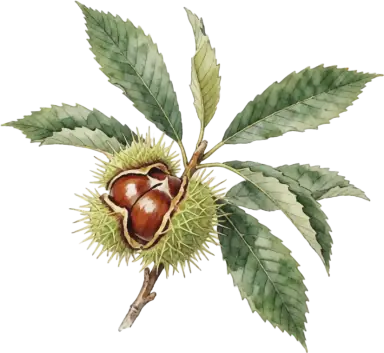
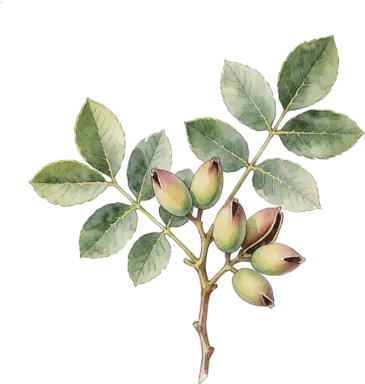
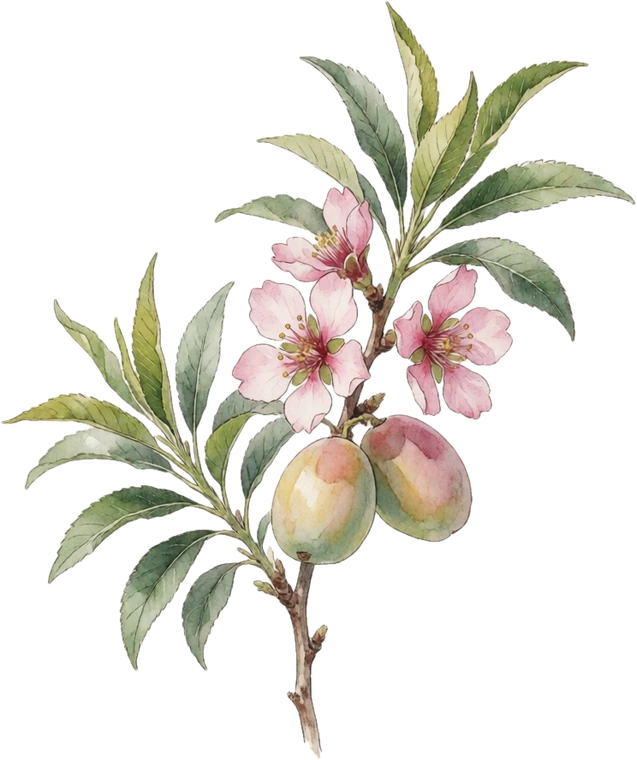
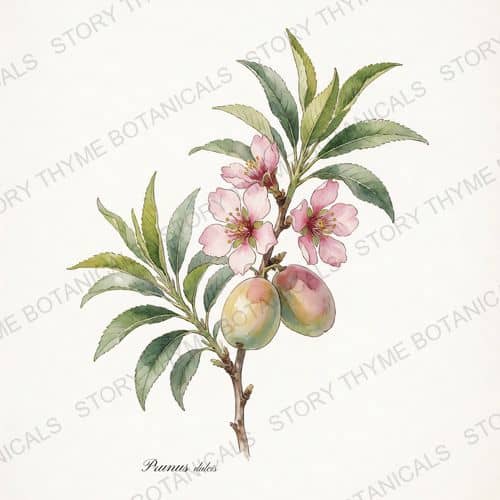
Botanical illustration of Almond
Tree · Prunus dulcis

A peach that makes a nut instead of flesh — same care, same pests, same early frost-prone bloom. That early bloom is why almonds are a West-Coast crop: a normal spring freeze kills the flowers east of the Rockies. Grow late-blooming 'Hall's Hardy' or self-fertile 'All-In-One' and site it high to dodge frost.

TreeFull SunModerate waterModerate growthExcellent edibleAttracts bees300-500 winter chill (unconfirmed)Needs a pollination partner

Where to buy the plant — 3 nurseries

Almond — a print from the Nut Trees collection

From the print shop

Growing almond? Hang it.

Our Nut Trees collection carries almondPrunus dulcis, print Nº 3, “Almond.”

16 designsfrom $21.99white or black groundmatte poster, unframed

Shop Nut Trees botanical prints →

I

Overview

Will almond suit your garden, and what goes wrong.

Will it fruit where you are?

Enter your ZIP — we look up your USDA hardiness zone (2023 map) and check it against what almond actually needs.

Hardy inZones 7-9
Winter chill300-500
Unconfirmed

Commonly quoted, but we have not traced this range to a university extension trial or another primary source, and published figures for the same plant often disagree. Chill-hour requirements were only ever established by trial for a handful of commercial fruit crops; for most species the work was never funded. Treat it as a starting point and check your local extension office before you plant on it.

PollinationPartner needed

Almond at a glance

HardinessUSDA 7–9
Mature size15-30 ft
PollinationMost need a compatible pollenizer bloom-matched nearby (a few self-fertile)
Chill requirement300-500
Unconfirmed

Commonly quoted, but we have not traced this range to a university extension trial or another primary source, and published figures for the same plant often disagree. Chill-hour requirements were only ever established by trial for a handful of commercial fruit crops; for most species the work was never funded. Treat it as a starting point and check your local extension office before you plant on it.

Bloom seasonVERY EARLY spring (pink-white, gorgeous — but frost-vulnerable)
Harvest seasonFall: hull splits, nut inside; pick and dry
Growth rateModerate

Common almond problems

  • Peach Twig Borer
  • Navel Orangeworm
  • Curculio
  • Brown Rot
  • Shot Hole
  • bacterial issues in humidity
  • Poor pollination → low fruit set (plant a partner)

II

Growing

Light, water, soil, propagation and the season’s jobs.

How to grow almond: light, water & soil

LightFull Sun
WaterModerate; deep, infrequent
SoilDeep, well-drained loam — no wet feet · pH 6.0 - 7.5
FertilizerLight balanced feed in spring
PruningLate Winter / after harvest — Open-center like a peach; fruits on spurs and one-year wood.
Spacing15-20 ft

How to plant & propagate almond

PropagateGrafted, or from cuttings/layering (seed won't come true)

When to spray almond

Dormant season. Dormant copper/oil for shot hole + brown rot.

Growing season. Bloom-time and hull-split sprays where pests are heavy.

The almond growing playbook

Field-tested instructions for every job almond asks of you, compiled from university extension guidance — in the order the season brings them.

Watering

Dial irrigation back as hull split starts, to starve hull rot

Reduce irrigation at the onset of hull split and never leave standing water under the trees while hulls are open. Keep nitrogen off the tree in the 45 to 60 days before hull split; if you leaf-sample in midsummer, nitrogen should read below 2.6 percent. Rhizopus stolonifer and Monilinia colonize the wet, sugary hull the moment it splits, and a lush, over-watered, over-fed tree keeps that hull moist for weeks instead of days. Hulls stay susceptible from split until they dry - anywhere from 10 days to 2 months, and irrigation and nitrogen are what decide which.

Do not cut water on a tree that is already drought-stressed, and never apply oil sprays to water-stressed trees. If you are also spraying for navel orangeworm at hull split, a Rhizopus-targeted fungicide tank-mixed at that timing cuts hull rot 60 to 70 percent.

Feeding

Feed lightly in spring, after leaf-out

Start after leaf-out, not before. For a home tree, apply about 1 ounce of actual nitrogen per year of tree age, capping at roughly 1/2 pound per year for a mature tree. Split it across the season rather than dumping it at once, and water it in deeply and infrequently. Nitrogen applied between late fall and spring is mostly gone before the tree leafs out and can take it up, so it leaches past the roots instead of feeding the crop. Fed too heavily, almond grows wood instead of nuts.

Excess nitrogen is a real cause of a healthy-looking almond that will not set nuts, and late-season nitrogen after the kernels have filled goes into the hull, where it raises hull rot risk rather than yield.

Pruning

Dormant pruning: build the frame early, then leave it aloneJan – Dec

Prune after leaf drop and before bud swell. At planting, head an unbranched whip at 30 to 36 inches above the soil to force low scaffolds; on a branched tree, remove anything below about 30 inches and keep 4 to 6 evenly spaced branches. A mature almond needs very little pruning - take out dead, broken, and crossing wood and open the center enough for light and spray coverage. Almond puts its structure on in the first few years and then coasts, so the framework you select early is the one the tree carries for decades. Heavy cutting on a bearing tree removes the spurs that carry the crop.

Prune in dry weather and finish before bud swell - almond blooms extremely early, and in warm zones bud swell can arrive in January. Fresh cuts are most vulnerable to canker fungi in the first weeks, so avoid pruning just ahead of a rain.

Spraying

Dormant oil for scale - and the job that beats itNov – Dec

Once the tree is genuinely dormant, narrow-range oil smothers overwintering scale and mite eggs. But do the sanitation first: strip and destroy every mummy nut left on the tree, because that is where next year's navel orangeworm is living right now. Removing mummy nuts in fall or winter, and harvesting early with prompt removal of nuts from the orchard floor, are the two things UC IPM calls essential to navel orangeworm control - the spray is not.

PHI IS THE WRONG THING TO CHECK FOR A NOVEMBER SPRAY: harvest is nine months away, so any label interval (0-28 days) is satisfied many times over. What actually binds is the tree being dormant, not spraying oil during or near bloom, and not spraying on freezing or wet days. Dormant-timed insecticides also raise winter runoff concerns. The PHI that DOES bite on almond is at hull split in July-August: spinosad 1 day, Bt 0.

Brown rot blossom blight: fungicide at pink bud and full bloom

Spray propiconazole, or pyraclostrobin plus fluxapyroxad, at pink bud (5 to 10 percent bloom) and again at full bloom. In a dry year a single full-bloom application is usually enough; a long bloom with rain warrants the second. Monilinia laxa overwinters in twig cankers and old infected flowers, and its spores blow or splash onto open flowers during wet weather. It infects through the flower itself, so the fungicide has to be on the petals before the rain, not after the blossoms brown.

This is a fungicide, not an insecticide - never add an insecticide to a bloom spray, because hives are in the orchard and bees are working the flowers. Rotate modes of action: make no more than one application of FRAC group 1, 4, 9, 11, or 17 before switching to a different group, or you will select for resistant Monilinia.

Shot hole at petal fall - but only if last fall's leaves told you to

Look at last autumn's leaf lesions with a hand lens: if the tan spots carry tiny black fruiting bodies, spray at petal fall this spring with iprodione, or azoxystrobin plus propiconazole, and continue at label intervals while wet weather lasts. If you found no fruiting structures, skip the spray. Wilsonomyces carpophilus needs prolonged leaf wetness to infect, and the black fruiting bodies on old lesions are the inoculum that starts the new season. No fruiting bodies means no spore source worth spraying against.

These are protectant fungicides, not eradicants - they only work if foliage is covered before the wet period begins, so spraying after a rain is wasted product. Follow your product's label for the per-season cap: UC IPM sets these per product, not across the board - some QoI/SDHI products allow only two applications per season, others three or four. Rotate modes of action, and note that iprodione is FRAC group 2, so it does not count against a QoI or SDHI limit.

Navel orangeworm: hit the first 1 percent of hull split

Cut small branches from the top southwest quadrant of 5 or 6 trees and watch for the first hulls to split. At the very beginning of hull split, and no later than 1 percent split, spray methoxyfenozide, chlorantraniliprole, spinetoram, or Bacillus thuringiensis. Under heavy pressure, repeat 2 to 3 weeks later as the crop finishes splitting. The hull is the tree's own armor; the instant it cracks, the kernel is exposed and navel orangeworm moths lay directly into the opening. Spray a week late and the larvae are already inside the shell where nothing can reach them.

Pre-harvest intervals differ sharply by product and harvest is only weeks away - check your label and count back: chlorantraniliprole is 10 days, methoxyfenozide 7 days, spinetoram 1 day, and Bacillus thuringiensis 0. Use a reduced-risk, non-pyrethroid product: pyrethroids like bifenthrin kill the predatory mites and touch off spider mite outbreaks, and their residues stay toxic to beneficials long after application. If bees are still present, apply spinetoram or spinosad in early morning or evening only.

Protection

Frost watch: almond blooms first and pays for it

Track overnight lows through bloom. Open flowers are killed at about 28 degrees F, so cover small trees with row cover or blankets on radiation-frost nights and uncover in the morning. Plant on a slope or high ground where cold air drains away rather than in a low frost pocket. Almond is the earliest stone fruit to bloom, often weeks before the last frost, and a flower killed at 28 degrees F is a nut that never forms - the whole crop can be lost in a single clear, still night.

Winter lows below about -10 degrees F damage fruit buds outright, which is why almond fails as a crop in cold-winter regions no matter how the bloom is protected. Remove covers each morning so bees can work the flowers.

Harvesting

Shake as soon as the nuts will come off

Nuts ripen unevenly - the upper, outer southwest quadrant splits first and the eye-level interior nuts are the laggards. Wait until 95 to 100 percent of the fruit at eye level is visibly split, then shake or pole the tree and get the nuts off the ground promptly. Dry them until the kernels snap rather than bend, then store airtight. Every day a split nut hangs on the tree, or lies on the ground, is another day navel orangeworm can lay into it. Early harvest with prompt pickup is one of the two cultural practices UC IPM calls essential to controlling that pest - it does more than any spray.

Nuts left on the tree over winter become mummies, which is exactly where next season's navel orangeworm overwinters - strip and destroy them rather than leaving them.

III

The year

What almond asks for, month by month.

The almond year, month by month

MonthJanFebMarAprMayJunJulAugSepOctNovDec
Bloom
Prune
Harvest

What each band means

  • Bloomflowers open — pollinators working, frost on blossoms is the danger.
  • Pruneshape it now — cuts heal cleanly and structure is visible.
  • Harvestpicking time — check ripeness every few days.

The almond year as text

  • Jan quiet month
  • Feb pruning
  • Mar bloom, pruning
  • Apr bloom
  • May quiet month
  • Jun quiet month
  • Jul pruning
  • Aug pruning
  • Sep harvest
  • Oct harvest
  • Nov harvest
  • Dec quiet month

These are the species' typical months — expect them a few weeks earlier in warm zones and later in cold ones. Watch the plant, not just the calendar.

IV

Ecology & uses

What it does for the garden, and what it is grown for.

Almond in the garden system

  • Canopy layer tree
  • Keystone: Keystone — hosts 340-450+ caterpillar species
AttractsBees
MoistureFacultative / average
DeerBrowsed — protect young plants
OriginIntroduced

What almond is grown for

! Some parts toxic — see notesKernels safe; avoid true 'bitter almond' seed types (cyanide)

UseFresh nuts
UseBaking
UseBlossom show
Edible value4/5

Harvesting & storing almond

Fall: hull splits, nut inside; pick and dry.

Edibility, identification, and traditional-use notes here are general reference — not medical or veterinary advice, and not a claim that any plant treats or prevents anything. Medicinal ratings record how strongly a plant features in herbal tradition, nothing more. Never eat or dose a plant you have not positively identified. More on how to use this library.

V

Cultivars

Named varieties of almond, ruled as a catalogue.

Best almond varieties & cultivars

8 on file

Named varieties of almond differ in winter-chill needs, ripening time, hardiness, and whether they set fruit on their own — pick one that fits your climate.

All-in-One · All In One

Self-fertile
Chill300–500 hrsRipensEarly fall (September)Zones5-9SizeSemi-dwarf, 12-15 ft tall and wide

Sweet, firm crisp kernel, paper shell — The default choice for a one-tree home planting: self-fruitful, so it needs no partner, and small enough for a suburban yard. Utah State Extension also lists it as reportedly self-fruitful and recommends it for home gardens. Bears in 3-4 years.

Where to buy ‘All-in-One

Story Thyme Farms may earn a small commission from these links, at no cost to you — it never changes what we recommend.

Garden Prince

Self-fertile
Chill250–250 hrsRipensAugust to SeptemberZones6-10SizeGenetic dwarf, 6-9 ft

Soft-shelled, exceptionally sweet — A true genetic dwarf that will crop in a large container. The lowest sourced chill requirement of any almond here, which makes it the pick for mild-winter zones where higher-chill varieties never break dormancy properly. Large pink blossoms make it ornamental. Yields 20+ lbs.

Where to buy ‘Garden Prince

Story Thyme Farms may earn a small commission from these links, at no cost to you — it never changes what we recommend.

Nonpareil · Non Pareil

Needs a pollinizer
Chill400–400 hrsRipensLate August to mid-SeptemberZones6-10Size15-20 ft, upright when young, spreading with age
PollinationMid bloom (mid-February to early March in California); the industry reference point other varieties are timed against

Medium, flat, light-colored kernel; sweet; blanches well — The benchmark almond and the most widely planted variety in California, grown for kernel quality. Must have a pollenizer - Texas Mission, All-in-One, Carmel, or Ne Plus all work. Its paper shell is poorly sealed, which is precisely why it is the variety navel orangeworm gets into, so the hull split spray and early harvest matter more here than on hard-shell types.

Where to buy ‘Nonpareil

Story Thyme Farms may earn a small commission from these links, at no cost to you — it never changes what we recommend.

Texas Mission · Mission; Texas

Partly self-fertile
Chill500–500 hrsRipensLate September to mid-October; about 29 days after NonpareilZones7-9Size15-20 ft
PollinationBlooms about 6 days after Nonpareil

Strong flavor, hard shell — Semi self-fertile but sets better with a partner such as All-in-One, Hall's Hardy, or Nonpareil. Its hard, well-sealed shell resists insect entry, and its late bloom is a hedge against frost. Good cold tolerance but sensitive to soil salts. Utah State Extension lists Mission among its recommended home-garden cultivars.

Where to buy ‘Texas Mission

Story Thyme Farms may earn a small commission from these links, at no cost to you — it never changes what we recommend.

Independence · Alm-21

Self-fertile
Chill400–400 hrsRipensLate August to mid-September, with NonpareilSizeUpright to moderately spreading, vigorous

Large kernel, light color, sweet; blanches well; well-sealed brittle shell — The self-fertile variety that changed commercial almond planting - sets full crops with fewer bees and needs only one shake at harvest. A Zaiger Genetics release (US Plant Patent 20295) licensed exclusively to Dave Wilson Nursery, so it is patent-protected and cannot be propagated. Zone range is not published by the nursery, so it is left blank rather than guessed.

Where to buy ‘Independence

Story Thyme Farms may earn a small commission from these links, at no cost to you — it never changes what we recommend.

Carmel

Needs a pollinizer
Chill400–400 hrsRipensAbout 17 days after Nonpareil (mid to late September)DiseaseVery susceptible to noninfectious bud failure, especially in hot regions and after heat stressSizeLow vigor, medium size, spreading
PollinationBlooms 1-2 days after Nonpareil

Medium elongated kernel, light color, sweet; soft well-sealed shell — The standard Nonpareil pollenizer: bloom overlaps almost perfectly and it is a heavy, early producer that knocks easily. The bud failure susceptibility is the catch - it worsens with heat stress and there is no cure, so buy propagation wood from a reputable source. Zone range is not published by the nursery.

Where to buy ‘Carmel

Story Thyme Farms may earn a small commission from these links, at no cost to you — it never changes what we recommend.

Ne Plus Ultra · Ne Plus

Needs a pollinizer
Chill250–250 hrsRipensAbout 14 days after Nonpareil (mid to late September)SizeSpreading, somewhat weeping
PollinationBlooms about 5 days before Nonpareil

Large kernel; soft, well-sealed shell — Grown mostly as a pollenizer rather than for its own crop. Its very early bloom is the whole point and the whole problem: it opens about 5 days ahead of Nonpareil, which extends the pollination window but leaves it the most frost-exposed variety in the orchard. Low chill at 250 hours. Utah State Extension lists Ne Plus among its home-garden cultivars. Zone range is not published by the nursery.

Where to buy ‘Ne Plus Ultra

Story Thyme Farms may earn a small commission from these links, at no cost to you — it never changes what we recommend.

Hall's Hardy · Halls Hardy; Ridenhower

Partly self-fertile
Chill800–800 hrsRipensFall (October)Zones5-9SizeFast to about 20 ft, peach-like foliage
PollinationLate blooming for an almond

Strongly flavored, thick hard shell; best for cooking and almond extract — Believed to be a peach-almond cross, which likely explains its extra cold hardiness and its late bloom - the two traits that let it fruit where true almonds get frosted out, including the maritime Northwest. Published chill figures vary wildly between nurseries (200 to 800 hours); the 800 here is Raintree's, and the real requirement is genuinely unsettled, so treat it as high-chill until proven otherwise. Partially self-fertile but crops better with a second almond or a peach nearby.

Where to buy ‘Hall's Hardy

Story Thyme Farms may earn a small commission from these links, at no cost to you — it never changes what we recommend.

VI

Sources & plant ID

Where the care distinctions come from, and how the plant is filed.

Research basis

Sources behind this profile

No extension citations are attached to almondyet. The care figures below come from the library's own catalogue rather than a traced primary source.

Plant ID

BinomialPrunus dulcis
FamilyRosaceae
TypeTree · Perennial
USDA symbolPRDU
OriginIntroduced
Invasive riskLow

VII

Where to buy

Third-party nurseries — not Story Thyme Farms.

Third-party nurseries, not Story Thyme Farms. Prices are theirs.

Story Thyme Farms may earn a small commission from these links, at no cost to you — it never changes what we recommend.

Almond needs a pollination partner — plant two genetically distinct trees (two different cultivars, or a cultivar plus a seedling).

VIII

Questions

Almond questions, answered straight.

Why isn't my almond fruiting?

Most often: it has no genetically distinct partner nearby. Almond can't pollinate itself — most need a compatible pollenizer bloom-matched nearby (a few self-fertile). Plant a second, unrelated one nearby; two different cultivars, or a cultivar plus a seedling, is the classic pairing.

Will almond fruit in a warm-winter climate?

Almond needs roughly 300-500 hours of winter chill (hours between 32–45°F) to break dormancy and set fruit. That range is commonly quoted but we have not traced it to a university extension trial, and published figures for this plant disagree — treat it as a starting point and check your local extension office. Mild-winter growers should count their chill hours before planting.

Is almond safe for kids and pets?

With care. Kernels safe; avoid true 'bitter almond' seed types (cyanide) Site it accordingly if children or pets roam the garden. This is general reference, not medical or veterinary advice — call a vet or poison control if something has actually been eaten.

When do you harvest almond?

Fall: hull splits, nut inside; pick and dry.

IX

Elsewhere

Where almond sits in the library.

Where almond sits in the library

Grows in the same world