The illustrated growing guide

Pecan

Carya illinoinensis

Family Juglandaceae

Est. zones 6-9

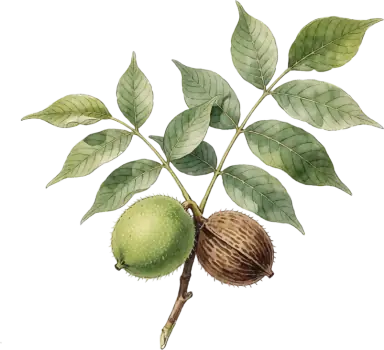
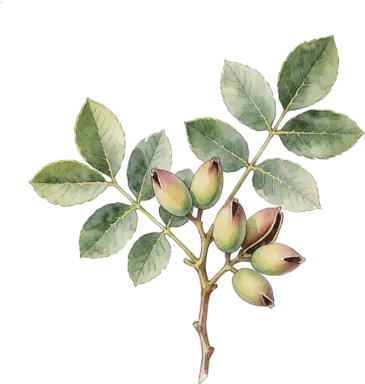
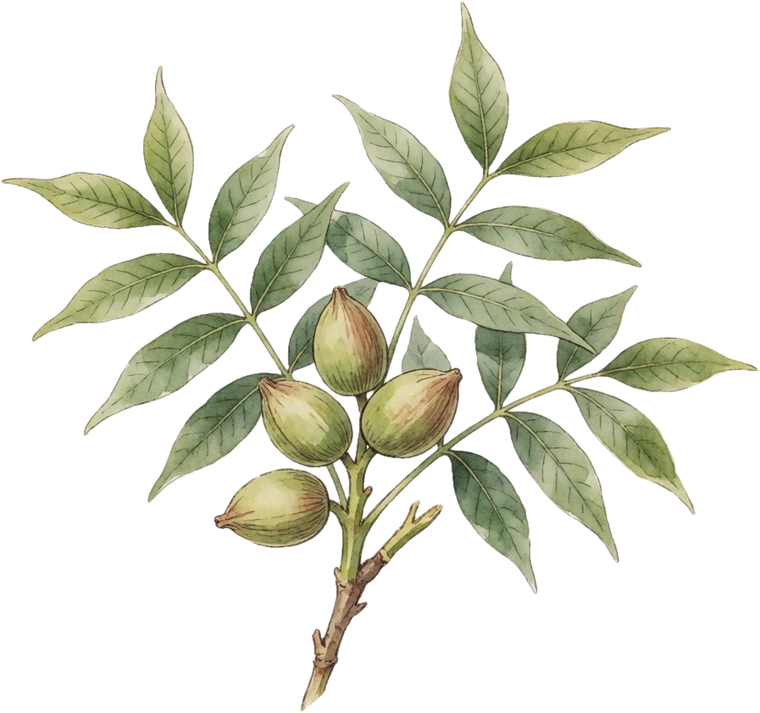
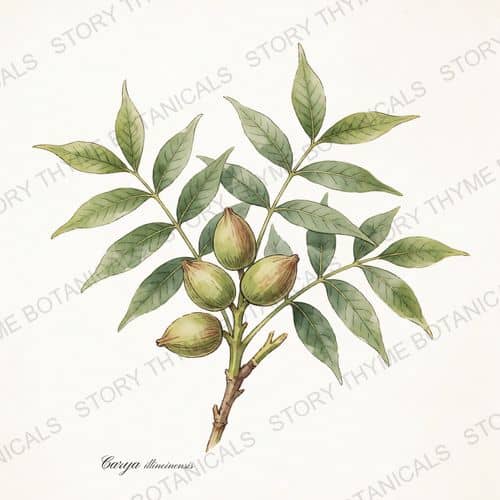
Botanical illustration of Pecan
Tree · Carya illinoinensis

Plant a 100-year tree: 40 ft from structures, 2 cultivars, 8-10 years to first nuts. Alternate bearing is normal (big year, small year). Zinc deficiency is THE pecan problem — learn the rosette look.

Tree · NativeFull SunHigh waterSlow-Moderate growthNative to North AmericaExcellent edibleNeeds a pollination partner

☤ Allelopathic — suppresses neighborsPecan releases juglone, an allelopathic toxin from the walnut family. It can stunt juglone-sensitive plants — tomatoes, potatoes, peppers, blueberries, apples, azaleas, and rhododendrons among them — within roughly 30–50 ft of a mature tree. Grow only juglone-tolerant species beneath it, and keep the sensitive ones well clear.

Where to buy the plant — 3 nurseries

Pecan — a print from the Nut Trees collection

From the print shop

Growing pecan? Hang it.

Our Nut Trees collection carries pecanCarya illinoinensis, print Nº 2, “Pecan.”

16 designsfrom $21.99white or black groundmatte poster, unframed

Shop Nut Trees botanical prints →

I

Overview

Will pecan suit your garden, and what goes wrong.

Will it fruit where you are?

Enter your ZIP — we look up your USDA hardiness zone (2023 map) and check it against what pecan actually needs.

Hardy inZones 6-9
PollinationPartner needed

Pecan at a glance

HardinessUSDA 6–9
Mature size70-100 ft — a true shade tree
PollinationWind-pollinated. Type I + Type II cultivars needed for good set ('Pawnee' I + 'Kanza' II = classic pair)
Chill requirementNot yet established
Bloom seasonSpring
Harvest seasonOctober - November
Growth rateSlow-Moderate

Common pecan problems

  • Pecan Weevil
  • Hickory Shuckworm
  • Aphids
  • Squirrels
  • Pecan Scab (choose resistant cultivars)
  • Powdery Mildew
  • Poor pollination → low fruit set (plant a partner)

II

Growing

Light, water, soil, propagation and the season’s jobs.

How to grow pecan: light, water & soil

LightFull Sun
WaterHigh young; taproot finds water later. Nut fill needs late-summer water
SoilDeep, Rich, Well-drained alluvial · pH 6.0 - 7.0
FertilizerNitrogen + ZINC (pecans crave zinc, foliar spray if new growth is mottled/rosetted).
PruningLate Winter — Central leader when young. Little needed after training.
Spacing35-50 ft

How to plant & propagate pecan

PropagateGrafted, or from cuttings/layering (seed won't come true)

When to spray pecan

Growing season. Realistically none for home growers — cultivar resistance does the work. 'Kanza' is scab-proof for the north.

The pecan growing playbook

Field-tested instructions for every job pecan asks of you, compiled from university extension guidance — in the order the season brings them.

Watering

Keep water on the tree through shuck split

Do not back off watering once the kernels finish filling. Keep the soil moist through nut maturity and shuck split, easing off only about a week before you plan to shake the tree. Shuck dehiscence - the shuck actually opening to release the nut - is a process that requires adequate water. A tree carrying a heavy crop on dry soil gets shuck decline instead, which delays or prevents the split and opens the nuts to anthracnose. Stick-tights that never release are the usual result.

Feeding

Feed pecan by soil testMar – Apr

Apply nitrogen and zinc only as needed from soil or leaf tests, keeping fertilizer away from the trunk. Pecans have high nutrient demand, but overfeeding wastes money and can worsen disease or weak growth.

Follow local extension rates for tree size and soil results.

Foliar zinc: first spray at budbreak, then twice more

Starting at budbreak, spray the new growth with zinc sulfate at 2 to 3 pounds per 100 gallons of water. Repeat for three sprays total at 2 to 3 week intervals while shoots are still expanding. Young and fast-growing trees need this most. Pecans are heavy zinc users, and zinc is immobile in the tree - it only enters the leaves that are actively expanding when you spray. Miss that window and the shoots rosette with short internodes and small crinkled leaflets, and the deficiency cannot be corrected later in the season.

Soil-applied zinc only works where soil pH is below 6.0, and even then foliar application is far more effective. Above pH 6.0 soil zinc is locked up and wasted.

Pruning

Dormant pruning: train a central leader, cut out narrow crotches

While the tree is leafless, train young trees to a single central leader and keep the lowest scaffold limbs at about 6 feet - head high or a little above - so you can walk and mow under the tree for the rest of its life. Remove branches with crotch angles narrower than 60 degrees now, while they are small. Mature pecans are not routinely pruned - thin crowded limbs and take out damaged wood only. Narrow crotch angles trap included bark and never form a real wood union, so they split out of the tree decades later under wind and a heavy nut load. Pecans get very large, and a crotch you ignore at year three is a crane job at year thirty.

Do not apply wound sealer. On cuts facing the afternoon sun, paint the wound with white latex paint to keep the tissue cool so it can heal over. (Wound guidance per UGA Pecan Extension, 'Pruning of pecan trees can be done at any time', 2017/04.)

What to watch for

Scout pecans for nut casebearerMay – Jun

Check small nut clusters for tiny white eggs or entry damage near late May and early June. Pecan nut casebearer larvae can destroy nutlets before the crop sizes up.

Treat only when scouting or local extension alerts justify it; follow label directions.

Spraying

Phylloxera: spray at budbreak, before shoots reach one inch

If this tree had galls on leaves or twigs last year, spray imidacloprid or carbaryl at budbreak and again 7 to 10 days later. The window closes once new green growth passes about one inch. Phylloxera nymphs hatch at budbreak and feed on the tender shoot, and that feeding is what makes the tissue swell into a gall. Once the gall closes around the insect it is sealed inside where no spray can reach it, so a treatment applied after galls appear does nothing.

Treatments applied after galls begin to form will not work - do not spray later hoping to catch it. Imidacloprid is applied once per year at most, and trees treated with it are more prone to mite outbreaks.

Pecan scab: cover sprays through nut sizing until the shell hardens

On a scab-susceptible cultivar, spray boscalid plus pyraclostrobin or phosphorous acid once the nuts begin sizing, and repeat every 2 to 3 weeks depending on how often it rains. Continue through shell hardening. Rotate between FRAC groups rather than repeating one product. On a resistant cultivar like Elliott, Excel, or Kanza you may need no sprays at all. Scab only infects tissue that is still actively growing, and it needs free moisture from rain or heavy fog to germinate. That is why the spray has to be on the nut before the rain arrives, not after - and why rainy stretches during nut sizing shorten the interval.

Propiconazole is labeled only for nonbearing nut trees that will not produce a crop for at least 1 year - do not use it on a bearing pecan. Sulfur has generally poor efficacy against pecan scab. Never spray a pecan with a sprayer previously used for herbicide.

Pecan weevil: trunk sprays once the shell hardens and weevils emerge

After the shells harden and the kernels reach the gel to dough stage, watch for emerging weevils, especially in the days after a soaking rain. When they appear, spray carbaryl or bifenthrin over the lower 8 feet of the trunk and the ground beneath it, and repeat two to four more times at 7 to 10 day intervals until emergence stops. A 12 to 18 inch band of cloth smeared with Tanglefoot around the trunk also traps climbing adults. The female weevil cannot lay eggs in a nut until the kernel has gelled, so she waits underground and emerges when rain softens the soil enough to dig out. Timing to that emergence, not to a date, is the whole game - in a dry year they may not emerge at all.

Carbaryl and bifenthrin kill the predators of aphids and mites and routinely trigger outbreaks of both. Trunk sprays reach only the lower 8 feet, so they will reduce but not fully control weevils on a tall yard tree. Follow the label rate and preharvest interval on the product you buy - the label is the law. Soil-applied imidacloprid does not control pecan weevil.

Protection

Scab sanitation: rake and destroy fallen shucks and leaves before buds swell

After harvest and before the buds begin to swell in spring, rake up and destroy every fallen leaf, shuck, and leftover nut under the tree. Do not compost them in place under the canopy. Prune out damaged twigs while you are there. The scab fungus overwinters in last year's fallen leaves, shucks, and nuts, and those are the primary source of the spores that infect new growth in spring. Clearing the litter removes the inoculum before it can be splashed back up into the canopy.

III

The year

What pecan asks for, month by month.

The pecan year, month by month

MonthJanFebMarAprMayJunJulAugSepOctNovDec
Bloom
Prune
Harvest

What each band means

  • Bloomflowers open — pollinators working, frost on blossoms is the danger.
  • Pruneshape it now — cuts heal cleanly and structure is visible.
  • Harvestpicking time — check ripeness every few days.

The pecan year as text

  • Jan quiet month
  • Feb pruning
  • Mar bloom, pruning
  • Apr bloom
  • May bloom
  • Jun quiet month
  • Jul quiet month
  • Aug quiet month
  • Sep quiet month
  • Oct harvest
  • Nov harvest
  • Dec quiet month

These are the species' typical months — expect them a few weeks earlier in warm zones and later in cold ones. Watch the plant, not just the calendar.

IV

Ecology & uses

What it does for the garden, and what it is grown for.

Pecan in the garden system

  • Canopy layer tree
  • Keystone: Keystone — hosts 230+ caterpillar species
AttractsBirds
MoistureFacultative / average
DeerBrowsed — protect young plants
OriginNative to North America

What pecan is grown for

✓ Commonly eatentree-nut allergen

UseNuts
UseShade
UseLegacy
Edible value4/5

Harvesting & storing pecan

October - November.

Edibility, identification, and traditional-use notes here are general reference — not medical or veterinary advice, and not a claim that any plant treats or prevents anything. Medicinal ratings record how strongly a plant features in herbal tradition, nothing more. Never eat or dose a plant you have not positively identified. More on how to use this library.

V

Cultivars

Named varieties of pecan, ruled as a catalogue.

Best pecan varieties & cultivars

12 on file

Named varieties of pecan differ in winter-chill needs, ripening time, hardiness, and whether they set fruit on their own — pick one that fits your climate.

Kanza

Partly self-fertile
RipensLate September to OctoberZones6-9DiseaseExcellent scab resistance (rated 1 of 4 in UGA trials)Size74 nuts per pound, 52% kernel
PollinationType II (protogynous)

Small nut, clean golden halves, high kernel quality — A Major x Shoshoni cross released by USDA. Superior cold hardiness makes it the pick for the northern end of pecan country, and UGA recommends it as an Elliott replacement. Earliest harvest of the resistant cultivars, around September 20 in Georgia.

Where to buy ‘Kanza

Story Thyme Farms may earn a small commission from these links, at no cost to you — it never changes what we recommend.

Elliott · Elliot

Partly self-fertile
RipensOctoberZones7-9DiseaseExcellent scab resistance (rated 1 of 4 in UGA trials), held up for many yearsSize77 nuts per pound, 51% kernel
PollinationType II (protogynous)

Small teardrop-shaped nut of extremely high quality, fills well — The benchmark for durable scab resistance - it has stayed resistant for decades where other cultivars broke down. Slow to come into production. UGA says Elliott is susceptible to late spring freezes and should not be planted in north Georgia or in low spots - at the northern end of pecan country plant Kanza instead, which UGA names as the Elliott replacement there.

Where to buy ‘Elliottverified

Story Thyme Farms may earn a small commission from these links, at no cost to you — it never changes what we recommend.

Excel

Partly self-fertile
RipensMid OctoberZones6-9DiseaseExcellent scab resistance (rated 1 of 4), described as high resistance or immunitySize44 nuts per pound, 49% kernel
PollinationType II (protogynous)

Large nut similar to Desirable, thick shell — Gives you a Desirable-sized nut without the Desirable spray program. UGA lists it as recommended for trial - the resistance looks excellent but long-term data is still limited.

Where to buy ‘Excel

Story Thyme Farms may earn a small commission from these links, at no cost to you — it never changes what we recommend.

Lakota

Partly self-fertile
RipensEarly to mid OctoberZones6-9DiseaseExcellent scab resistance (rated 1 of 4)Size59 nuts per pound, 61% kernel
PollinationType II (protogynous)

Very high kernel percentage - the highest on the UGA list — Harvests about two weeks after Pawnee. Outstanding kernel percentage, though some Oklahoma growers have reported quality concerns.

Where to buy ‘Lakota

Story Thyme Farms may earn a small commission from these links, at no cost to you — it never changes what we recommend.

Amling

Partly self-fertile
RipensMid to late OctoberZones6-9DiseaseExcellent scab resistance (rated 1 of 4)Size57 nuts per pound, 55% kernel
PollinationType I (protandrous)

Medium nut, good kernel quality — UGA specifically calls it good for organic and low-input growing and a good yard tree, with beautiful dark green foliage. One of the few Type I options with top scab resistance, so it pairs well with Elliott or Kanza.

Where to buy ‘Amling

Story Thyme Farms may earn a small commission from these links, at no cost to you — it never changes what we recommend.

McMillan

Partly self-fertile
RipensMid OctoberZones6-9DiseaseExcellent scab resistance (rated 1 of 4)Size51 nuts per pound, 50% kernel
PollinationType II (protogynous)

Adequate rather than premium kernel quality — Reputation as a consistent bearer with outstanding disease resistance, recommended for low-input operations. Pick it for reliability rather than for the finest kernel.

Where to buy ‘McMillan

Story Thyme Farms may earn a small commission from these links, at no cost to you — it never changes what we recommend.

Sumner

Partly self-fertile
RipensLate OctoberZones6-9DiseaseGood scab resistance (rated 2 of 4), but recent susceptibility reported; favored by black pecan aphidSize56 nuts per pound, 49% kernel
PollinationType II (protogynous)

Thin-shelled, cracks out easily — The latest harvest on the UGA list, around October 29 in Georgia - too late for short-season sites. Slow to come into bearing. Its historic scab resistance has started to break down, and black pecan aphids prefer it.

Where to buy ‘Sumner

Story Thyme Farms may earn a small commission from these links, at no cost to you — it never changes what we recommend.

Caddo

Partly self-fertile
RipensEarly to mid OctoberZones6-9DiseaseMediocre scab resistance (rated 3 of 4) - needs a fungicide programSize67 nuts per pound, 54% kernel
PollinationType I (protandrous)

Small nut but quality holds up even on old trees — UGA calls it one of the best varieties for yield and it is precocious, coming into bearing young. The catch is that you must commit to scab sprays in a humid climate.

Where to buy ‘Caddo

Story Thyme Farms may earn a small commission from these links, at no cost to you — it never changes what we recommend.

Forkert

Partly self-fertile
RipensMid to late OctoberZones6-9DiseaseMediocre scab resistance (rated 3 of 4) - needs a fungicide programSize53 nuts per pound, 58% kernel
PollinationType II (protogynous)

Outstanding nut quality - the reason to grow it — UGA says the outstanding feature of Forkert is nut quality, and it is preferred for the in-shell market. Requires scab management where summers are wet.

Where to buy ‘Forkert

Story Thyme Farms may earn a small commission from these links, at no cost to you — it never changes what we recommend.

Pawnee

Partly self-fertile
RipensMid to late SeptemberZones6-9DiseasePoor scab resistance (rated 4 of 4) - scab damage can exceed even DesirableSize56 nuts per pound, 54% kernel
PollinationType I (protandrous)

Large nut, good kernel — The earliest harvest of any common cultivar, around September 17 in Georgia, which is why it is popular in short-season northern areas where scab pressure is lower. In the humid Southeast its scab susceptibility is serious - UGA rates it as bad as or worse than Desirable.

Where to buy ‘Pawnee

Story Thyme Farms may earn a small commission from these links, at no cost to you — it never changes what we recommend.

Desirable

Partly self-fertile
RipensMid OctoberZones6-9DiseasePoor scab resistance (rated 4 of 4) - the most scab-susceptible cultivar still worth growingSize48 nuts per pound, 51% kernel
PollinationType I (protandrous)

Large nut, excellent sheller, the industry benchmark — The commercial standard for nut size and shelling, but UGA describes it as the most scab-susceptible cultivar that can still be grown. Only plant it if you will run a full fungicide program - it is a poor choice for a low-spray home tree in a humid climate.

Where to buy ‘Desirable

Story Thyme Farms may earn a small commission from these links, at no cost to you — it never changes what we recommend.

Stuart

Partly self-fertile
RipensMid OctoberZones6-9DiseaseMediocre scab resistance (rated 3 of 4)Size55 nuts per pound, 46% kernel
PollinationType II (protogynous)

Marginal nut quality, lowest kernel percentage on the UGA list — The old Southern dooryard standby, widely available and tough, but it takes 8 to 10 years to reach bearing age and the kernel percentage is the weakest of the common cultivars. Better modern options exist for a new planting.

Where to buy ‘Stuart

Story Thyme Farms may earn a small commission from these links, at no cost to you — it never changes what we recommend.

VI

Sources & plant ID

Where the care distinctions come from, and how the plant is filed.

Research basis

Sources behind this profile

No extension citations are attached to pecanyet. The care figures below come from the library's own catalogue rather than a traced primary source.

Plant ID

BinomialCarya illinoinensis
FamilyJuglandaceae
TypeTree · Perennial
USDA symbolCAIL2
OriginNative to North America
Invasive riskLow

VII

Where to buy

Third-party nurseries — not Story Thyme Farms.

Third-party nurseries, not Story Thyme Farms. Prices are theirs.

Story Thyme Farms may earn a small commission from these links, at no cost to you — it never changes what we recommend.

Pecan needs a pollination partner — plant two genetically distinct trees (two different cultivars, or a cultivar plus a seedling).

VIII

Questions

Pecan questions, answered straight.

Why isn't my pecan fruiting?

Most often: it has no genetically distinct partner nearby. Pecan can't pollinate itself — wind-pollinated. Plant a second, unrelated one nearby; two different cultivars, or a cultivar plus a seedling, is the classic pairing.

Is pecan safe for kids and pets?

Pecan is commonly eaten and isn't considered toxic, but "commonly eaten" isn't a guarantee for any particular person or animal — allergies, quantity, and which part you eat all matter. One caveat on this one: tree-nut allergen. Never eat a plant you haven't positively identified, and check with a vet before letting pets or livestock graze anything new.

When do you harvest pecan?

October - November.

How do you propagate pecan?

Grafted, or from cuttings/layering (seed won't come true).

IX

Elsewhere

Where pecan sits in the library.