The illustrated growing guide

Blackberry

Rubus fruticosus

Family Rosaceae

Est. zones 5-8

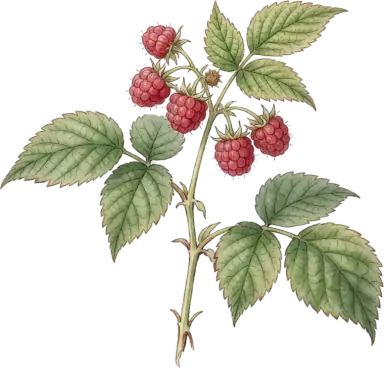
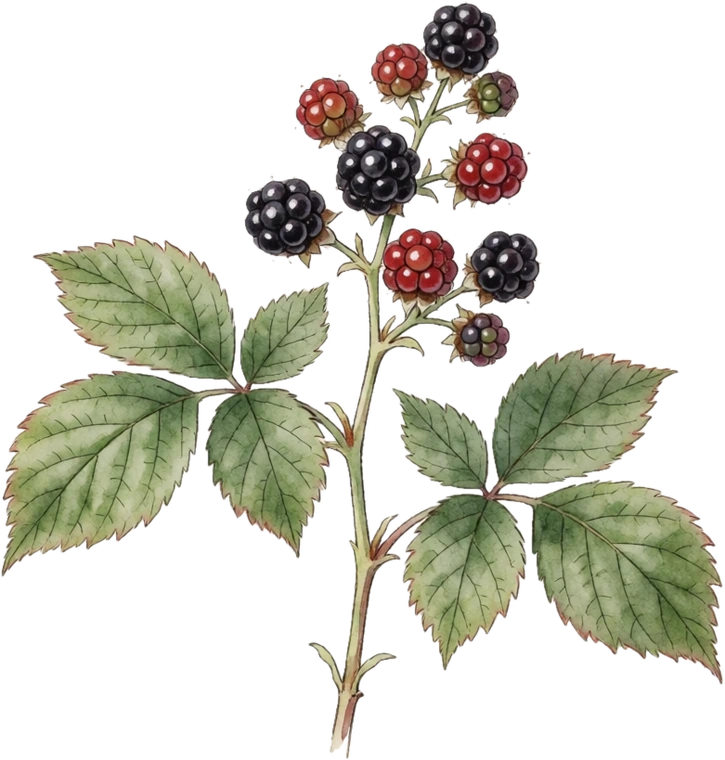
Botanical illustration of Blackberry
Shrub · Rubus fruticosus

Trellising required for vining types. Thornless makes harvest easy.

ShrubFull SunModerate waterFast growthExcellent edibleAttracts bees300-600 winter chill (unconfirmed)

Where to buy the plant — 3 nurseries

Blackberry — a print from the Berry Plants collection

From the print shop

Growing blackberry? Hang it.

Our Berry Plants collection carries blackberryRubus fruticosus, print Nº 2, “Blackberry.”

16 designsfrom $21.99white or black groundmatte poster, unframed

Shop Berry Plants botanical prints →

I

Overview

Will blackberry suit your garden, and what goes wrong.

Will it fruit where you are?

Enter your ZIP — we look up your USDA hardiness zone (2023 map) and check it against what blackberry actually needs.

Hardy inZones 5-8
Winter chill300-600
Unconfirmed

Commonly quoted, but we have not traced this range to a university extension trial or another primary source, and published figures for the same plant often disagree. Chill-hour requirements were only ever established by trial for a handful of commercial fruit crops; for most species the work was never funded. Treat it as a starting point and check your local extension office before you plant on it.

PollinationSelf-fertile

Blackberry at a glance

HardinessUSDA 5–8
Mature sizeCanes 5-8 ft
PollinationSelf-Fertile
Chill requirement300-600
Unconfirmed

Commonly quoted, but we have not traced this range to a university extension trial or another primary source, and published figures for the same plant often disagree. Chill-hour requirements were only ever established by trial for a handful of commercial fruit crops; for most species the work was never funded. Treat it as a starting point and check your local extension office before you plant on it.

Bloom seasonLate Spring
Harvest seasonSummer
Growth rateFast

Common blackberry problems

II

Growing

Light, water, soil, propagation and the season’s jobs.

How to grow blackberry: light, water & soil

LightFull Sun
WaterModerate
SoilWell-drained, Loam · pH 5.5 - 7.0
FertilizerSpring
PruningWinter / Summer tipping — Floricane: Remove fruit-bearing canes after harvest. Tip new canes in summer to branch.
Spacing3-4 ft

How to plant & propagate blackberry

PropagateGrafted, or from cuttings/layering (seed won't come true)

When to spray blackberry

Dormant season. Lime Sulfur: Late winter (Delayed Dormant) to clean up Anthracnose/Rust spores on canes.

Growing season. SWD: Monitor traps. Spray spinosad/insecticide if detected during fruit ripening. Beetles: Manual removal.

The blackberry growing playbook

Field-tested instructions for every job blackberry asks of you, compiled from university extension guidance — in the order the season brings them.

Watering

Water steadily while the berries size up

Give the planting about an inch of water a week through the season, and up to roughly 2 gallons per plant per day while the fruit is filling. Use drip or a soaker hose at the base rather than a sprinkler. Blackberry drupelets swell in the last days before ripening, so a dry spell right then gives small, seedy, crumbly fruit. Overhead water also wets the foliage and splashes anthracnose spores from cane to cane.

Feeding

Feed the canes before bloom

Once growth starts in spring but well before the flowers open, band a complete fertilizer such as 10-10-10 at about 5 pounds per 100 linear feet of row along the planting, keeping it off the crowns, and water it in. The floricanes are building this year's fruit and the primocanes are building next year's at the same time, so the nitrogen has to be there before bloom draws the plant's reserves down.

Second feeding after the last picking

After harvest finishes but before autumn, make a second application of 10-10-10 at about 5 pounds per 100 linear feet along the row. The primocanes keep growing after the fruit is gone and they are the entire crop for next year, so feeding them now sets the cane size and bud count you will harvest from.

Do not push nitrogen into late fall; soft late growth does not harden off and is the first thing winter kills.

Pruning

Prune blackberry canesMar – Aug

In early spring remove winter-killed cane tips; after harvest cut spent floricanes to the ground and tie in new canes. Floricanes fruit once and then decline, while open trained canes are easier to pick and less disease-prone.

Wear gloves for thorny cultivars.

Tip the new primocanes when they reach the top wire

Through the summer, pinch out the growing tip of each new primocane as it reaches the top trellis wire, about 5 feet on erect types. Do it by hand as the canes get there, not all at once. Removing the tip forces the cane to push lateral branches, and those laterals carry next year's fruit. An untipped cane grows tall and flops with few fruiting sites.

Wear gloves on thorny cultivars.

What to watch for

Orange rust: dig out infected plants before the pustules open

Just after the last frost, walk the patch and look for shoots that come up weak, spindly and stunted with waxy blisters on the leaf undersides that turn powdery bright orange. Dig those plants out entirely, crown and roots included, and carry them off site. Orange rust grows systemically through the canes, crown and roots, so a diseased plant never recovers and every sucker off it is infected too. Removing it before the pustules break open keeps millions of spores from seeding the rest of the planting.

Do not compost infected plants. Fungicides will not cure a plant once symptoms show, so removal is the only home-garden control. Red raspberries are immune and can replace a rust-plagued patch.

Spotted wing drosophila: pick clean every 3 to 4 days

As soon as the berries start coloring, pick every 3 to 4 days and take every ripe and overripe berry off the plant and off the ground. Refrigerate what you keep at about 35F right away, and seal culls in a plastic bag left in the sun rather than composting them. Unlike ordinary fruit flies, the female spotted wing drosophila saws through the skin of sound, ripening fruit to lay eggs, so fruit is at risk from first color onward. Every berry left on the plant becomes a nursery that reinfests the patch.

Chilling stops larval development; composting culls does not reliably kill them.

Spraying

Anthracnose: copper spray as buds break

If anthracnose showed up last year, spray a copper hydroxide product labeled for brambles once the new shoots pushing from the buds are under 3/8 inch long. Wet the old canes thoroughly, not just the new growth. The fungus overwinters in lesions on last year's canes, and the spores wash onto the tender new shoots in the first warm rains. Once the shoots elongate past this stage the spray no longer reaches the source.

Liquid lime sulfur is the traditional delayed-dormant material but is no longer sold for residential use because it is caustic. Use only a copper product whose label lists brambles.

Spotted wing drosophila: spinosad only once the fruit is coloring

If sanitation alone is losing ground and you are finding larvae in picked fruit, spray spinosad after the flowers are finished and the berries are coloring. It holds for about 5 to 7 days; leave at least 5 days between treatments. Some trials report that adding sugar as a feeding stimulant improves control — only do this if the product's label allows it. Spinosad kills the adult flies before they can lay into the ripening fruit, which is the only window that matters since the larvae are untouchable once inside the berry.

Spinosad has a 1-day pre-harvest interval on caneberries and a 5-day minimum between treatments. Never spray any pesticide on a crop in flower while bees are foraging - wait until bloom is over, and apply at dusk or dawn.

Harvesting

Pick ripe blackberries oftenJul – Sep

Pick the berries once they turn fully black and slip off easily, chill them quickly, and keep picking every few days. Frequent harvest captures ripe fruit before birds, mold, or over-softening take it.

Handle gently; brambles bruise fast.

III

The year

What blackberry asks for, month by month.

The blackberry year, month by month

MonthJanFebMarAprMayJunJulAugSepOctNovDec
Bloom
Prune
Harvest

What each band means

  • Bloomflowers open — pollinators working, frost on blossoms is the danger.
  • Pruneshape it now — cuts heal cleanly and structure is visible.
  • Harvestpicking time — check ripeness every few days.

The blackberry year as text

  • Jan pruning
  • Feb pruning
  • Mar quiet month
  • Apr quiet month
  • May bloom
  • Jun pruning, harvest
  • Jul pruning, harvest
  • Aug pruning, harvest
  • Sep quiet month
  • Oct quiet month
  • Nov quiet month
  • Dec pruning

These are the species' typical months — expect them a few weeks earlier in warm zones and later in cold ones. Watch the plant, not just the calendar.

IV

Ecology & uses

What it does for the garden, and what it is grown for.

Blackberry in the garden system

  • Shrub layer shrub
  • Keystone: Keystone — hosts 140+ caterpillar species
AttractsBees, Birds
MoistureFacultative / average
DeerBrowsed — protect young plants
OriginIntroduced

What blackberry is grown for

✓ Commonly eaten

UseFresh
UseJam
UseBaking
Edible value4/5

Harvesting & storing blackberry

Summer.

Edibility, identification, and traditional-use notes here are general reference — not medical or veterinary advice, and not a claim that any plant treats or prevents anything. Medicinal ratings record how strongly a plant features in herbal tradition, nothing more. Never eat or dose a plant you have not positively identified. More on how to use this library.

V

Cultivars

Named varieties of blackberry, ruled as a catalogue.

Best blackberry varieties & cultivars

18 on file

Named varieties of blackberry differ in winter-chill needs, ripening time, hardiness, and whether they set fruit on their own — pick one that fits your climate.

Natchez

Self-fertile
Chill200–300 hrsRipensEarly JuneZones5-9Diseasemoderate; some cane susceptibilitySizeerect to semi-erect, 4-6 ft, thornless

large, mild sweet berries, good fresh — One of the earliest-ripening thornless erect types and low-chill (~300 hrs), so it fruits well in the warm South.

Where to buy ‘Natchezverified

Story Thyme Farms may earn a small commission from these links, at no cost to you — it never changes what we recommend.
Ouachita

Self-fertile
Chill400–500 hrsRipensLate June-JulyZones5-9Diseasegood (rosette/orange-rust tolerant)Sizeerect, 4-6 ft, thornless

firm, sweet, high-quality berries — A reliable, upright thornless workhorse (~450 chill hrs) with a long harvest and good disease package for most of the country.

Where to buy ‘Ouachita

Story Thyme Farms may earn a small commission from these links, at no cost to you — it never changes what we recommend.

Navaho

Self-fertile
Chill800–900 hrsRipensJulyZones6-9Diseasegood (rust-resistant)Sizeerect, 4-6 ft, thornless

very sweet, high sugar, excellent fresh — Prized for outstanding flavor, but its high chill need (~800-900 hrs, confirmed by Drake & Clark) means it fruits poorly in mild-winter regions.

Where to buy ‘Navaho

Story Thyme Farms may earn a small commission from these links, at no cost to you — it never changes what we recommend.

Apache

Self-fertile
Chill800–900 hrsRipensMid-Late JulyZones5-9DiseasegoodSizeerect, sturdy 5-6 ft, thornless

large, sweet, firm berries — Very large-fruited thornless erect type on strong self-supporting canes; among the highest chill needs of the Arkansas erect series.

Where to buy ‘Apache

Story Thyme Farms may earn a small commission from these links, at no cost to you — it never changes what we recommend.

Arapaho

Self-fertile
Chill400–500 hrsRipensEarly-Mid JuneZones5-9Diseasegood (rust-resistant)Sizeerect, compact 4-5 ft, thornless

sweet with small seeds — The earliest thornless erect cultivar with notably small seeds (~500 chill hrs), good for short-season and Southern gardens.

Where to buy ‘Arapaho

Story Thyme Farms may earn a small commission from these links, at no cost to you — it never changes what we recommend.

Kiowa

Self-fertile
Chill200–300 hrsRipensJune-JulyZones5-9DiseasemoderateSizeerect, thorny, 5-6 ft

very large, aromatic, good fresh — Produces some of the largest blackberries with a long harvest and one of the lowest chill needs (~200 hrs), but the canes are thorny.

Where to buy ‘Kiowaverified

Story Thyme Farms may earn a small commission from these links, at no cost to you — it never changes what we recommend.

Triple Crown

Self-fertile
Chill400–500 hrsRipensJuly-AugustZones5-9DiseasegoodSizesemi-erect, vigorous, needs trellis, thornless

large, sweet, excellent fresh flavor — High-yielding thornless semi-erect with top-rated flavor; trellis the long, vigorous canes.

Where to buy ‘Triple Crownverified

Story Thyme Farms may earn a small commission from these links, at no cost to you — it never changes what we recommend.
Chester · Chester Thornless

Self-fertile
Chill300–500 hrsRipensAugustZones5-8Diseaseexcellent (cane-blight resistant)Sizesemi-erect, vigorous, needs trellis, thornless

firm, sweet-tart, holds well — The most cold-hardy thornless semi-erect and very productive; late-ripening. Noted for winter HARDINESS rather than a high chill requirement (cited ~300-500 hrs).

Where to buy ‘Chesterverified

Story Thyme Farms may earn a small commission from these links, at no cost to you — it never changes what we recommend.

Prime-Ark Freedom · APF-153T

Self-fertile
Chill300–500 hrsRipensJune floricane crop, then Aug through frost on primocanesZones5-9DiseasemoderateSizeerect, thornless, 4-5 ft

large, sweet, good fresh — First thornless primocane-fruiting blackberry, so tipping canes gives a fall crop even in short-season areas.

Where to buy ‘Prime-Ark Freedom

Story Thyme Farms may earn a small commission from these links, at no cost to you — it never changes what we recommend.

Prime-Ark Traveler · APF-190T

Self-fertile
Chill300–400 hrsRipensJuly floricane crop, then fall on primocanesZones5-8DiseasegoodSizeerect, thornless, compact 4-5 ft

firm, sweet, ships and holds well — Thornless primocane type bred for shippable firm fruit, giving a dependable late-season second crop.

Where to buy ‘Prime-Ark Traveler

Story Thyme Farms may earn a small commission from these links, at no cost to you — it never changes what we recommend.

Marionberry · Marion

Self-fertile
Chill400–500 hrsRipensJulyZones7-9Diseasemoderate; winter-tender canesSizetrailing, thorny, requires trellis

rich, complex, classic blackberry flavor — The benchmark Pacific-Northwest trailing blackberry (USDA/Oregon, 1956) for flavor, but its canes are cold-tender and thorny; chill figure approximate.

Where to buy ‘Marionberry

Story Thyme Farms may earn a small commission from these links, at no cost to you — it never changes what we recommend.

Osage

Self-fertile
Chill350–400 hrsRipensEarly to mid seasonZones6-9Diseasegood; superior postharvest storageSizeerect, thornless

small to average berries, sweet and low in acid — Arkansas 2013 thornless erect release needing an estimated 350-400 chill hours (NC State caneberry guide), with good flavor and production and uniform drupelet fill. Zone span narrowed to 6-9: the chill source states no zones, nursery listings claim 5-9, but UMD reports thornless blackberries are hardy into zones 8 to 6 with winter injury likely in 6b and colder, and the UA release recorded little injury only to about -8.6F. Zone 5 growers should expect cane damage.

Where to buy ‘Osage

Story Thyme Farms may earn a small commission from these links, at no cost to you — it never changes what we recommend.

Ponca · Sweet-Ark Ponca

Self-fertile
Chill400–400 hrsRipensEarly, with NatchezZones6-9Diseasesusceptible to cane and leaf rustSizeerect, thornless, short internodes; benefits from a trellis

medium berries (about 6.8 g), the sweetest of the University of Arkansas releases — Arkansas 2019 release needing an estimated 400 chill hours (NC State caneberry guide). Per the University of Arkansas release announcement, first harvest comes with Natchez, two to four days ahead of Caddo and Osage, and the fruit holds up well after picking. Watch it for cane and leaf rust (UMD). Zone span narrowed to 6-9: the chill source states no zones, and UMD reports thornless blackberries are hardy into zones 8 to 6 with winter injury likely in 6b and colder.

Where to buy ‘Ponca

Story Thyme Farms may earn a small commission from these links, at no cost to you — it never changes what we recommend.

Caddo · Sweet-Ark Caddo

Self-fertile
Chill400–400 hrsRipensEarly, a few days after PoncaZones6-9Diseaseexcellent plant healthSizeerect, thornless

large berries about 8 grams, firm and sweet — Arkansas 2018 release needing an estimated 400 chill hours (NC State caneberry guide); Osage-like flavor on noticeably bigger berries, with high yields and excellent postharvest handling. Zone span narrowed to 6-9: the chill source states no zones, UMD reports thornless blackberries are hardy into zones 8 to 6 with winter injury likely in 6b and colder, and Caddo's tested hardiness showed very limited injury only to a low near 1F. Not a zone 5 plant.

Where to buy ‘Caddo

Story Thyme Farms may earn a small commission from these links, at no cost to you — it never changes what we recommend.

Von

Self-fertile
Chill800–800 hrsRipensMid to late, over about six weeksZones6-9Diseasestrong resistance to orange rust, fruit anthracnose, and double blossom/rosetteSizeerect, thornless

medium to large sweet berries, small seeds, low acid — NC State's first thornless release and the best disease package of the bunch; hardy to about -12F and unusually tolerant of wet weather. Its estimated 800 chill hours rule it out in mild-winter regions. Takes two years to reach full yield.

Where to buy ‘Von

Story Thyme Farms may earn a small commission from these links, at no cost to you — it never changes what we recommend.

Prime-Ark 45 · Prime-Ark® 45

Self-fertile
Chill300–300 hrsRipensEarly floricane crop, then a variable primocane cropZones5-9DiseasemoderateSizeerect, thorny

large berries, mildly sweet, good shipping quality — Arkansas 2011 primocane-fruiting release needing an estimated 300 chill hours, so it suits the warm South. The canes are thorny, which is the trade for its firmness and yield.

Where to buy ‘Prime-Ark 45

Story Thyme Farms may earn a small commission from these links, at no cost to you — it never changes what we recommend.

Prime-Ark Horizon · Prime-Ark® Horizon

Self-fertile
RipensEarly floricane crop, then the latest primocane seasonZones6-8Sizeerect, reduced thorns but not fully thornless

large, firm berries, light on aroma with some tartness — Arkansas 2020 primocane release with the latest primocane season of the group, which stretches picking furthest into fall. Excellent cold storage. Chill requirement not published, so treat its fit in mild winters as unproven.

Where to buy ‘Prime-Ark Horizon

Story Thyme Farms may earn a small commission from these links, at no cost to you — it never changes what we recommend.

Twilight

Self-fertile
RipensEarly to mid seasonZones6-8Sizesemi-erect, thornless

very firm berries with thick skin and good flavor — Semi-erect thornless type singled out by UMD for storage and shelf life. Chill requirement not published. UMD notes thornless blackberries are typically hardy into zones 8 to 6, with winter injury possible in 6b and colder.

Where to buy ‘Twilight

Story Thyme Farms may earn a small commission from these links, at no cost to you — it never changes what we recommend.

VI

Sources & plant ID

Where the care distinctions come from, and how the plant is filed.

Research basis

Sources behind this profile

No extension citations are attached to blackberryyet. The care figures below come from the library's own catalogue rather than a traced primary source.

Plant ID

BinomialRubus fruticosus
FamilyRosaceae
TypeShrub · Perennial
USDA symbolRUFR80
OriginIntroduced
Invasive riskLow

VII

Where to buy

Third-party nurseries — not Story Thyme Farms.

Third-party nurseries, not Story Thyme Farms. Prices are theirs.

Story Thyme Farms may earn a small commission from these links, at no cost to you — it never changes what we recommend.

VIII

Questions

Blackberry questions, answered straight.

Do I need two blackberry plants to get fruit?

No — blackberry is self-fertile, so a single plant will set a crop. A second one usually improves yields, but it isn't required.

Will blackberry fruit in a warm-winter climate?

Blackberry needs roughly 300-600 hours of winter chill (hours between 32–45°F) to break dormancy and set fruit. That range is commonly quoted but we have not traced it to a university extension trial, and published figures for this plant disagree — treat it as a starting point and check your local extension office. Mild-winter growers should count their chill hours before planting.

Is blackberry safe for kids and pets?

Blackberry is commonly eaten and isn't considered toxic, but "commonly eaten" isn't a guarantee for any particular person or animal — allergies, quantity, and which part you eat all matter. Never eat a plant you haven't positively identified, and check with a vet before letting pets or livestock graze anything new.

When do you harvest blackberry?

Summer.

IX

Elsewhere

Where blackberry sits in the library.

Where blackberry sits in the library

Grows in the same world