Adams
Also known as Adams No. 1, Adams No. 2, Adams II
Partly self-fertile
- Chill
- 300–600 hrs
- Ripens
- August
- Zones
- 3-9
- Disease
- moderate; vigorous and productive
- Size
- 6-10 ft tall, upright
- Pollination
- partially self-fertile; plant a second cultivar (e.g. York or Johns) for reliable, heavier fruit set
large clusters, good for juice, jelly, wine and dried — Classic New York selection with big berry clusters and strong vigor; plant with a second cultivar like York for best set. Chill-hour figure is an estimate only — no extension source gives a chill requirement for elderberry, which is cold-hardy and not chill-limited.
Where to buy ‘Adams’verified
Story Thyme Farms may earn a small commission from these links, at no cost to you — it never changes what we recommend.
York
Partly self-fertile
- Chill
- 300–600 hrs
- Ripens
- Mid to late August
- Zones
- 4-8
- Disease
- moderate
- Size
- 6-10 ft tall
- Pollination
- partially self-fertile; classic partner for Adams and a good pollinizer for other canadensis cultivars
largest berries of the American types; soft, sweet, juicy, highly pigmented — NY Ag Experiment Station release (Adams No. 2 x Ezyoff); produces the biggest berries in the group and ripens mid-to-late season, extending harvest alongside earlier cultivars. Zones corrected to 4-8 per WVU Extension. Chill-hour figure is an unverified estimate; elderberry has no documented chill requirement.
Where to buy ‘York’verified
Story Thyme Farms may earn a small commission from these links, at no cost to you — it never changes what we recommend.
Nova
Partly self-fertile
- Chill
- 300–600 hrs
- Ripens
- Early August
- Zones
- 4-8
- Disease
- moderate
- Size
- 6 ft tall and wide, compact
- Pollination
- partially self-fertile; often paired with York
large soft berries, sweeter than most; excellent for wine, juice and jam — Hardy, early-ripening Canadian (Kentville, Nova Scotia) selection that stays compact, making it a good pollinizer partner and small-yard choice. Zones corrected to 4-8 per WVU Extension. Chill-hour figure is an unverified estimate; elderberry has no documented chill requirement.
Where to buy ‘Nova’verified
Story Thyme Farms may earn a small commission from these links, at no cost to you — it never changes what we recommend.
Johns
Also known as John's
Partly self-fertile
- Chill
- 300–600 hrs
- Ripens
- Mid-August
- Zones
- 3-9
- Disease
- moderate; very vigorous
- Size
- 8-10 ft tall, large
- Pollination
- partially self-fertile; strong, heavy-flowering pollinizer for Adams and others
glossy firm purple-black fruit, excellent for wine and juice — Tall, vigorous Canadian cultivar valued as a heavy-flowering pollinizer and for wine and elderflower production. Chill-hour figure is an unverified estimate; elderberry has no documented chill requirement.
Where to buy ‘Johns’
Story Thyme Farms may earn a small commission from these links, at no cost to you — it never changes what we recommend.
Bob Gordon
Partly self-fertile
- Chill
- 300–600 hrs
- Ripens
- Late July to early August (later, into September, in some regions)
- Zones
- 3-9
- Disease
- moderate to good; highly productive
- Size
- 6-8 ft tall and wide
- Pollination
- partially self-fertile; a second cultivar improves yield
high-sugar (high-Brix) purple berries, top-rated for juice, wine and syrup — University of Missouri release (2011) whose downward-facing clusters resist bird and rain loss and give among the highest yields; a determinate, later-blooming type that ripens all at once. Harvest window per WVU is late July-early August but it ripens later in cooler regions. Chill-hour figure is an unverified estimate.
Where to buy ‘Bob Gordon’verified
Story Thyme Farms may earn a small commission from these links, at no cost to you — it never changes what we recommend.
Wyldewood
Partly self-fertile
- Chill
- 300–600 hrs
- Ripens
- Mid-August to early September
- Zones
- 3-9
- Disease
- good; very heavy producer
- Size
- 8-10 ft tall, large
- Pollination
- partially self-fertile; best pollinizers are Ranch and Bob Gordon (per WVU Extension)
small dark berries in very large heads, heavy juice yield — Late-ripening University of Missouri release (2010) with enormous, indeterminate flower and fruit heads and broad soil tolerance. Chill-hour figure is an unverified estimate; elderberry has no documented chill requirement.
Where to buy ‘Wyldewood’verified
Story Thyme Farms may earn a small commission from these links, at no cost to you — it never changes what we recommend.
Ranch
Partly self-fertile
- Chill
- 300–600 hrs
- Ripens
- Late July to August
- Zones
- 4-8
- Disease
- good; high pest tolerance and drought tolerant
- Size
- 5-6 ft tall, compact
- Pollination
- partially self-fertile; a second cultivar improves yield
small black berries, good for juice and syrup — Compact, drought- and pest-tolerant University of Missouri selection that ripens early and stays short, ideal for hedgerows and small plots; also cited as a good pollinizer for Wyldewood. Chill-hour figure is an unverified estimate.
Where to buy ‘Ranch’verified
Story Thyme Farms may earn a small commission from these links, at no cost to you — it never changes what we recommend.
Marge
Also known as European black elder selection (Sambucus nigra type)
Partly self-fertile
- Chill
- 400–700 hrs
- Ripens
- August to September
- Zones
- 4-8
- Disease
- good; vigorous and high-yielding
- Size
- 6-10 ft tall
- Pollination
- partially self-fertile; a single plant will crop, but yields are heavier with a second European (nigra-type) elderberry
very high anthocyanin; primarily a juice and medicinal berry, tart raw — A Sambucus nigra type (parentage debated; DNA leans nigra over hybrid). Marketed as self-pollinating and a single plant does fruit, but sources describe it as only partially self-fertile with heavier crops when a second European elderberry is present. Changed from 'yes' to 'partial'. Chill-hour figure is an unverified estimate; nigra types likely need somewhat more chill than canadensis.
Where to buy ‘Marge’verified
Story Thyme Farms may earn a small commission from these links, at no cost to you — it never changes what we recommend.
Kent
Partly self-fertile
- Ripens
- Very early; ripens 7-10 days before Adams No. 2
- Zones
- 4-8
- Size
- vigorous, upright
- Pollination
- partially self-fertile; plant a second American cultivar for a heavier set
small but very sweet berries in large clusters; fairly high sugar — A 1957 Kentville, Nova Scotia seedling of Adams No. 1 and the earliest of the named cultivars, which is what makes it the pick for a short season - some Vermont growers call it the best all-around performer, and yields are reliable from the very first years. Zones 4-8 per Grimo Nut Nursery; MSU Extension E2747 lists Kent among elderberry cultivars hardy to USDA zones 4 to 9. No extension source gives a chill requirement for elderberry, so chill is left blank rather than guessed.
Where to buy ‘Kent’
Story Thyme Farms may earn a small commission from these links, at no cost to you — it never changes what we recommend.
Scotia
Partly self-fertile
- Ripens
- Late July to early September (species window); ripening period not established - UVM lists Scotia under 'Ripening Periods Uncertain' and MU gives no ripening figure for it
- Zones
- 4-8
- Size
- upright
- Pollination
- partially self-fertile; fruits more heavily with another elderberry nearby
the sweetest of the elderberries and the smallest-fruited; highest sugar content — A 1959 Kentville, Nova Scotia seedling of Adams No. 2 and a sibling of Nova. UVM rates it the highest-sugar named cultivar and lists it as the smallest-fruited, and Grimo describes it as 'the smallest fruit, but the sweetest of the elderberries available' - the choice when you want to eat or juice it rather than maximize tonnage. MU af1017 is more restrained, saying only that the berries are sweeter than Kent or Victoria (the same phrase it uses for Nova), and describing the berries as medium to large; sources genuinely disagree on berry size because elderberry hybridizes freely. Ripening is unresolved: UVM files Scotia under 'Ripening Periods Uncertain' and MU gives it no ripening figure, so treat the harvest window as the species window rather than a mid-season slot. Zones 4-8 per Grimo Nut Nursery. Chill left blank: no extension source gives elderberry a chill requirement.
Where to buy ‘Scotia’
Story Thyme Farms may earn a small commission from these links, at no cost to you — it never changes what we recommend.
Victoria
Partly self-fertile
- Ripens
- Early; ripens 3-6 days before Adams No. 2
- Zones
- 4-9
- Size
- moderately vigorous
- Pollination
- partially self-fertile; best set with a second cultivar
medium berries in medium clusters — A 1957 Kentville, Nova Scotia release and another Adams No. 2 seedling. Moderately vigorous with medium berries and clusters, ripening a few days ahead of Adams - a useful early partner rather than a headline yielder. Zones per MSU Extension E2747, which lists Victoria among elderberry cultivars hardy to USDA zones 4 to 9; parentage and fruit description from the UVM production guide, ripening figure from MU af1017. Chill left blank: elderberry has no documented chill requirement in any extension source.
Where to buy ‘Victoria’
Story Thyme Farms may earn a small commission from these links, at no cost to you — it never changes what we recommend.
Samdal
Also known as Sambucus nigra Samdal
Partly self-fertile
- Ripens
- September
- Zones
- 4-8
- Size
- up to 10 ft tall; notably does not run or sucker far from the base
- Pollination
- partially self-fertile; plant with another European (nigra-type) elderberry to maximize production
large clusters of black fruit, particularly high in anthocyanins — A Danish Sambucus nigra cultivar praised in the UVM guide for excellent yield, high vigor and a grower-friendly habit that stays put instead of suckering across the bed. Important care consequence: like other nigra types it fruits on second-year wood, so the cut-to-the-ground pruning used on American elderberry would remove the crop - prune selectively instead. Zone rating deliberately tightened from the One Green World catalog's 3-8 to 4-8: zone 3 is not plausible for S. nigra, and UVM reports that European elderberry is significantly less winter hardy than S. canadensis with a poor survival rate in New England, so treat even zone 4 as needing a sheltered site. Ripening, size and fruit description per One Green World. Chill left blank - no sourced figure.
Where to buy ‘Samdal’verified
Story Thyme Farms may earn a small commission from these links, at no cost to you — it never changes what we recommend.
Haschberg
Also known as Sambucus nigra Haschberg
Partly self-fertile
- Ripens
- September
- Zones
- 4-8
- Size
- 6-8 ft tall
- Pollination
- partially self-fertile; plant two varieties for heavier crops
abundant clusters of large, juicy bluish-black berries — The standard commercial European black elder of Austrian and German orchards, hardy to about -25F and bearing within 2-3 years of planting. A nigra type, so it fruits on the previous year's wood and must not be cut to the ground the way American cultivars can be. UVM cautions that European elderberry is markedly less winter hardy than S. canadensis and ripens less uniformly over a longer period, so treat the catalog zone rating as optimistic outside a mild or sheltered site. Zones, size and traits from the One Green World catalog - nursery-sourced, hence the low confidence. No sourced chill figure.
Where to buy ‘Haschberg’verified
Story Thyme Farms may earn a small commission from these links, at no cost to you — it never changes what we recommend.




 PruningIn January, February and March
 Bloom
Bloom









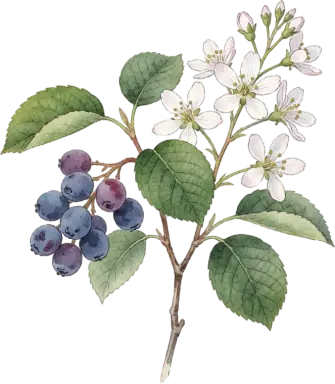 Serviceberry / Juneberry
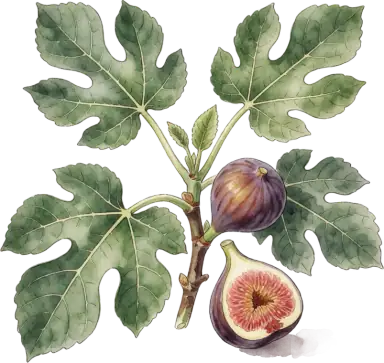 Fig
Fig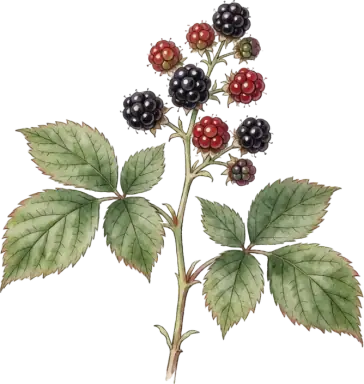 Blackberry
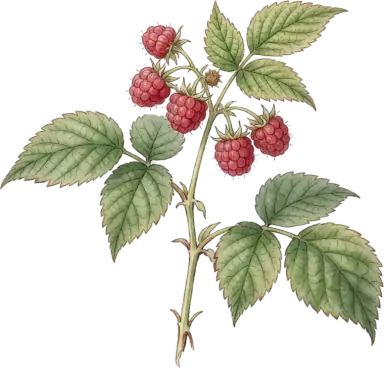 Raspberry