The illustrated growing guide

Fig

Ficus carica

Family Moraceae

Est. zones 6-10

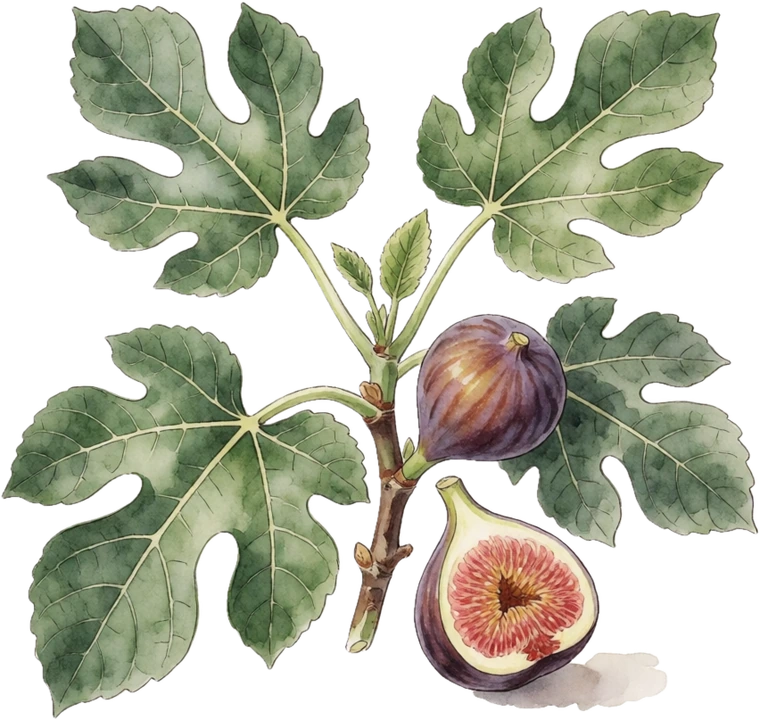
Botanical illustration of Fig
Shrub · Ficus carica

Roots survive -20F, top dies at 10F. In MO, expect dieback to ground. Will regrow and fruit on new wood (breba crop likely lost, main crop succeeds).

ShrubFull SunModerate waterFast growthExcellent edibleup to 100 winter chill

Where to buy the plant — 3 nurseries

Fig — a print from the Kitchen & Orchard collection

From the print shop

Growing fig? Hang it.

Our Kitchen & Orchard collection carries figFicus carica, print Nº 3, “Fig.”

16 designsfrom $21.99white or black groundmatte poster, unframed

Shop Kitchen & Orchard botanical prints →

I

Overview

Will fig suit your garden, and what goes wrong.

Will it fruit where you are?

Enter your ZIP — we look up your USDA hardiness zone (2023 map) and check it against what fig actually needs.

Hardy inZones 6-10
Winter chillup to 100
PollinationSelf-fertile

Fig at a glance

HardinessUSDA 6–10
Mature size10-15 ft (dieback keeps smaller)
PollinationSelf-Fertile (Parthenocarpic - no wasp needed for common figs)
Chill requirementup to 100
Bloom seasonN/A (Flowers inside fruit)
Harvest seasonLate Summer / Fall
Growth rateFast

Common fig problems

II

Growing

Light, water, soil, propagation and the season’s jobs.

How to grow fig: light, water & soil

LightFull Sun (Reflected heat is good)
WaterModerate. Dry spell tolerant once established.
SoilWell-drained, Rich · pH 6.0 - 7.5
FertilizerSpring/Summer. Stop in Aug to harden off.
PruningSpring (after winter kill is obvious) — Remove dead wood. Pinch tips in summer to encourage fruit set.
Spacing10-15 ft (or pot)

How to plant & propagate fig

PropagateGrafted, or from cuttings/layering (seed won't come true)

When to spray fig

Dormant season. Winter Protection: Wrap/Mulch heavily in November after leaves drop.

The fig growing playbook

Field-tested instructions for every job fig asks of you, compiled from university extension guidance — in the order the season brings them.

Watering

Give an inch of water a week through the growing season

Supply 1 to 1.5 inches of water per week from rain or irrigation, keeping the supply steady rather than swinging between soaked and bone dry. Watch for yellowing and dropping leaves - that is the drought signal, and by then fruit is already being shed. Fig roots are shallow and the plant sheds its crop rather than fight a drought, so a dry spell during fruit sizing drops the figs outright. Drought-stressed trees are also markedly more vulnerable to root-knot nematode damage and simply will not fruit well.

Mulching

Mulch 2 to 3 inches over the root zone

Lay a 2 to 3 inch layer of organic mulch over the root zone, pulling it back a few inches from the stems. Renew it each year as it breaks down. Figs root shallowly and dry out fast, so mulch buffers the moisture swings that make them drop fruit. Organic mulches also measurably reduce root-knot nematode damage - which matters because an infected fig cannot be cured by any chemical treatment, making prevention the only tool you get.

Feeding

Feed lightly starting at bud break

As buds break, spread a balanced 8-8-8 or 10-10-10 in a band starting a foot out from the trunk - about 1 ounce per month for young plants, or one-third pound per foot of bush height for established ones, split across roughly three applications. Stop feeding by midsummer. Figs are naturally light feeders, and excess nitrogen pushes leafy growth at the expense of fruit - the classic sign of overfeeding is a vigorous plant whose figs swell but never ripen.

Do not fertilize or heavily irrigate after midsummer. Late feeding pushes tender growth that has not hardened off, and that tissue is killed by temperatures just below freezing.

Pruning

Dormant pruning: head back last year's growthFeb – Mar

Prune once the coldest weather has passed but before buds move. Cut out dead, frozen, crowded, and low-growing wood and root suckers, then head back the remaining shoots by about one-third to one-half of last year's growth. Keep three to eight vigorous, widely spaced main stems and aim for at least a foot of new growth on every limb this season. The main fig crop is borne on the current season's new wood, so heading back last year's growth is what forces the vigorous new shoots that carry the fruit. Waiting until the coldest weather has passed also lets you see which wood the winter actually killed instead of guessing.

Heavy winter pruning removes the breba crop, which forms on last year's wood - if you want the early breba figs, prune lightly. Fig sap causes contact dermatitis, so wear gloves and long sleeves.

What to watch for

Check ripening figs for souring at the eye

As figs begin to soften, look for gas bubbles or a scummy ooze at the eye and a fermented smell. Pick and destroy every souring fruit rather than letting it hang or drop, and keep fallen fruit cleaned up. Souring is caused by yeasts and bacteria that the dried fruit beetle carries in through an open ostiole, and each fermenting fig becomes the beetle bait that seeds the rest of the crop.

No chemical treatment reliably controls souring - do not spray for it. The only real prevention is planting closed-eye cultivars such as Celeste or Alma, plus sanitation.

Spraying

Fig rust: neutral copper once the first leaves reach full size

Only spray if rust defoliated the plant last year - it is not worth spraying otherwise. Start neutral copper or a 5-5-50 Bordeaux mix (copper sulfate, lime, and water) when the first leaves of spring have reached full size, and repeat every two to three weeks as new growth appears. In fall, rake up and destroy the fallen infected leaves. Fig rust overwinters on fallen leaves and reinfects the new spring foliage, and a bad infection strips the plant of the leaves it needs to ripen a crop - so the spores have to be stopped on young leaves before they build up, and the fallen leaves removed before they can start next year.

Stop copper applications once the fruit reaches about one-quarter inch in diameter, because the residue disfigures the fruit; resume only after harvest is finished. Follow the copper product label - always check the label for fig and its pre-harvest interval before applying.

Protection

Protect your fig for winterNov

In cold zones mulch the roots heavily and wrap or bend-and-bury the canes. Fig wood dies back below the low teens without protection.

Move container figs under cover after leaf dropNov – Dec

Once the leaves have dropped and the plant is dormant, move the pot into a cool indoor structure such as an unheated garage, before temperatures drop low enough to freeze the rootball. Keep it there until hard freezes have ended, then bring it back out. A fig in the ground has soil insulating its roots, but a pot does not - Rutgers warns that when trees are in pots the roots can be killed by freezing temperatures, and dead roots kill the plant outright rather than just the top.

Store the plant cool, not warm. It needs cool temperatures to hold dormancy, and Rutgers directs dormant container figs to a cool indoor structure rather than heated living space.

Harvesting

Pick when the neck softens and the fig droops

Harvest when the fruit stem loses its rigidity and the fig droops down slightly on the branch. Twist the fruit off or cut it with shears into a shallow container, and check the plant every day or two once ripening starts. Figs do not ripen after picking, so a fig pulled while its neck is still stiff never sweetens - and one left a day too long bruises, splits, or is taken by birds and ants.

The milky sap from stems and unripe fruit causes contact dermatitis and is made worse by sunlight - wear gloves and long sleeves when picking.

III

The year

What fig asks for, month by month.

The fig year, month by month

MonthJanFebMarAprMayJunJulAugSepOctNovDec
Prune
Harvest

What each band means

  • Pruneshape it now — cuts heal cleanly and structure is visible.
  • Harvestpicking time — check ripeness every few days.

The fig year as text

  • Jan pruning
  • Feb pruning
  • Mar pruning
  • Apr pruning
  • May pruning
  • Jun quiet month
  • Jul quiet month
  • Aug harvest
  • Sep harvest
  • Oct harvest
  • Nov harvest
  • Dec pruning

These are the species' typical months — expect them a few weeks earlier in warm zones and later in cold ones. Watch the plant, not just the calendar.

IV

Ecology & uses

What it does for the garden, and what it is grown for.

Fig in the garden system

  • Shrub layer shrub
AttractsBirds
MoistureFacultative / average
DeerBrowsed — protect young plants
OriginIntroduced

What fig is grown for

✓ Commonly eatenSap can irritate skin

UseFresh
UseJam
UseDrying
Edible value5/5

Harvesting & storing fig

Late Summer / Fall.

Edibility, identification, and traditional-use notes here are general reference — not medical or veterinary advice, and not a claim that any plant treats or prevents anything. Medicinal ratings record how strongly a plant features in herbal tradition, nothing more. Never eat or dose a plant you have not positively identified. More on how to use this library.

V

Cultivars

Named varieties of fig, ruled as a catalogue.

Best fig varieties & cultivars

16 on file

Named varieties of fig differ in winter-chill needs, ripening time, hardiness, and whether they set fruit on their own — pick one that fits your climate.

LSU Gold

Self-fertile
RipensJuly-SeptZones8-10DiseasegoodSize10-15 ft

large and sweet — A warm-climate favorite

Where to buy ‘LSU Gold

Story Thyme Farms may earn a small commission from these links, at no cost to you — it never changes what we recommend.
Celeste · Celestial, Sugar Fig, Malta, Blue Celeste

Self-fertile
RipensLate July-AugZones6-9Diseasegood (tight closed eye resists souring and dried-fruit beetle in humidity)Sizevigorous; commonly 10-15 ft, larger in the Deep South

very sweet amber-to-rose flesh; excellent fresh, dried, or preserved — The classic Southern 'sugar fig'; its closed eye makes it a top pick for humid regions where other figs sour, though heavy loads can drop in a hot early summer. Bears a single heavy main crop.

Where to buy ‘Celesteverified

Story Thyme Farms may earn a small commission from these links, at no cost to you — it never changes what we recommend.

Brown Turkey · Eastern Brown Turkey, Texas Everbearing (regional), English Brown Turkey

Self-fertile
RipensJuly-Sept (light breba plus main crop)Zones6-10Diseasemoderate (open eye can sour in wet climates)Size10-15 ft; responds well to hard pruning to 6-8 ft

mild, mellow-sweet; reliable fresh eating — The most widely sold, forgiving beginner fig; adaptable and productive, but the name covers several strains so buy from a reputable source.

Where to buy ‘Brown Turkeyverified

Story Thyme Farms may earn a small commission from these links, at no cost to you — it never changes what we recommend.

Black Mission · Mission, Franciscana, Beers Black

Self-fertile
RipensJune breba, then Aug-Oct main cropZones7-10DiseasemoderateSizelarge, 15-25 ft if unpruned

rich, intense, deep-sweet; excellent both fresh and dried — The California standard for flavor and drying, giving two crops in long-season areas but wants heat and space and is only marginally cold-hardy.

Where to buy ‘Black Missionverified

Story Thyme Farms may earn a small commission from these links, at no cost to you — it never changes what we recommend.

Kadota · Dottato, White Kadota

Self-fertile
RipensAug-OctZones7-10Diseasegood (thick skin and small eye resist splitting)Sizelarge, vigorous, 15-20 ft

mild, low-seed, thick greenish-yellow skin; best for canning, preserves, and drying — The classic light-skinned canning fig; needs abundant summer heat to ripen its late main crop and benefits from heavy pruning.

Where to buy ‘Kadota

Story Thyme Farms may earn a small commission from these links, at no cost to you — it never changes what we recommend.

LSU Purple

Self-fertile
RipensJuly through frost (often several flushes)Zones7-9Diseasegood (bred for leaf-rust and disease tolerance)Size6-12 ft; compact and precocious

mild, sweet, berry note; good fresh — LSU AgCenter release that fruits on very young plants (1-2 years) and can give up to three crops a season, making it ideal for small Gulf-Coast gardens.

Where to buy ‘LSU Purple

Story Thyme Farms may earn a small commission from these links, at no cost to you — it never changes what we recommend.
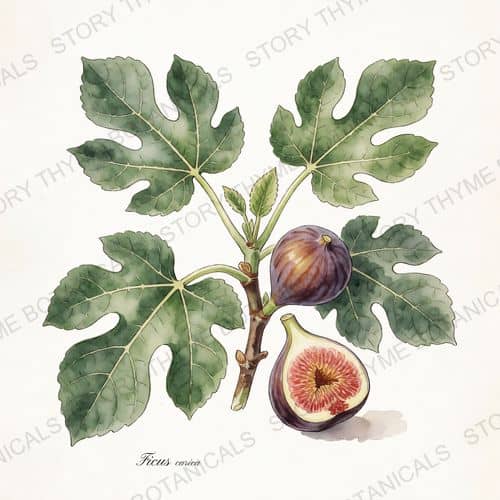
Violette de Bordeaux · Negronne, Petite Negri, Petite Negra, VdB

Self-fertile
RipensAug-SeptZones6-9Diseasemoderate to goodSizecompact, 6-10 ft; excellent in containers

rich, jammy, deep-berry; among the best-flavored dark figs — A naturally dwarf, top-flavor fig prized for small spaces and pot culture, letting cold-climate growers move it to shelter in winter.

Where to buy ‘Violette de Bordeauxverified

Story Thyme Farms may earn a small commission from these links, at no cost to you — it never changes what we recommend.

Desert King · King, Charlie

Partly self-fertile
RipensLate June-Aug (breba crop)Zones6-9Diseasegood; fruit holds up in maritime rainSizelarge, vigorous, 15-20 ft
PollinationSan Pedro type: breba crop is parthenocarpic (no pollinizer needed); main crop needs the fig wasp, which is absent in most of the US, so only the breba matures

sweet, strawberry-red flesh, green skin; excellent fresh — A San Pedro type whose heavy, reliable breba crop ripens without pollination, making it the standout choice for cool-summer, maritime climates like the Pacific Northwest. Plant one and expect a single (breba) crop.

Where to buy ‘Desert Kingverified

Story Thyme Farms may earn a small commission from these links, at no cost to you — it never changes what we recommend.

Osborne Prolific · Neveralla, Archipel, Hardy Prolific, Rust

Self-fertile
RipensAug-SeptZones7-9DiseasemoderateSizemedium, 8-12 ft

very sweet, rich amber-to-strawberry flesh; dessert-quality fresh — A dependable low-heat cropper that ripens well in the Pacific Northwest and cool coastal North where heat-lovers struggle; fruit sizes up larger in cool climates.

Where to buy ‘Osborne Prolific

Story Thyme Farms may earn a small commission from these links, at no cost to you — it never changes what we recommend.

Olympian

Self-fertile
RipensJuly breba, then Aug-Sept main cropZones6-9DiseasemoderateSizecompact to medium, 6-10 ft; short and bushy

very large green-and-purple fruit, sweet violet flesh; good fresh — A cold-hardy heirloom rediscovered in Olympia, Washington that ripens two crops early enough for shorter, cool-summer seasons but also takes Southern humidity.

Where to buy ‘Olympianverified

Story Thyme Farms may earn a small commission from these links, at no cost to you — it never changes what we recommend.

Alma

Self-fertile
RipensLate Aug-OctZones7-9Diseasegood (resin-sealed closed eye resists souring and the dried-fruit beetle)Size10-15 ft; moderately vigorous, precocious

rich, very sweet amber pulp; excellent fresh and preserved — A Texas A&M release (1975) valued for outstanding sweetness and an eye sealed with a drop of resin that resists spoilage in humid heat, though it ripens late and needs a long, warm season.

Where to buy ‘Alma

Story Thyme Farms may earn a small commission from these links, at no cost to you — it never changes what we recommend.

Magnolia · Madonna, Brunswick Magnolia

Self-fertile
RipensMid-July through AugustZones7-11Diseasegenerally disease and insect resistant, but the open eye invites souringSize4-10 ft tall, 6-12 ft wide

fair fresh, excellent for preserves; pink to amber flesh with tiny seeds — One of the largest figs in the trade, bronze-red with an open ostiole. Rated fair fresh but excellent for preserving, which is the reason to grow it. The open eye means insects get in, so pick promptly and expect souring pressure in wet years.

Where to buy ‘Magnolia

Story Thyme Farms may earn a small commission from these links, at no cost to you — it never changes what we recommend.

Marseille · Marseilles, Oregon Prolific, St. Anthony Fig, White Genoa

Self-fertile
RipensLate July, sometimes a second crop in a hot summerZones6-9Diseasegenerally free from insect pests and diseasesSize10-12 ft tall, 8-10 ft wide

small, sweet and rich; green-yellow to nearly white skin with rose seedy flesh — A white fig, also known as White Genoa, that NC State says was brought to the US by Thomas Jefferson and is rumored to have been his favorite. It produces on new wood, so it can be pruned back hard in early spring to maintain shape. At zone 6 it sits at the cold end of its range and needs winter protection.

Where to buy ‘Marseille

Story Thyme Farms may earn a small commission from these links, at no cost to you — it never changes what we recommend.

Little Ruby

Self-fertile
Zones7-10Diseaseclosed eye resists souring and the dried fruit beetleSizedwarf

Listed by NC State as a dwarf variety with a closed eye that can be grown in a pot. The closed ostiole is the trait that matters in humid regions, and dwarf habit makes it practical to move under cover for winter in cold zones. Zones given here are the species range from the NC State toolbox, not a cultivar-specific figure.

Where to buy ‘Little Rubyverified

Story Thyme Farms may earn a small commission from these links, at no cost to you — it never changes what we recommend.

Hunt

Self-fertile
RipensJulyZones7-9Diseaseclosed eye resists souring and the dried fruit beetleSizesmall to medium bush

good fresh, excellent for preserving; small pear-shaped fruit, dull bronze with white specks and violet-brown tones — Rated very cold hardy with a closed eye by UF/IFAS, and listed in Clemson's fig variety table as good fresh and excellent for preserving. The closed eye is its practical advantage in the humid Southeast, where an open ostiole invites souring. Zones reflect the South Carolina range Clemson grows it across rather than a published cultivar-specific figure.

Where to buy ‘Hunt

Story Thyme Farms may earn a small commission from these links, at no cost to you — it never changes what we recommend.

VI

Sources & plant ID

Where the care distinctions come from, and how the plant is filed.

Research basis

Sources behind this profile

No extension citations are attached to figyet. The care figures below come from the library's own catalogue rather than a traced primary source.

Plant ID

BinomialFicus carica
FamilyMoraceae
TypeShrub · Perennial
USDA symbolFICA
OriginIntroduced
Invasive riskLow

VII

Where to buy

Third-party nurseries — not Story Thyme Farms.

Third-party nurseries, not Story Thyme Farms. Prices are theirs.

Story Thyme Farms may earn a small commission from these links, at no cost to you — it never changes what we recommend.

VIII

Questions

Fig questions, answered straight.

Do I need two fig plants to get fruit?

No — fig is self-fertile, so a single plant will set a crop. A second one usually improves yields, but it isn't required.

Will fig fruit in a warm-winter climate?

Fig needs roughly up to 100 hours of winter chill (hours between 32–45°F) to break dormancy and set fruit. Mild-winter growers should count their chill hours before planting.

Is fig safe for kids and pets?

Fig is commonly eaten and isn't considered toxic, but "commonly eaten" isn't a guarantee for any particular person or animal — allergies, quantity, and which part you eat all matter. One caveat on this one: Sap can irritate skin. Never eat a plant you haven't positively identified, and check with a vet before letting pets or livestock graze anything new.

When do you harvest fig?

Late Summer / Fall.

IX

Elsewhere

Where fig sits in the library.