The illustrated growing guide

Celeriac (Celery Root)

Apium graveolens var. rapaceum

Family Apiaceae

Est. zones 2-11

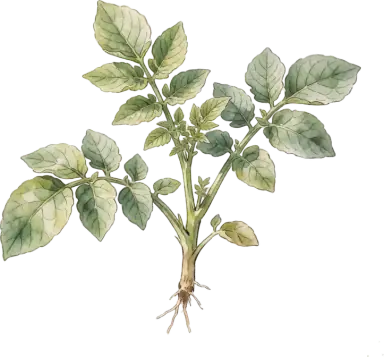
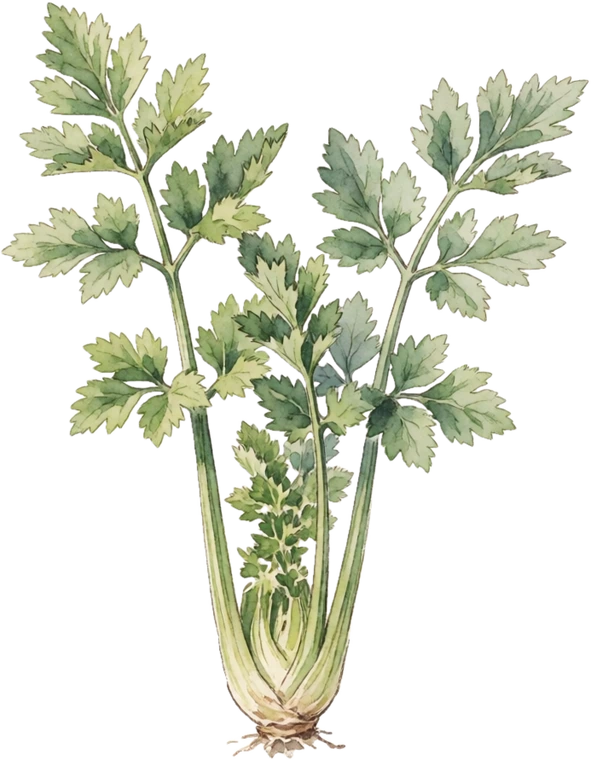
Botanical illustration of Celeriac (Celery Root)
Biennial · Apium graveolens var. rapaceum

The gnarled, unglamorous root that tastes of celery crossed with parsnip — a winter kitchen treasure for soups, purées, and remoulade, and far easier than blanched celery stalks. It needs a long, steadily moist season (start early), but the payoff is a root that stores for months in the fridge or a root cellar. Frost sweetens it. Peel away the ugly exterior to reach the ivory flesh.

BiennialFull Sun to Light ShadeHigh waterSlow growthExcellent edible

Where to buy the plant — 1 nursery

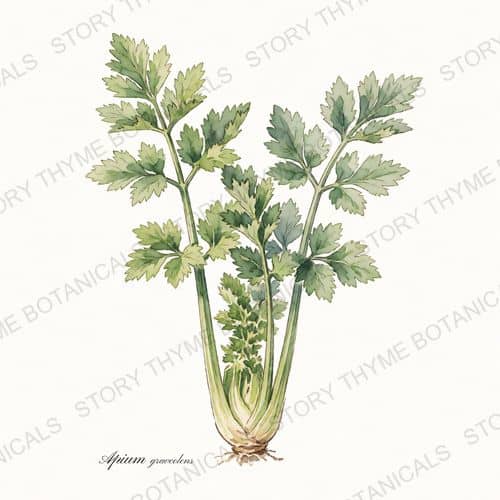
Celeriac — a print from the Roots & Alliums collection

From the print shop

Growing celeriac (celery root)? Hang it.

Our Roots & Alliums collection carries celeriac (celery root)Apium graveolens var. rapaceum, print Nº 14, “Celeriac.”

16 designsfrom $21.99white or black groundmatte poster, unframed

Shop Roots & Alliums botanical prints →

I

Overview

Will celeriac (celery root) suit your garden, and what goes wrong.

Will it fruit where you are?

Enter your ZIP — we look up your USDA hardiness zone (2023 map) and check it against what celeriac (celery root) actually needs.

Life cycleBiennial, grown as an annual

Celeriac (Celery Root) at a glance

Life cycleBiennial, grown as an annual
Mature size12-18 in
PollinationN/A
Chill requirementNot yet established
Bloom seasonN/A
Harvest seasonFall: dig the knobby swollen root after frost (which sweetens it); stores for months
Growth rateSlow (110-120 days)

Common celeriac (celery root) problems

  • Celery pests (lighter)
  • Slugs
  • Almost none

II

Growing

Light, water, soil, propagation and the season’s jobs.

How to grow celeriac (celery root): light, water & soil

LightFull Sun to Light Shade
WaterHIGH and steady — never let it dry (like celery)
SoilRich, deep, moisture-retentive · pH 6.0 - 7.0
FertilizerSteady feeding — a long-season heavy feeder
PruningNone — A long, thirsty season like celery, but far more forgiving of the final result — the ugly knob is the crop. Remove side-shoots and soil from the crown as it swells. Frost improves flavor; it stores like a turnip for months.
Spacing8-10 in

How to plant & propagate celeriac (celery root)

Maturity100-120 days
From seedStart indoors 10-12 wks early like celery
PropagateFrom seed

The celeriac (celery root) growing playbook

Field-tested instructions for every job celeriac (celery root) asks of you, compiled from university extension guidance — in the order the season brings them.

Sowing

Start seed indoors 10-12 weeks before your transplant date

Sow 1/4 inch deep or press seed onto the surface with only a light sprinkling of soil over it, and keep it constantly moist. Germinate at 70-75F, then hold seedlings at 65-70F once they are up. Expect two to three weeks for sprouting, and do not expect every seed to come up. Celeriac needs roughly 100-150 days to size a root, so it has to be well along before it ever reaches the garden. The seed is tiny and light-dependent for germination, which is why burying it deeply or letting the surface dry out is the usual cause of a failed flat. Seed can also go dormant above 80F, so a hot windowsill works against you.

Planting out

Set plants out only after settled warmth, not on the calendar

Move seedlings out once frost risk has passed and nights have settled, spacing them 6-12 inches apart in rows 18-36 inches apart. Do not chill plants to harden them off. If you use mulch film, choose bare ground or white plastic rather than black. Celeriac bolts instead of forming a root if young plants sit below 55F for more than about seven days, and a plant that has begun to bolt splits its petioles and never sizes a knob. Celeriac is also more sensitive than celery to the heat trapped under black plastic, which pushes top growth at the root's expense.

Watering

Water evenly all season, and never let it swing dry to soaked

Keep the top few inches of soil moist but not wet at all times, ideally with drip irrigation. Water early in the day so the foliage dries, and avoid the pattern of letting the bed go dry and then flooding it. Celeriac is shallow rooted, and any interruption of growth permanently shrinks the root. Wild swings in moisture also drive blackheart, in which the innermost growing points die because the plant cannot assimilate calcium during the growth surge that follows a drought broken by heavy water. Wet foliage overnight is separately what lets the leaf blights infect.

Mulching

Mulch with straw to keep digging through winter

Cover the plants with straw or leaves in fall and pull roots as you want them. Where you would rather store them, trim the roots and stalks and hold them at 32-34F at 95 percent relative humidity, where they will keep for three to six months. The roots take frost, so the practical limit on a fall garden is frozen ground rather than the plant itself. A straw blanket keeps the soil diggable and lets the bed act as the root cellar. In cold storage, humidity is what keeps the knob from shriveling, and how well it holds depends on variety and on how much disease it met before harvest.

Feeding

Side-dress nitrogen twice after transplanting

Work compost or rotted manure in before planting, then side-dress once at 3-4 weeks after transplanting and again at 7-8 weeks after setting out. Base the total rate on a soil test rather than guessing. This is a long-season heavy feeder that has to hold steady growth for three to five months, and the root only bulks while the tops are actively feeding it. Splitting the nitrogen into two later doses matches the crop's demand instead of dumping it all at planting, when the seedling cannot use it.

Do not overdo nitrogen or potassium. High N, K, and sodium levels are themselves associated with blackheart.

Pruning

Snip side roots off the swelling knob

As the crown begins to swell, snip away the side roots that form around it. You can hill soil over the knob to blanch the outside white, or leave it unhilled and standing proud of the soil. Side roots split the plant's effort and leave a knob that is harder to peel and trim at harvest. Hilling is a genuine tradeoff rather than a rule: it blanches the skin white, but roots left to push above soil level with no hilling may finish larger.

What to watch for

Check leaves twice a week for tunnels and yellow spots

Look over the foliage twice weekly. Pick off and destroy yellow leaves and any showing the small holes and tunnels of celery leafminer. Remove and destroy plants with curled, fan-like leaves and twisted petioles. Do not follow celeriac with its own family — carrots, parsley, parsnip, and celery share its pests and residue-borne diseases; rotate the bed to an unrelated crop such as onion or lettuce for at least 2 years. Remove or till under crop debris after harvest. Small yellow spots on the leaves are early or late blight, and late blight lesions carry dark pycnidia in their centers. Both survive on crop residue and on the seed, and both run fast once foliage stays wet above 70F. Leafminers themselves do minimal damage as long as their numbers stay in check, so handwork is usually enough in a garden.

Many celery insecticides and fungicides are labeled for celery but NOT for celeriac, and the two are separate crops on the label. Do not carry a celery recommendation onto celeriac without reading the label.

Harvesting

Dig after the first frost, when the knob is 3-4 inches across

Lift the roots with a garden fork once they reach 3-4 inches across or slightly larger, cutting the stems close to the knob and trimming the side roots. Leave the crop out through at least the first frost of fall before digging in earnest. Celeriac does not reach its full flavor until after the first frost, which is why digging on size alone in early fall gives you a blander root than waiting. It holds fairly well in the ground, but leaving it too long in wet conditions invites internal hollowing and rot, and a plant carried into a second year as the biennial it is just throws a tall seed stalk and a pithy root.

III

The year

What celeriac (celery root) asks for, month by month.

The celeriac (celery root) year, month by month

MonthJanFebMarAprMayJunJulAugSepOctNovDec
Harvest

What each band means

  • Harvestpicking time — check ripeness every few days.

The celeriac (celery root) year as text

  • Jan quiet month
  • Feb quiet month
  • Mar quiet month
  • Apr quiet month
  • May quiet month
  • Jun quiet month
  • Jul quiet month
  • Aug quiet month
  • Sep harvest
  • Oct harvest
  • Nov harvest
  • Dec quiet month

These are the species' typical months — expect them a few weeks earlier in warm zones and later in cold ones. Watch the plant, not just the calendar.

IV

Ecology & uses

What it does for the garden, and what it is grown for.

Celeriac (Celery Root) in the garden system

  • Root layer biennial
MoistureFacultative / average
DeerBrowsed — protect young plants
OriginIntroduced

What celeriac (celery root) is grown for

✓ Commonly eaten

UseWinter soups
UsePurées
UseRemoulade
UseStorage
Edible value4/5

Harvesting & storing celeriac (celery root)

Fall: dig the knobby swollen root after frost (which sweetens it); stores for months. About 100-120 days from planting.

Edibility, identification, and traditional-use notes here are general reference — not medical or veterinary advice, and not a claim that any plant treats or prevents anything. Medicinal ratings record how strongly a plant features in herbal tradition, nothing more. Never eat or dose a plant you have not positively identified. More on how to use this library.

V

Cultivars

Named varieties of celeriac (celery root), ruled as a catalogue.

Best celeriac (celery root) varieties & cultivars

7 on file

Named varieties of celeriac (celery root) differ in winter-chill needs, ripening time, hardiness, and whether they set fruit on their own — pick one that fits your climate.

Giant Prague · Prague;Smooth Prague;Large Smooth Prague

Ripensfall after first frostZones2-11Size3-4 inch root

Large, almost spherical root with smooth skin that stores well. Arkansas Extension notes best quality is obtained if roots are harvested at 3 to 4 inches in diameter. UC Sonoma describes the same variety as producing knobby, crisp, white roots that store well.

Where to buy ‘Giant Prague

Story Thyme Farms may earn a small commission from these links, at no cost to you — it never changes what we recommend.

Monarch

Ripensfall after first frostZones2-11

Smooth, cream-colored roots of excellent quality, and the fastest of the extension-listed cultivars at 100 days. UC Sonoma adds that it has easy-to-peel skin and a long storage tolerance.

Where to buy ‘Monarch

Story Thyme Farms may earn a small commission from these links, at no cost to you — it never changes what we recommend.

Brilliant

Ripensfall after first frostZones2-11Size3-5 inch root

Three- to five-inch diameter roots that store well. UC Sonoma describes this European strain as having nearly fiberless, white roots.

Where to buy ‘Brilliant

Story Thyme Farms may earn a small commission from these links, at no cost to you — it never changes what we recommend.

Diamant

Ripensfall after first frostZones2-11

White interior, stands above the ground for easy harvesting, and stores well.

Where to buy ‘Diamant

Story Thyme Farms may earn a small commission from these links, at no cost to you — it never changes what we recommend.

Yara

Ripensfall after first frostZones2-11

Slow to bolt, which matters because celeriac set out into a cold spring runs to seed instead of forming a knob.

Where to buy ‘Yara

Story Thyme Farms may earn a small commission from these links, at no cost to you — it never changes what we recommend.

Alabaster

Ripensfall after first frostZones2-11

strong celery flavor — Strong celery flavor, light-colored smooth skin, and stores well.

Where to buy ‘Alabaster

Story Thyme Farms may earn a small commission from these links, at no cost to you — it never changes what we recommend.

Marble Ball

Ripensfall after first frostZones2-11

strong celery flavor — Strong celery flavor, light-colored smooth skin, and stores well.

Where to buy ‘Marble Ball

Story Thyme Farms may earn a small commission from these links, at no cost to you — it never changes what we recommend.

VI

Sources & plant ID

Where the care distinctions come from, and how the plant is filed.

Research basis

Sources behind this profile

No extension citations are attached to celeriac (celery root)yet. The care figures below come from the library's own catalogue rather than a traced primary source.

Plant ID

BinomialApium graveolens var. rapaceum
FamilyApiaceae
TypeBiennial
USDA symbolAPGR2
OriginIntroduced
Invasive riskLow

VII

Where to buy

Third-party nurseries — not Story Thyme Farms.

Third-party nurseries, not Story Thyme Farms. Prices are theirs.

Story Thyme Farms may earn a small commission from these links, at no cost to you — it never changes what we recommend.

VIII

Questions

Celeriac (Celery Root) questions, answered straight.

Is celeriac (celery root) safe for kids and pets?

Celeriac (Celery Root) is commonly eaten and isn't considered toxic, but "commonly eaten" isn't a guarantee for any particular person or animal — allergies, quantity, and which part you eat all matter. Never eat a plant you haven't positively identified, and check with a vet before letting pets or livestock graze anything new.

When do you harvest celeriac (celery root)?

Fall: dig the knobby swollen root after frost (which sweetens it); stores for months. From planting, expect about 100-120 days to maturity.

How do you propagate celeriac (celery root)?

From seed.

IX

Elsewhere

Where celeriac (celery root) sits in the library.

Where celeriac (celery root) sits in the library

Grows in the same world