The illustrated growing guide
Chinese Artichoke (Crosne)
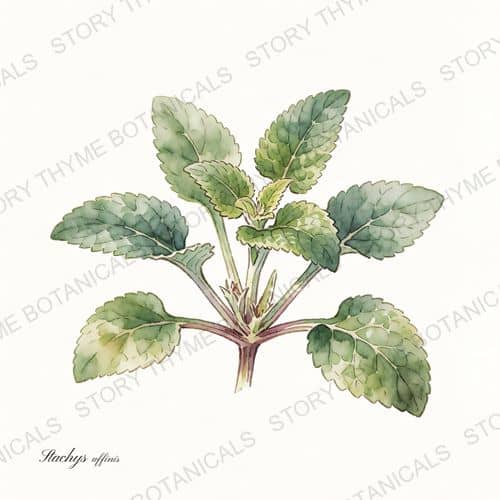
Stachys affinis
Family Lamiaceae
Est. zones 5-9

A gourmet oddity from the mint family — tiny pearly tubers twisted like little screws, prized in French cuisine for their crisp, nutty, water-chestnut crunch. Dig them in fall, eat raw or briefly sautéed, and leave a few tubers behind for next year's self-renewing patch.
⚠ Spreads aggressivelyChinese Artichoke (Crosne) spreads vigorously and regrows from bits of root, so it's very hard to fully remove once established — give it a contained bed or a spot where it can roam freely, and edge it every year.
I
Overview
Will chinese artichoke (crosne) suit your garden, and what goes wrong.
Will it fruit where you are?
Enter your ZIP — we look up your USDA hardiness zone (2023 map) and check it against what chinese artichoke (crosne) actually needs.
Chinese Artichoke (Crosne) at a glance
Common chinese artichoke (crosne) problems
- Almost none
- Almost none
II
Growing
Light, water, soil, propagation and the season’s jobs.
How to grow chinese artichoke (crosne): light, water & soil
How to plant & propagate chinese artichoke (crosne)
The chinese artichoke (crosne) growing playbook
Field-tested instructions for every job chinese artichoke (crosne) asks of you, compiled from university extension guidance — in the order the season brings them.
Sowing
Plant the tubers in spring, in full sun
Plant dormant tubers in spring, once the ground is workable, into a fertile, humus-rich, well-drained soil in full sun. On clay, work in organic matter before planting. Expect a full season of top growth before there is anything worth digging. The tuber is the whole plant's savings account: it has to push up a season of leaf, run the summer, and only then swell new tubers underground before frost. Planting in spring gives it that entire window, and loose, humus-rich soil is what lets the new tubers form cleanly instead of stalling in a compacted layer.
Dividing
Divide the tuberous rootstock to renew or spread the patch
RHS lists division as the propagation method for this crop. Do it in spring, at the same point in the year RHS gives for planting tubers: lift a congested clump, break it apart, and replant the firmest tubers into refreshed soil at fresh spacing. Save your best tubers at digging time and use them as next spring's planting stock. This is a perennial that reproduces from its own tubers, so a patch left alone gets crowded and the tubers get smaller as they compete. Dividing resets the spacing, and because every tuber is a viable plant, your harvest and your seed stock are the same thing.
What to watch for
Check the new shoots for slug damage
As the shoots come up in spring, check them for slug damage - ragged holes and grazed stems, worst after rain. Clear damp hiding places near the row and pick slugs off in the evening. The plant is otherwise generally disease-free and needs no spray program. Slugs are the one pest this crop reliably has, and they hit it hardest at emergence, when the soft new growth is the only leaf the plant owns. Shoots lost in spring are leaf area the plant never gets back, and leaf area in summer is exactly what pays for the tubers you dig in autumn.
Harvesting
Dig the tubers from late autumn, a few at a time
Start digging once the season's top growth has finished, from late autumn onward. Lift only what you plan to eat and leave the rest of the patch in the ground - the tubers hold perfectly well in the soil over winter and can be dug as you need them. The tubers only reach size at the very end of the season, so digging early just costs you yield. The ground itself is the best storage this crop has: the plant is hardy well below -20C, so the tubers sit safely in cold soil and stay in the condition they were grown in.
III
The year
What chinese artichoke (crosne) asks for, month by month.
The chinese artichoke (crosne) year, month by month
What each band means
- Bloom — flowers open — pollinators working, frost on blossoms is the danger.
- Prune — shape it now — cuts heal cleanly and structure is visible.
- Harvest — picking time — check ripeness every few days.
The chinese artichoke (crosne) year as text
- Jan quiet month
- Feb quiet month
- Mar quiet month
- Apr quiet month
- May quiet month
- Jun bloom
- Jul bloom
- Aug bloom
- Sep pruning, harvest
- Oct pruning, harvest
- Nov pruning, harvest
- Dec quiet month
These are the species' typical months — expect them a few weeks earlier in warm zones and later in cold ones. Watch the plant, not just the calendar.
IV
Ecology & uses
What it does for the garden, and what it is grown for.
Chinese Artichoke (Crosne) in the garden system
- Root layer perennial
What chinese artichoke (crosne) is grown for
✓ Commonly eaten
Harvesting & storing chinese artichoke (crosne)
Small, curious spiral white tubers dug in fall — crisp, nutty, water-chestnut texture, eaten raw or lightly cooked.
Edibility, identification, and traditional-use notes here are general reference — not medical or veterinary advice, and not a claim that any plant treats or prevents anything. Medicinal ratings record how strongly a plant features in herbal tradition, nothing more. Never eat or dose a plant you have not positively identified. More on how to use this library.
V
Cultivars
Named varieties of chinese artichoke (crosne), ruled as a catalogue.
Best chinese artichoke (crosne) varieties & cultivars
Species (crosne du Japon)
VI
Sources & plant ID
Where the care distinctions come from, and how the plant is filed.
Research basis
Sources behind this profile
No extension citations are attached to chinese artichoke (crosne)yet. The care figures below come from the library's own catalogue rather than a traced primary source.
Plant ID
VII
Where to buy
Third-party nurseries — not Story Thyme Farms.
Third-party nurseries, not Story Thyme Farms. Prices are theirs.
Story Thyme Farms may earn a small commission from these links, at no cost to you — it never changes what we recommend.
VIII
Questions
Chinese Artichoke (Crosne) questions, answered straight.
Is chinese artichoke (crosne) safe for kids and pets?
Chinese Artichoke (Crosne) is commonly eaten and isn't considered toxic, but "commonly eaten" isn't a guarantee for any particular person or animal — allergies, quantity, and which part you eat all matter. Never eat a plant you haven't positively identified, and check with a vet before letting pets or livestock graze anything new.
When do you harvest chinese artichoke (crosne)?
Small, curious spiral white tubers dug in fall — crisp, nutty, water-chestnut texture, eaten raw or lightly cooked.
How do you propagate chinese artichoke (crosne)?
Division or seed.
IX
Elsewhere
Where chinese artichoke (crosne) sits in the library.
Potato
Sweet Potato
Garlic
Onion