The illustrated growing guide

Cilantro / Coriander

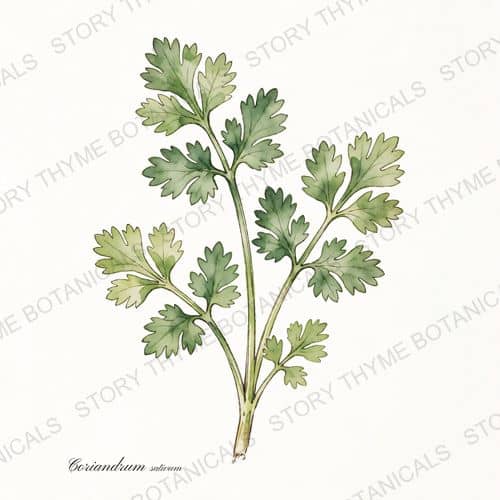
Coriandrum sativum

Family Apiaceae

Grown as an annual

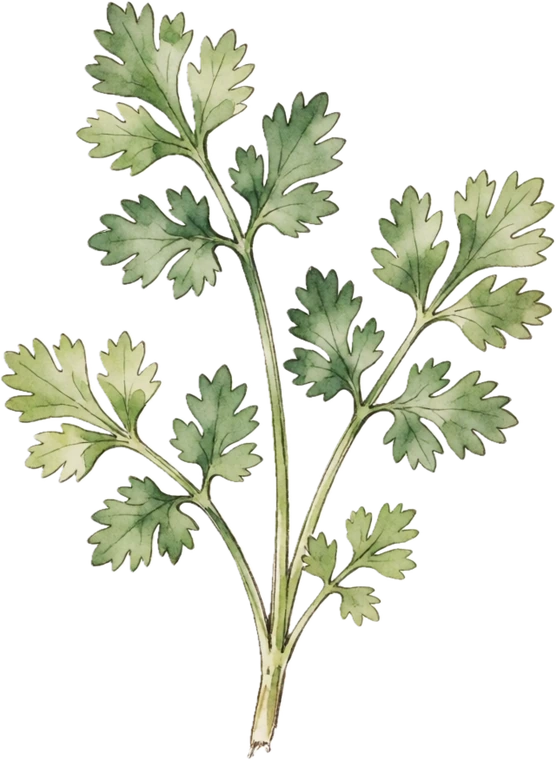
Botanical illustration of Cilantro / Coriander
Annual · Coriandrum sativum

Cilantro bolts the week you need it — accept it: sow every 2-3 weeks, harvest whole plants young, and let bolters make coriander seed + feed the good bugs. Fall cilantro lasts months instead of weeks.

AnnualFull Sun spring/fallModerate waterVery Fast growthAttracts beesNone winter chill

Where to buy the plant — 3 nurseries

I

Overview

Will cilantro / coriander suit your garden, and what goes wrong.

Will it fruit where you are?

Enter your ZIP — we look up your USDA hardiness zone (2023 map) and check it against what cilantro / coriander actually needs.

Life cycleAnnual
Winter chillNone

Cilantro / Coriander at a glance

Life cycleAnnual
Mature size18-24 inches
PollinationBeneficial-insect magnet in bloom
Chill requirementNone (not chill-dependent)
Bloom seasonBolts in heat (that's coriander starting)
Harvest seasonLeaves spring + fall; coriander seed July
Growth rateVery Fast

Common cilantro / coriander problems

II

Growing

Light, water, soil, propagation and the season’s jobs.

How to grow cilantro / coriander: light, water & soil

LightFull Sun spring/fall, part shade summer
WaterModerate
SoilAverage, Well-drained · pH 6.2 - 6.8
FertilizerLight nitrogen for leaf production.
PruningNone (annual) — None.
Spacing4-6 inches

How to plant & propagate cilantro / coriander

Maturity45-70 days
From seedDirect-sow; leaf then seed
PropagateFrom seed

The cilantro / coriander growing playbook

Field-tested instructions for every job cilantro / coriander asks of you, compiled from university extension guidance — in the order the season brings them.

Sowing

Direct sow in spring; transplant only if you must

As soon as the soil is workable, sow seed a half inch deep, thinning later to about 2 inches apart, in rows at least 15 inches apart. Direct sowing is the simpler path. You can start indoors 4 to 6 weeks before transplanting, but minimize root disturbance when the seedlings go out. Cilantro drives a long taproot early and resents having it disturbed, so a plant moved roughly tends to check. Direct sowing sidesteps the problem entirely; the extension guidance if you do transplant is to disturb the roots as little as possible.

Succession sow every 2 to 3 weeks, and keep going into late summer

Sow a fresh short row every 2 to 3 weeks rather than one big planting, and continue successive plantings until late summer if you want a continued harvest. Expect the rows you sow into peak heat to bolt early and give you little leaf. A cilantro plant has one leaf phase and then it flowers; there is no cutting it back into a second youth, so a continuous supply comes from repeated sowings rather than technique. Heat is what triggers bolting, so sowings that mature in hot weather run to flower fastest.

Feeding

A light nitrogen feed, once or twice, and no more

Apply about a quarter cup of a nitrogen fertilizer such as 21-0-0 per 25 square feet, one to two times across the growing season. The leaf is the crop, and nitrogen is what builds leaf. But cilantro is a short, fast plant that finishes in weeks - it cannot use a heavy program, and feeding past this only pushes soft growth.

Thinning

Thin to the spacing that matches the crop you actually want

Once seedlings are up and handleable, thin to about 2 inches apart if you are growing for leaves, or 8 to 10 inches apart if you want the plants to stand and ripen coriander seed. Leaf cilantro is cut young and never needs room. A plant that has to stand and carry a seed head to maturity is a much bigger plant, and the extension spacing for a seed crop is four to five times wider than for leaf.

What to watch for

Scout for leafhoppers, and pull anything yellowed and deformed

Check the planting for leafhoppers through the warm months - small wedge-shaped insects holding their wings tent-like over the back. Pull and remove any plant showing yellowed, stunted or distorted growth, since an infected plant will only grow tall and spindly and go sterile. Leafhoppers vector aster yellows, which is a phytoplasma rather than a fungus - nothing you spray on the leaf cures an infected plant, so the only useful step is removing the infected plants before hoppers move the disease down the row.

Do not reach for an insecticide here, even though some extension guidance suggests one for the hoppers. Cilantro left to flower is a magnet for bees and hoverflies, and a spray on bloom kills the pollinators and the aphid predators for a disease it cannot cure anyway.

Protection

Mulch and shade the afternoon to buy leaf time in heat

Mulch the row and give the planting shade from mid-afternoon sun, either from a taller neighbouring crop or from shade cloth. Water consistently while you do it. Heat is the trigger that flips cilantro from leaf to flower, and both mulch and afternoon shade work on the same lever - they hold the soil cool, which delays the switch and keeps the leaves from turning bitter.

Harvesting

Cut leaves at 6 inches, and pinch every flower stem you see

When plants stand about 6 inches tall, cut roughly a third of the plant at ground level, or pick sparingly once plants reach 4 to 6 inches. Pinch out flower stems as they appear. Wrap cut leaves loosely and refrigerate; they hold about a week. Cutting at ground level takes whole stems and leaves the growing point to push again, while pinching the flower stalks extends the leaf harvest. Once bolting is truly underway the leaves go bitter and no amount of cutting brings them back.

Coriander seed: gather when the heads go brown, not before

Once you let a planting flower, leave it standing and wait for the seed heads to turn brown, then gather the seed as it ripens. If heads start shattering, cut them off into a paper bag and hang it until the plant dries and the seed falls to the bottom. Coriander seed finishes drying down on the plant, and the brown head is the signal that it is mature enough to store and use; gathering green costs you keeping quality. Left alone, the plant will also self-seed the bed for next season.

III

The year

What cilantro / coriander asks for, month by month.

The cilantro / coriander year, month by month

MonthJanFebMarAprMayJunJulAugSepOctNovDec
Harvest

What each band means

  • Harvestpicking time — check ripeness every few days.

The cilantro / coriander year as text

  • Jan quiet month
  • Feb quiet month
  • Mar harvest
  • Apr harvest
  • May harvest
  • Jun quiet month
  • Jul harvest
  • Aug quiet month
  • Sep harvest
  • Oct harvest
  • Nov harvest
  • Dec quiet month

These are the species' typical months — expect them a few weeks earlier in warm zones and later in cold ones. Watch the plant, not just the calendar.

IV

Ecology & uses

What it does for the garden, and what it is grown for.

Cilantro / Coriander in the garden system

  • Herbaceous layer annual
  • Nectary/insectary
AttractsBees
MoistureFacultative / average
DeerBrowsed — protect young plants
OriginIntroduced

What cilantro / coriander is grown for

✓ Commonly eaten

UseSalsa
UseCulinary
UseCoriander seed
Edible value3/5

Harvesting & storing cilantro / coriander

Leaves spring + fall; coriander seed July. About 45-70 days from planting.

Edibility, identification, and traditional-use notes here are general reference — not medical or veterinary advice, and not a claim that any plant treats or prevents anything. Medicinal ratings record how strongly a plant features in herbal tradition, nothing more. Never eat or dose a plant you have not positively identified. More on how to use this library.

V

Cultivars

Named varieties of cilantro / coriander, ruled as a catalogue.

Best cilantro / coriander varieties & cultivars

6 on file

Named varieties of cilantro / coriander differ in days to maturity, disease resistance, flavor, and habit — pick one that fits your season and space.

Calypso

RipensLeaves 50-55 days; coriander seed 120-150 daysZones2-11SizeFull, bulky plants 12-18 inches

Standard cilantro — Reported as three weeks slower to bolt than Santo, which is the longest leaf window of the common varieties. Full bulky habit and harvestable at every stage.

Where to buy ‘Calypso

Story Thyme Farms may earn a small commission from these links, at no cost to you — it never changes what we recommend.

Cruiser

RipensLeaves 50-55 days; coriander seed 120-150 daysZones2-11SizeUpright, uniform, large leaves on sturdy stems

Standard cilantro — Bolt resistance comparable to Calypso but with a tidier, more upright habit and sturdier stems, which is why it is sold as a bunching variety.

Where to buy ‘Cruiser

Story Thyme Farms may earn a small commission from these links, at no cost to you — it never changes what we recommend.

Santo

RipensLeaves 50-55 days; coriander seed 90-105 daysZones2-11Size12-18 inches

Mild, uniform cilantro; darker leaf — The long-standing slow-bolting standard and the variety others are benchmarked against. Reaches seed faster than Calypso or Cruiser, which makes it the better pick if coriander seed is the goal.

Where to buy ‘Santoverified

Story Thyme Farms may earn a small commission from these links, at no cost to you — it never changes what we recommend.

Leisure

RipensLeaves 28-40 daysZones2-11

Standard cilantro — Heat tolerant and high yielding, and fast enough to slip a leaf crop in before the weather turns against it.

Where to buy ‘Leisure

Story Thyme Farms may earn a small commission from these links, at no cost to you — it never changes what we recommend.

Slow Bolt · Slow Bolting

RipensLeaves about 50 daysZones2-11

Standard cilantro — A widely sold open-pollinated slow-bolting selection, listed at 50 days to maturity.

Where to buy ‘Slow Bolt

Story Thyme Farms may earn a small commission from these links, at no cost to you — it never changes what we recommend.

Confetti

RipensBaby leaf 30-35 days; coriander seed 80-100 daysZones2-11SizeLofty, feathery, fern-like foliage

Mild; best young — Grown for baby leaf rather than bunching - texture, flavour and looks are all best on young plants, so cut it early. Left to flower it draws beneficial insects.

Where to buy ‘Confetti

Story Thyme Farms may earn a small commission from these links, at no cost to you — it never changes what we recommend.

VI

Sources & plant ID

Where the care distinctions come from, and how the plant is filed.

Research basis

Sources behind this profile

No extension citations are attached to cilantro / corianderyet. The care figures below come from the library's own catalogue rather than a traced primary source.

Plant ID

BinomialCoriandrum sativum
FamilyApiaceae
TypeAnnual
USDA symbolCOSA
OriginIntroduced
Invasive riskLow

VII

Where to buy

Third-party nurseries — not Story Thyme Farms.

Third-party nurseries, not Story Thyme Farms. Prices are theirs.

Story Thyme Farms may earn a small commission from these links, at no cost to you — it never changes what we recommend.

VIII

Questions

Cilantro / Coriander questions, answered straight.

Is cilantro / coriander safe for kids and pets?

Cilantro / Coriander is commonly eaten and isn't considered toxic, but "commonly eaten" isn't a guarantee for any particular person or animal — allergies, quantity, and which part you eat all matter. Never eat a plant you haven't positively identified, and check with a vet before letting pets or livestock graze anything new.

When do you harvest cilantro / coriander?

Leaves spring + fall; coriander seed July. From planting, expect about 45-70 days to maturity.

How do you propagate cilantro / coriander?

From seed.

IX

Elsewhere

Where cilantro / coriander sits in the library.

Where cilantro / coriander sits in the library

Grows in the same world