Hackberry
Celtis occidentalis
Family Cannabaceae
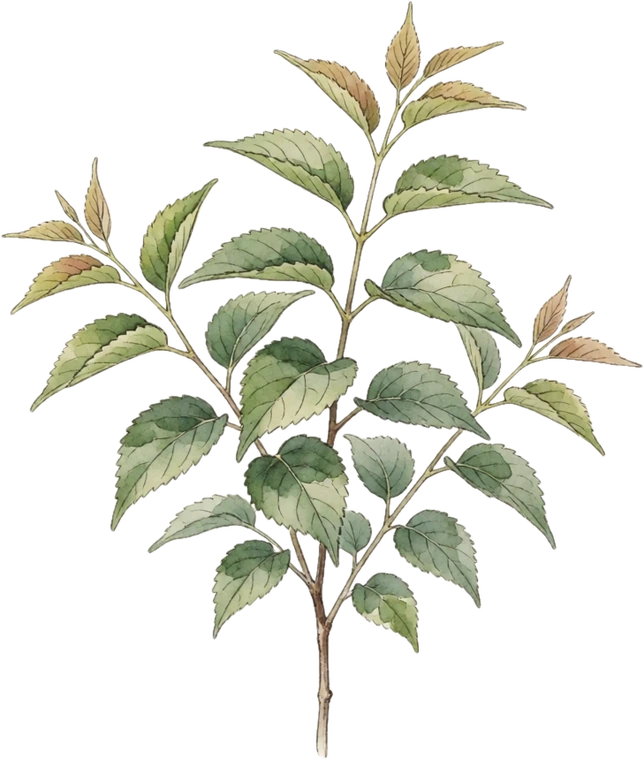
There's a native shade tree that thrives where nothing else will — drought, wind, road salt, compacted city clay — and still feeds the neighborhood. Hackberry hangs small, sweet, date-like berries that birds strip bare, a genuine wild edible people have gathered for centuries. It isn't glamorous. It's indestructible, and generous.
Several butterfly species raise their caterpillars in its canopy, so a single tree quietly runs a nursery all summer. Hardy from zone 3 to 9 and reaching 40 to 60 feet at a decent pace, it's the tree for the worst spot on your property — plant it there and stop worrying.
 Full Sun
 Low water
 Moderate-Fast growth
 Native to North America
 Attracts butterflies
From the print shop
Growing hackberry? Hang it.
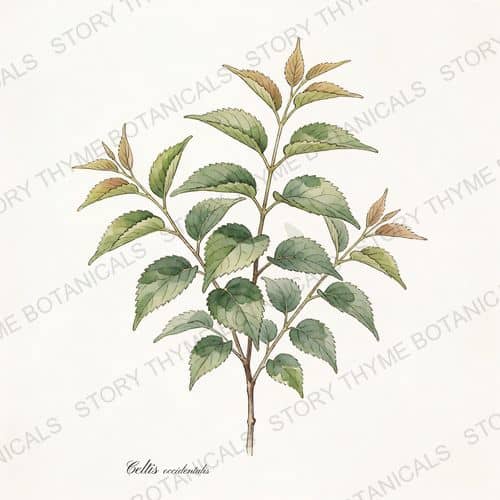
Our Plant Library collection carries hackberry — Celtis occidentalis, print Nº 221, “Hackberry.”
526 designsfrom $12.99white or black backgroundmatte poster, unframed
Will it fruit where you are?
Enter your ZIP — we look up your USDA hardiness zone (2023 map) and check it against what hackberry actually needs.
 Hardy inZones 3-9
Hackberry · Common problems
Common hackberry problems

Pests
3 problems on file
- Nipple Gall (cosmetic)
- Hackberry Psyllid
- Lace Bugs

Diseases
3 problems on file
- Witches'-Broom (cosmetic)
- Almost nothing serious
- Bacterial Leaf Scorch
Hackberry · Growing & propagation
Growing hackberry
- Light
- Full Sun
- Water
- Low
Extremely tough: drought, wind, salt, poor soil, urban abuse
 Soil
Soil- Any, even terrible · pH 6.0 - 8.0
 Fertilizer
- None
 Pruning
- Winter
Train a leader young; remove crossing wood. Otherwise a do-nothing, bulletproof tree.
 Spacing
- 40+ ft
How to plant & propagate hackberry
- Propagate
- Seed (stratify), cuttings, or layering
Hackberry · Calculators & field guides
A little help in the garden.
Hackberry · Yearly calendar
The hackberry year, month by month
Jan
PruneDecember to February
 BloomPrune
BloomMarch to May
PruneDecember to February
What each band means
- Bloom — flowers open — pollinators working, frost on blossoms is the danger.
- Prune — shape it now — cuts heal cleanly and structure is visible.
These are the species' typical months — expect them a few weeks earlier in warm zones and later in cold ones. Watch the plant, not just the calendar.
Hackberry · Ecology & uses
Ecology & uses
Celtis occidentalis
Hackberry in the garden system
- Canopy layer tree
- Nectary/insectary
- Hosts Hackberry emperor, question mark, snout butterflies
- Attracts
- Butterflies, Birds
 Habitat
- Prairie/meadow
 Moisture
- Upland / dry
 Deer
Deer- Browsed
Protect young plants
- Origin
- Native to North America
What hackberry is grown for
✓ Commonly eatenBerries edible and safe
 Use
Use- Tough-site shade
- Use
- Butterfly host
- Use
- Edible berries
- Use
- Urban
Harvesting & storing hackberry
Small sweet date-like berries — edible, bird-beloved, historically a Native food.
Edibility, identification, and traditional-use notes here are general reference — not medical or veterinary advice, and not a claim that any plant treats or prevents anything. Medicinal ratings record how strongly a plant features in herbal tradition, nothing more. Never eat or dose a plant you have not positively identified. More on how to use this library.
Hackberry · Varieties & cultivars
Choosing a hackberry variety
Species; 'Prairie Sentinel' (columnar); 'Prairie Pride' (uniform)
Sources & plant identity
Know what you’re growing.
See where the knowledge comes from.
Hackberry
Celtis occidentalis
The plant, at a glance.
- Botanical name
- Celtis occidentalis
- Plant family
- Cannabaceae
- Growth habit
- Tree · Perennial
- Origin
- Native to North America
- USDA plant symbol
- CEOC
- Invasive risk
- Low
Hardiness, size and timing vary with your cultivar, soil and climate.
Rooted in research.
University extension research, brought together with hands-on growing experience at Story Thyme Farms.
Questions
Hackberry questions, answered straight.
Is hackberry safe for kids and pets?
Hackberry is commonly eaten and isn't considered toxic, but "commonly eaten" isn't a guarantee for any particular person or animal — allergies, quantity, and which part you eat all matter. One caveat on this one: Berries edible and safe. Never eat a plant you haven't positively identified, and check with a vet before letting pets or livestock graze anything new.
When do you harvest hackberry?
Small sweet date-like berries — edible, bird-beloved, historically a Native food.
How do you propagate hackberry?
Seed (stratify), cuttings, or layering.
Elsewhere
Where hackberry sits in the library.
 Maple
Maple Oak
Oak Tulip Poplar
 Bald Cypress