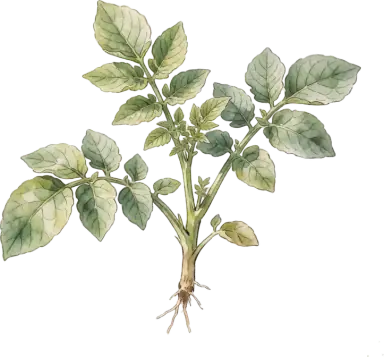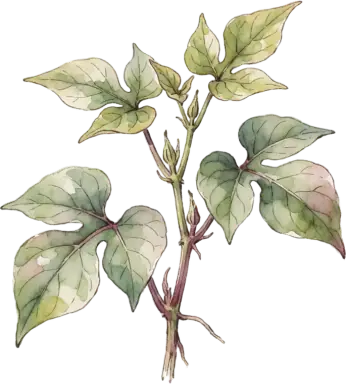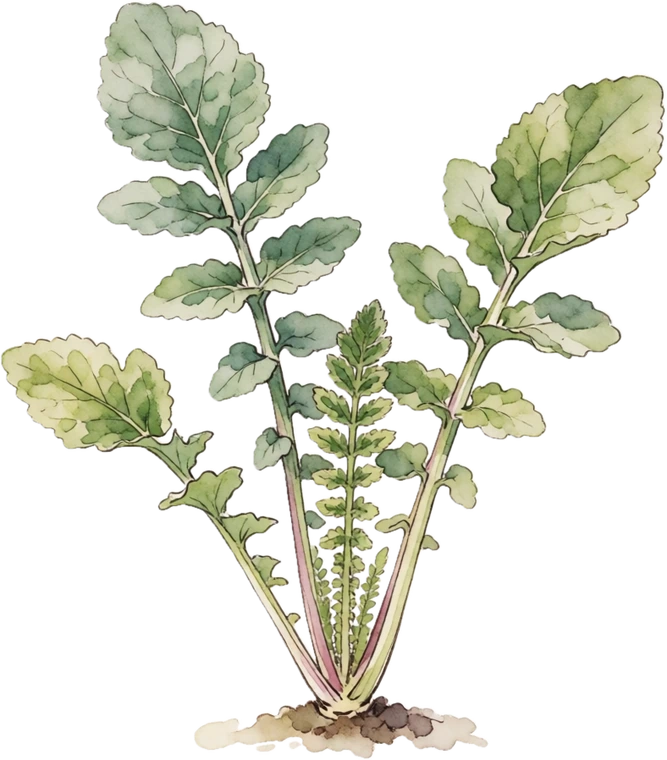
Named varieties of horseradish differ in winter-chill needs, ripening time, hardiness, and whether they set fruit on their own — pick one that fits your climate.
Common · Maliner Kren
RipensOctober - November, after frostZones3-9DiseaseSusceptible to white rust and turnip mosaic virusSizeLarge, vigorous; largest roots of the common types
Superior eating quality, the benchmark for pungency — The broad crinkled-leaf type long preferred for commercial production and the standard against which other horseradish is judged. Its weakness is disease, not flavor. Days to maturity reflects the 150 day season Utah State gives for horseradish generally.
Where to buy ‘Common’
Story Thyme Farms may earn a small commission from these links, at no cost to you — it never changes what we recommend.
Big Top Western
RipensOctober - November, after frostZones3-9DiseaseBred for disease resistance, particularly to turnip mosaic virusSizeLarge roots; wide smooth leaves
Bred to carry the root size growers want without the virus vulnerability of the common type, which makes it the usual pick where turnip mosaic is established. Days to maturity reflects the 150 day season Utah State gives for horseradish generally.
Where to buy ‘Big Top Western’
Story Thyme Farms may earn a small commission from these links, at no cost to you — it never changes what we recommend.
New Bohemian
RipensOctober - November, after frostZones3-9DiseaseResistant to white rust and mosaic virusSizeNarrow smooth leaves; roots smaller than the common type
Somewhat lower quality than the common type — A Bohemian type that trades some root size and eating quality for resistance to the two diseases that ruin common horseradish. Days to maturity reflects the 150 day season Utah State gives for horseradish generally.
Where to buy ‘New Bohemian’
Story Thyme Farms may earn a small commission from these links, at no cost to you — it never changes what we recommend.
Bohemian Giant
RipensOctober - November, after frostZones3-9DiseaseBohemian type: better disease resistance than common horseradishSizeNarrow smooth leaves; roots smaller than the common type
Somewhat lower quality than the common type — Nebraska Extension names it as a Bohemian cultivar and characterizes the Bohemian type as a group rather than listing traits unique to this variety, so treat it as a Bohemian-type selection. Days to maturity reflects the 150 day season Utah State gives for horseradish generally.
Where to buy ‘Bohemian Giant’
Story Thyme Farms may earn a small commission from these links, at no cost to you — it never changes what we recommend.
Sass
RipensOctober - November, after frostZones3-9DiseaseBohemian type: better disease resistance than common horseradishSizeNarrow smooth leaves; roots smaller than the common type
Somewhat lower quality than the common type — Named by Nebraska Extension as a Bohemian cultivar. The source characterizes the Bohemian type as a group rather than listing traits unique to Sass, so treat it as a Bohemian-type selection. Days to maturity reflects the 150 day season Utah State gives for horseradish generally.
Where to buy ‘Sass’
Story Thyme Farms may earn a small commission from these links, at no cost to you — it never changes what we recommend.
Swiss
RipensOctober - November, after frostZones3-9DiseaseBohemian type: better disease resistance than common horseradishSizeNarrow smooth leaves; roots smaller than the common type
Somewhat lower quality than the common type — Named by Nebraska Extension as a Bohemian cultivar. The source characterizes the Bohemian type as a group rather than listing traits unique to Swiss, so treat it as a Bohemian-type selection. Days to maturity reflects the 150 day season Utah State gives for horseradish generally.
Where to buy ‘Swiss’
Story Thyme Farms may earn a small commission from these links, at no cost to you — it never changes what we recommend.
Variegata · Variegated horseradish
RipensOctober - November, after frostZones3-9SizeSlightly lower vigor than standard green types; may take 2 to 3 years to make a nice stand
Dark green leaves splashed irregularly with cream. Nebraska Extension rates its vigor slightly below the standard green varieties and says it may take 2-3 years from planting to achieve a nice stand. Wisconsin Extension notes the variegation can disappear after transplanting and returns once the plant is well established, and that named varieties are rarely available to homeowners other than this ornamental. Utah State adds that it is less invasive and tolerates partial shade, which makes it the one horseradish worth planting where you cannot contain a running root. Days to maturity left blank because it needs two to three years to establish rather than one season.
Where to buy ‘Variegata’
Story Thyme Farms may earn a small commission from these links, at no cost to you — it never changes what we recommend.