The illustrated growing guide

Leek

Allium ampeloprasum

Family Amaryllidaceae

Est. zones 2-11

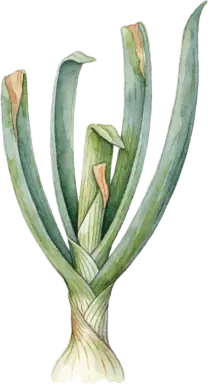
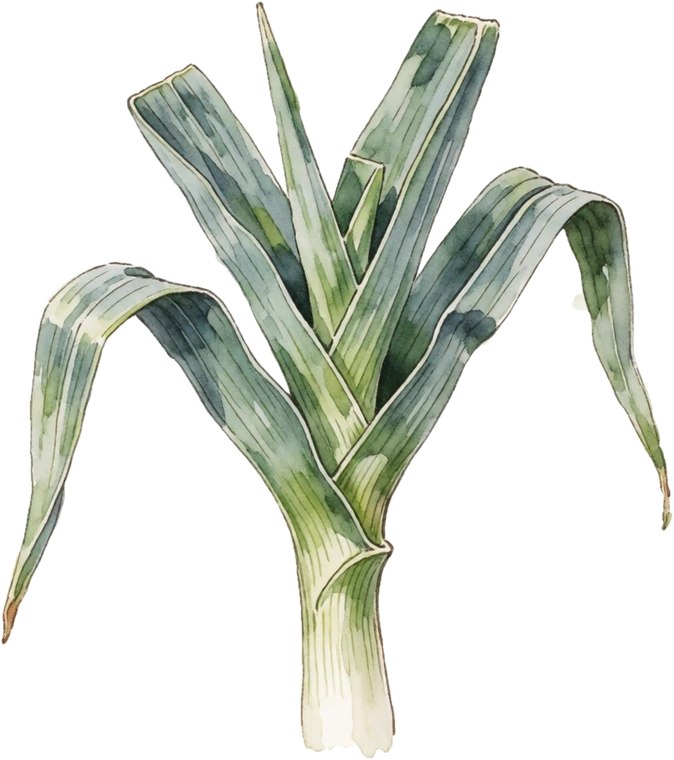
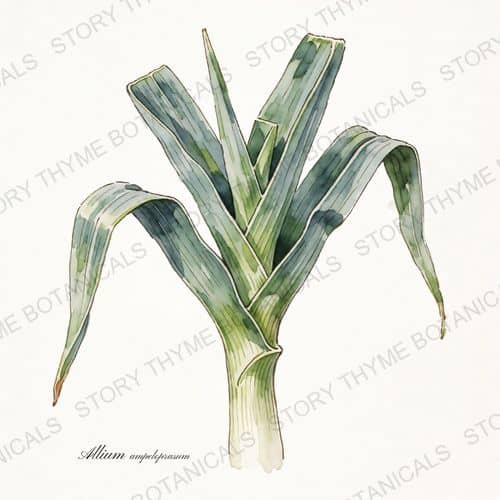
Botanical illustration of Leek
Annual · Allium ampeloprasum

The garden's winter bank account: standing hardy through snow, dug the day you want potato-leek soup. The trench-and-hill ritual is the whole game.

AnnualFull SunModerate waterSlow growthExcellent edibleAttracts bees

Where to buy the plant — 2 nurseries

Leek — a print from the Roots & Alliums collection

From the print shop

Growing leek? Hang it.

Our Roots & Alliums collection carries leekAllium ampeloprasum var. porrum, print Nº 7, “Leek.”

16 designsfrom $21.99white or black groundmatte poster, unframed

Shop Roots & Alliums botanical prints →

I

Overview

Will leek suit your garden, and what goes wrong.

Will it fruit where you are?

Enter your ZIP — we look up your USDA hardiness zone (2023 map) and check it against what leek actually needs.

Life cycleBiennial, grown as an annual

Leek at a glance

Life cycleBiennial, grown as an annual
Mature size2-3 ft
PollinationN/A
Chill requirementNot yet established
Bloom seasonSecond year (leave a few — pollinator globes)
Harvest seasonSeptember - March, dug as needed; frost improves them
Growth rateSlow (100+ days)

Common leek problems

II

Growing

Light, water, soil, propagation and the season’s jobs.

How to grow leek: light, water & soil

LightFull Sun
WaterModerate, steady
SoilDeep, rich, loose · pH 6.0 - 7.0
FertilizerNitrogen every 3-4 weeks — leeks are grass that wants feeding
PruningNone — Plant pencil transplants in 6-in-deep dibber holes, water in (no backfill), then hill soil as they grow — that's the white shank.
Spacing6 in in trenches

How to plant & propagate leek

Maturity100-120 days
From seedStart indoors 10-12 wks early; transplant into deep holes
PropagateFrom seed

When to spray leek

Growing season. Rotate alliums; rust rarely needs action in home beds.

The leek growing playbook

Field-tested instructions for every job leek asks of you, compiled from university extension guidance — in the order the season brings them.

Sowing

Start leeks indoors, 4 to 10 weeks before your last frost

Sow seed a quarter inch deep in a moistened soilless mix indoors, counting back 4 to 10 weeks from your average last spring frost (in northern climates that lands in late February or March). Keep the mix near 70F until germination, then move the flat under lights or into a very bright window. When the grass-like seedlings reach 6 to 7 inches, cut them back to 1 1/2 to 2 inches, and use the trimmings like chives. A leek needs a long season to size up, so the head start is what decides whether you get a fat shaft or a pencil. Trimming the tops keeps the seedlings from flopping and pushes growth into the roots. Counting back from YOUR last frost rather than a fixed date is what makes this portable across zones 2 to 11.

Planting out

Drop transplants into a deep hole, and do not fill it in

Once daytime temperatures hold at 45F or above (Minnesota Extension's threshold), harden the seedlings off for five to seven days, then drop each one into a hole about 6 inches deep, up to the first leaf notch. Space the holes 6 to 9 inches apart in a home garden; 2 to 6 inches works if you want more, thinner shafts. Do not backfill the hole - just water them in and let the soil collapse in on its own over the following weeks. The white edible shaft is only the part of the stem that grew in darkness, so the depth of that hole is literally the length of your harvest. Backfilling packs soil into the leaf notch and grits the layers you will later eat.

Mulching

Hill soil up the shaft two or three times

As the plants grow, bank 2 to 3 inches of soil or compost against the stems, two or three times over the season, stopping at the point where the leaves fan out. Blanching is what makes the shaft tender and mild rather than tough and oniony, and it only happens where light is excluded. Hilling past the leaf fan buries the growing point and traps soil between the layers.

Feeding

Sidedress nitrogen twice while the shaft is bulking

Sidedress a balanced fertilizer such as 10-10-10 at one cup per 10 feet of row, spread about six inches out from the plants and scratched in. Utah State splits this as a quarter pound of 21-0-0 per 100 square feet, applied twice about six weeks apart during the bulking stretch. Leeks are shallow-rooted and spend a long season laying down leaf after leaf, and every leaf is a future ring of shaft, so a nitrogen lull in midsummer shows up as a thin stem in fall.

What to watch for

Trap for leek moth, then count 7 to 10 days

Hang a pheromone trap and check it weekly. There are three flights a season, and eggs hatch roughly 7 to 10 days after you start catching adults - that lag, not the calendar, is when a treatment is worth making. Pull and destroy allium debris at season's end so the adults have nowhere to overwinter. Leek moth larvae mine inside the folded leaves and down into the shaft, so once you can see the windowpaning damage the caterpillar is already somewhere a spray cannot wet. The trap catch is the only warning you get while the eggs are still on the leaf surface.

Spraying

Thrips and leek moth: spinosad, and aim into the axils

If thrips silvering or leek moth mining forces your hand, spinosad (Entrust) or spinetoram (Radiant) are the home-scale materials - add a spreader and aim down into the leaf axils, because both pests shelter where the leaves fold together. Bt kurstaki is the gentlest option for leek moth but often will not hold it alone, since the larvae mine inside the leaf where Bt cannot be eaten. Thrips rasp the leaf to silver under hot dry spells and leek moth larvae tunnel the shaft, and both hide in the tight leaf axils - a spray that only wets the outside of the flat leaf does almost nothing.

WAIT 1 DAY after spinosad or spinetoram before pulling leeks. Bt kurstaki is 0 days. Spinosad and spinetoram are both moderately toxic to bees - if you are letting any second-year leeks flower for pollinators, do not spray those plants at all, and spray the rest at dusk when bees are not flying.

Protection

Cover for allium leafminer before the flies find you - both flights

Put insect netting or floating row cover over the bed before the first adult flight, and keep it on until the flight ends roughly five to seven weeks later. Penn State's field cue is the bloom of daffodils, forsythia, or ornamental pear - once those open, the flies are due. Do it again in fall: Penn State reports a second 5-to-7-week flight beginning in late September, which is the one that hits an overwintering leek crop. As a matter of rotation, do not lay cover over ground that grew infested alliums last year, or you will trap the emerging pupae underneath it. Allium leafminer females stipple a neat row of round punctures down a leaf and lay eggs there, and the maggots then mine down into the shaft where no spray can reach them. Exclusion is the only control that works before the damage is already inside - and because leeks stand in the ground into winter, the late-September flight matters as much as the spring one.

Harvesting

Dig leeks as you need them, and let the frost come

Start digging once the shaft is over an inch across, or a half to three-quarters of an inch for baby types, looking for a firm white shaft at least three inches long. Leave the rest standing and lift them one at a time as you cook. Hill the soil up and pile on a heavy mulch before the ground freezes, and you can keep digging through winter. A leek does not bolt or split the way an onion does if you leave it, so the ground is the best storage you have - and frost genuinely sweetens the shaft. The mulch is not there to save the leek but to keep the soil soft enough to get a fork into.

III

The year

What leek asks for, month by month.

The leek year, month by month

MonthJanFebMarAprMayJunJulAugSepOctNovDec
Harvest

What each band means

  • Harvestpicking time — check ripeness every few days.

The leek year as text

  • Jan harvest
  • Feb harvest
  • Mar harvest
  • Apr quiet month
  • May quiet month
  • Jun quiet month
  • Jul quiet month
  • Aug quiet month
  • Sep harvest
  • Oct harvest
  • Nov harvest
  • Dec harvest

These are the species' typical months — expect them a few weeks earlier in warm zones and later in cold ones. Watch the plant, not just the calendar.

IV

Ecology & uses

What it does for the garden, and what it is grown for.

Leek in the garden system

  • Root layer annual
AttractsBees
MoistureFacultative / average
DeerBrowsed — protect young plants
OriginIntroduced

What leek is grown for

! Some parts toxic — see notesToxic to dogs, cats and horses — organosulfur compounds cause Heinz-body haemolytic anaemia; also toxic to cattle, sheep and goats. Cats are the most sensitive.

UseSoup
UseBraising
UseWinter harvest
Edible value4/5

Harvesting & storing leek

September - March, dug as needed; frost improves them. About 100-120 days from planting.

Edibility, identification, and traditional-use notes here are general reference — not medical or veterinary advice, and not a claim that any plant treats or prevents anything. Medicinal ratings record how strongly a plant features in herbal tradition, nothing more. Never eat or dose a plant you have not positively identified. More on how to use this library.

V

Cultivars

Named varieties of leek, ruled as a catalogue.

Best leek varieties & cultivars

10 on file

Named varieties of leek differ in winter-chill needs, ripening time, hardiness, and whether they set fruit on their own — pick one that fits your climate.

Varna

RipenssummerSizeslender bunching

mild — A tall bunching type developed for thick direct seeding rather than transplanting, so it skips the dibble-hole step entirely.

Where to buy ‘Varna

Story Thyme Farms may earn a small commission from these links, at no cost to you — it never changes what we recommend.

King Richard

Ripenssummer to early fallSizelong slender shaft

sweet and tender — Frost resistant to about 20F but will not overwinter - a summer leek to eat, not to store in the ground.

Where to buy ‘King Richardverified

Story Thyme Farms may earn a small commission from these links, at no cost to you — it never changes what we recommend.

Columbus

RipensfallSizemedium, long and tall

mild — Blue-green leaves and very little tendency to bulb. Has some winter hardiness but should be mulched if you want to hold it.

Where to buy ‘Columbus

Story Thyme Farms may earn a small commission from these links, at no cost to you — it never changes what we recommend.

Splendid

RipensfallSize7-8 inch non-bulbous stalk

mild — A vigorous grower but very winter tender - lift it before hard cold rather than trying to overwinter it.

Where to buy ‘Splendid

Story Thyme Farms may earn a small commission from these links, at no cost to you — it never changes what we recommend.

Tadorna

Ripensfall through winterSizemedium length stalk

Has survived -10F in trials, which puts it among the few leeks you can honestly plan to dig out of frozen ground.

Where to buy ‘Tadorna

Story Thyme Farms may earn a small commission from these links, at no cost to you — it never changes what we recommend.

Lancelot

Ripensfall through winterSizeshort with a large cylindrical shaft

Winter hardy, with gray-green leaves and a thick shaft on a short plant.

Where to buy ‘Lancelot

Story Thyme Farms may earn a small commission from these links, at no cost to you — it never changes what we recommend.

Autumn Giant

Ripensfall through winterSizelarge

An heirloom that has survived -10F in some trials.

Where to buy ‘Autumn Giant

Story Thyme Farms may earn a small commission from these links, at no cost to you — it never changes what we recommend.

Bandit

Ripensfall through winterSizeshort and very thick

sweet — Thick stalks with upright foliage and very little bulbing. Rated very winter hardy. Days to maturity is given as 125 by SDSU and 135 by Wisconsin - expect it late either way.

Where to buy ‘Bandit

Story Thyme Farms may earn a small commission from these links, at no cost to you — it never changes what we recommend.

American Flag · Large American Flag

RipensfallSize7-9 inch stems

mild, sweet, onion-like — Blanches snowy white, very hardy, and will overwinter in milder climates. Also listed among Utah State's recommended varieties.

Where to buy ‘American Flag

Story Thyme Farms may earn a small commission from these links, at no cost to you — it never changes what we recommend.

Giant Musselburgh

Ripenslate fall through winterSizelarge tender white stalks

mild — An extremely hardy heirloom that has been grown for more than 90 years and is described as a very dependable performer.

Where to buy ‘Giant Musselburgh

Story Thyme Farms may earn a small commission from these links, at no cost to you — it never changes what we recommend.

VI

Sources & plant ID

Where the care distinctions come from, and how the plant is filed.

Research basis

Sources behind this profile

No extension citations are attached to leekyet. The care figures below come from the library's own catalogue rather than a traced primary source.

Plant ID

BinomialAllium ampeloprasum
FamilyAmaryllidaceae
TypeAnnual · Biennial
USDA symbolALAM
OriginIntroduced
Invasive riskLow

VII

Where to buy

Third-party nurseries — not Story Thyme Farms.

Third-party nurseries, not Story Thyme Farms. Prices are theirs.

Story Thyme Farms may earn a small commission from these links, at no cost to you — it never changes what we recommend.

VIII

Questions

Leek questions, answered straight.

Is leek safe for kids and pets?

With care. Toxic to dogs, cats and horses — organosulfur compounds cause Heinz-body haemolytic anaemia; also toxic to cattle, sheep and goats. Cats are the most sensitive. Site it accordingly if children or pets roam the garden. This is general reference, not medical or veterinary advice — call a vet or poison control if something has actually been eaten.

When do you harvest leek?

September - March, dug as needed; frost improves them. From planting, expect about 100-120 days to maturity.

How do you propagate leek?

From seed.

IX

Elsewhere

Where leek sits in the library.

Where leek sits in the library

Grows in the same world