Lime

Citrus × aurantiifolia / latifolia

Family Rutaceae

TreeZones 9-11

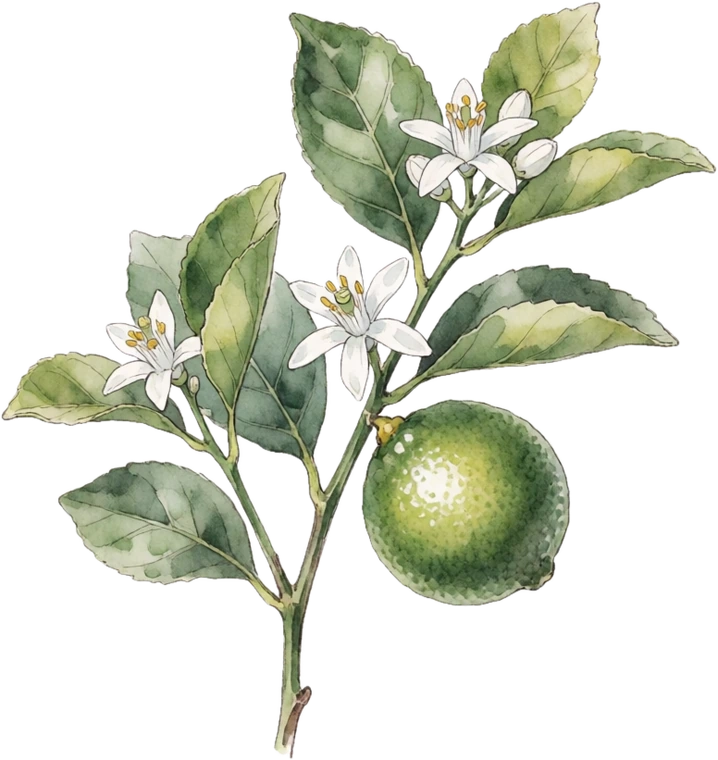
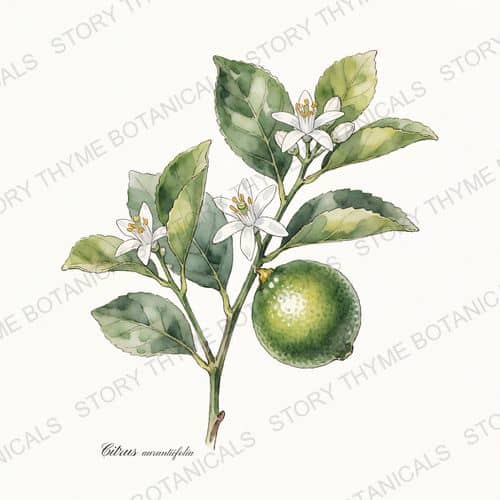
Botanical illustration of Lime

Limes off your own tree, year-round — Persian limes ripen continuously, picked green and glossy for cocktails, tacos and key lime pie whenever the recipe calls. And if you grow makrut, the leaves alone justify the pot: they are the ingredient that makes homemade Thai curry taste like the restaurant's.

Of the common citrus this is the most cold-shy — frost that a lemon shrugs off will strip a lime — so north of zone 9 it lives in a container that migrates indoors for winter. Self-fertile, bee-visited, evergreen and fragrant in bloom. Treat it as a well-traveled houseguest and it keeps the bar stocked.

Where to buy lime — 6 nurseries compared

  • Full Sun
  • Moderate water
  • Moderate growth
  • Excellent edible
  • Attracts bees
  • None winter chill
Lime — a print from the Plant Library collection

From the print shop

Growing lime? Hang it.

Our Plant Library collection carries lime — Citrus aurantiifolia, print Nº 278, “Lime.”

526 designsfrom $12.99white or black backgroundmatte poster, unframed

Shop Plant Library botanical prints →

✓

Will it fruit where you are?

Enter your ZIP — we look up your USDA hardiness zone (2023 map) and check it against what lime actually needs.

Life cyclePerennial zones 9–11, annual elsewhere
Winter chillNone
PollinationSelf-fertile

Lime · Common problems

Common lime problems

Pests, diseases and weather to keep an eye on.

Pests

3 problems on file

Diseases

2 problems on file

Lime · Growing & propagation

Growing lime

Light, water, soil, propagation and the season’s jobs.
What it needsThe details
Light
Full Sun
Water
Moderate, even
Soil
Well-drained citrus mix · pH 6.0 - 7.0
Fertilizer
Citrus feed monthly in season
Pruning
Spring

Light shaping; the Key lime is shrubby and thorny — let it bush.

Spacing
8-12 ft

Container 4-5 ft

How to plant & propagate lime

Propagate
Grafted, or from cuttings/layering

Seed won't come true

Lime · Harvest & keeping

What you get from lime

How long before it bears, how much it gives, how you know it is ready, and how long it keeps once picked.
Botanical illustration of Lime
Years to first harvest
2 to 4 years
Typical yield
30–100 lbs
What you eat
Fruit
How to tell it is ready
Pick full-size but still green

Yellow is past prime for most limes; glossy and heavy

How long it keeps
1-2 weeks refrigerated

Lime · Seasonal care & spray guidance

The lime growing playbook

Field-tested instructions for every job lime asks of you, compiled from university extension guidance — in the order the season brings them.

When to spray lime

Dormant season. Oil in late winter.

Growing season. Oil for scale.

While it is dormant

winter, before growth starts

2 jobs
PruningIn winter

Light pruning once the last hard freeze has passed

Limes need very little pruning. In late winter, after the last hard freeze in your area and before new growth begins, take out dead wood, remove branches that cross or rub, and rub off any basal suckers coming from below the bud union. Avoid extensive pruning in the late fall and early winter. Shape only, and never remove more than a third of the canopy in one pass. Shoots below the bud union are rootstock, not lime, and if left they flourish at the expense of the grafted variety. Cutting before the freeze risk is over pushes a tender flush straight into cold weather, and a mature citrus that is pruned hard loses the canopy that shades its own fruit.

ProtectionIn winter

Cold protection: lime is the tenderest citrus you can grow

Watch the forecast through the cold months and act before the night arrives, not after it. 'Tahiti' lime leaves are damaged below 28F, and the tree takes severe damage or dies below 24F. Where those temperatures are realistic in your winter, grow the tree in a container you can carry indoors ahead of a freeze rather than in the ground. Lime has the narrowest cold margin of the common citrus, and the gap between leaf scorch and a dead tree is only about four degrees. A freeze that merely burns a lemon can take a lime out entirely.

As growth begins

early spring

1 job
FeedingIn spring

Three feedings, from bud break through fruit swell

Split the year's fertilizer into three applications as the crop builds: at early bud break, again at fruit swell, and again when the fruit reach about an inch in diameter. Use a complete fertilizer with micronutrients, 6-6-6 or 8-8-8 on young trees and 10-10-10 on mature ones, unless a soil test says otherwise. Lime pushes its heaviest growth and sizes its fruit across this stretch, and splitting the nitrogen across the three flushes feeds the crop steadily instead of dumping it all on the roots at once.

Just after bloom

as the fruit sets

1 job
SprayingAfter fruit set

Citrus canker: copper on expanding fruit, not on a calendar

Only if canker is present in your area: begin copper sprays once the young fruit are about a quarter to a half inch across, and repeat at roughly 21-day intervals while the fruit expand. Fruit remain susceptible for about 60 to 90 days after petal fall; once past that, stop spraying, because later infections make only small inconspicuous pustules. The bacterium can only enter through stomates on the fruit surface while those stomates are still opening on expanding fruit. Copper is a short-lived physical barrier over that window and does essentially nothing outside it.

Through summer

the growing season

2 jobs
What to watch forThrough summer

Asian citrus psyllid: watch the flush, protect the parasitoid

Inspect every new flush for psyllid nymphs and the waxy tubules they secrete on the tender tips - all stages feed on new growth, so the flush is the only place to look. On a dooryard tree, lean on biological control rather than sprays: the parasitoid Tamarixia radiata reaches up to 70 percent parasitism of nymphs where it is established, and it only persists where insecticide use stays low. Timing nitrogen and pruning for summer and winter, when psyllids are least active, keeps the tree from flushing into a psyllid peak. The psyllid vectors the bacterium behind huanglongbing, which has no cure and kills a lime tree within about five to eight years. The tender flush it breeds and feeds on is the whole of the problem and the whole of the scouting target.

SprayingThrough summer

Citrus leafminer: horticultural oil on the new flush only

On a young tree, spray horticultural oil as soon as new shoots begin to develop, repeating every 10 to 14 days and coating the expanding leaves. Stop once the leaves harden off. Mature bearing trees generally tolerate the mines and usually need no treatment, though a heavy infestation can reduce production. The moth lays only on soft, expanding leaves, so that flush is the entire control window - a hardened leaf cannot be mined and any spray after that is wasted. The mines matter mostly because the damage stunts young trees and makes them more susceptible to citrus canker where that pathogen is present, not because they starve the tree.

Harvest time

as it ripens, and picking

1 job
HarvestingAt harvest

Pick Persian limes green, at about 1 3/4 inches

Harvest 'Tahiti' or Persian limes when they reach about 1 3/4 inches (45 mm) across and are dark to medium-dark green. The tree bears all year with a pronounced summer peak, so pick continuously rather than waiting for one date. A mature tree can carry 450 to 550 lbs of fruit. The rind runs from dark green to light yellow as the fruit passes maturity, and a lime picked at full green is at its peak of acidity and aroma. Yellow on the tree means the fruit is already past what you wanted from it.

Lime · Calculators & field guides

A little help in the garden.

Calculators for the figures. Field guides for the hands-on work.

Lime · Yearly calendar

The lime year, month by month

What lime asks for, month by month.

Jan

HarvestJanuary to December

MonthJanFebMarAprMayJunJulAugSepOctNovDec
Prune
Harvest

PruneMarch to May

HarvestJanuary to December

What each band means

  • Prune — shape it now — cuts heal cleanly and structure is visible.
  • Harvest — picking time — check ripeness every few days.

These are the species' typical months — expect them a few weeks earlier in warm zones and later in cold ones. Watch the plant, not just the calendar.

Lime · Ecology & uses

Ecology & uses

What it does for the garden, and what it is grown for.
Botanical illustration of Lime

Citrus × aurantiifolia / latifolia

Lime in the garden system

  • Understory layer tree
Attracts
Bees
Moisture
Facultative / average
Deer
Browsed

Protect young plants

Origin
Introduced

What lime is grown for

✓ Commonly eatenSkin oils mildly irritating to pets

Use
Cocktails
Use
Key lime pie
Use
Thai leaves
Edible value
4/5

Harvesting & storing lime

Persian limes ripen year-round; pick green and glossy (yellow = overripe).

Edibility, identification, and traditional-use notes here are general reference — not medical or veterinary advice, and not a claim that any plant treats or prevents anything. Medicinal ratings record how strongly a plant features in herbal tradition, nothing more. Never eat or dose a plant you have not positively identified. More on how to use this library.

Lime · Varieties & cultivars

Best lime varieties & cultivars

There are far more than these — the ones below are the named varieties of lime people actually plant.

Named varieties of lime differ in winter-chill needs, ripening time, hardiness, and whether they set fruit on their own — pick one that fits your climate.

8 varieties

Key Lime

Also known as Mexican Lime, West Indian Lime, Bartender's Lime, Citrus aurantiifolia

Self-fertile

Ripens
Year-round, peak summer-fall (Jun-Nov)
Zones
9-11
Disease
susceptible to citrus canker and withertip (anthracnose)
Size
6-12 ft, shrubby and very thorny (dwarf on rootstock)

intense aromatic tart-acidic; the classic pie/cocktail lime — The true small seedy pie lime, but the most cold-tender lime and very thorny. Self-fertile, so a single tree fruits. North of zone 9 keep it in a movable container to overwinter indoors.

Where to buy ‘Key Lime’verified

Story Thyme Farms may earn a small commission from these links, at no cost to you — it never changes what we recommend.

Sources & plant identity

Know what you’re growing.
See where the knowledge comes from.

Botanical illustration of Lime

Lime

Citrus × aurantiifolia / latifolia

The plant, at a glance.

Botanical name
Citrus × aurantiifolia / latifolia
Plant family
Rutaceae
Growth habit
Tree · Tender Perennial
Origin
Introduced
USDA plant symbol
CIAU4
Invasive risk
Low
Every garden is different.

Hardiness, size and timing vary with your cultivar, soil and climate.

Rooted in research.

University extension research, brought together with hands-on growing experience at Story Thyme Farms.

Explore Lime’s sources9 reference links
for Lime

Research from these sources

Publisher marks identify sources, not sponsorship or endorsement.

Questions

Lime questions, answered straight.

Do I need two lime plants to get fruit?

No — lime is self-fertile, so a single plant will set a crop. A second one usually improves yields, but it isn't required.

Is lime safe for kids and pets?

Lime is commonly eaten and isn't considered toxic, but "commonly eaten" isn't a guarantee for any particular person or animal — allergies, quantity, and which part you eat all matter. One caveat on this one: Skin oils mildly irritating to pets. Never eat a plant you haven't positively identified, and check with a vet before letting pets or livestock graze anything new.

When do you harvest lime?

Persian limes ripen year-round; pick green and glossy (yellow = overripe).

How do you propagate lime?

Grafted, or from cuttings/layering (seed won't come true).

Elsewhere

Where lime sits in the library.