Malabar Spinach

Basella alba

Family Basellaceae

VineZones 2-11

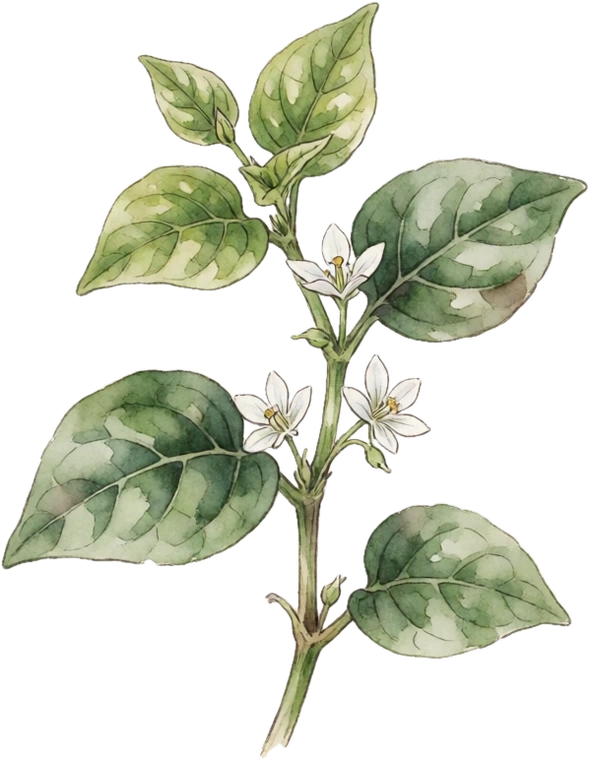
Botanical illustration of Malabar Spinach

Malabar spinach solves summer's cruelest joke — that spinach dies just when you want greens most. This tropical vine converts July heat and humidity into a fountain of thick, glossy, mild leaves, and the red-stemmed form is handsome enough that the trellis doubles as decoration.

Climbing six to ten feet in a hot season, it makes an edible privacy screen that gets more productive as summers get meaner. The leaves are crisp and mild raw, silky when cooked, with a body that thickens soups the way okra does. Give one trellis over to it this summer.

Where to buy malabar spinach — 3 nurseries compared

  • Full Sun
  • Moderate water
  • Very Fast in heat growth
  • Excellent edible
Malabar Spinach — a print from the Plant Library collection

From the print shop

Growing malabar spinach? Hang it.

Our Plant Library collection carries malabar spinach — Basella alba, print Nº 289, “Malabar Spinach.”

526 designsfrom $12.99white or black backgroundmatte poster, unframed

Shop Plant Library botanical prints →

✓

Will it fruit where you are?

Enter your ZIP — we look up your USDA hardiness zone (2023 map) and check it against what malabar spinach actually needs.

Life cycleTender perennial, grown as an annual

Malabar Spinach · Common problems

Common malabar spinach problems

Pests, diseases and weather to keep an eye on.

Pests

1 problem on file

  • Almost none — very pest-tough

Diseases

1 problem on file

  • Almost none

Malabar Spinach · Growing & propagation

Growing malabar spinach

Light, water, soil, propagation and the season’s jobs.
What it needsThe details
Light
Full Sun
Water
Moderate-High

Loves heat AND humidity

Soil
Rich, moist · pH 6.0 - 6.8
Fertilizer
Monthly in season
Pruning
None

Give it a trellis in the hottest spot you have; it climbs fast and cranks out succulent leaves when true spinach is impossible. Pinch to slow it and harvest tips.

Spacing
12 in at a trellis

How to plant & propagate malabar spinach

Maturity
70 days
From seed
Start indoors or direct-sow in heat

Needs warmth

Propagate
From seed

Malabar Spinach · Seasonal care & spray guidance

The malabar spinach growing playbook

Field-tested instructions for every job malabar spinach asks of you, compiled from university extension guidance — in the order the season brings them.

As growth begins

early spring

3 jobs
SowingIn spring

Start seed indoors in spring, and scarify it first

Sow seed a quarter inch deep in flats 6 to 8 weeks before your last frost. Before sowing, nick each seed coat with a file, sharp knife, or sandpaper and soak the seed in water overnight. Hold the flats at 65 to 75 degrees; germination still takes 10 days to three weeks. Basella has a tough, water-resistant seed coat, so untreated seed germinates slowly and unevenly. Scarifying and soaking open that coat and hasten germination. The seed also needs warmth: this crop cannot grow where temperatures stay consistently below 60 degrees.

Planting outIn spring

Set out only after the soil hits 65 degrees, onto a trellis

Wait until two to three weeks past your last frost and the soil is 65 to 75 degrees, then set plants about 12 inches apart at the base of a sturdy trellis or fence. Do not rush this by the calendar; go by soil temperature. This is a tropical vine that is extremely vulnerable to frost and will not grow at all while nights stay below 60 degrees, so an early planting just sits and sulks or dies. It climbs to six feet or more and needs the support in place from the start.

FeedingIn spring

Feed nitrogen on poor sandy ground

On poor sandy soil only, work in nitrogen at roughly 80 lb per acre of actual N, with phosphate and potash at about 18 lb per acre each. Scale that to your bed size, and skip it on soil already high in organic matter. This is a leaf crop, so nitrogen drives the harvest directly, but Malabar spinach grows optimally in sandy loam already high in organic matter at pH 5.5 to 7.0, and the fertilizer only pays on thin sandy ground that cannot hold nutrients.

Through summer

the growing season

2 jobs
WateringIn summer

Keep the soil continuously moist or the leaves turn bitter

Irrigate regularly through the heat so the root zone never dries out. Do not let the plant coast between deep waterings the way you might with an established perennial. Dry soil is what triggers Malabar spinach to bolt into flower, and once it flowers the leaves go bitter and the harvest is effectively over. Continuous moisture is the single thing that keeps the leaves mild and succulent.

What to watch forIn summer

Watch for leaf spot, and pull the infected leaves

Check the foliage through the humid part of summer for fungal leaf spots caused by Cercospora beticola, and for snail damage. Remove and destroy infected leaves rather than composting them in place. Cercospora spreads from lesion to lesion on splashing water and wet foliage, so taking out the spotted leaves removes the spore source before it runs through the canopy. Malabar spinach carries flavonoid glycosides that make it resistant to tobacco cutworm, so it rarely needs insecticide at all.

Harvest time

as it ripens, and picking

1 job
HarvestingAt harvest

Cut young leaves and tips, and keep cutting

From about 70 days after sowing, hand harvest by trimming young leaves and the tender young stems. Prune overlong vines and pinch the tips as you go to keep the plant in shape. Hold picked leaves at 50 to 60 degrees, where they keep 12 to 14 days. The young leaves and shoot tips are the tender, edible part, and this vine twines and rambles hard enough that it needs periodic cutting back of overlong vines just to stay manageable on its trellis. Keep the soil moist while you pick: it is dry soil, not the picking, that pushes the plant into bloom and turns the leaves bitter.

After harvest

autumn, and putting it to bed

1 job
ProtectionIn autumn

Take cuttings before frost to carry the plant over

Ahead of your first frost, cut stem tips and root them in water or moist soil, then keep them indoors through winter. Outdoors it survives the winter only in zone 10 and warmer. Frost kills this vine outright, but the stems root readily wherever they touch moist soil, so a tip cutting is a far more reliable way to keep a favorite plant than saving seed with its stubborn seed coat.

Malabar Spinach · Calculators & field guides

A little help in the garden.

Calculators for the figures. Field guides for the hands-on work.

Malabar Spinach · Yearly calendar

The malabar spinach year, month by month

What malabar spinach asks for, month by month.

Jan

No calendar activity is listed for this month.

MonthJanFebMarAprMayJunJulAugSepOctNovDec
Bloom
Harvest

BloomJune to August

HarvestJune to August

What each band means

  • Bloom — flowers open — pollinators working, frost on blossoms is the danger.
  • Harvest — picking time — check ripeness every few days.

These are the species' typical months — expect them a few weeks earlier in warm zones and later in cold ones. Watch the plant, not just the calendar.

Malabar Spinach · Ecology & uses

Ecology & uses

What it does for the garden, and what it is grown for.
Botanical illustration of Malabar Spinach

Basella alba

Malabar Spinach in the garden system

  • Vine layer vine
Habitat
Dry/rocky
Moisture
Facultative / average
Deer
Browsed

Protect young plants

Origin
Introduced

What malabar spinach is grown for

✓ Commonly eatenmucilaginous when cooked — good in soups

Use
Summer spinach
Use
Edible screen
Use
Soups
Edible value
4/5

Harvesting & storing malabar spinach

Thick, glossy, mild leaves all summer — a spinach substitute that THRIVES in July heat; red-stemmed types are ornamental. About 70 days from planting.

Edibility, identification, and traditional-use notes here are general reference — not medical or veterinary advice, and not a claim that any plant treats or prevents anything. Medicinal ratings record how strongly a plant features in herbal tradition, nothing more. Never eat or dose a plant you have not positively identified. More on how to use this library.

Malabar Spinach · Varieties & cultivars

Best malabar spinach varieties & cultivars

There are far more than these — the ones below are the named varieties of malabar spinach people actually plant.

Named varieties of malabar spinach differ in winter-chill needs, ripening time, hardiness, and whether they set fruit on their own — pick one that fits your climate.

2 varieties

Red Stem

Also known as Rubra;Red Malabar;Basella rubra

Self-fertile

Ripens
Summer into fall
Zones
9-11
Size
Vining to 6 ft, occasionally much longer

Mild, like Swiss chard — Burgundy stems and pink-veined dark green leaves make this the ornamental type, handsome enough for a trellis in a front bed. Comes true from seed. Perennial only in zone 10 and warmer; grown as a warm-season annual everywhere colder.

Where to buy ‘Red Stem’verified

Story Thyme Farms may earn a small commission from these links, at no cost to you — it never changes what we recommend.

Sources & plant identity

Know what you’re growing.
See where the knowledge comes from.

Botanical illustration of Malabar Spinach

Malabar Spinach

Basella alba

The plant, at a glance.

Botanical name
Basella alba
Plant family
Basellaceae
Growth habit
Vine · Tender Perennial
Origin
Introduced
USDA plant symbol
BAAL2
Invasive risk
Low
Every garden is different.

Hardiness, size and timing vary with your cultivar, soil and climate.

Rooted in research.

University extension research, brought together with hands-on growing experience at Story Thyme Farms.

Explore Malabar Spinach’s sources3 reference links
for Malabar Spinach

Research from these sources

Publisher marks identify sources, not sponsorship or endorsement.

Questions

Malabar Spinach questions, answered straight.

Is malabar spinach safe for kids and pets?

Malabar Spinach is commonly eaten and isn't considered toxic, but "commonly eaten" isn't a guarantee for any particular person or animal — allergies, quantity, and which part you eat all matter. One caveat on this one: mucilaginous when cooked — good in soups. Never eat a plant you haven't positively identified, and check with a vet before letting pets or livestock graze anything new.

When do you harvest malabar spinach?

Thick, glossy, mild leaves all summer — a spinach substitute that THRIVES in July heat; red-stemmed types are ornamental. From planting, expect about 70 days to maturity.

How do you propagate malabar spinach?

From seed.

Elsewhere

Where malabar spinach sits in the library.

Where malabar spinach sits in the library

Grows in the same world