Summer Squash / Zucchini
- Mature size
- 3-4 ft bush
- Growth rate
- Very Fast
- Harvest season
- June - September
Family Cucurbitaceae
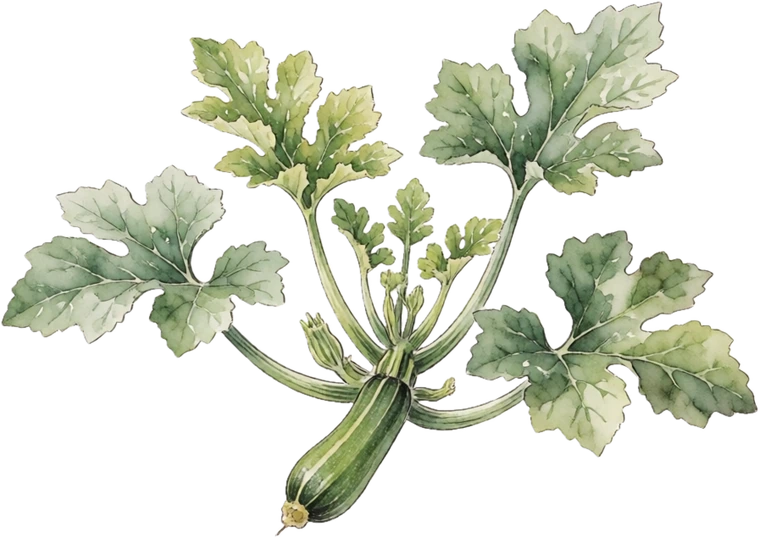
Squash is two harvests wearing one name: summer types like zucchini that produce faster than kitchens can keep up, and winter types that store for months as dense, sweet flesh for soups and pies. Either way, abundance is the defining feature.
Big leaves, big yellow blossoms, and bees in steady attendance make a squash patch feel busy in the best way. All it wants is full sun and elbow room. Plant a hill of each type and cover both the grill tonight and the pantry in midwinter.
 Full Sun
 Moderate water
 Excellent edible
 Attracts bees
 None winter chill
Will it fruit where you are?
Enter your ZIP — we look up your USDA hardiness zone (2023 map) and check it against what squash actually needs.
 Life cycleAnnual
Squash · Common problems
Nothing common enough to list for squash. Watch it like anything else in the garden, and check the plants growing next to it.
Squash · Which one do you have?
Where these differ, the key facts above give the span across all of them. Each type’s own figures, as the catalogue records them:
Squash · Growing & propagation
Light Soil
Soil Pruning
 From seedPropagate
Squash · Seasonal care & spray guidance
early spring
3 jobsSowingIn springSummer Squash / ZucchiniSow seeds about half an inch deep after your last frost date, waiting until soil temperature is at least 70F at the two-inch depth. Direct seeding beats transplanting here. Bush types go in closely spaced rows with two to three feet between rows; for vining types sow 2 inches apart, thin to 8-12 inches, and leave 2-3 feet on each side of the row for the vines to run. Aim for a soil pH of 6.0-6.5. Squash seed rots rather than germinates in cold soil, and squash resents root disturbance, so indoor-started plants set back badly at transplanting. Waiting for warm soil produces a faster, stronger plant than a head start does.
SowingIn springWinter SquashWait until all danger of frost has passed and the soil is 65 F at a 2 inch depth, then sow seed 24 to 36 inches apart with 5 to 6 feet between rows. Bush varieties can take the closer end of that spacing; long-vined types need the full room. Squash is a warm-season crop whose seed germinates poorly in cold ground and whose vines are killed outright by frost, so soil temperature, not a date on the calendar, is the honest signal that it is time.
Planting outIn springWinter SquashSow indoors about four weeks before setting out, and move plants to the garden once they have two to three true leaves and the soil has reached at least 65 F. Keep the root ball intact when you plant. A winter squash can need 100 days or more to finish, which a short summer will not give it from direct-sown seed, and four weeks is the sweet spot that buys the time without holding the seedling in a pot past the point where it transplants well.
at bloom
3 jobs FeedingAt bloomWinter Squash
Work phosphorus and potassium in before planting according to a soil test, then side-dress nitrogen once vines are spreading and blooms appear, placing it 6 to 8 inches out from the plants rather than against the stems. The plant takes up most of its nitrogen while it is building vine and setting fruit, so that is when the side-dress pays; fertilizer laid against the stem burns roots instead.
 ProtectionAt bloomSummer Squash / Zucchini
If you covered the seedlings against cucumber beetles and vine borers, take the covers off as soon as flowering starts, or commit to hand-pollinating by hand every morning. Also skip row covers entirely on ground that grew cucurbits last year, since that traps emerging borers under the fabric with your plants. Squash carries separate male and female flowers and cannot set fruit without a bee physically moving pollen between them. A cover left on through bloom locks the pollinators out and you harvest nothing but shriveled babies.
ProtectionAt bloomWinter SquashFloating row covers over young plants shut out squash vine borer moths and cucumber beetles, but take them off as soon as the first flowers open, or at minimum open them during the day while the plants are blooming. Squash carries separate male and female flowers and sets no fruit at all unless bees carry pollen between them, so a cover left on through bloom trades a pest problem for an empty harvest.
the growing season
8 jobsSowingIn summerSummer Squash / ZucchiniSow a fresh planting of squash after the squash vine borer's egg-laying peak has passed in your area - roughly a month to six weeks after your spring planting begins to run, once you stop finding fresh frass at the crowns. A summer sowing still has ample time to bear, since summer squash goes from seed to first pick in about two months. Where the borer has two flights, this dodge only works if you time it between them, so confirm your local flight pattern with your extension office before you count on it. Across the northern half of the borer's range it has a single generation that lays over a narrow window, so a planting that sprouts after that window largely escapes the pest that kills the spring planting, and it replaces vines the borer has already taken. In the South - Illinois Extension names southern Illinois - there can be two generations, and a second planting timed only off the first flight can sprout straight into the second.
FeedingIn summerSummer Squash / ZucchiniOnce the plants begin spreading their vines, side-dress with nitrogen: about half a cup of 46-0-0 per 100 feet of row, or one cup of 27-3-3, or 3.5 cups of 10-3-1 per 100 feet. The plant switches from building roots to building a large canopy and a long run of fruit at the same moment the vines start to run, and that is when it draws down soil nitrogen fastest.
 What to watch forIn summerSummer Squash / Zucchini
Look at the base of each stem weekly for sawdust-like frass pushed out of a small hole, and for plants that wilt in the heat of the day. If you find frass, slit the vine lengthwise near the entry hole, pull the larva out, and mound soil over the cut stem. Bury a few nodes along each vine as insurance so the plant can root at those points and carry on if the crown is lost. The larva feeds inside the stem for four to six weeks and severs the plant's water supply from within, which is why the wilt appears suddenly and the leaves look otherwise healthy. Frass is the only outward sign before collapse.
What to watch forIn summerSummer Squash / ZucchiniTurn leaves over weekly and look for clusters of about 20 oval, yellowish to bronze eggs, roughly a sixteenth of an inch each, laid in the V where two veins meet. Scrape or crush them, and hand-pick the gray adults and the young nymphs into soapy water. A board laid flat overnight gives you a place to collect the adults that shelter under it. Squash bugs drain sap with piercing mouthparts, leaving yellow spots that brown out and wilt the plant, and a young plant can be killed outright. Destroying eggs is the only control that lands before the damage does, since the tough adults shrug off most treatments.
What to watch forThrough summerWinter SquashCheck the base of each stem weekly for sawdust-like frass around a small entry hole, and for vines that wilt at midday. Where you find frass, carefully split the stem open lengthwise, pull the larva out, then mound moist soil over that stretch of stem so it can root and carry the plant. A few Blue Hubbard plants set at the edge of the patch work as a trap crop, since the moths strongly prefer them. The larva feeds inside the vine, cutting the water-conducting tissue, which is why the plant wilts in the heat of the day; no spray reaches it once it is in there, so finding the frass early is the only cure.
What to watch forThrough summerWinter SquashTurn leaves over weekly and crush the small bronze egg masses laid on the undersides. Lay a board or a piece of heavy cardboard flat on the soil nearby; adults and nymphs gather under it overnight, so you can lift it early in the morning and destroy them. Clear out crop debris thoroughly at the end of the season. Squash bugs overwinter as adults under sheltering debris and lay eggs from about midsummer, so every egg mass crushed now is a generation that never feeds, and a bed cleared in fall is one that shelters fewer bugs to start next year.
 SprayingIn summerSummer Squash / Zucchini
Watch the older, shaded leaves near the crown for powdery white patches, and start wettable sulfur before the disease develops or at the very earliest spots, repeating on a 7 to 10 day interval as long as conditions stay conducive. If mild to moderate mildew is already established, horticultural oil, neem oil, or Bacillus subtilis can knock it back instead, though the biological is not as effective as the oils or sulfur. Unlike most leaf diseases, this mildew can germinate and infect with no free water on the leaf at all - for some powdery mildews, prolonged leaf wetness actually kills the spores. That is why it takes hold in a dense, shaded canopy in a dry summer while your careful drip irrigation does nothing to stop it, and why a protectant has to go on before you see much.
SprayingThrough summerWinter SquashStarting midsummer, inspect the older, shaded crown leaves, both surfaces, for small round white powdery spots. At the earliest sign, spray wettable sulfur, covering leaf undersides thoroughly, and repeat on the label interval. Horticultural or neem oil is an alternative, but on a crop this deep into bloom apply oils in the late afternoon or evening, after the day's squash flowers have closed, and never tank-mix or alternate them with sulfur inside a two-week window. Choosing a mildew-tolerant variety cuts how much spraying you need. The fungus kills leaves prematurely, and that lost canopy is what makes winter squash smaller, less sweet, and poorer keeping, since the sugar that fills and stores the fruit is made in those leaves. Shade and dense crown growth favor it, which is why the older interior leaves show it first.
as it ripens, and picking
2 jobsHarvestingAt harvestSummer Squash / ZucchiniHarvest before fruit goes over-large, hard-skinned, and seedy - the skin should still nick under a fingernail. Zucchini and straightnecks are best around 6-8 inches, scallops at 2-3 inches. Check every day or two and step carefully, since the vines bruise. Remove any oversized fruit you find even if you have no use for it. Refrigerate what you pick and use it within about four days. Summer squash is harvested immature, so every fruit left to ripen signals the plant that it has finished reproducing and shuts down further fruit set. One forgotten club-sized zucchini costs you the rest of the plant's run.
HarvestingAt harvestWinter SquashPick when the skin is hard enough that your thumbnail cannot puncture it and the surface has gone from a bright juvenile sheen to a dull, dry look. Cut each fruit off leaving a generous stem, and do not harvest fruit while it is wet or let it get wet afterward. The hardened rind is the fruit's only defense in storage; picked before it sets, the squash bruises and rots, and a broken or missing stem leaves an open wound for rot organisms right at the top of the fruit.
autumn, and putting it to bed
2 jobsPruningAfter harvestSummer Squash / ZucchiniWhen the planting is finished, pull the old plants and shred them, trash them, hot compost them, or cultivate the residue into the soil. Do not leave the vines lying in the bed over winter. Borer larvae leave the stems to overwinter as pupae in the soil right where the crop grew, and infested plants left intact seed next summer's infestation nearby. In Michigan and most of the northern range that is a single generation a year, so clearing the vines and disturbing that ground is a direct strike on next year's population before it ever flies; where a second generation occurs it still removes the overwintering brood.
HarvestingAfter harvestWinter SquashCure butternut and other moschata types and the maxima types such as hubbard, buttercup and kabocha for 5 to 10 days at 80 to 85 F with high humidity, then store at 50 to 60 F with 50 to 70 percent humidity and good air movement. Do not cure pepo types such as acorn, delicata or spaghetti; move them straight into storage. Cured moschata and maxima keep 4 to 6 months, pepo types 2 to 3. Curing hardens the rind and heals harvest wounds in moschata and maxima fruit, but in pepo types the same warm spell actually shortens storage life, so one blanket rule for all winter squash spoils half the crop.
Squash · Companion plants
Avoid
Underlined names have their own growing guide in this library.
Squash · Calculators & field guides
Squash · Yearly calendar
No calendar activity is listed for this month.
 Bloom
BloomBloomJune to August
These are the species' typical months — expect them a few weeks earlier in warm zones and later in cold ones. Watch the plant, not just the calendar.
Squash · Ecology & uses
 AttractsMoisture
 Deer
DeerProtect young plants
✓ Commonly eaten
Edible valueEdibility, identification, and traditional-use notes here are general reference — not medical or veterinary advice, and not a claim that any plant treats or prevents anything. Medicinal ratings record how strongly a plant features in herbal tradition, nothing more. Never eat or dose a plant you have not positively identified. More on how to use this library.
Squash · Varieties & cultivars
Compare hardiness, mature size, growth habit, days to maturity and intended use in the seller’s variety description. Where this guide covers several plant types, start with the type you want to grow, then choose a variety for your season and space.
Sources & plant identity
Hardiness, size and timing vary with your cultivar, soil and climate.
University extension research, brought together with hands-on growing experience at Story Thyme Farms.
 Clemson University
 Cornell University
 NC State Extension
 University of California ANR
 University of Illinois
 University of Minnesota
 University of Massachusetts
 Virginia Tech
 University of Florida
Publisher marks identify sources, not sponsorship or endorsement.
Third-party nurseries — not Story Thyme Farms.
Third-party nurseries, not Story Thyme Farms. Prices are theirs.
Story Thyme Farms may earn a small commission from these links, at no cost to you — it never changes what we recommend.
Squash questions, answered straight.
Squash is commonly eaten and isn't considered toxic, but "commonly eaten" isn't a guarantee for any particular person or animal — allergies, quantity, and which part you eat all matter. Never eat a plant you haven't positively identified, and check with a vet before letting pets or livestock graze anything new.
From seed.
Where squash sits in the library.
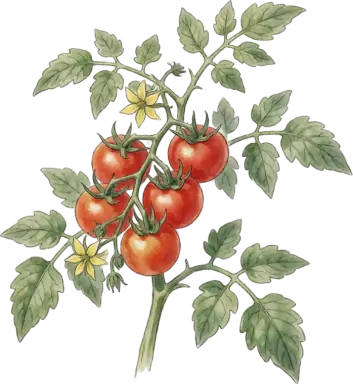 Tomato
 Pepper
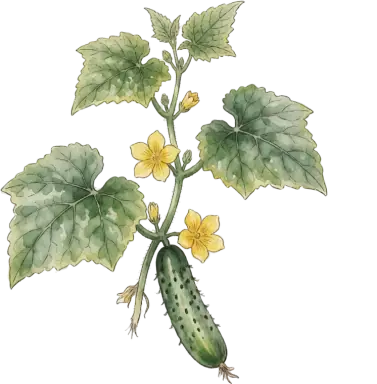 Cucumber
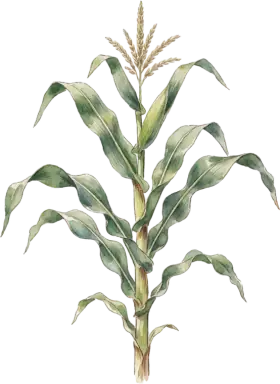 Corn
Corn