 HarvestingIn September, October and November
Dig established marshmallow roots
Harvest roots only from 2+ year clumps, replant divisions, scrub, slice, and dry. Older roots have the best mucilage and harvesting young plants weakens the patch.
Althaea officinalis
Family Malvaceae
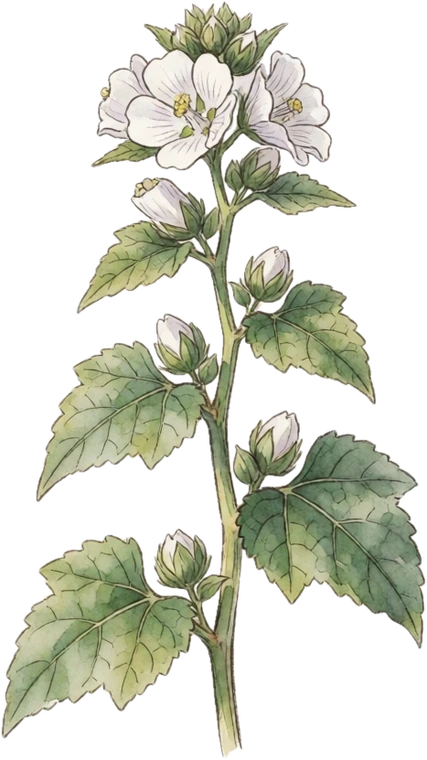
The candy borrowed its name from this plant. Marshmallow — the original one — is a tall, soft-leaved cottage herb whose roots and leaves brew the famously silky, soothing tea herbalists have kept close for centuries, topped in summer with pale mallow flowers that bees appreciate.
Where the ground stays damp — a rain garden's fringe, a low bed edge — it rises in a graceful velvety column year after year, with roots worth digging once a plant is well established. Few herbs suit a wet spot so well. Give the damp corner its classic resident.
 Full Sun to Part Shade
 Moderate water
 Moderate growth
 Attracts bees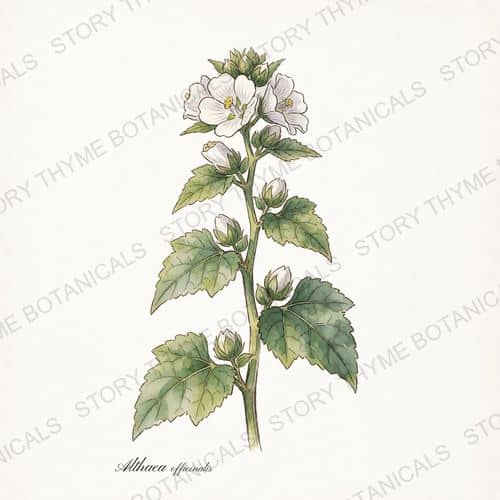
From the print shop
Our Plant Library collection carries marshmallow — Althaea officinalis, print Nº 295, “Marshmallow.”
526 designsfrom $12.99white or black backgroundmatte poster, unframed
Will it fruit where you are?
Enter your ZIP — we look up your USDA hardiness zone (2023 map) and check it against what marshmallow actually needs.
 Hardy inZones 3-9
Marshmallow · Common problems

3 problems on file

2 problems on file
Marshmallow · Growing & propagation
LightWater Soil
SoilTolerates wet edges · pH 6.0 - 7.5
 Fertilizer
 Pruning
Cut dead stems to ground; divide or refresh older clumps as needed.
 SpacingPropagate
Marshmallow · Seasonal care & spray guidance
Growing season. Improve airflow; remove rusted leaves.
autumn, and putting it to bed
1 jobHarvestingIn September, October and NovemberHarvest roots only from 2+ year clumps, replant divisions, scrub, slice, and dry. Older roots have the best mucilage and harvesting young plants weakens the patch.
Marshmallow · Calculators & field guides
Marshmallow · Yearly calendar
No calendar activity is listed for this month.
 BloomPruneHarvest
BloomJuly, then September
PruneFebruary to March
HarvestJune to November
These are the species' typical months — expect them a few weeks earlier in warm zones and later in cold ones. Watch the plant, not just the calendar.
Marshmallow · Ecology & uses
Althaea officinalis
 Attracts
 HabitatMoisture
 Deer
DeerProtect young plants
 Origin
! Some parts toxic — see notesCaution: mucilage may interfere with medication absorption; separate from meds
UseUseUseUseEdible valueTraditional use ratingLeaves/flowers summer; roots fall of year 2+.
Edibility, identification, and traditional-use notes here are general reference — not medical or veterinary advice, and not a claim that any plant treats or prevents anything. Medicinal ratings record how strongly a plant features in herbal tradition, nothing more. Never eat or dose a plant you have not positively identified. More on how to use this library.
Marshmallow · Varieties & cultivars
Species
Sources & plant identity
Althaea officinalis
Hardiness, size and timing vary with your cultivar, soil and climate.
University extension research, brought together with hands-on growing experience at Story Thyme Farms.
Publisher marks identify sources, not sponsorship or endorsement.
Marshmallow questions, answered straight.
With care. Caution: mucilage may interfere with medication absorption; separate from meds Site it accordingly if children or pets roam the garden. This is general reference, not medical or veterinary advice — call a vet or poison control if something has actually been eaten.
Leaves/flowers summer; roots fall of year 2+.
Division or seed.
Where marshmallow sits in the library.

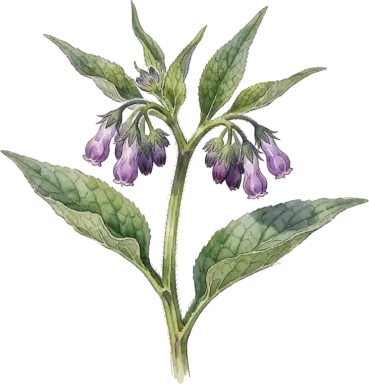 Comfrey
 Lavender
 Rosemary
 Anise Hyssop