The illustrated growing guide

Passionfruit (Tropical)

Passiflora edulis

Family Passifloraceae

Est. zones 9-11

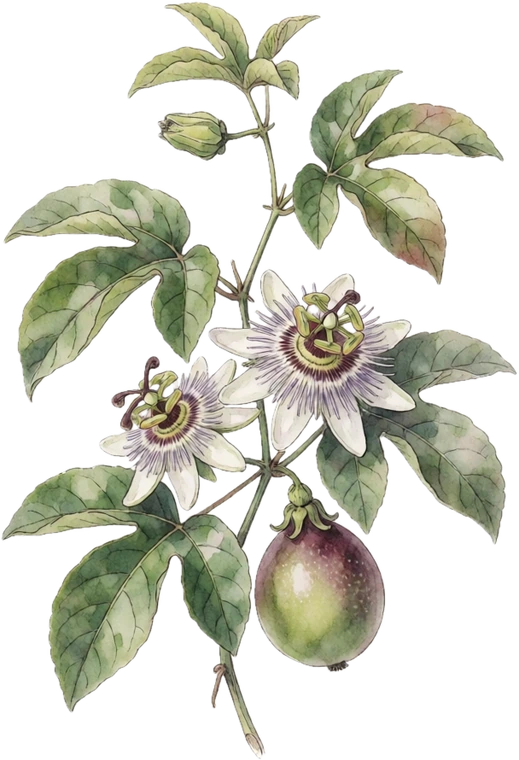
Botanical illustration of Passionfruit (Tropical)
Vine · Passiflora edulis

The true passionfruit of juice fame — a rampant vine that covers a fence in a season and drips wrinkled, intensely aromatic fruit. Purple types are self-fertile and hardier (to zone 9); it's a greenhouse or drag-in-the-pot plant colder than that. For a zone-5 native cousin, grow maypop instead.

VineFull SunModerate waterVery Fast growthExcellent edibleAttracts beesNone winter chillNeeds a pollination partner

Where to buy the plant — 3 nurseries

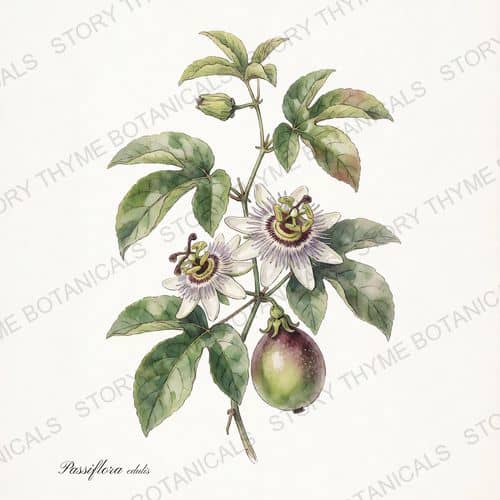
Passion Flower — a print from the Tropical Plants collection

From the print shop

The closest print we make

Our Tropical Plants collection carries Passiflora edulis — the same species as passionfruit (tropical) — but the print shows “Passion Flower,” a different cultivar of it, not passionfruit (tropical) itself.

16 designsfrom $21.99white or black groundmatte poster, unframed

Shop Tropical Plants botanical prints →

I

Overview

Will passionfruit (tropical) suit your garden, and what goes wrong.

Will it fruit where you are?

Enter your ZIP — we look up your USDA hardiness zone (2023 map) and check it against what passionfruit (tropical) actually needs.

Life cyclePerennial zones 9–11, annual elsewhere
Winter chillNone
PollinationPartner needed

Passionfruit (Tropical) at a glance

Life cyclePerennial zones 9–11, annual elsewhere
Mature size15-20 ft vigorous vine
PollinationPurple types mostly self-fertile; yellow types need a second clone + often hand-pollination
Chill requirementNone (not chill-dependent)
Bloom seasonSummer (the intricate purple-and-white 'passion' flower)
Harvest seasonFruit ripens and WRINKLES, then drops — gather off the ground
Growth rateVery Fast

Common passionfruit (tropical) problems

  • Aphids
  • Scale
  • Caterpillars (Gulf Fritillary — shared host)
  • Fusarium Wilt
  • Woodiness Virus
  • Poor pollination → low fruit set (plant a partner)

II

Growing

Light, water, soil, propagation and the season’s jobs.

How to grow passionfruit (tropical): light, water & soil

LightFull Sun
WaterModerate-High in growth
SoilRich, well-drained · pH 6.0 - 7.0
FertilizerBalanced feed monthly; ease off high-N (all vine, no fruit)
PruningAfter fruiting — Trellis it hard; thin old wood; fruits on new growth.
SpacingStrong trellis; 6+ ft

The passionfruit (tropical) growing playbook

Field-tested instructions for every job passionfruit (tropical) asks of you, compiled from university extension guidance — in the order the season brings them.

Watering

Water little and often, and never let it sit wet

Through the growing season give small, frequent irrigation that keeps soil moist but never saturated - a drip line or a low-aspect microsprinkler on a timer does this better than hand watering. In hot inland weather this may mean daily. Do not compensate for a dry spell with a flood. The root system is shallow and has limited tolerance of both drought and flooding. Dry it out and fruit drop and leaves wither; keep it saturated and you invite Phytophthora crown and root rot, which kills purple passionfruit outright.

Mulching

Mulch the root zone, but keep it off the collar

Lay 2 to 4 inches of mulch around the base of the vine to hold moisture and suppress weeds. Keep the mulch pulled back from the stem itself so the root collar stays dry and airy. Shallow roots dry out fast and hate the swings, so mulch steadies them (UF/IFAS HS1467). But collar rot, caused by Haematonectria haematococca and Fusarium solani, girdles the vine right at the soil line and the fungus stays viable in that soil for up to four years (UF/IFAS HS1397) — so holding wet mulch against the collar is asking for it.

Feeding

Feed lightly and often once growth restarts

Starting when the vine breaks into spring growth, apply a granular 10-10-10 or 8-3-9 with micronutrients at about 0.25 lb per young plant, working up to roughly 1 lb per mature vine, every 4 to 6 weeks through the growing season. On alkaline soil, drench with a chelated iron product such as Sequestrene 138 (6% Fe-EDDHA) two to four times a year. Passionfruit is a shallow-rooted vine that can push more than 35 feet of growth in a single year, so it runs through nutrients fast and cannot mine deep soil for them. Small frequent doses match that draw, while one heavy dose, especially of nitrogen, buys you vine instead of fruit.

Pruning

Prune in late winter, while the vine is idle

In late winter, when the vine is not actively growing and before the spring flush, cut out dead and weak stems and pull down the thatch of dead leaves caught in the canopy. Train one main stem to the top wire, then let it run horizontally and drape downward in a curtain. Disinfect your pruners between plants with a 10% bleach solution or quaternary ammonium. That mat of dead leaves holds humidity against living tissue, which is exactly what Alternaria brown spot and anthracnose need to sporulate. Opening the canopy to airflow is the single cheapest disease control this vine has, and pruning sap carries woodiness virus from vine to vine on dirty blades.

What to watch for

Check fruit set at bloom, and hand-pollinate if it is poor

When the flowers open, watch whether large carpenter bees or honeybees are working them and whether young fruit are setting behind the blooms. If set is poor, transfer pollen with a clean cotton glove or a soft paintbrush from the anthers of one flower to the stigmas of another, ideally a different vine. Yellow passionfruit must get pollen from a genetically different vine; plant a second cultivar nearby. The flower hangs its anthers below its stigmas, so gravity will not do the job and it needs a bee big enough to bridge the gap. Yellow passionfruit is largely self-incompatible and some purple-yellow hybrids are partly so, which is why a lone vine can bloom heavily and set almost nothing. Heavy rain, high humidity, and temperature extremes also knock out pollination.

Never apply an insecticide while the vine is in bloom - carpenter bees and honeybees are what turn these flowers into fruit.

Scout leaf undersides for mites and Gulf fritillary caterpillars

Through the warm months turn leaves over and look for stippled yellowing on the upper surface, brown necrotic dry patches, or fine silken webbing - all mite damage. Treat with a selective miticide at the first symptoms rather than waiting for webbing. For Gulf fritillary caterpillars, scout and hand-remove eggs and larvae; reserve any insecticide for outside the bloom period. Mites are the most common passionfruit pest, and where natural predators are scarce they defoliate a vine to death; they also chew flower buds, cutting fruit set before you ever see a flower. Gulf fritillary larvae feed on nothing but passionfruit foliage and can strip a vine completely.

UF/IFAS is explicit that the material chosen and the timing must not kill native pollinators or honeybees - read the label, choose a selective miticide, and never spray anything insecticidal onto open flowers. Follow the product's pre-harvest interval; passionfruit ripens continuously, so fruit is almost always present.

Protection

Wrap the crown before a freeze

Before a freeze, wrap the base of the vine with high R-value insulation such as fiberglass batting to save the crown even if the top is lost - new shoots regrow from that protected wood. If you run overhead sprinklers for freeze protection, start them when temperatures reach about 36 degrees F and do not shut them off until wet bulb temperature climbs back above 32 degrees F the next day. A mature vine shrugs off several degrees below freezing, but prolonged exposure at 32 degrees F or a dip into the low-to-mid 20s kills it to the ground (UF/IFAS HS1406). Yellow types are the more frost tender of the two (UC ANR Ventura County). Turning sprinklers off while ice is still on the vine strips heat out as the ice sublimates and does more damage than no water at all.

Harvesting

Let it fall, then gather off the ground daily

Fruit is ready roughly 70 to 75 days after the flower opens. Rather than picking, let ripe fruit drop and collect it off the ground every day; the thick rind means the fall does not damage it. Store what you gather in plastic bags at 41 to 54 degrees F and 85 to 90% humidity for two weeks or more. Picking from the vine is guesswork - the fruit gives few external cues and comes off under-ripe. Drop is the vine's own ripeness signal. Gathering daily also denies fruit flies the overripe fruit they breed in, which is what causes premature drop and woody lumps the following round. A wrinkling rind is water leaving the peel, not spoilage; the pulp is still good.

Fruit collected off bare ground can pick up soil contamination - gather promptly and wash before eating, and if you are selling, check what your buyer expects for ground-harvested fruit.

III

The year

What passionfruit (tropical) asks for, month by month.

The passionfruit (tropical) year, month by month

MonthJanFebMarAprMayJunJulAugSepOctNovDec
Bloom

What each band means

  • Bloomflowers open — pollinators working, frost on blossoms is the danger.

The passionfruit (tropical) year as text

  • Jan quiet month
  • Feb quiet month
  • Mar quiet month
  • Apr quiet month
  • May quiet month
  • Jun bloom
  • Jul bloom
  • Aug bloom
  • Sep quiet month
  • Oct quiet month
  • Nov quiet month
  • Dec quiet month

These are the species' typical months — expect them a few weeks earlier in warm zones and later in cold ones. Watch the plant, not just the calendar.

IV

Ecology & uses

What it does for the garden, and what it is grown for.

Passionfruit (Tropical) in the garden system

  • Vine layer vine
  • Nectary/insectary
  • Hosts Gulf fritillary & zebra longwing butterflies
AttractsBees
HabitatDry/rocky
MoistureFacultative / average
DeerBrowsed — protect young plants
OriginIntroduced

What passionfruit (tropical) is grown for

! Some parts toxic — see notesRipe fruit safe; unripe fruit + foliage not for eating

UseJuice
UseFresh eating
UseOrnamental screen
Edible value4/5

Harvesting & storing passionfruit (tropical)

Fruit ripens and WRINKLES, then drops — gather off the ground.

Edibility, identification, and traditional-use notes here are general reference — not medical or veterinary advice, and not a claim that any plant treats or prevents anything. Medicinal ratings record how strongly a plant features in herbal tradition, nothing more. Never eat or dose a plant you have not positively identified. More on how to use this library.

V

Cultivars

Named varieties of passionfruit (tropical), ruled as a catalogue.

Best passionfruit (tropical) varieties & cultivars

9 on file

Named varieties of passionfruit (tropical) differ in winter-chill needs, ripening time, hardiness, and whether they set fruit on their own — pick one that fits your climate.

Possum Purple · Purple Possum

Self-fertile
Ripens70-75 days after bloomZones9-11Sizefruit 2.5-3.5 in long, about 2 in across

sweet, moderately strong, pleasant aroma — A seedling selection from Possum Trot Nursery and the most widely grown passionfruit in south Florida, and the safest default for a single-vine home planting since its flowers are self-compatible. UF/IFAS HS1467 reports it is a cross between purple and yellow passionfruit, demonstrated by its seedlings segregating for both purple and yellow fruit color - so buy a rooted plant, not seed, if you want the parent's fruit.

Where to buy ‘Possum Purple

Story Thyme Farms may earn a small commission from these links, at no cost to you — it never changes what we recommend.

Panama Red

Ripens70-75 days after bloomZones9-11Sizeoval, can run larger than Possum Purple

similar to Possum Purple — One of the four cultivars UF/IFAS names as grown in Florida. The peel turns red rather than purple at ripeness, and it was selected by Australian producers for higher yields.

Where to buy ‘Panama Red

Story Thyme Farms may earn a small commission from these links, at no cost to you — it never changes what we recommend.

Sweet Sunrise

Needs a pollinizer
Ripens70-75 days after bloomZones10-11Sizefruit about the size of a baseball
Pollinationself-incompatible yellow

A yellow type sold by nurseries in southern Florida and named by UF/IFAS as a popular Florida cultivar. As a yellow, plan on a second genetically different vine or hand pollination - yellow passionfruit is largely self-incompatible. Yellow types are also more frost tender than purple ones.

Where to buy ‘Sweet Sunrise

Story Thyme Farms may earn a small commission from these links, at no cost to you — it never changes what we recommend.

Whitman Yellow · Whitman

Needs a pollinizer
Ripens70-75 days after bloomZones10-11Diseaseresistant to the Fusarium wilt and nematode problems that plague purple types
Pollinationself-incompatible yellow

A yellow seedling selection made by the Florida tropical fruit collector William Whitman. Yellow passionfruit is the type used as rootstock for grafted purples because its roots shrug off the fungal and nematode damage purple roots cannot.

Where to buy ‘Whitman Yellow

Story Thyme Farms may earn a small commission from these links, at no cost to you — it never changes what we recommend.

Frederick

Partly self-fertile
Ripens7-8 weeks after bloomZones9-11Diseasecarries the disease resistance of the yellow parentSizelarger than a straight purple
Pollinationpurple x yellow hybrid

the better flavor of the purple parent — A yellow-purple hybrid that UC recommends for California as combining purple flavor, yellow disease resistance, and larger size. Hybrids may or may not be self-fertile and some show partial self-incompatibility, so a second cultivar nearby is cheap insurance.

Where to buy ‘Frederick

Story Thyme Farms may earn a small commission from these links, at no cost to you — it never changes what we recommend.

Red Rover

Partly self-fertile
Ripens7-8 weeks after bloomZones9-11Diseasecarries the disease resistance of the yellow parentSizelarger than a straight purple
Pollinationpurple x yellow hybrid

the better flavor of the purple parent — One of the yellow-purple hybrids UC names alongside Frederick and Red Riviera for the same reason - purple flavor, yellow disease resistance, bigger fruit. Hybrid self-fertility is inconsistent, so pair it with another vine.

Where to buy ‘Red Rover

Story Thyme Farms may earn a small commission from these links, at no cost to you — it never changes what we recommend.

Nancy Garrison

Self-fertile
Ripens7-8 weeks after bloomZones9-11

A purple cultivar UC lists as available to California growers. Purple passionfruit flowers are self-compatible, but they still need an insect to move the pollen because the anthers sit below the stigmas - so expect to hand-pollinate where carpenter bees are scarce. Purple types are the ones vulnerable to Fusarium wilt, nematodes, and crown rot, so give it fast-draining soil or a raised bed.

Where to buy ‘Nancy Garrison

Story Thyme Farms may earn a small commission from these links, at no cost to you — it never changes what we recommend.

Black Knight

Self-fertile
Ripens7-8 weeks after bloomZones9-11

A purple cultivar on UC's list of those available to California growers. As a purple it is self-compatible but frost tender, and it wants drainage - purple roots are the ones Fusarium wilt, nematodes, and crown rot go after.

Where to buy ‘Black Knight

Story Thyme Farms may earn a small commission from these links, at no cost to you — it never changes what we recommend.

Purple Giant

Self-fertile
Ripens7-8 weeks after bloomZones9-11

A purple cultivar on UC's list of those available to California growers. Self-compatible like other purples, but still insect-dependent for pollen transfer because the anthers sit below the stigmas. UC does not describe its fruit size, so treat the name as a name, not a measurement.

Where to buy ‘Purple Giant

Story Thyme Farms may earn a small commission from these links, at no cost to you — it never changes what we recommend.

VI

Sources & plant ID

Where the care distinctions come from, and how the plant is filed.

Research basis

Sources behind this profile

No extension citations are attached to passionfruit (tropical)yet. The care figures below come from the library's own catalogue rather than a traced primary source.

Plant ID

BinomialPassiflora edulis
FamilyPassifloraceae
TypeVine · Tender Perennial
USDA symbolPAED
OriginIntroduced
Invasive riskLow

VII

Where to buy

Third-party nurseries — not Story Thyme Farms.

Third-party nurseries, not Story Thyme Farms. Prices are theirs.

Story Thyme Farms may earn a small commission from these links, at no cost to you — it never changes what we recommend.

Passionfruit (Tropical) needs a pollination partner — plant two genetically distinct plants (two different cultivars, or a cultivar plus a seedling).

VIII

Questions

Passionfruit (Tropical) questions, answered straight.

Why isn't my passionfruit (tropical) fruiting?

Most often: it has no genetically distinct partner nearby. Passionfruit (Tropical) can't pollinate itself — purple types mostly self-fertile; yellow types need a second clone + often hand-pollination. Plant a second, unrelated one nearby; two different cultivars, or a cultivar plus a seedling, is the classic pairing.

Is passionfruit (tropical) safe for kids and pets?

With care. Ripe fruit safe; unripe fruit + foliage not for eating Site it accordingly if children or pets roam the garden. This is general reference, not medical or veterinary advice — call a vet or poison control if something has actually been eaten.

When do you harvest passionfruit (tropical)?

Fruit ripens and WRINKLES, then drops — gather off the ground.

IX

Elsewhere

Where passionfruit (tropical) sits in the library.

Where passionfruit (tropical) sits in the library

Grows in the same world