Rutabaga (Swede)

Brassica napus var. napobrassica

Family Brassicaceae

BiennialZones 2-11

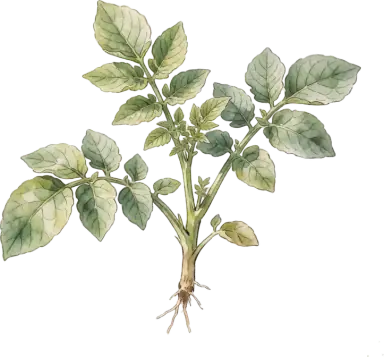
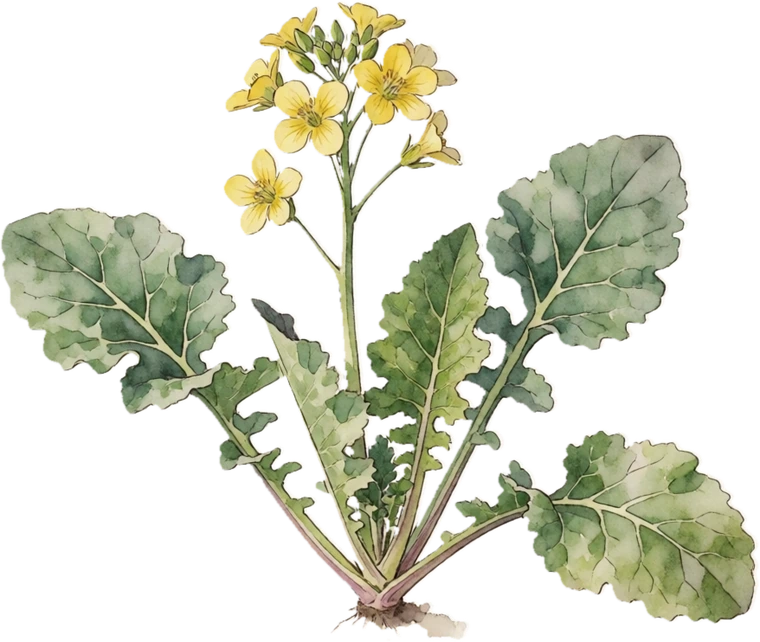
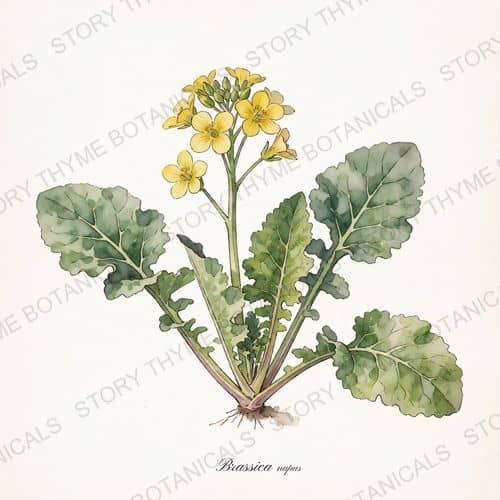
Botanical illustration of Rutabaga (Swede)

Meet the turnip's bigger, sweeter, golden-fleshed cousin: rutabaga — the 'neeps' of a Scottish Burns supper and the secret heart of good winter stews and mashes. Hard frosts turn its dense flesh sugary in the ground, so the harvest actually improves while the rest of the garden shuts down.

Undemanding and cold-hardy, it's one of the great keepers: months in a root cellar without complaint, plus a bonus crop of edible greens on top. A midsummer sowing fills the winter table from one short row. If you store food at all, make room for this old reliable.

Where to buy rutabaga (swede) — 5 nurseries compared

  • Full Sun
  • Moderate water
  • Moderate growth
  • Excellent edible
  • Attracts bees
Rutabaga (Swede) — a print from the Plant Library collection

From the print shop

Growing rutabaga (swede)? Hang it.

Our Plant Library collection carries rutabaga (swede) — Brassica napus, print Nº 410, “Rutabaga (Swede).”

526 designsfrom $12.99white or black backgroundmatte poster, unframed

Shop Plant Library botanical prints →

✓

Will it fruit where you are?

Enter your ZIP — we look up your USDA hardiness zone (2023 map) and check it against what rutabaga (swede) actually needs.

Life cycleBiennial, grown as an annual

Rutabaga (Swede) · Common problems

Common rutabaga (swede) problems

Pests, diseases and weather to keep an eye on.

Pests

3 problems on file

Diseases

2 problems on file

Rutabaga (Swede) · Growing & propagation

Growing rutabaga (swede)

Light, water, soil, propagation and the season’s jobs.
What it needsThe details
Light
Full Sun
Water
Moderate, even
Soil
Rich, loose, well-drained · pH 6.0 - 7.0
Fertilizer
Compost at sowing; light N
Pruning
None

Sow in midsummer for a fall crop — it needs cool weather to size up and sweeten, and frost only improves it. Thin well. Stores like a champion through winter. The tops are edible greens too.

Spacing
6-8 in

How to plant & propagate rutabaga (swede)

Maturity
90-100 days
From seed
Sow midsummer for a fall crop

Needs cool weather to size

Propagate
From seed

Rutabaga (Swede) · Seasonal care & spray guidance

The rutabaga (swede) growing playbook

Field-tested instructions for every job rutabaga (swede) asks of you, compiled from university extension guidance — in the order the season brings them.

When to spray rutabaga (swede)

Growing season. Row cover from sowing.

Through summer

the growing season

6 jobs
SowingIn summer

Sow in summer for a fall crop, about 100 days before your first hard frost

Direct sow a quarter to a half inch deep in rows 18 to 24 inches apart. Count back 90 to 110 days from your first expected hard frost and sow then - in the north that lands in early summer, in the deep south it can be as late as early fall. Seed germinates in 7 to 10 days in warm soil. Rutabaga sizes its root slowly and turns woody and bitter in summer heat, so the crop has to do its bulking in cooling fall weather. A spring sowing runs the root through midsummer and ruins it.

FeedingIn summer

Check boron before you sow - brown heart cannot be fixed later

Get a soil test that includes boron before planting, especially on sandy soil low in organic matter, and correct any shortfall at sowing with borax, boric acid, or Solubor at the rate your soil test calls for. On alkaline soil a foliar application works better than a soil one. Rutabaga is among the most boron-hungry vegetables there is - a long season and a big root mean it draws boron for months, and without enough the root develops soft water-soaked brown centers that hollow out. This is brown heart, and it is invisible until you cut the root open.

FeedingIn summer

Side-dress nitrogen about 6 weeks after the seedlings emerge

About 6 weeks after emergence, side-dress a quarter cup of 21-0-0 per 10 feet of row, band it a few inches off the row, and water it in. The root does most of its bulking in the back half of the season, and a plant that runs out of nitrogen then stalls with a small root. Feeding at the start instead would only push leaf growth while the root is still tiny.

ThinningIn summer

Thin seedlings to 4 to 6 inches apart once they are up

After the seedlings emerge and have their first true leaves, thin to 4 to 6 inches between plants. Snip the extras at the soil line rather than pulling them, so you do not tear the roots of the keepers. A rutabaga root needs to swell to 4 or 5 inches across. Crowded plants compete for water and room and give you a row of leafy tops over roots that never size up.

What to watch forIn summer

Scout weekly for imported cabbageworm and treat small larvae with Bt

Check the tops weekly once the cover comes off. Look for velvety green caterpillars along the leaf midribs, large ragged holes, and greenish-brown droppings on the foliage. If you find them, spray Bacillus thuringiensis var. kurstaki, targeting the early instar larvae and covering the leaves thoroughly, including the undersides. Cabbageworms strip the leaf area the plant needs to fill the root, and Btk is a stomach poison the caterpillar has to eat - it works well on small larvae and poorly on big ones, so catching them early is the whole game.

ProtectionIn summer

Floating row cover at seeding to shut out cabbage maggot and flea beetles

Lay floating row cover over the bed the day you seed and bury or weight the edges so no fly can walk under. Leave it on through seedling establishment. Do not put the bed where brassicas or root crops grew last year - rotate to fresh ground, since the maggots overwinter as pupae in the soil where last year's crop stood. Cabbage maggots tunnel through the root itself, which is the part you are growing, and no amount of later spraying reaches a maggot inside a root. Flea beetles shothole the cotyledons and can outright kill a just-emerged stand. Both are barrier problems, and the barrier only works if it goes on before the pest arrives.

Harvest time

as it ripens, and picking

1 job
HarvestingAt harvest

Dig at 4 to 5 inches across, after the plants have taken several frosts

Lift roots once they are 4 to 5 inches in diameter and the plants have been through several light frosts. Trim the tops off about an inch above the crown and remove the long thin taproot. Handle the roots gently and knock the loose dirt off without cutting or bruising the skin, which is what lets them keep. Frost is what makes a rutabaga worth eating - chilled plants convert starch to sugar, so a root pulled before frost tastes flat and sharp while the same root pulled after tastes sweet. 4 to 5 inches is the size extension guides target; some varieties are bred to go larger without coarsening, so go by the size your variety is sold at rather than pulling everything at 5 inches.

After harvest

autumn, and putting it to bed

1 job
ProtectionAfter harvest

Store cold and damp, or heavily mulch and dig through winter

Store the roots at 32 to 35 F and 90 to 95 percent relative humidity, where they hold for two to four months and often longer in a root cellar. Alternatively leave them in the ground under a heavy mulch and dig as needed until the ground freezes hard. Rutabaga wants cold and damp. A refrigerator is cold but dry, and the low humidity makes the roots shrivel and sprout instead of keeping.

Rutabaga (Swede) · Calculators & field guides

A little help in the garden.

Calculators for the figures. Field guides for the hands-on work.

Rutabaga (Swede) · Yearly calendar

The rutabaga (swede) year, month by month

What rutabaga (swede) asks for, month by month.

Jan

HarvestSeptember to February

MonthJanFebMarAprMayJunJulAugSepOctNovDec
Harvest

HarvestSeptember to February

What each band means

  • Harvest — picking time — check ripeness every few days.

These are the species' typical months — expect them a few weeks earlier in warm zones and later in cold ones. Watch the plant, not just the calendar.

Rutabaga (Swede) · Ecology & uses

Ecology & uses

What it does for the garden, and what it is grown for.
Botanical illustration of Rutabaga (Swede)

Brassica napus var. napobrassica

Rutabaga (Swede) in the garden system

  • Root layer biennial
Attracts
Bees
Moisture
Facultative / average
Deer
Browsed

Protect young plants

Origin
Introduced

What rutabaga (swede) is grown for

✓ Commonly eaten

Use
Winter stews
Use
Mashes
Use
Long storage
Use
Root cellar
Edible value
4/5

Harvesting & storing rutabaga (swede)

Fall/Winter: dig after hard frosts (which sweeten it); stores for months in a root cellar. About 90-100 days from planting.

Edibility, identification, and traditional-use notes here are general reference — not medical or veterinary advice, and not a claim that any plant treats or prevents anything. Medicinal ratings record how strongly a plant features in herbal tradition, nothing more. Never eat or dose a plant you have not positively identified. More on how to use this library.

Rutabaga (Swede) · Varieties & cultivars

Best rutabaga (swede) varieties & cultivars

There are far more than these — the ones below are the named varieties of rutabaga (swede) people actually plant.

Named varieties of rutabaga (swede) differ in winter-chill needs, ripening time, hardiness, and whether they set fruit on their own — pick one that fits your climate.

7 varieties

American Purple Top

Also known as Purple Top Yellow

Ripens
fall
Zones
2-11
Size
4 to 6 inch globe roots

Sweet yellow flesh that deepens to orange when cooked — The heirloom standard and the variety most extension guides name first. Large round roots, bright yellow with a rich purple crown. A reliable winter keeper.

Where to buy ‘American Purple Top’verified

Story Thyme Farms may earn a small commission from these links, at no cost to you — it never changes what we recommend.

Sources & plant identity

Know what you’re growing.
See where the knowledge comes from.

Botanical illustration of Rutabaga (Swede)

Rutabaga (Swede)

Brassica napus var. napobrassica

The plant, at a glance.

Botanical name
Brassica napus var. napobrassica
Plant family
Brassicaceae
Growth habit
Biennial
Origin
Introduced
USDA plant symbol
BRNA
Invasive risk
Low
Every garden is different.

Hardiness, size and timing vary with your cultivar, soil and climate.

Rooted in research.

University extension research, brought together with hands-on growing experience at Story Thyme Farms.

Explore Rutabaga (Swede)’s sources8 reference links
for Rutabaga (Swede)

Questions

Rutabaga (Swede) questions, answered straight.

Is rutabaga (swede) safe for kids and pets?

Rutabaga (Swede) is commonly eaten and isn't considered toxic, but "commonly eaten" isn't a guarantee for any particular person or animal — allergies, quantity, and which part you eat all matter. Never eat a plant you haven't positively identified, and check with a vet before letting pets or livestock graze anything new.

When do you harvest rutabaga (swede)?

Fall/Winter: dig after hard frosts (which sweeten it); stores for months in a root cellar. From planting, expect about 90-100 days to maturity.

How do you propagate rutabaga (swede)?

From seed.

Elsewhere

Where rutabaga (swede) sits in the library.

Where rutabaga (swede) sits in the library

Grows in the same world