The illustrated growing guide

Shagbark Hickory

Carya ovata

Family Juglandaceae

Est. zones 4-8

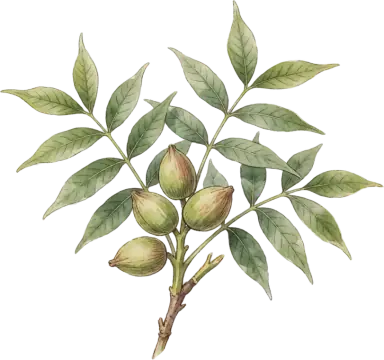
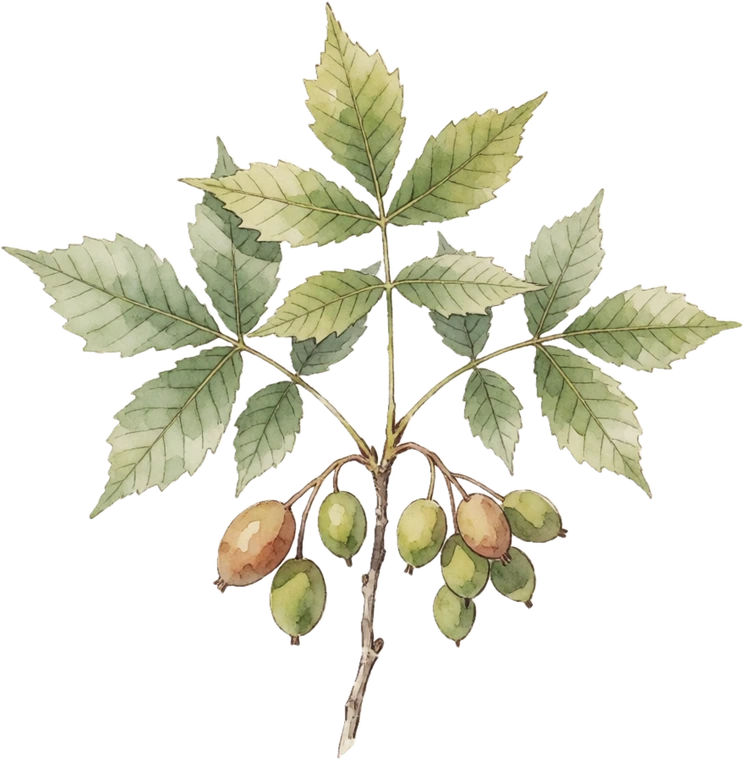
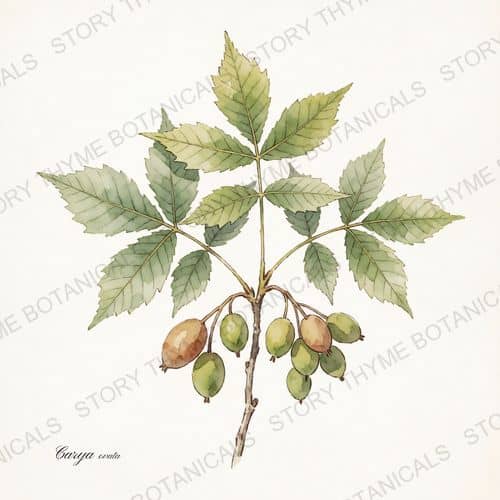
Botanical illustration of Shagbark Hickory
Tree · Carya ovata

The shaggy-barked native that makes the sweetest wild nut in North America — and the bark makes a real hickory syrup. It's a slow, century-scale legacy tree with a taproot that hates being moved, so plant a small grafted tree and think in decades. Squirrels are relentless at harvest; plant extra.

Tree · NativeFull Sun to Part ShadeLow waterSlow growthNative to North AmericaExcellent edibleAttracts butterfliesNeeds a pollination partner

☤ Allelopathic — suppresses neighborsShagbark Hickory releases juglone, an allelopathic toxin from the walnut family. It can stunt juglone-sensitive plants — tomatoes, potatoes, peppers, blueberries, apples, azaleas, and rhododendrons among them — within roughly 30–50 ft of a mature tree. Grow only juglone-tolerant species beneath it, and keep the sensitive ones well clear.

Where to buy the plant — 1 nursery

Hickory — a print from the Nut Trees collection

From the print shop

Growing shagbark hickory? Hang it.

Our Nut Trees collection carries shagbark hickoryCarya ovata, print Nº 7, “Hickory.”

16 designsfrom $21.99white or black groundmatte poster, unframed

Shop Nut Trees botanical prints →

I

Overview

Will shagbark hickory suit your garden, and what goes wrong.

Will it fruit where you are?

Enter your ZIP — we look up your USDA hardiness zone (2023 map) and check it against what shagbark hickory actually needs.

Hardy inZones 4-8
PollinationPartner needed

Shagbark Hickory at a glance

HardinessUSDA 4–8
Mature size60-80 ft
PollinationWind; two trees improve set
Chill requirementNot yet established
Bloom seasonSpring (catkins)
Harvest seasonFall: sweet nuts in thick husks — the best-flavored native nut; squirrels compete hard
Growth rateSlow

Common shagbark hickory problems

  • Hickory Bark Beetle
  • Weevils
  • Almost none significant
  • Poor pollination → low fruit set (plant a partner)

II

Growing

Light, water, soil, propagation and the season’s jobs.

How to grow shagbark hickory: light, water & soil

LightFull Sun to Part Shade
WaterLow once established — deep taproot
SoilDeep, well-drained; adaptable · pH 6.0 - 7.5
FertilizerNone
PruningWinter — Train young; then a century of hands-off. Taproot resents transplanting — plant small.
Spacing40+ ft

How to plant & propagate shagbark hickory

PropagateGrafted, or from cuttings/layering (seed won't come true)

The shagbark hickory growing playbook

Field-tested instructions for every job shagbark hickory asks of you, compiled from university extension guidance — in the order the season brings them.

Watering

Do not let a bearing tree run dry as the nuts size and fill

Irrigate through summer dry spells on bearing trees. Water matters at two moments: before the shells form, and again after the shells harden. Newly planted trees need watering weekly through their first summer. Water scarcity before the shells form caps how big the nut can ever get, because the shell sets the envelope the kernel must later fill, and drought after shell hardening leaves you full-sized nuts with shrivelled kernels rattling inside.

Feeding

Feed by trunk diameter at the tail of dormancyFeb – Mar

From the second season onward (not at planting): measure the trunk diameter 5 inches above the ground. Spread 1 lb of 10-10-10 per inch of trunk diameter under the outer edge of the canopy, never more than 1/3 lb of actual nitrogen per inch of trunk diameter per season. Time it to the last few weeks of dormancy, before budbreak - late February in Kentucky and the mid-South, March where winters run longer. Do not broadcast onto frozen or snow-covered ground; the fertilizer will run off with snowmelt before roots can take it up. Soil test yearly and lime as needed so the pH never drops below 6.0. Trunk diameter is the honest proxy for how much root and canopy there is to feed, and fertilizer placed at the canopy periphery lands over the feeder roots rather than the trunk. Applying just before budbreak puts the nitrogen there when the tree starts pulling on it.

Do not fertilize a tree at planting - it burns the new roots. Wait until after the first year. Do not apply to frozen ground or anywhere runoff can reach surface water.

Foliar zinc once the catkins have shed

Just after pollination, spray the foliage with zinc sulfate at 1 to 2 lb per 100 gallons (1 to 2 tablespoons per gallon) on young trees, or 5 to 10 lb per 100 gallons on mature trees. Repeat twice more at two to three week intervals. For soil application use zinc chelate instead of zinc sulfate. Zinc is the trace element nut trees run short of first, and when it is lacking the nutlets simply fail to set - the crop is lost at the very beginning rather than late.

Pruning

Train young trees to a central leader while dormantFeb – Mar

Prune young trees lightly in late winter to pick out scaffold limbs with wide crotch angles and keep a single central leader. Clear the branches off the trunk to a height of at least 6 feet if you plan to band it with a metal squirrel guard. Once 10 to 15 well-spaced scaffolds have formed, cut the leader back to a lateral and let the tree run as a modified central leader. Bearing trees need very little: take dead limbs back to a side limb or the trunk. Wide crotch angles and a single leader are what keep a 70-foot tree from splitting at a fork decades later, and cuts made while the tree is dormant and leafless heal before the borers and bark beetles fly.

Leave a clear 6-foot trunk if a squirrel shield is in your plans - a limb below the shield gives squirrels a way around it.

What to watch for

Jar the limbs for pecan weevil as the kernels harden

Starting as the kernels begin to harden, spread a large sheet under the tree once a week and jar the limbs with a padded pole. Count the brown, long-snouted weevils that drop. Three or more out of one tree is the threshold to begin spraying. Weevils usually emerge after the first good rain once kernels harden. If you would rather not spray, shaking them onto the sheet and destroying them week after week genuinely reduces the damage. The female drills the shell and lays inside the nut; once the egg is in there the grub is sealed away from any spray, so the only window that exists is the days between her emerging from the soil and her laying.

Spraying

Pecan weevil: carbaryl to the trunk at shell hardening

Only if your jarring counts hit three weevils per tree, or the tree has a weevil history, spray carbaryl (Sevin) on the lower 8 feet of the trunk starting at shell hardening. Repeat for two to four applications at 7 to 10 day intervals. Do not apply after shuck split. Stop at least 14 days before you expect to harvest. Bifenthrin is the other labelled option. Weevils walk up the trunk after emerging from the soil, so a band on the lower trunk intercepts the females on their way to the nuts - the one place and time they are exposed. Once she has drilled the shell and laid inside the nut, no spray reaches the grub.

PRE-HARVEST INTERVAL: 14 days. University of Kentucky ID-77 (Table 6, Pecan pest control guide) lists Sevin 80 S for pecan weevil at a 14 day PHI and adds 'Do not apply after shuck split' - honor both, and read your product label, which governs. Carbaryl and bifenthrin are both highly toxic to bees and other pollinators - keeping the spray on the trunk and off the flowering groundcover under the tree is the point of the trunk-band method. Do not spray if bees are foraging on cover beneath the tree; mow or remove blooming groundcover first.

Protection

Band the trunk against squirrels before the nuts are worth stealing

Bolt a 4-foot-wide tin or aluminum shield around the trunk with its lower edge at least 4 feet off the ground, four to six weeks before you expect squirrel damage. Fit it before the nuts ripen, not after the raids start. The shield works by denying squirrels any purchase on the trunk, so it has to be up before they establish the tree as a food source rather than in response to losses.

This fails entirely if squirrels can jump in from a neighboring tree - check the canopy gaps before you spend the effort.

Harvesting

Gather off the ground promptly, then dry on screens

Gather hickory nuts as soon as they fall - do not let them lie. Hull them and spread the nuts on screens to dry. Crack a couple every few days to test; when the kernels are crisp, store the nuts in their shells in mesh bags somewhere cool, well ventilated, and out of reach of squirrels. Nuts left on wet ground pick up mold and off flavors, and the drying is what converts the kernel to storage condition - a nut bagged before its kernel goes crisp will mold in the bag.

Cull any moldy nuts as you sort rather than bagging them - one is enough to seed the rest.

III

The year

What shagbark hickory asks for, month by month.

The shagbark hickory year, month by month

MonthJanFebMarAprMayJunJulAugSepOctNovDec
Bloom
Prune
Harvest

What each band means

  • Bloomflowers open — pollinators working, frost on blossoms is the danger.
  • Pruneshape it now — cuts heal cleanly and structure is visible.
  • Harvestpicking time — check ripeness every few days.

The shagbark hickory year as text

  • Jan pruning
  • Feb pruning
  • Mar bloom
  • Apr bloom
  • May bloom
  • Jun quiet month
  • Jul quiet month
  • Aug quiet month
  • Sep harvest
  • Oct harvest
  • Nov harvest
  • Dec pruning

These are the species' typical months — expect them a few weeks earlier in warm zones and later in cold ones. Watch the plant, not just the calendar.

IV

Ecology & uses

What it does for the garden, and what it is grown for.

Shagbark Hickory in the garden system

  • Canopy layer tree
  • Keystone: Keystone — hosts 230+ caterpillar species
AttractsBirds, Butterflies
MoistureUpland / dry
DeerBrowsed — protect young plants
OriginNative to North America

What shagbark hickory is grown for

✓ Commonly eatenNuts safe (bark also used to make hickory syrup)

UseNuts
UseHickory syrup
UseLegacy shade
Edible value4/5

Harvesting & storing shagbark hickory

Fall: sweet nuts in thick husks — the best-flavored native nut; squirrels compete hard.

Edibility, identification, and traditional-use notes here are general reference — not medical or veterinary advice, and not a claim that any plant treats or prevents anything. Medicinal ratings record how strongly a plant features in herbal tradition, nothing more. Never eat or dose a plant you have not positively identified. More on how to use this library.

V

Cultivars

Named varieties of shagbark hickory, ruled as a catalogue.

Best shagbark hickory varieties & cultivars

9 on file

Named varieties of shagbark hickory differ in winter-chill needs, ripening time, hardiness, and whether they set fruit on their own — pick one that fits your climate.

Grainger

Partly self-fertile
RipenslateZones4-8Sizelarge nut

Originated in Tennessee. Zones are the species range for Carya ovata; Kentucky extension recommends this cultivar but does not publish a cultivar-specific zone.

Where to buy ‘Grainger

Story Thyme Farms may earn a small commission from these links, at no cost to you — it never changes what we recommend.

Wilcox

Partly self-fertile
RipensearlyZones4-8Sizemedium nut

very good — Originated in Ohio. Bears in five to seven years, which is fast for a hickory. Zones are the species range for Carya ovata.

Where to buy ‘Wilcox

Story Thyme Farms may earn a small commission from these links, at no cost to you — it never changes what we recommend.

Wurth

Partly self-fertile
Zones4-8Diseasegood scab resistanceSizelarge nut

Strong vegetative growth and a very good producer. Zones are the species range for Carya ovata.

Where to buy ‘Wurth

Story Thyme Farms may earn a small commission from these links, at no cost to you — it never changes what we recommend.

Yoder No. 1 · Yoder

Partly self-fertile
Zones4-8

excellent — Developed by Emmet Yoder in Smithfield, Ohio. Zones are the species range for Carya ovata.

Where to buy ‘Yoder No. 1

Story Thyme Farms may earn a small commission from these links, at no cost to you — it never changes what we recommend.

Silvis 303 · Silvis

Self-fertile
Zones4-8Sizelarge nut

good quality — 45% kernel. Developed by Ray Silvis in West Richfield, Ohio. Kentucky extension (ID-77) calls it self-fruitful; Rhodes is the other shagbark in that same list described as self-fruitful. Zones are the species range for Carya ovata.

Where to buy ‘Silvis 303

Story Thyme Farms may earn a small commission from these links, at no cost to you — it never changes what we recommend.

Bridgewater

Partly self-fertile
Zones4-8Diseasescab susceptible in the SouthSizevery large nut

47% kernel. Originated in Connecticut. Zones are the species range for Carya ovata.

Where to buy ‘Bridgewater

Story Thyme Farms may earn a small commission from these links, at no cost to you — it never changes what we recommend.

Wilmoth

Partly self-fertile
Zones4-8Sizelarge nut

good taste — Developed by Leslie Wilmoth in Glendale, Kentucky. Zones are the species range for Carya ovata.

Where to buy ‘Wilmoth

Story Thyme Farms may earn a small commission from these links, at no cost to you — it never changes what we recommend.

Cook Shag

Partly self-fertile
Zones4-8

good — Originated in Kentucky. Zones are the species range for Carya ovata.

Where to buy ‘Cook Shag

Story Thyme Farms may earn a small commission from these links, at no cost to you — it never changes what we recommend.

Raudabaugh

Partly self-fertile
Zones4-8

A seedling selection that originated in Pennsylvania. Zones are the species range for Carya ovata.

Where to buy ‘Raudabaugh

Story Thyme Farms may earn a small commission from these links, at no cost to you — it never changes what we recommend.

VI

Sources & plant ID

Where the care distinctions come from, and how the plant is filed.

Research basis

Sources behind this profile

No extension citations are attached to shagbark hickoryyet. The care figures below come from the library's own catalogue rather than a traced primary source.

Plant ID

BinomialCarya ovata
FamilyJuglandaceae
TypeTree · Perennial
USDA symbolCAOV2
OriginNative to North America
Invasive riskLow

VII

Where to buy

Third-party nurseries — not Story Thyme Farms.

Third-party nurseries, not Story Thyme Farms. Prices are theirs.

Story Thyme Farms may earn a small commission from these links, at no cost to you — it never changes what we recommend.

Shagbark Hickory needs a pollination partner — plant two genetically distinct trees (two different cultivars, or a cultivar plus a seedling).

VIII

Questions

Shagbark Hickory questions, answered straight.

Why isn't my shagbark hickory fruiting?

Most often: it has no genetically distinct partner nearby. Shagbark Hickory is only partly self-fertile, so a lone plant sets a light crop at best — wind; two trees improve set. Plant a second, unrelated one nearby; two different cultivars, or a cultivar plus a seedling, is the classic pairing.

Is shagbark hickory safe for kids and pets?

Shagbark Hickory is commonly eaten and isn't considered toxic, but "commonly eaten" isn't a guarantee for any particular person or animal — allergies, quantity, and which part you eat all matter. One caveat on this one: Nuts safe (bark also used to make hickory syrup. Never eat a plant you haven't positively identified, and check with a vet before letting pets or livestock graze anything new.

When do you harvest shagbark hickory?

Fall: sweet nuts in thick husks — the best-flavored native nut; squirrels compete hard.

How do you propagate shagbark hickory?

Grafted, or from cuttings/layering (seed won't come true).

IX

Elsewhere

Where shagbark hickory sits in the library.

Where shagbark hickory sits in the library

Grows in the same world