The illustrated growing guide
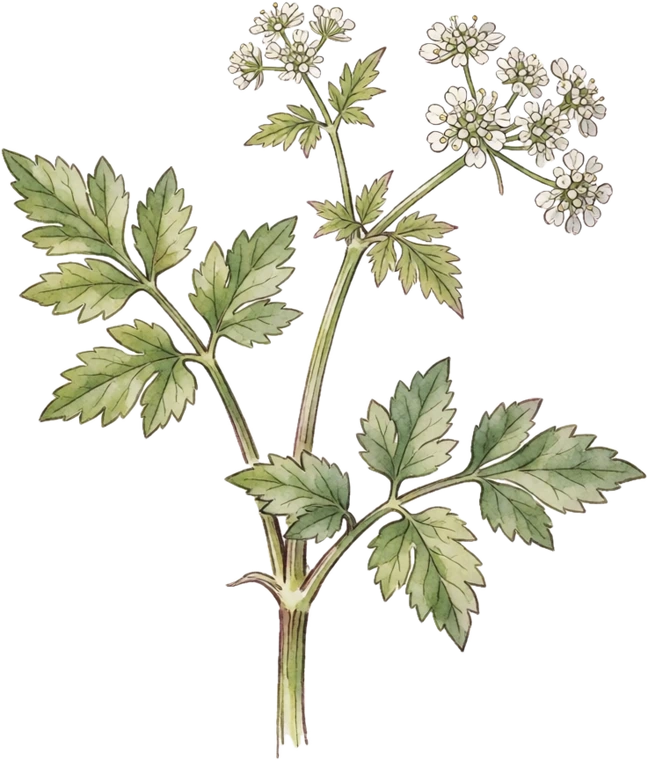
Skirret
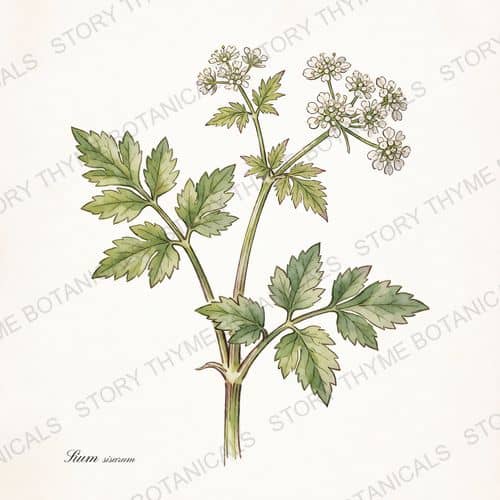
Sium sisarum
Family Apiaceae
Est. zones 5-9

The sweet perennial root that fed Europe before potatoes arrived — a cluster of slim white roots tasting of sweet carrot-parsnip, dug all winter, replanted from its own crown forever. A true dig-and-replant perennial vegetable for the root layer.
I
Overview
Will skirret suit your garden, and what goes wrong.
Will it fruit where you are?
Enter your ZIP — we look up your USDA hardiness zone (2023 map) and check it against what skirret actually needs.
Skirret at a glance
Common skirret problems
- Almost none
- Few
II
Growing
Light, water, soil, propagation and the season’s jobs.
How to grow skirret: light, water & soil
How to plant & propagate skirret
The skirret growing playbook
Field-tested instructions for every job skirret asks of you, compiled from university extension guidance — in the order the season brings them.
Sowing
Sow seed in spring for an autumn lift
Sow the carrot-like seed half an inch deep, either directly in the bed or in a seedbed for transplanting later. Space rows 12 to 18 inches apart and thin plants to 6 inches apart in the row. Expect 6 to 8 months from sowing to harvest. Where winters are frost-free or nearly so, sow in fall instead and carry the crop through the cool season. Skirret is a hardy cool-season crop that needs 6 to 8 months to build its root cluster, so a spring sowing puts harvest in autumn just as the plant goes dormant. In mild-winter regions the summer heat is the enemy rather than the cold, which is why the season flips.
Planting out
Set out seedlings or root divisions two inches deep
Move seedbed transplants or pieces of root division into the garden at 6 inches apart, with rows 12 to 18 inches apart, setting roots about 2 inches deep (UF/IFAS HS667). Choose a site with deep, fertile, moisture-retentive soil in full sun (RHS). Where winters are frost-free or nearly so, set plants out in fall instead and carry the crop through the cool season. Skirret carries its crop in a cluster of roots thrown from the stem base, so it needs loose depth beneath the crown and enough elbow room for that cluster to fill out rather than fight a neighbor. The season flips in mild-winter regions for the same reason it does at sowing: there the summer heat is the enemy rather than the cold, and UF/IFAS directs Florida growers to plant in fall.
Watering
Water through dry spells if you mean to eat the roots
Keep the soil moisture-retentive and water during dry spells across the growing season. Do not let the bed run dry for long stretches while the roots are bulking. Skirret roots already carry a tough woody core, and a plant checked by drought puts its energy into fiber rather than the sweet white flesh around that core. Roots grown dry come up stringy and small.
Dividing
Split the clump at the dormant lift and replant the offsets
When you lift a dormant clump, divide it: replant some sections at about 2 inches deep on the same 6 inch spacing and keep the rest to eat. Save the crowns with visible shoot buds for replanting and eat the fattest roots. Skirret is perennial and the clump multiplies into several crowns, so the harvest and the replanting are one job. Division also keeps a strain going true, which seed will not do.
Pruning
Cut back last year's stems in early spring
On clumps you left in the ground over winter, cut the old stems back in early spring before new growth pushes. The plant throws 3 to 4 foot stems that die back and collapse over the crown, and clearing them lets you see the new shoots and gives the emerging growth light and air.
What to watch for
Watch for eelworm and voles, but expect little else
Check plants over the season for stem and bulb eelworm, and look for vole runs and gnawed roots at the crown. Skirret is otherwise generally disease-free, so do not spray it on a schedule. The root cluster sits shallow at the stem base, which puts it within easy reach of voles, and stem and bulb eelworm moves through the crown tissue. Neither problem announces itself above ground until the damage is done.
⚠ No insecticide is registered for skirret in the US and none is warranted here. Manage voles by clearing cover around the bed or by physical exclusion rather than by spraying.
Harvesting
Lift the roots once the plant is dormant
Wait until the tops have died back and the plant is dormant, then cut the stems back and fork up the whole root cluster. Roots run 6 to 8 inches long and hold in the ground through winter, so lift as you need them rather than all at once. Cut the tough fibrous core out before cooking, not after. The sugars that give skirret its name move into the roots as the plant shuts down for winter, so a dormant root is a sweet root. The core turns nearly impossible to remove once cooked, which is why it comes out on the board.
III
The year
What skirret asks for, month by month.
The skirret year, month by month
What each band means
- Bloom — flowers open — pollinators working, frost on blossoms is the danger.
- Prune — shape it now — cuts heal cleanly and structure is visible.
- Harvest — picking time — check ripeness every few days.
The skirret year as text
- Jan harvest
- Feb harvest
- Mar quiet month
- Apr quiet month
- May quiet month
- Jun bloom
- Jul bloom
- Aug bloom
- Sep pruning, harvest
- Oct pruning, harvest
- Nov pruning, harvest
- Dec harvest
These are the species' typical months — expect them a few weeks earlier in warm zones and later in cold ones. Watch the plant, not just the calendar.
IV
Ecology & uses
What it does for the garden, and what it is grown for.
Skirret in the garden system
- Root layer perennial
What skirret is grown for
✓ Commonly eaten
Harvesting & storing skirret
Sweet white finger-roots, fall through winter; divide crowns to replant. About perennial from planting.
Edibility, identification, and traditional-use notes here are general reference — not medical or veterinary advice, and not a claim that any plant treats or prevents anything. Medicinal ratings record how strongly a plant features in herbal tradition, nothing more. Never eat or dose a plant you have not positively identified. More on how to use this library.
V
Cultivars
Named varieties of skirret, ruled as a catalogue.
Best skirret varieties & cultivars
Straight species (a Tudor-era staple root)
VI
Sources & plant ID
Where the care distinctions come from, and how the plant is filed.
Research basis
Sources behind this profile
No extension citations are attached to skirretyet. The care figures below come from the library's own catalogue rather than a traced primary source.
Plant ID
VII
Where to buy
Third-party nurseries — not Story Thyme Farms.
Third-party nurseries, not Story Thyme Farms. Prices are theirs.
Story Thyme Farms may earn a small commission from these links, at no cost to you — it never changes what we recommend.
VIII
Questions
Skirret questions, answered straight.
Is skirret safe for kids and pets?
Skirret is commonly eaten and isn't considered toxic, but "commonly eaten" isn't a guarantee for any particular person or animal — allergies, quantity, and which part you eat all matter. Never eat a plant you haven't positively identified, and check with a vet before letting pets or livestock graze anything new.
When do you harvest skirret?
Sweet white finger-roots, fall through winter; divide crowns to replant. From planting, expect about perennial to maturity.
How do you propagate skirret?
From seed or division.
IX
Elsewhere
Where skirret sits in the library.
Potato
Sweet Potato
Garlic
Onion