The illustrated growing guide

Tillage Radish (Daikon Cover Crop)

Raphanus sativus var. longipinnatus

Family Brassicaceae

Grown as an annual

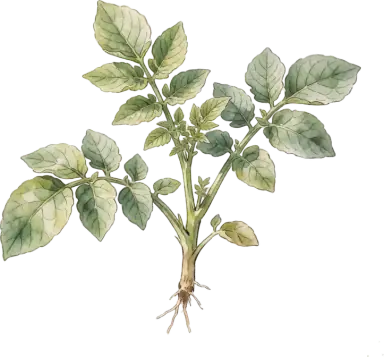
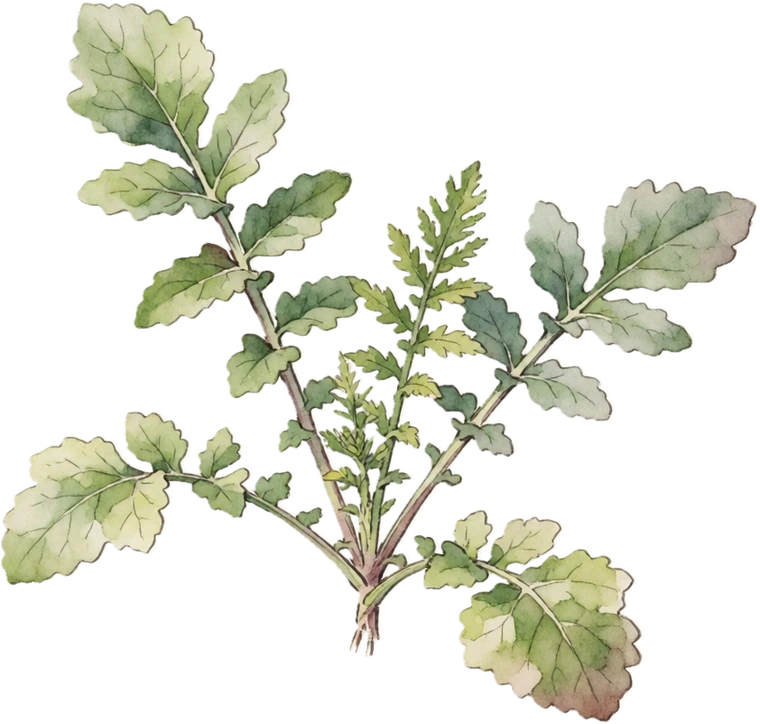
Botanical illustration of Tillage Radish (Daikon Cover Crop)
Annual · Raphanus sativus var. longipinnatus

The cover crop that plows for you — a giant daikon whose taproot punches through compacted hardpan, scavenges leftover nitrogen, then winter-kills and rots away, leaving deep channels that loosen soil and drain water. Sow late summer for fall growth. Bonus: the roots are edible daikon if you pull them young. The go-to fix for tight, compacted ground.

AnnualFull SunModerate waterVery Fast growthExcellent edibleAttracts beesNone winter chill

Where to buy the plant — 1 nursery

French Radish — a print from the Roots & Alliums collection

From the print shop

Growing tillage radish (daikon cover crop)? Hang it.

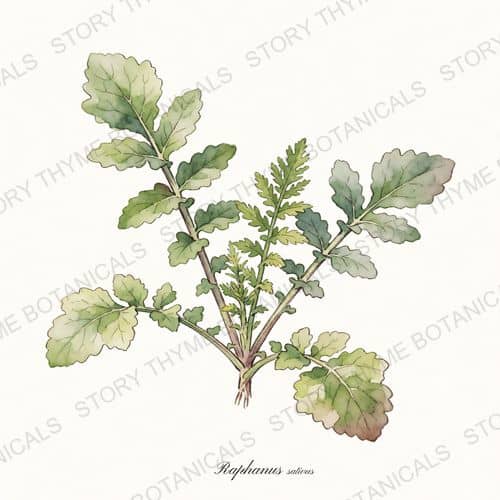
Our Roots & Alliums collection carries tillage radish (daikon cover crop)Raphanus sativus, print Nº 3, “French Radish.”

16 designsfrom $21.99white or black groundmatte poster, unframed

Shop Roots & Alliums botanical prints →

I

Overview

Will tillage radish (daikon cover crop) suit your garden, and what goes wrong.

Will it fruit where you are?

Enter your ZIP — we look up your USDA hardiness zone (2023 map) and check it against what tillage radish (daikon cover crop) actually needs.

Life cycleAnnual
Winter chillNone

Tillage Radish (Daikon Cover Crop) at a glance

Life cycleAnnual
Mature sizeFoliage 1-2 ft; root drills 1-3 ft down
PollinationFlowers feed bees if allowed
Chill requirementNone (not chill-dependent)
Bloom seasonBolts in spring if overwintered
Harvest seasonCover crop — the giant root shatters hardpan, then winter-kills and rots, leaving channels; also an edible daikon
Growth rateVery Fast (60 days)

Common tillage radish (daikon cover crop) problems

II

Growing

Light, water, soil, propagation and the season’s jobs.

How to grow tillage radish (daikon cover crop): light, water & soil

LightFull Sun
WaterModerate
SoilAny, incl. compacted · pH 6.0 - 7.5
FertilizerNone
PruningWinter-kills in cold zones (no termination needed) — The 'biological plow' — a giant daikon whose long taproot drills through compacted soil and hardpan, then winter-kills in cold climates and rots away, leaving deep channels for water, air, and roots plus a nitrogen-scavenging boost. Sow in late summer/fall. The roots are also edible daikon (harvest young). Where winters are mild it survives and must be mowed before it bolts.
SpacingBroadcast

How to plant & propagate tillage radish (daikon cover crop)

PropagateFrom seed

The tillage radish (daikon cover crop) growing playbook

Field-tested instructions for every job tillage radish (daikon cover crop) asks of you, compiled from university extension guidance — in the order the season brings them.

Sowing

Sow at least 6 weeks before regular frosts begin

Count back from your average first frost and sow with at least 6 weeks of growing weather left. Drill seed 1/2 to 1 inch deep, or broadcast and rake it in. For a cover crop stand, drill about 6 to 10 pounds per acre or broadcast 8 to 12 pounds per acre, roughly a quarter pound per 1000 square feet. Mixing with oats or cereal rye protects the soil surface that radish alone leaves loose and bare, and rye has the added benefit of overwintering to catch the nitrogen the rotting radish releases. The whole point of this plant is the taproot, and the root is built in the cool weeks of fall. Sown too late it never bulks up, and sown too early in midsummer heat it bolts and sets seed, which turns next year's cover crop into next year's weed.

Plant it away from the patio and windows. Rotting radish roots give off a powerful rotten-egg sulfur smell, worst during winter thaws.

Watering

Keep water even while the root sizes up

Water on a steady 2 to 3 day rhythm rather than letting the bed swing dry and then soaking it. Do not let it flood either. This crop tolerates neither drought nor standing water. A dry spell gives roots a rough texture and off flavor, too much water rots them, and the swings between the two are what bring on radish scab.

Feeding

Count your credits toward 40 to 60 pounds of nitrogen, then add only the shortfall

Radish and radish mixtures need roughly 40 to 60 pounds of nitrogen per acre, about 1 to 1.5 pounds per 1000 square feet, and that total can be met from fertilizer, manure or legume credits. Following a manured or well fertilized summer crop the credits usually cover it and you add nothing. On thin or long-fallow ground with nothing left to scavenge, supply the shortfall before sowing. This plant's job is to catch the nitrate your summer crop left behind before winter rain leaches it away, then hand it back in spring as the roots rot. A well grown stand takes up more than 100 pounds of nitrogen per acre (eOrganic). Nitrogen you add beyond what the stand needs is simply more nitrogen available to leach.

Do not use fresh manure. Per UF/IFAS HS1370 it is high in nitrogen, which stimulates lateral root branching and makes the taproot fork instead of driving straight down.

Thinning

Thin to 4 to 6 inches if you want to eat the roots

Growing this as an edible daikon rather than a cover crop means thinning seedlings to 4 to 6 inches apart in rows once they have their first true leaves. A cover crop stand is left thick and unthinned on purpose. A daikon root needs room to size up without a neighbor pinching it. Crowded roots stay thin and forked, which is fine for shattering hardpan but poor eating.

What to watch for

Check seedlings for flea beetles, and mind the cabbage rotation

Look over the seedlings for the shot-hole feeding of flea beetles and for wilting that points to cabbage root maggot. Do not sow this where broccoli, cabbage, kale or other cole crops grew, and do not follow it with them either. Radish is a brassica, so it shares clubroot, cabbage root maggot and flea beetles with every cole crop in the garden. Slotting it into a cabbage rotation feeds those problems instead of breaking them.

Cut any winter survivors before they set seed

Walk the bed in early spring and look for plants that came through alive and are sending up a flower stalk. Cut, pull or hoe them off before the pods fill. In a cold winter you will find none and can plant straight into the clean, mellow bed the rotted roots leave behind. Radish is meant to winterkill, and it dies at about 25 F, showing injury once temperatures drop below the mid-20s. Mild winters and warm zones can still let roughly 10 percent of a stand survive, and a survivor bolts, sets seed and reseeds itself into a weed you did not plan on. Do the walk even after a winter you thought was cold enough.

Harvesting

Pull edible daikon at 7 to 10 weeks

Lift roots about 7 weeks after sowing for a spring crop and about 10 weeks for a fall one, taking them while the shoulders are still smooth. Left as a cover crop, harvest nothing and let the freeze do the work. An overmature daikon turns fibrous and its flavor sharpens until it is unpleasant. Fall roots take longer than spring roots because they are growing into cooling weather.

III

The year

What tillage radish (daikon cover crop) asks for, month by month.

The tillage radish (daikon cover crop) year, month by month

MonthJanFebMarAprMayJunJulAugSepOctNovDec
Bloom
Prune
Harvest

What each band means

  • Bloomflowers open — pollinators working, frost on blossoms is the danger.
  • Pruneshape it now — cuts heal cleanly and structure is visible.
  • Harvestpicking time — check ripeness every few days.

The tillage radish (daikon cover crop) year as text

  • Jan pruning, harvest
  • Feb pruning, harvest
  • Mar bloom
  • Apr bloom
  • May bloom
  • Jun quiet month
  • Jul quiet month
  • Aug quiet month
  • Sep quiet month
  • Oct quiet month
  • Nov quiet month
  • Dec pruning, harvest

These are the species' typical months — expect them a few weeks earlier in warm zones and later in cold ones. Watch the plant, not just the calendar.

IV

Ecology & uses

What it does for the garden, and what it is grown for.

Tillage Radish (Daikon Cover Crop) in the garden system

  • Root layer annual
AttractsBees
MoistureFacultative / average
DeerBrowsed — protect young plants
OriginIntroduced

What tillage radish (daikon cover crop) is grown for

✓ Commonly eatenRoot edible (daikon) when young

UseCompaction buster
UseNitrogen scavenger
UseEdible daikon
UseCover crop
Edible value4/5

Harvesting & storing tillage radish (daikon cover crop)

Cover crop — the giant root shatters hardpan, then winter-kills and rots, leaving channels; also an edible daikon.

Edibility, identification, and traditional-use notes here are general reference — not medical or veterinary advice, and not a claim that any plant treats or prevents anything. Medicinal ratings record how strongly a plant features in herbal tradition, nothing more. Never eat or dose a plant you have not positively identified. More on how to use this library.

V

Cultivars

Named varieties of tillage radish (daikon cover crop), ruled as a catalogue.

Best tillage radish (daikon cover crop) varieties & cultivars

8 on file

Named varieties of tillage radish (daikon cover crop) differ in days to maturity, disease resistance, flavor, and habit — pick one that fits your season and space.

GroundHog · GroundHog Radish

Sizelarge daikon-type taproot

A large-rooted daikon-type selection marketed for cover cropping under trademark. Not the product of a formal breeding program.

Where to buy ‘GroundHog

Story Thyme Farms may earn a small commission from these links, at no cost to you — it never changes what we recommend.

Tillage Radish · Tillage Radish; Variety CCS-779

Sizelarge daikon-type taproot

Officially Variety CCS-779. The one variety in this group with real varietal protection behind it, rather than a trade selection.

Where to buy ‘Tillage Radish

Story Thyme Farms may earn a small commission from these links, at no cost to you — it never changes what we recommend.

Graza

The outlier in this group, developed over about 17 years through crosses involving three species, with smooth leaves rather than bristly ones.

Where to buy ‘Graza

Story Thyme Farms may earn a small commission from these links, at no cost to you — it never changes what we recommend.

Adagio

Diseasereported suppression of cyst nematodes

An oilseed radish cultivar reported to give better nematode suppression, especially of cyst nematodes, than other cultivars. Sow it thick, since a high seeding rate is recommended where nematode suppression is the goal.

Where to buy ‘Adagio

Story Thyme Farms may earn a small commission from these links, at no cost to you — it never changes what we recommend.

Ultimo

Diseasereported suppression of cyst nematodes

Named alongside Adagio as one of the oilseed cultivars reported to suppress nematodes better than the rest.

Where to buy ‘Ultimo

Story Thyme Farms may earn a small commission from these links, at no cost to you — it never changes what we recommend.

Renova

Cited by MSU Extension as an example of heavy nitrogen recycling: shown to recycle more than 140 pounds of nitrogen per acre in a growing season. For scale, the common cultivar recycled more than 60 pounds per acre in two months in muck soil, though that is a shorter window on a different soil and not a direct comparison.

Where to buy ‘Renova

Story Thyme Farms may earn a small commission from these links, at no cost to you — it never changes what we recommend.

Nitro · Nitro Radish

Sizelarge daikon-type taproot

One of the widely sold large-rooted daikon selections, a trade selection rather than a formally bred variety.

Where to buy ‘Nitro

Story Thyme Farms may earn a small commission from these links, at no cost to you — it never changes what we recommend.

Sodbuster

Sizelarge daikon-type taproot

A large-rooted daikon-type selection marketed for cover cropping. Not the product of a formal breeding program.

Where to buy ‘Sodbuster

Story Thyme Farms may earn a small commission from these links, at no cost to you — it never changes what we recommend.

VI

Sources & plant ID

Where the care distinctions come from, and how the plant is filed.

Research basis

Sources behind this profile

No extension citations are attached to tillage radish (daikon cover crop)yet. The care figures below come from the library's own catalogue rather than a traced primary source.

Plant ID

BinomialRaphanus sativus var. longipinnatus
FamilyBrassicaceae
TypeAnnual
USDA symbolRASA2
OriginIntroduced
Invasive riskLow

VII

Where to buy

Third-party nurseries — not Story Thyme Farms.

Third-party nurseries, not Story Thyme Farms. Prices are theirs.

Story Thyme Farms may earn a small commission from these links, at no cost to you — it never changes what we recommend.

VIII

Questions

Tillage Radish (Daikon Cover Crop) questions, answered straight.

Is tillage radish (daikon cover crop) safe for kids and pets?

Tillage Radish (Daikon Cover Crop) is commonly eaten and isn't considered toxic, but "commonly eaten" isn't a guarantee for any particular person or animal — allergies, quantity, and which part you eat all matter. One caveat on this one: Root edible (daikon) when young. Never eat a plant you haven't positively identified, and check with a vet before letting pets or livestock graze anything new.

When do you harvest tillage radish (daikon cover crop)?

Cover crop — the giant root shatters hardpan, then winter-kills and rots, leaving channels; also an edible daikon.

How do you propagate tillage radish (daikon cover crop)?

From seed.

IX

Elsewhere

Where tillage radish (daikon cover crop) sits in the library.

Where tillage radish (daikon cover crop) sits in the library

Grows in the same world