The illustrated growing guide

Turnip

Brassica rapa subsp. rapa

Family Brassicaceae

Est. zones 2-11

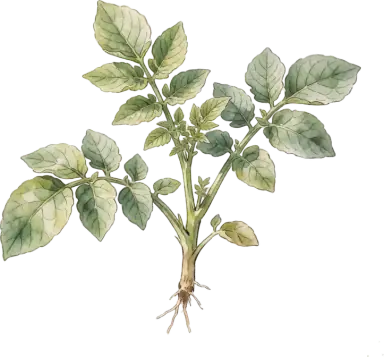
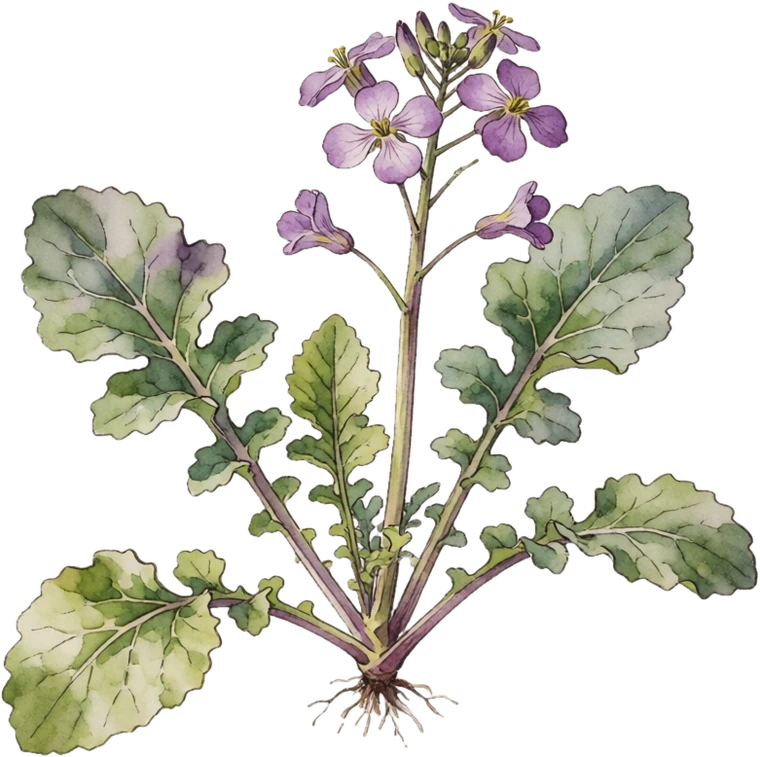
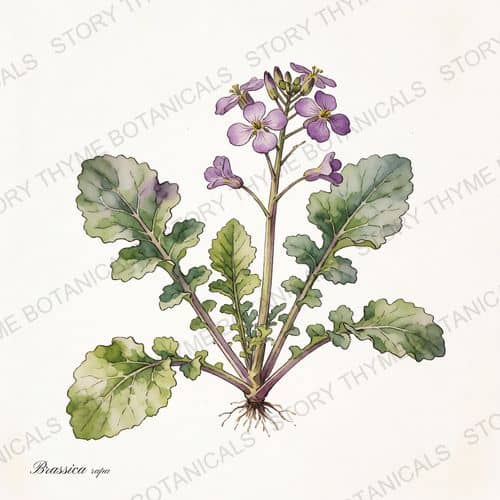
Botanical illustration of Turnip
Annual · Brassica rapa subsp. rapa

Two different vegetables: storage purple-tops for roasting and stews, and 'Hakurei' salad turnips — crisp, sweet, raw — that convert turnip haters on the spot.

AnnualFull SunModerate waterFast growthExcellent edibleAttracts beesAttracts butterflies

Where to buy the plant — 2 nurseries

Turnip — a print from the Roots & Alliums collection

From the print shop

Growing turnip? Hang it.

Our Roots & Alliums collection carries turnipBrassica rapa subsp. rapa, print Nº 11, “Turnip.”

16 designsfrom $21.99white or black groundmatte poster, unframed

Shop Roots & Alliums botanical prints →

I

Overview

Will turnip suit your garden, and what goes wrong.

Will it fruit where you are?

Enter your ZIP — we look up your USDA hardiness zone (2023 map) and check it against what turnip actually needs.

Life cycleBiennial, grown as an annual

Turnip at a glance

Life cycleBiennial, grown as an annual
Mature size12-18 in
PollinationN/A
Chill requirementNot yet established
Bloom seasonN/A
Harvest seasonMay - June; fall crop October - December (frost transforms them)
Growth rateFast (50-60 days)

Common turnip problems

II

Growing

Light, water, soil, propagation and the season’s jobs.

How to grow turnip: light, water & soil

LightFull Sun
WaterModerate, even
SoilLoose, decent · pH 6.0 - 7.5
FertilizerLight; fresh manure forks roots
PruningNone — Thin ruthlessly; eat thinnings as greens.
Spacing3-4 in

How to plant & propagate turnip

Maturity40-60 days
From seedDirect-sow spring or midsummer for fall
PropagateFrom seed

When to spray turnip

Growing season. Row cover from sowing.

The turnip growing playbook

Field-tested instructions for every job turnip asks of you, compiled from university extension guidance — in the order the season brings them.

Sowing

Sow the spring crop as early as the ground can be worked

Direct sow seed about a half inch deep, roughly an inch apart (3 to 20 seeds per foot of row), in rows 12 to 24 inches apart, as early in spring as the soil can be worked. Sow again every 10 days for a run of harvests rather than one glut. Turnips size up in cool weather and turn pithy and strong-flavored once heat arrives, so a spring crop only finishes well if it is started early enough to beat summer.

Sow the fall crop in late summer, counting back from your first frost

Count back about 10 weeks from your average first fall frost and sow then, which is roughly three to four weeks later than you would sow rutabaga. Sow at the same depth and spacing as the spring crop. The fall crop matures as the weather cools instead of heating up, which is when turnips grow fastest and hold the best texture, and the plants are hardy to fall frosts so the harvest window stays open late.

Watering

Keep water steady while the roots are sizing up

Give about an inch of water a week from rain or irrigation while the roots are swelling, soaking the soil deeply rather than wetting the surface. Do not let the plants wilt between waterings. Drought stress makes turnips bitter and woody, and a root that grows quickly and without interruption is the one that tastes mild.

Feeding

Sidedress lightly three to four weeks after sowing

Three to four weeks after sowing, sidedress about 1 pound of calcium nitrate (15.5-0-0) per 100 square feet, which is roughly 30 feet of row. Keep the soil pH between 6.0 and 6.5. Turnips need enough nitrogen to build the leaves that feed the root, but too much pushes the plant into top growth at the root's expense and you end up with fine greens and no turnip.

Thinning

Thin seedlings to 2 to 4 inches once they are 4 inches tall

When the seedlings stand about 4 inches tall, thin them to 2 to 4 inches apart in the row. The plants you pull are big enough to eat as greens, so nothing is wasted. A turnip root needs the room to swell, and a crowded stand simply stalls at marble size no matter how well it is fed or watered.

Spraying

Flea beetles: treat only if seedlings are being shredded

Check the seedlings for small round shot-holes in the leaves. If the damage is heavy on young plants, spray permethrin, which carries a 2-day pre-harvest interval on this crop. Carbaryl also works but its 14-day pre-harvest interval is awkward on a crop you may pull in 40 days. An established plant with a few holes needs nothing. Turnip and mustard leaves lack the waxy coating that protects cabbage and collards, so flea beetles hit them harder, and a seedling can be set back badly before it has the leaf area to outgrow the feeding.

Permethrin has a 2-day pre-harvest interval on turnip and carbaryl has 14 days. Both are broad-spectrum and toxic to bees. Never spray a plant that has bolted and flowered, since a flowering turnip pulls in foraging bees.

Protection

Float a row cover over the bed at sowing for root maggot and flea beetle

Lay a floating row cover or screen cage over the bed at sowing time, before the adult flies and beetles are active, and seal the edges to the soil. Do not use a row cover over ground that grew an infested brassica crop last year, and rotate to a new bed instead. Cabbage maggot flies lay their eggs at the base of the plant and the larvae tunnel the root, scoring it with grooves that let soft rot organisms in, so a barrier set before egg-laying is the whole control. A cover set over already-infested soil just traps the emerging flies with the crop.

Harvesting

Pull the roots at 2 to 3 inches across, before hot weather

Harvest when the roots are about 2 to 3 inches in diameter, which is roughly golf-ball to tennis-ball size. Do not leave a spring crop standing into hot weather waiting for it to get bigger. Store roots and greens separately, and expect only a week or two in the refrigerator. A turnip left too long, or left in the ground through heat, goes pithy and strong-flavored, and the size that looks most impressive is the one that eats worst.

III

The year

What turnip asks for, month by month.

The turnip year, month by month

MonthJanFebMarAprMayJunJulAugSepOctNovDec
Harvest

What each band means

  • Harvestpicking time — check ripeness every few days.

The turnip year as text

  • Jan quiet month
  • Feb quiet month
  • Mar quiet month
  • Apr quiet month
  • May harvest
  • Jun harvest
  • Jul quiet month
  • Aug quiet month
  • Sep harvest
  • Oct harvest
  • Nov harvest
  • Dec harvest

These are the species' typical months — expect them a few weeks earlier in warm zones and later in cold ones. Watch the plant, not just the calendar.

IV

Ecology & uses

What it does for the garden, and what it is grown for.

Turnip in the garden system

  • Root layer annual
AttractsBees, Butterflies
MoistureFacultative / average
DeerBrowsed — protect young plants
OriginIntroduced

What turnip is grown for

✓ Commonly eaten

UseRoasting
UseRaw (Hakurei)
UseGreens
UseStorage
Edible value4/5

Harvesting & storing turnip

May - June; fall crop October - December (frost transforms them). About 40-60 days from planting.

Edibility, identification, and traditional-use notes here are general reference — not medical or veterinary advice, and not a claim that any plant treats or prevents anything. Medicinal ratings record how strongly a plant features in herbal tradition, nothing more. Never eat or dose a plant you have not positively identified. More on how to use this library.

V

Cultivars

Named varieties of turnip, ruled as a catalogue.

Best turnip varieties & cultivars

6 on file

Named varieties of turnip differ in winter-chill needs, ripening time, hardiness, and whether they set fruit on their own — pick one that fits your climate.

Purple Top White Globe · Purple Top

RipensfallZones2-11Size3-6 inch globes

Mild, fine-grained white flesh — An 1880 heirloom and the standard American turnip, magenta above ground and white below. It holds quality until quite large, and topped roots stored cool with air circulation keep four to five months, so this is the one to grow for winter storage. Tops are usable as greens.

Where to buy ‘Purple Top White Globeverified

Story Thyme Farms may earn a small commission from these links, at no cost to you — it never changes what we recommend.

Hakurei · Hakurei F1

Ripensspring to fallZones2-11SizeBest under 2 inches

Sweet and fruity, juicy and tender raw — The salad turnip, eaten raw rather than cooked. Smooth flat-round white roots that stay smooth as they size, unlike turnips that roughen with age. Radish-size roots are ready in about 30 days. Greens are good raw or lightly cooked. Sow early spring through late summer.

Where to buy ‘Hakurei

Story Thyme Farms may earn a small commission from these links, at no cost to you — it never changes what we recommend.

Tokyo Cross · Tokyo Cross F1

Ripensspring to fallZones2-11Size2 inches for salads, up to 6 inches at full size

Mild and fine-grained, firm white flesh — A 1969 All-America Selections winner from Takii that is slow to bolt, which is what makes it the one to use for repeat sowings from spring through fall. It reaches 6 inches without going pithy, so the harvest window is unusually forgiving. Leaves are good steamed.

Where to buy ‘Tokyo Cross

Story Thyme Farms may earn a small commission from these links, at no cost to you — it never changes what we recommend.

Golden Ball · Gold Ball; Golden Globe

Ripensspring and fallZones2-11Size3-4 inch globes

Sweet, mellow and smooth; delicate-grained meaty flesh — An amber-fleshed heirloom whose flesh is described as never woody, which is the usual complaint about turnips. Grows quickly, keeps well, and works in both spring and fall sowings. The variety to try on people who think they dislike turnips.

Where to buy ‘Golden Ball

Story Thyme Farms may earn a small commission from these links, at no cost to you — it never changes what we recommend.

Royal Crown · Royal Crown F1

Ripensspring and fallZones2-11SizeGood quality up to 4 inches

Sweet and mild; best young — A hybrid improvement on the purple-top type, with a very smooth slightly flattened white root blotched purple on top. Tops are shorter but carry more leaves per plant, which makes it a genuine dual-purpose pick where you want greens and roots off one sowing. Matures quickly for both spring and fall.

Where to buy ‘Royal Crown

Story Thyme Farms may earn a small commission from these links, at no cost to you — it never changes what we recommend.

White Lady · White Lady F1

Ripensspring to fallZones2-11SizeHarvestable small or up to 5 inches

Mild and sweet — A white hybrid with pubescence-free stems, which is why the tops are tender enough to use as greens. Harvestable small or left to 5 inches, and suited to spring, summer or autumn sowing. Seed vendors disagree sharply on days to maturity, quoting anywhere from 28 to 50 days, so treat the figure here as approximate and judge by root size.

Where to buy ‘White Ladyverified

Story Thyme Farms may earn a small commission from these links, at no cost to you — it never changes what we recommend.

VI

Sources & plant ID

Where the care distinctions come from, and how the plant is filed.

Research basis

Sources behind this profile

No extension citations are attached to turnipyet. The care figures below come from the library's own catalogue rather than a traced primary source.

Plant ID

BinomialBrassica rapa subsp. rapa
FamilyBrassicaceae
TypeAnnual · Biennial
USDA symbolBRRA
OriginIntroduced
Invasive riskLow

VII

Where to buy

Third-party nurseries — not Story Thyme Farms.

Third-party nurseries, not Story Thyme Farms. Prices are theirs.

Story Thyme Farms may earn a small commission from these links, at no cost to you — it never changes what we recommend.

VIII

Questions

Turnip questions, answered straight.

Is turnip safe for kids and pets?

Turnip is commonly eaten and isn't considered toxic, but "commonly eaten" isn't a guarantee for any particular person or animal — allergies, quantity, and which part you eat all matter. Never eat a plant you haven't positively identified, and check with a vet before letting pets or livestock graze anything new.

When do you harvest turnip?

May - June; fall crop October - December (frost transforms them). From planting, expect about 40-60 days to maturity.

How do you propagate turnip?

From seed.

IX

Elsewhere

Where turnip sits in the library.

Where turnip sits in the library

Grows in the same world