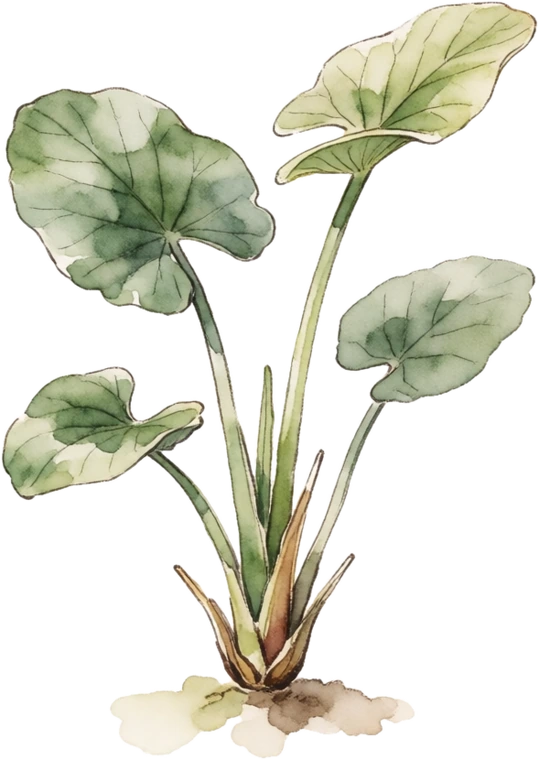
The illustrated growing guide
Water Chestnut (Chinese)
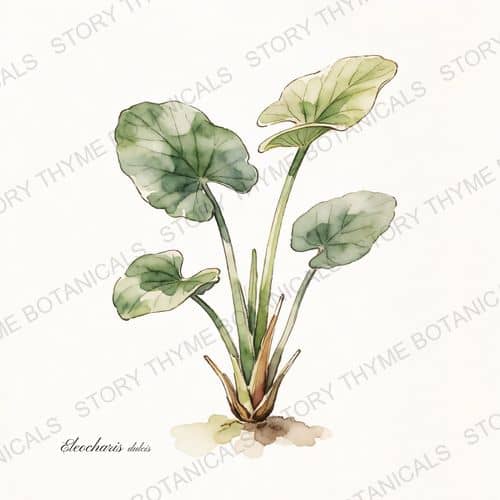
Eleocharis dulcis
Family Cyperaceae
Est. zones 9-11

Grow your own genuinely crunchy stir-fry water chestnuts — a grassy aquatic sedge that fills a flooded tub or pond edge and forms sweet, crisp ivory corms in the mud. Their magic is staying crisp after cooking. It wants a long, hot season (or a heated tub up north); drain and dig the corms in fall. Note: this is the edible Eleocharis, not the invasive floating water-chestnut.
I
Overview
Will water chestnut (chinese) suit your garden, and what goes wrong.
Will it fruit where you are?
Enter your ZIP — we look up your USDA hardiness zone (2023 map) and check it against what water chestnut (chinese) actually needs.
Water Chestnut (Chinese) at a glance
Common water chestnut (chinese) problems
- Almost none
- Almost none
II
Growing
Light, water, soil, propagation and the season’s jobs.
How to grow water chestnut (chinese): light, water & soil
How to plant & propagate water chestnut (chinese)
The water chestnut (chinese) growing playbook
Field-tested instructions for every job water chestnut (chinese) asks of you, compiled from university extension guidance — in the order the season brings them.
Sowing
Plant the corms in spring, then flood for one day and let it drain
Set the corms 4 to 5 inches deep in the soil and 30 inches apart, in rows spaced about the same. Flood the plot and keep it submerged for a single day, then let the water drain away naturally rather than holding it. Waterchestnut needs a growing period of 220 frost-free days to carry corms to edible size, so planting has to open as early as the season safely allows. The one-day flood and slow drain settles the soil around the corms and establishes the young plants before the bed goes back under water.
⚠ Buy Eleocharis dulcis specifically. European water chestnut, Trapa natans, shares the common name but is a different plant entirely - an invasive that is spreading through Northeast and Mid-Atlantic waterways - and Penn State Extension notes it has nothing to do with the edible variety.
Watering
Re-flood at 12 inches tall and hold 4 to 6 inches over the soil
Once the plants stand about 12 inches high, flood the bed again and keep 4 to 6 inches of water over the soil surface for the rest of the season. Grow this only where you can raise and lower the level on your own schedule - a tub, a lined pond, or a bed with ditches and dikes. This is a flooded crop, and the standing water carries it through the summer while the rhizomes spread and set corms. Open swamp or marsh will not do, because the whole system depends on controlling the water level rather than accepting whatever the site gives you.
Drain the bed about 30 days before you dig
Cut the water off and let the bed dry down roughly 30 days ahead of harvest, so the ground is firm enough to work when you come to lift the corms. Treat 30 days as the guideline the extension source gives; how long your bed actually needs will depend on your soil and drainage. The corms sit in mud at the bottom of a flooded bed and have to be scooped off the bottom with forks. Until the water is off and the ground has dried enough to work, there is no way to reach them.
What to watch for
Check for daughter plants 6 to 8 weeks after planting
About 6 to 8 weeks in, look for secondary plants coming up in a ring around each parent. Under favorable conditions they appear on their own and the bed begins to close in. Those daughter plants are the crop building the rhizome network, and the corms form along it rather than in a clump under the parent. A bed that has not started throwing secondaries by this point is not on track to yield.
Harvesting
Dig the corms in late fall, once the bed has dried down
After a full summer of growth the corms reach edible size in late fall. Scoop them off the bottom with a fork, and work the whole spread of the bed rather than just under the original planting spots. The corms only size up at the very end of the season, so there is nothing worth lifting before late fall. They form along the rhizomes that ran out from each parent, which is why the harvest covers the entire bed.
III
The year
What water chestnut (chinese) asks for, month by month.
The water chestnut (chinese) year, month by month
What each band means
- Prune — shape it now — cuts heal cleanly and structure is visible.
- Harvest — picking time — check ripeness every few days.
The water chestnut (chinese) year as text
- Jan quiet month
- Feb quiet month
- Mar quiet month
- Apr quiet month
- May quiet month
- Jun quiet month
- Jul quiet month
- Aug quiet month
- Sep pruning, harvest
- Oct pruning, harvest
- Nov pruning, harvest
- Dec quiet month
These are the species' typical months — expect them a few weeks earlier in warm zones and later in cold ones. Watch the plant, not just the calendar.
IV
Ecology & uses
What it does for the garden, and what it is grown for.
Water Chestnut (Chinese) in the garden system
- Root layer perennial
What water chestnut (chinese) is grown for
✓ Commonly eatenCorms edible raw or cooked (peel first)
Harvesting & storing water chestnut (chinese)
Corms harvested in fall from the mud — the crisp, sweet, ivory 'water chestnut' of stir-fries, wonderful raw or cooked (stays crunchy).
Edibility, identification, and traditional-use notes here are general reference — not medical or veterinary advice, and not a claim that any plant treats or prevents anything. Medicinal ratings record how strongly a plant features in herbal tradition, nothing more. Never eat or dose a plant you have not positively identified. More on how to use this library.
V
Cultivars
Named varieties of water chestnut (chinese), ruled as a catalogue.
Best water chestnut (chinese) varieties & cultivars
Eleocharis dulcis (the edible Chinese water chestnut — NOT the invasive Trapa)
VI
Sources & plant ID
Where the care distinctions come from, and how the plant is filed.
Research basis
Sources behind this profile
No extension citations are attached to water chestnut (chinese)yet. The care figures below come from the library's own catalogue rather than a traced primary source.
Plant ID
VII
Where to buy
Third-party nurseries — not Story Thyme Farms.
Third-party nurseries, not Story Thyme Farms. Prices are theirs.
Story Thyme Farms may earn a small commission from these links, at no cost to you — it never changes what we recommend.
VIII
Questions
Water Chestnut (Chinese) questions, answered straight.
Is water chestnut (chinese) safe for kids and pets?
Water Chestnut (Chinese) is commonly eaten and isn't considered toxic, but "commonly eaten" isn't a guarantee for any particular person or animal — allergies, quantity, and which part you eat all matter. One caveat on this one: Corms edible raw or cooked (peel first. Never eat a plant you haven't positively identified, and check with a vet before letting pets or livestock graze anything new.
When do you harvest water chestnut (chinese)?
Corms harvested in fall from the mud — the crisp, sweet, ivory 'water chestnut' of stir-fries, wonderful raw or cooked (stays crunchy).
How do you propagate water chestnut (chinese)?
Division or seed.
IX
Elsewhere
Where water chestnut (chinese) sits in the library.
Potato
Sweet Potato
Garlic
Onion