The illustrated growing guide

Yacon

Smallanthus sonchifolius

Family Asteraceae

Est. zones 2-11

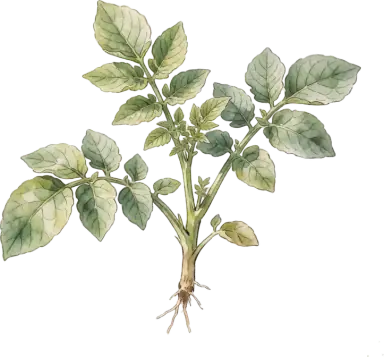
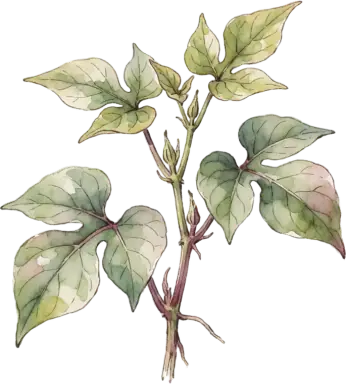
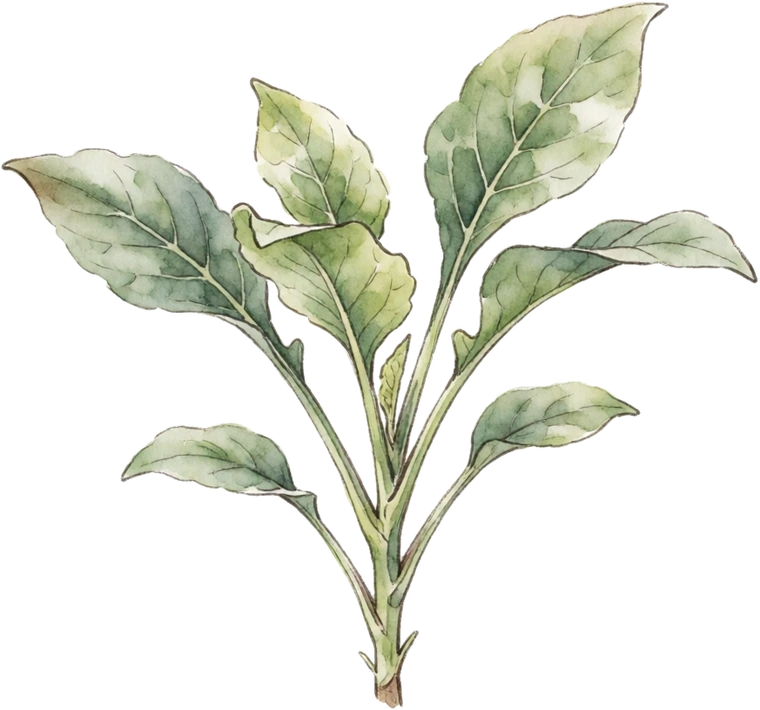
Botanical illustration of Yacon
Perennial · Smallanthus sonchifolius

The sweetest thing you'll ever dig — big juicy tubers eaten raw like a crisp, refreshing fruit (think apple crossed with water chestnut), sweetened by prebiotic inulin rather than starch, so it's famously low-glycemic. A frost-tender Andean perennial: harvest after the tops die, cure to intensify the sweetness.

PerennialFull SunModerate waterFast growthExcellent edible

Where to buy the plant — 1 nursery

I

Overview

Will yacon suit your garden, and what goes wrong.

Will it fruit where you are?

Enter your ZIP — we look up your USDA hardiness zone (2023 map) and check it against what yacon actually needs.

Life cycleTender perennial, grown as an annual

Yacon at a glance

Life cycleTender perennial, grown as an annual
Mature size4-6 ft
PollinationYellow daisy flowers late
Chill requirementNot yet established
Bloom seasonFall (if season is long)
Harvest seasonLarge sweet storage tubers dug after frost — crisp, juicy, sweet like a cross of apple and jicama; eaten RAW; sweetness increases as they sit
Growth rateFast

Common yacon problems

  • Almost none
  • Almost none

II

Growing

Light, water, soil, propagation and the season’s jobs.

How to grow yacon: light, water & soil

LightFull Sun
WaterModerate-High
SoilRich, deep, loose · pH 6.0 - 7.5
FertilizerMonthly in season
PruningNone — An Andean giant that makes big, crisp, sweet-and-juicy tubers you eat raw like fruit — apple-meets-jicama, and remarkably sweet (it stores prebiotic sugars, not starch). Dig after frost, then cure a week or two to sweeten further. Separate the edible storage tubers from the knobby crowns (replant the crowns).
Spacing2-3 ft

How to plant & propagate yacon

PropagateDivision or seed

The yacon growing playbook

Field-tested instructions for every job yacon asks of you, compiled from university extension guidance — in the order the season brings them.

Sowing

Sprout yacon corms indoors about two months before you plant out

Roughly two months before you intend to plant out (which is itself after your last frost), bury the corms in moist potting soil to wake them up. Once shoots appear, separate the sprouted corms and move each into a 6- or 8-inch pot to grow on until the weather settles. Yacon needs about 180 days in the ground to size its storage roots, and it will not tolerate frost at either end of that run, so the head start indoors is what buys a full-season crop in a short-season yard.

Planting out

Plant yacon out once nights stay above freezing

Set the potted plants out in spring after freezing nights have ended, 30 to 40 inches apart with 3 to 4 feet between row centers. Give it loamy, nutrient-rich soil in full sun; raised beds with plastic mulch keep weed pressure down. Yacon runs best between 64 and 80 degrees and is damaged at 32, so it gains nothing from going out early. The wide spacing matters because a single plant throws a root cluster nearly a foot across.

Watering

Keep water steady while the roots bulk

Do not let yacon run dry through the heat of the season. Steady rain or irrigation, paired with cool nights, is what drives corm and storage-root formation. Yacon will take temperatures as high as 105 degrees so long as water is available, but the swelling of the storage roots is the step that moisture stress shuts down first, and that is the harvest.

Feeding

Feed yacon on a potato program

No fertilizer recommendation exists specifically for yacon, so follow potato: about 200 lb/acre of nitrogen, with phosphate and potash applied only as your soil test calls for. Ammonium sulfate or a controlled-release fertilizer both work. Nitrogen does double duty in this crop, raising both total yield and the fructooligosaccharide content that is the whole point of the sweet storage roots.

Rates above are field-scale; scale them to your bed size and let a soil test, not habit, set the phosphorus and potassium.

What to watch for

Scout yacon, but do not reach for a spray

Walk the plants for slugs, caterpillars, beetles and leafhoppers, and check for Fusarium, Sclerotinia and Alternaria on foliage. If roots come up stunted or knotty, suspect nematodes. Handle what you find culturally: hand-pick, clear debris, and rotate. Yacon defends itself unusually well. Its monoterpenes, diterpenes and sesquiterpenes are genuinely pest-suppressive and the trichomes on leaves and stems are a second barrier, so damage rarely reaches a threshold worth treating.

UF/IFAS reports that registered chemicals for yacon production are not available in Florida, and yacon is a minor enough crop that few if any products list it anywhere. Before applying anything, read the label: if yacon is not on it, the application is off-label and may be illegal in your state. Yacon's fall flowers pull in bees and other beneficials, so never put an insecticide on a blooming plant.

Protection

Lift and store the crown rhizomes for next year

After the first killing frost but before the ground freezes, lift the crown, cut the stems back to 3 to 6 inches and brush the soil off by hand — do not wash it. Leave a few of the small storage roots attached to the rhizome; that improves storage life. Let the surface dry for a day or two in a cool airy spot, then pack the crown in slightly moist sand or mulch and hold it near 40 to 50 degrees in the dark. Divide and replant in spring once frost danger has passed. The crown rhizomes, not the edible storage roots, are what regrow the plant, and they are frost-tender. Unlike dahlia or canna tubers, yacon rhizomes shrivel rather than keep if you dry-cure them hard, so the aim is a barely-damp medium and a cold dark hold, not desiccation.

Check the stored crowns periodically. Too warm and they break dormancy early; freezing kills them outright; bone-dry medium shrivels them. Expect roughly six months of viable storage, so in a very long winter plan to plant rather than store if you can.

Harvesting

Dig yacon after frost has taken the tops down

Wait for the first killing frost to shrivel and blacken the top growth — roughly 180 days (6-7 months) from planting. Then lift the whole cluster with a fork, starting a foot out from the stems and working around the plant so you bring up the root ball intact. The storage roots are brittle and snap easily, so lever from well outside the crown rather than pulling against it. Leave the crown and its rhizomes attached until you separate the storage roots for eating. Frost-killed tops are the plant's own signal that it has finished moving sugars down into the storage roots; dug earlier, the roots are noticeably flatter in flavor. UF/IFAS puts maturity at 6-7 months from planting.

Sun the roots to sweeten them, then store cold

Lay the cleaned storage roots out in direct sun for about six days before eating. They will wrinkle as they lose water and turn markedly sweeter. Once sweetened, hold them cold and dark. Sunning hydrolyzes the fructooligosaccharides into free fructose and glucose. Measured over six days, FOS fell from 50-62 percent of dry matter to 29-44 percent while free sugars climbed from 29-34 to 45-51 percent, and the roots shed about 40 percent of their water.

Sunning trades the prebiotic FOS for ordinary sugar. If you grew yacon for its low-calorie or prebiotic value rather than dessert sweetness, skip the sunning and eat the roots fresh. Cold storage holds roots about 4 months at 50F and up to a year at 35F.

III

The year

What yacon asks for, month by month.

The yacon year, month by month

MonthJanFebMarAprMayJunJulAugSepOctNovDec
Bloom

What each band means

  • Bloomflowers open — pollinators working, frost on blossoms is the danger.

The yacon year as text

  • Jan quiet month
  • Feb quiet month
  • Mar quiet month
  • Apr quiet month
  • May quiet month
  • Jun quiet month
  • Jul quiet month
  • Aug quiet month
  • Sep bloom
  • Oct bloom
  • Nov bloom
  • Dec quiet month

These are the species' typical months — expect them a few weeks earlier in warm zones and later in cold ones. Watch the plant, not just the calendar.

IV

Ecology & uses

What it does for the garden, and what it is grown for.

Yacon in the garden system

  • Root layer perennial
MoistureFacultative / average
DeerBrowsed — protect young plants
OriginIntroduced

What yacon is grown for

✓ Commonly eatenits sugars are low-glycemic inulin

UseRaw sweet snack
UseLow-glycemic
UseAndean crop
Edible value4/5

Harvesting & storing yacon

Large sweet storage tubers dug after frost — crisp, juicy, sweet like a cross of apple and jicama; eaten RAW; sweetness increases as they sit.

Edibility, identification, and traditional-use notes here are general reference — not medical or veterinary advice, and not a claim that any plant treats or prevents anything. Medicinal ratings record how strongly a plant features in herbal tradition, nothing more. Never eat or dose a plant you have not positively identified. More on how to use this library.

V

Cultivars

Named varieties of yacon, ruled as a catalogue.

Best yacon varieties & cultivars

8 on file

Named varieties of yacon differ in winter-chill needs, ripening time, hardiness, and whether they set fruit on their own — pick one that fits your climate.

Bekya

Ripensfall, after first frostZones5-11

least sweet at first, moderately sweet at maturity — White flesh, tan tubers that stay tan. Zone range is a species trait, not a varietal one; yacon zone tolerance does not differ between cultivars.

Where to buy ‘Bekya

Story Thyme Farms may earn a small commission from these links, at no cost to you — it never changes what we recommend.

Bogachiel

Ripensfall, after first frostZones5-11

sweetest of the varieties both young and mature — Yellow to orange flesh, unusual in yacon. Tubers start tan and redden as they mature. Zone range is a species trait, not a varietal one.

Where to buy ‘Bogachiel

Story Thyme Farms may earn a small commission from these links, at no cost to you — it never changes what we recommend.

Sol Duc

Ripensfall, after first frostZones5-11

sweetest both early and at maturity — White flesh, red-tan tubers deepening to red. High yield. Zone range is a species trait, not a varietal one.

Where to buy ‘Sol Duc

Story Thyme Farms may earn a small commission from these links, at no cost to you — it never changes what we recommend.

Cajamarca

Ripensfall, after first frostZones5-11

middling young, among the sweetest once fully mature — White flesh, tan to tan-red tubers. Named for the Peruvian region. Zone range is a species trait, not a varietal one.

Where to buy ‘Cajamarca

Story Thyme Farms may earn a small commission from these links, at no cost to you — it never changes what we recommend.

Morado

Ripensfall, after first frostZones5-11

middling young, among the sweetest once mature — White flesh under red-tan skin that deepens to red. Flowers early, but tuberizes at an intermediate pace — the early flowers are not a signal to dig early. A seven-cultivar study grown in southwest Germany found Morado, Late Red and Cajamarca jointly highest in total phenolics, flavonoids and antioxidant activity. Zone range is a species trait, not a varietal one; yacon zone tolerance does not differ between cultivars.

Where to buy ‘Morado

Story Thyme Farms may earn a small commission from these links, at no cost to you — it never changes what we recommend.

New Zealand

Ripensfall, after first frostZones5-11Sizetall, plants often over 7 feet

middling young, among the sweetest once mature — White/tan tubers with heavy purple-red blushing that darkens with sun exposure. Rhizome dormancy is among the longest, holding 3 to 4 months at 38F without significant sprouting — but the nursery still cautions that yacon rhizome does not store well and is better planted than stored. Zone range is a species trait, not a varietal one.

Where to buy ‘New Zealand

Story Thyme Farms may earn a small commission from these links, at no cost to you — it never changes what we recommend.

Quinault

Ripensfall, after first frostZones5-11

middling young, among the sweetest once mature — White flesh, red-tan tubers deepening to red. Flowers early, tuberizes at an intermediate pace, moderate yield. Zone range is a species trait, not a varietal one.

Where to buy ‘Quinault

Story Thyme Farms may earn a small commission from these links, at no cost to you — it never changes what we recommend.

Late Red

Ripensfall, after first frostZones5-11

middling young, among the sweetest once mature — Yellow flesh under tan-red skin that holds its color rather than deepening. Moderate yield, intermediate tuberization. One of the few yellow-fleshed yacons alongside Bogachiel. A seven-cultivar study found Late Red among the highest in total phenolics, flavonoids and antioxidant activity. Zone range is a species trait, not a varietal one.

Where to buy ‘Late Red

Story Thyme Farms may earn a small commission from these links, at no cost to you — it never changes what we recommend.

VI

Sources & plant ID

Where the care distinctions come from, and how the plant is filed.

Research basis

Sources behind this profile

No extension citations are attached to yaconyet. The care figures below come from the library's own catalogue rather than a traced primary source.

Plant ID

BinomialSmallanthus sonchifolius
FamilyAsteraceae
TypePerennial · Tender Perennial
OriginIntroduced
Invasive riskLow

VII

Where to buy

Third-party nurseries — not Story Thyme Farms.

Third-party nurseries, not Story Thyme Farms. Prices are theirs.

Story Thyme Farms may earn a small commission from these links, at no cost to you — it never changes what we recommend.

VIII

Questions

Yacon questions, answered straight.

Is yacon safe for kids and pets?

Yacon is commonly eaten and isn't considered toxic, but "commonly eaten" isn't a guarantee for any particular person or animal — allergies, quantity, and which part you eat all matter. One caveat on this one: its sugars are low-glycemic inulin. Never eat a plant you haven't positively identified, and check with a vet before letting pets or livestock graze anything new.

When do you harvest yacon?

Large sweet storage tubers dug after frost — crisp, juicy, sweet like a cross of apple and jicama; eaten RAW; sweetness increases as they sit.

How do you propagate yacon?

Division or seed.

IX

Elsewhere

Where yacon sits in the library.

Where yacon sits in the library

Grows in the same world